Artwork
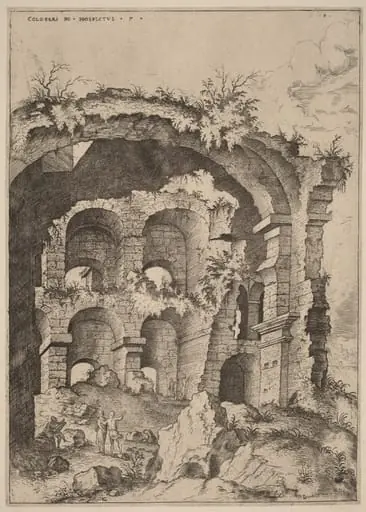
View of the Colosseum with the Palatine in the Background
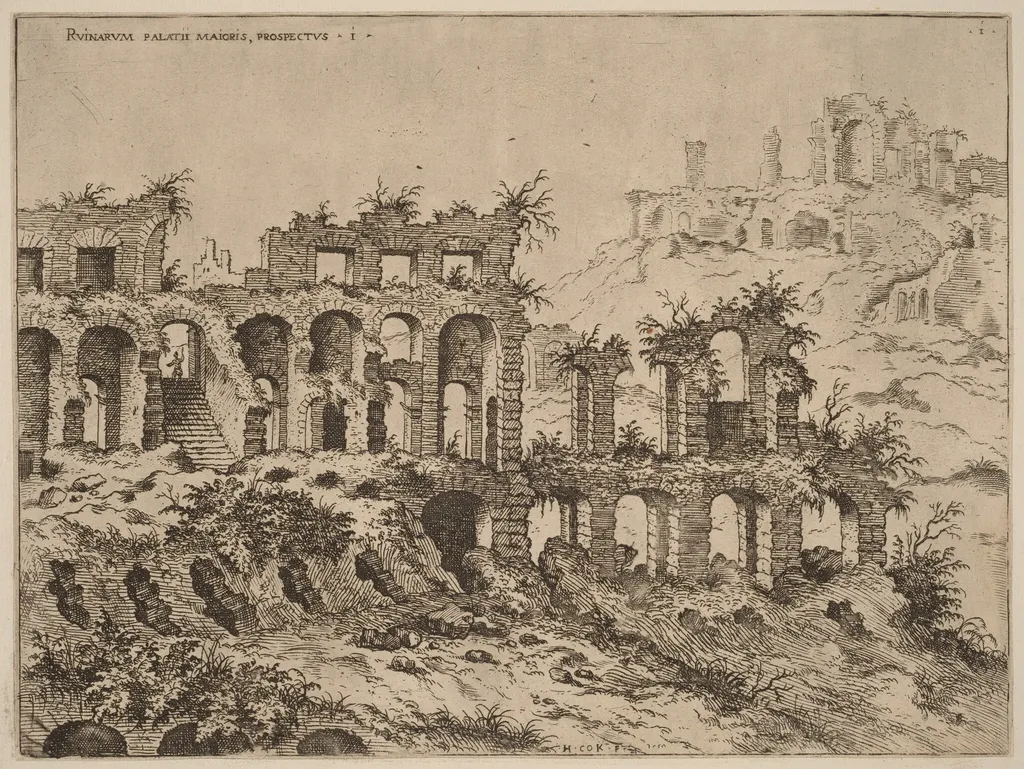
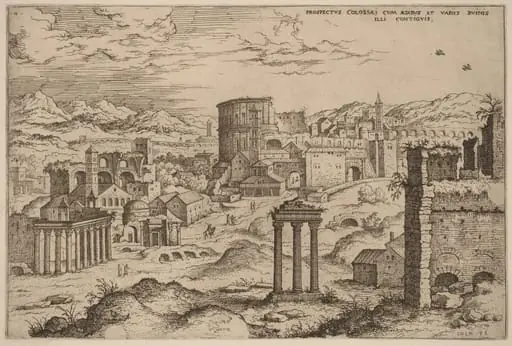
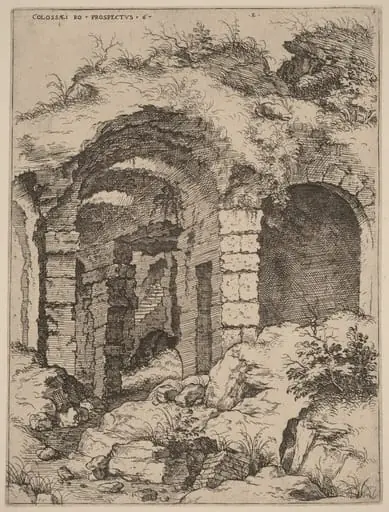
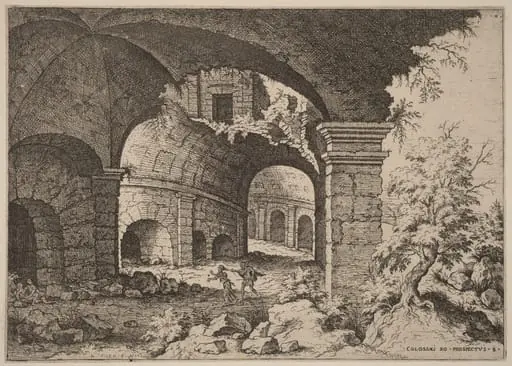
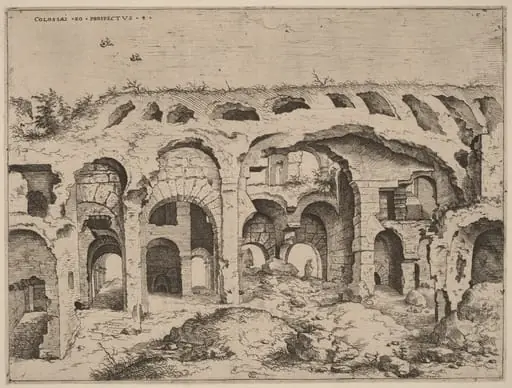
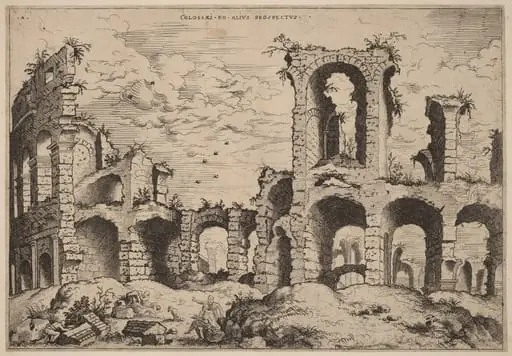
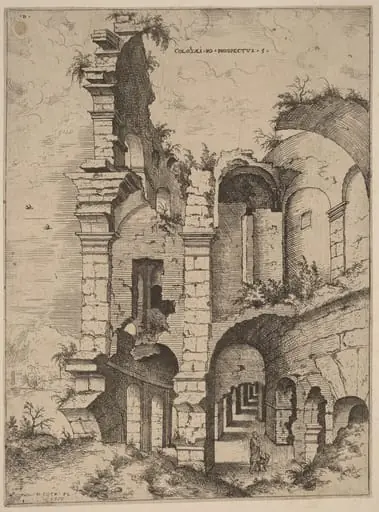
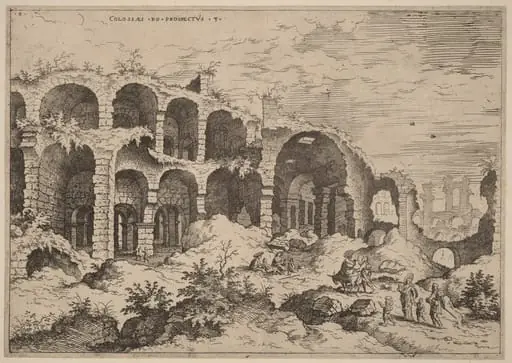
View of the Colosseum with the Palatine in the Background is an ink print by the Renaissance artist Hieronymus Cock. It dates from 1550 and is held in the collection of the National Gallery of Art.
About this work
Overview
Created around 1550 by the Flemish artist and publisher Hieronymus Cock, this etching captures the Colosseum with the Palatine Hill rising behind it.
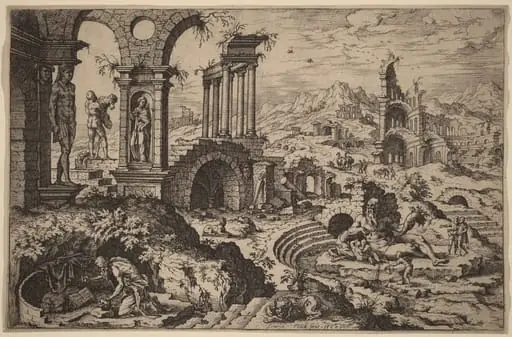
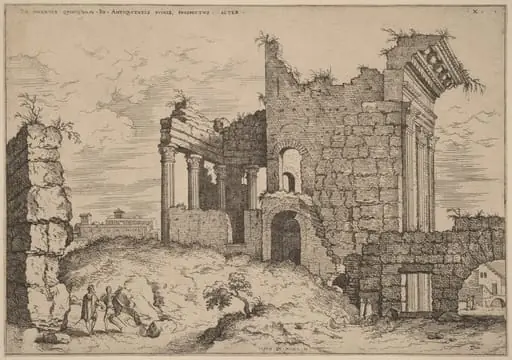
Created around 1550 by the Flemish artist and publisher Hieronymus Cock, this etching captures the Colosseum with the Palatine Hill rising behind it. Executed on laid paper, the work belongs to a series of topographical prints that documented Rome’s ancient architecture during the mid-16th century. Cock, known for his role in commercializing print production, used etching to translate architectural observation into widely distributed images for European audiences.
Subject & Meaning
The scene centers on the Colosseum, its fractured grandeur framed by the overgrown slopes of the Palatine. No figures populate the landscape, emphasizing the ruins as silent witnesses to antiquity. The composition reflects Renaissance fascination with Rome’s past, not as a living city but as a repository of classical memory. The absence of human activity invites contemplation rather than narrative, aligning with scholarly interests in antiquarian study.
Technique & Style
Cock employed etching to render fine linear detail across the stone surfaces of the amphitheater and the irregular contours of the hillside. The use of hatched lines and subtle tonal gradations suggests depth without heavy shading, characteristic of Northern European printmaking traditions. The precision of architectural forms indicates direct observation, likely based on on-site sketches, distinguishing this from idealized or imaginary views common in later periods.
History & Provenance
Produced during Cock’s tenure as a leading print publisher in Antwerp, the work was part of a commercial venture that disseminated images of Roman ruins across Europe. Though no early ownership records are widely documented, its survival in multiple institutional collections suggests it was widely circulated. The print likely served both as a souvenir for travelers and as a reference for artists and architects engaged in classical revival.
Context
In mid-16th century Rome, the ruins of antiquity were being systematically recorded as part of a broader cultural revival. Artists and scholars traveled to the city to document its remains, often for patrons interested in classical heritage. Cock’s print fits within this movement, contributing to a growing visual archive that helped shape Northern European perceptions of Rome—not as a contemporary city, but as a monument to lost empire.
Legacy
This etching stands as an early example of topographical printmaking that prioritized accuracy over embellishment. It influenced later generations of artists and cartographers who sought to document historical sites with documentary intent. While not widely known today, its technical clarity and observational fidelity mark it as a significant contribution to the development of architectural representation in print.
Artist & collection
Artist
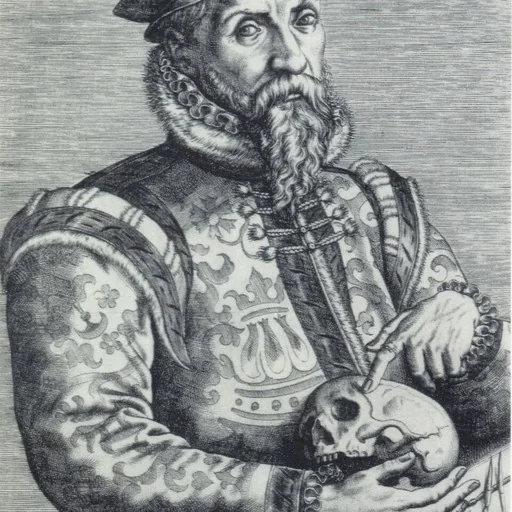
Hieronymus Cock, or Hieronymus Wellens de Cock, (1518 – 3 October 1570) was a Flemish painter and etcher as well as a publisher and distributor of prints.