Artwork
Immaculate Conception
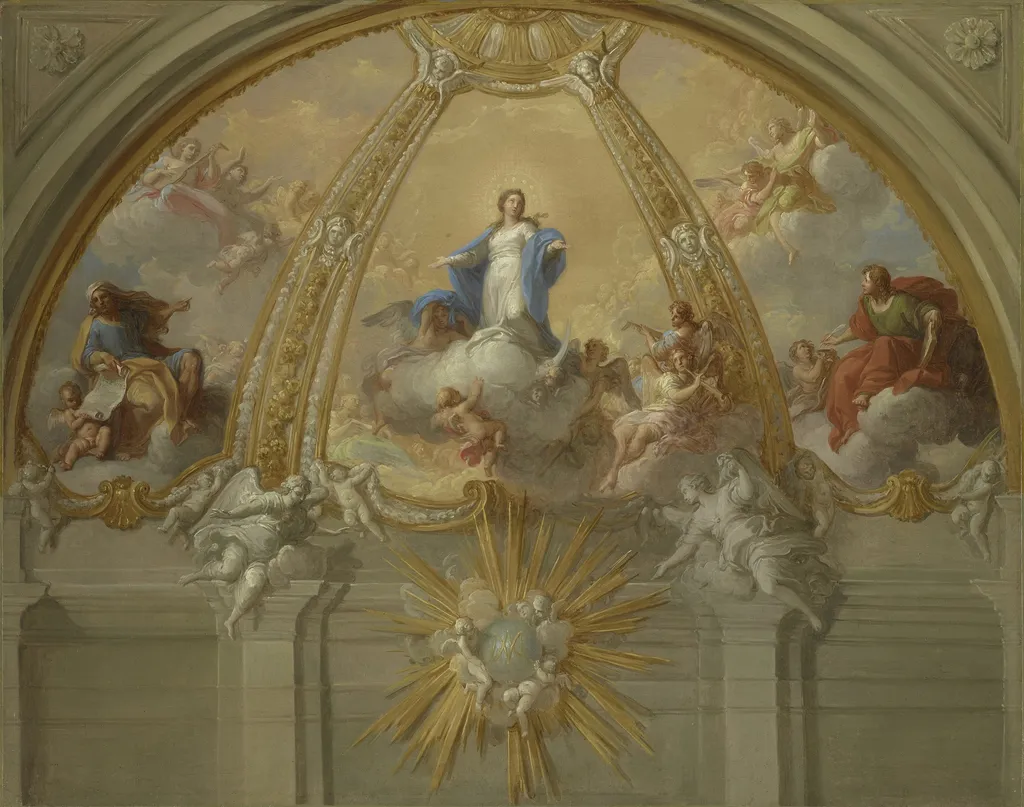
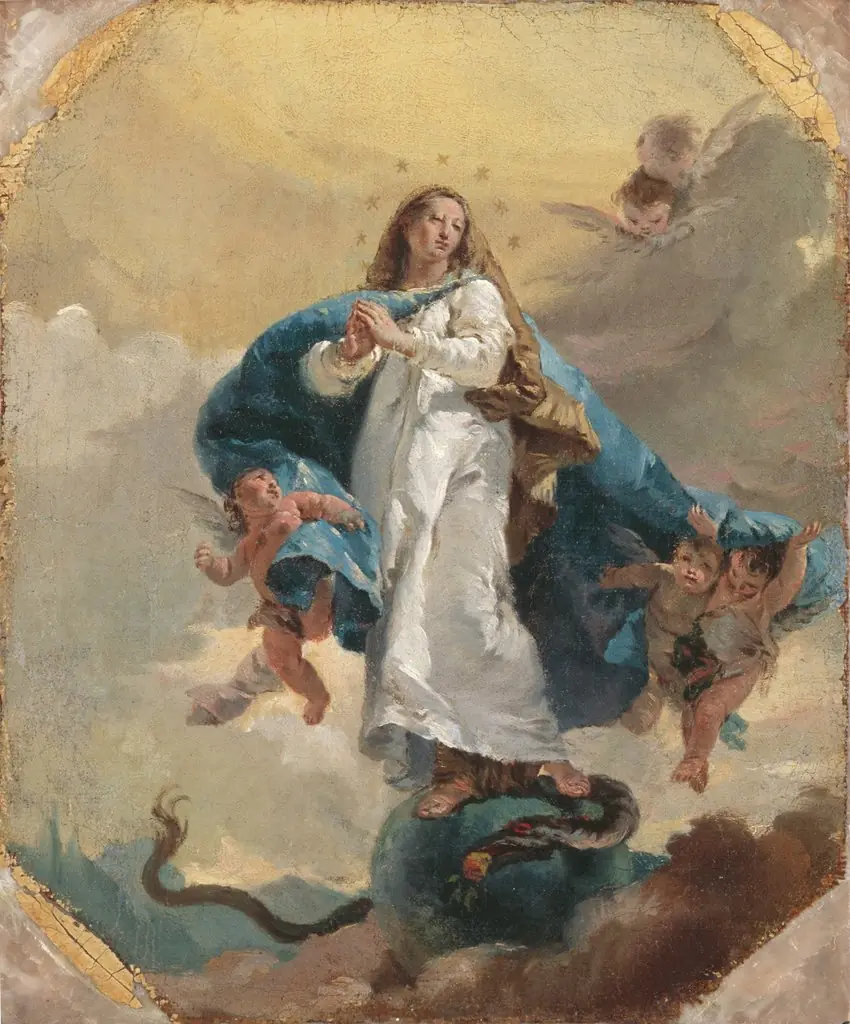
Immaculate Conception is an oil painting by the Rococo painting artist Placido Costanzi. It dates from 1730 and is held in the collection of the J. Paul Getty Museum.
About this work
Overview
Paul Getty Museum’s collection and exemplifies Costanzi’s skill in religious narrative, informed by his membership in Rome’s Accademia di San Luca.
Painted in 1730 by Placido Costanzi, this oil-on-canvas work depicts the theological concept of the Immaculate Conception. Executed in the Rococo idiom, it reflects the late-Baroque transition toward lighter, more ornamental forms. The painting resides in the J. Paul Getty Museum’s collection and exemplifies Costanzi’s skill in religious narrative, informed by his membership in Rome’s Accademia di San Luca.
Subject & Meaning
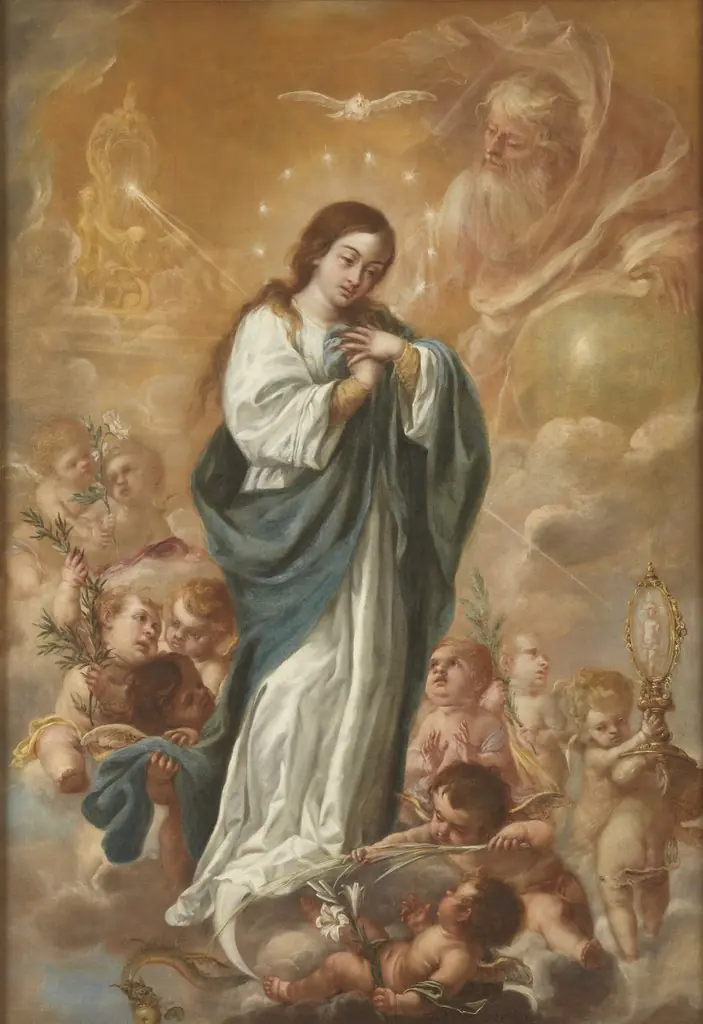
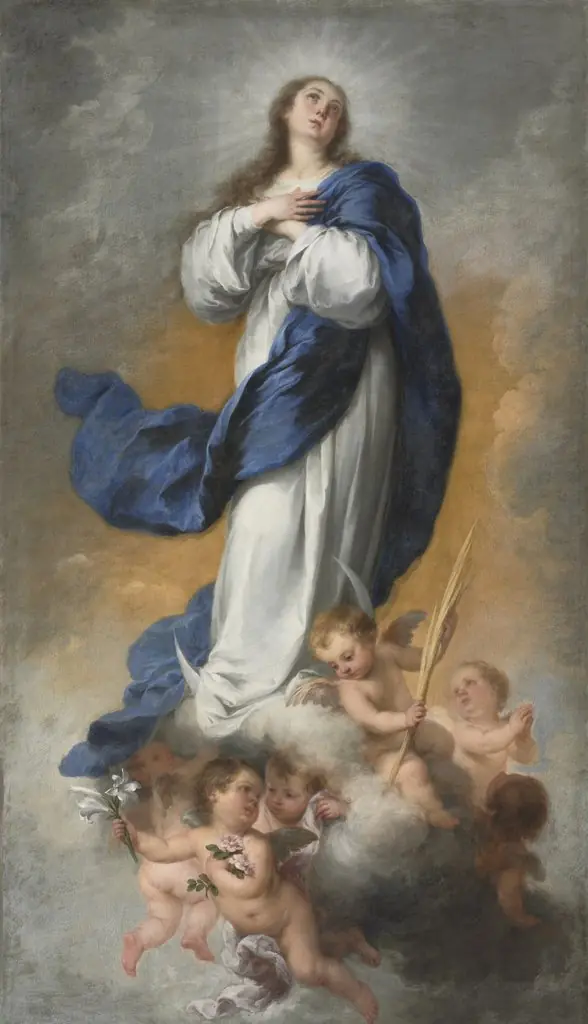
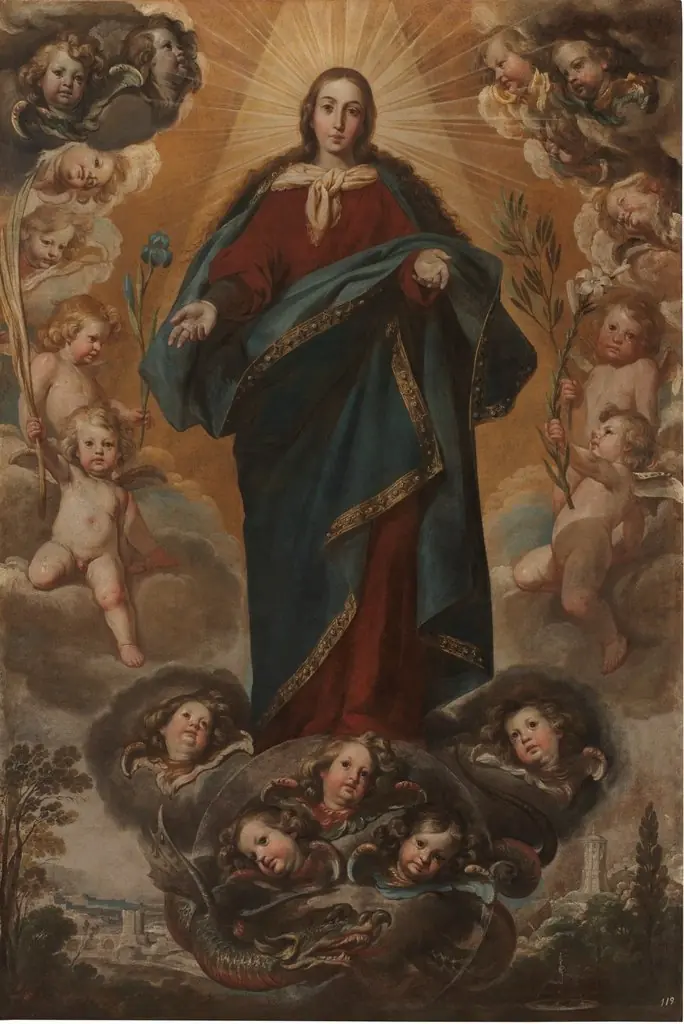
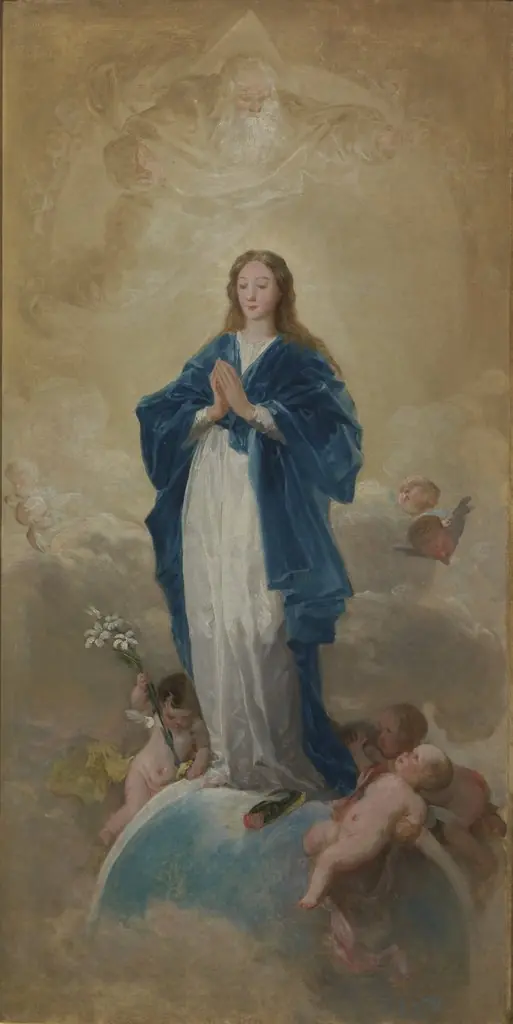
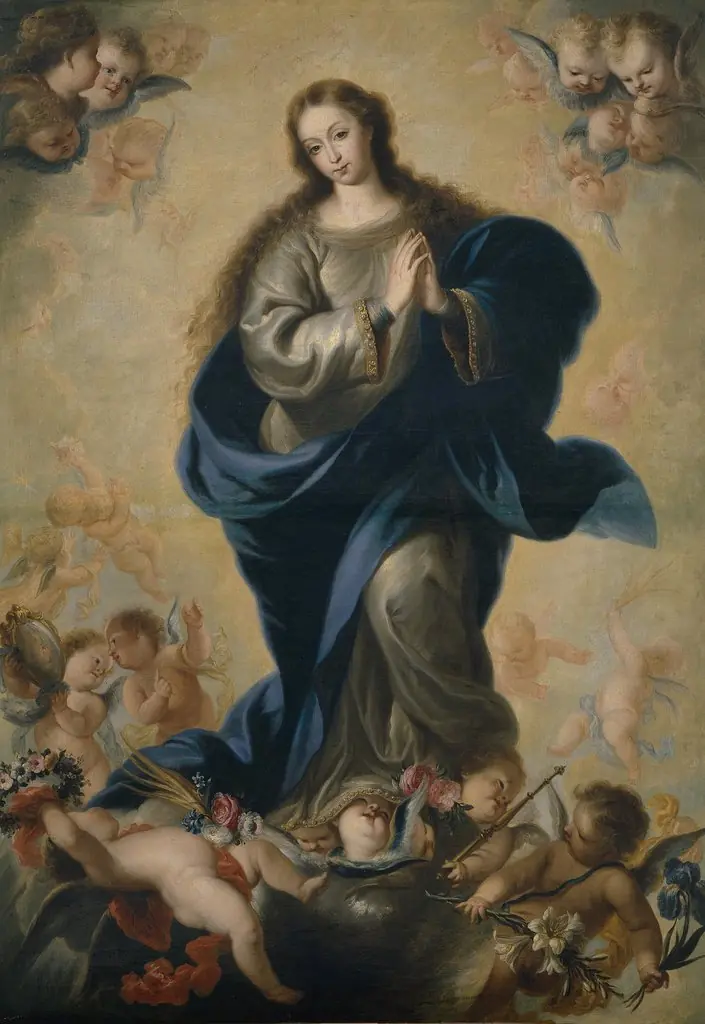
The Virgin Mary is shown ascending on a cloud, arms outstretched in a gesture of intercession. Dressed in a white robe and blue mantle, she is surrounded by hovering angels and cherubs, symbolizing divine purity and celestial harmony. The golden luminescence and celestial setting reinforce her freedom from original sin, a central tenet of the doctrine. The composition avoids dramatic tension, favoring serene, reverent stillness.
Technique & Style
Costanzi employed fine brushwork to render delicate textures in fabric, skin, and cloud forms. The palette is restrained, dominated by soft golds, pale blues, and whites, creating a luminous yet quiet atmosphere. Figures are arranged in gentle, flowing rhythms, characteristic of Rococo sensibility. Details such as feathered wings and drapery folds are rendered with precision, enhancing the work’s devotional intimacy.
History & Provenance
Commissioned for a religious context, the painting entered the Getty’s collection through documented acquisitions. Costanzi, active in Rome during the early 18th century, was affiliated with the Accademia di San Luca, where he later served as director in 1758. His role in Roman artistic circles suggests the work was likely intended for ecclesiastical patrons familiar with doctrinal imagery.
Context
In early 18th-century Italy, the Immaculate Conception was a widely promoted doctrine, especially favored by the Franciscans and supported by papal authority. Artists responded with numerous depictions blending theological symbolism with decorative elegance. Costanzi’s version aligns with Roman traditions but distinguishes itself through its subdued colorism and restrained movement, contrasting with the more theatrical approaches of contemporaries.
Legacy
Though not among the most widely reproduced religious images of the period, Costanzi’s painting contributes to the understanding of how doctrinal themes were interpreted in mid-Baroque Rome. His work reflects the gradual shift from grandeur to refinement in ecclesiastical art. As a director of the Accademia di San Luca, his influence extended beyond his own output, shaping pedagogical standards for religious painting in his time.
Artist & collection
Artist
Placido Costanzi (1702 – 2 October 1759) was an Italian painter of the late-Baroque period.