Artwork
The Immaculate Conception
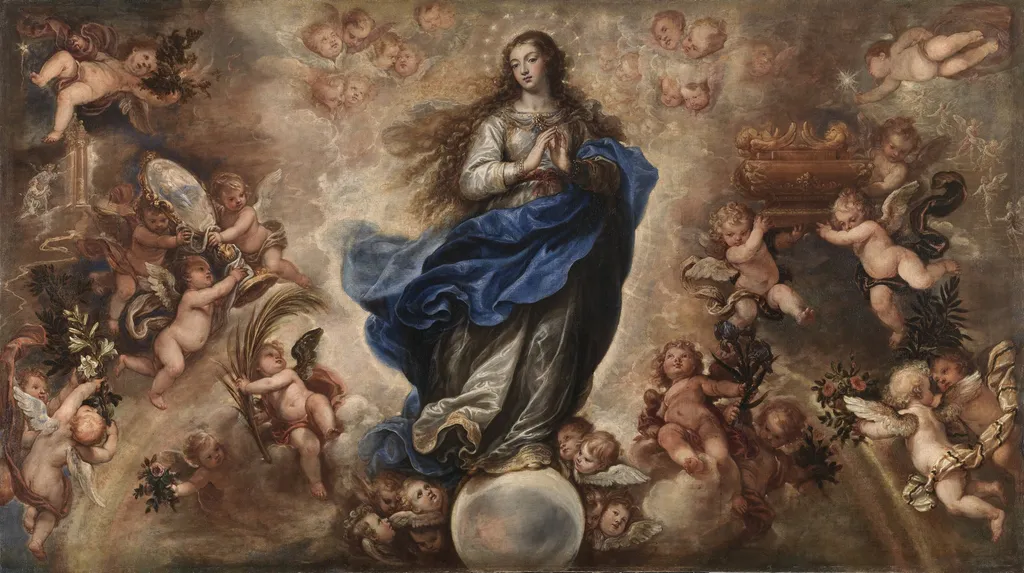
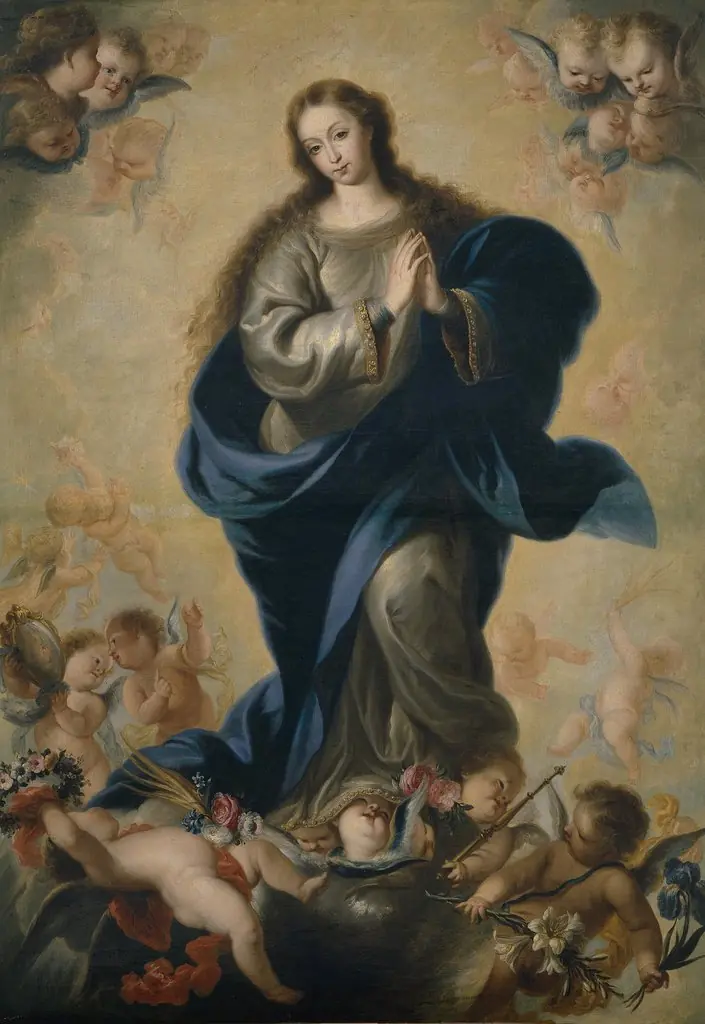
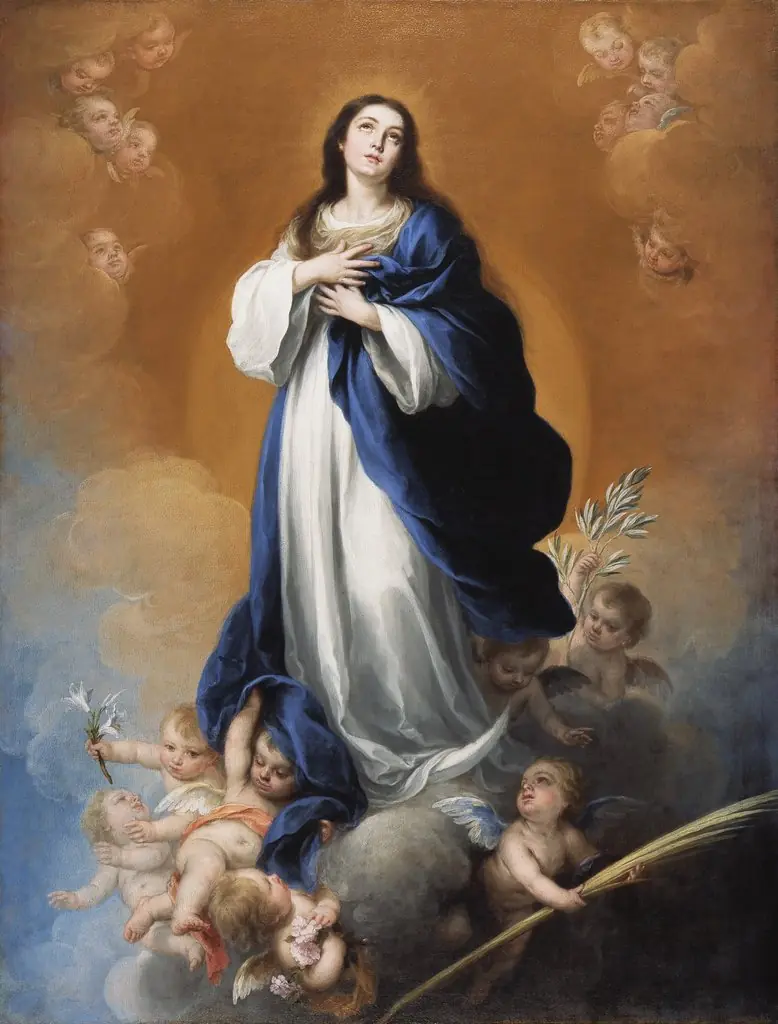
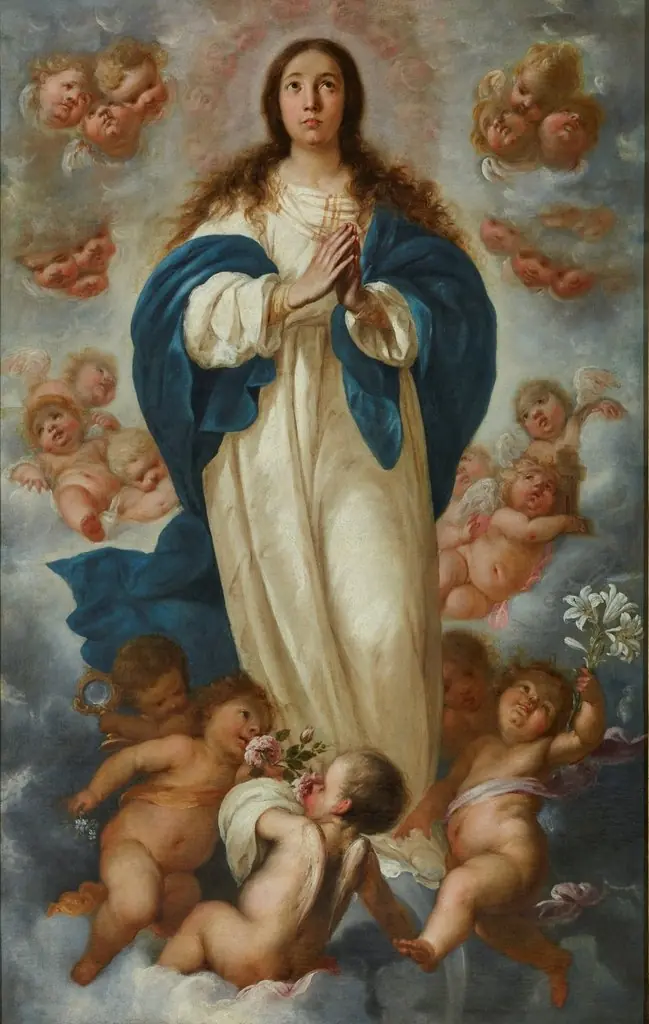
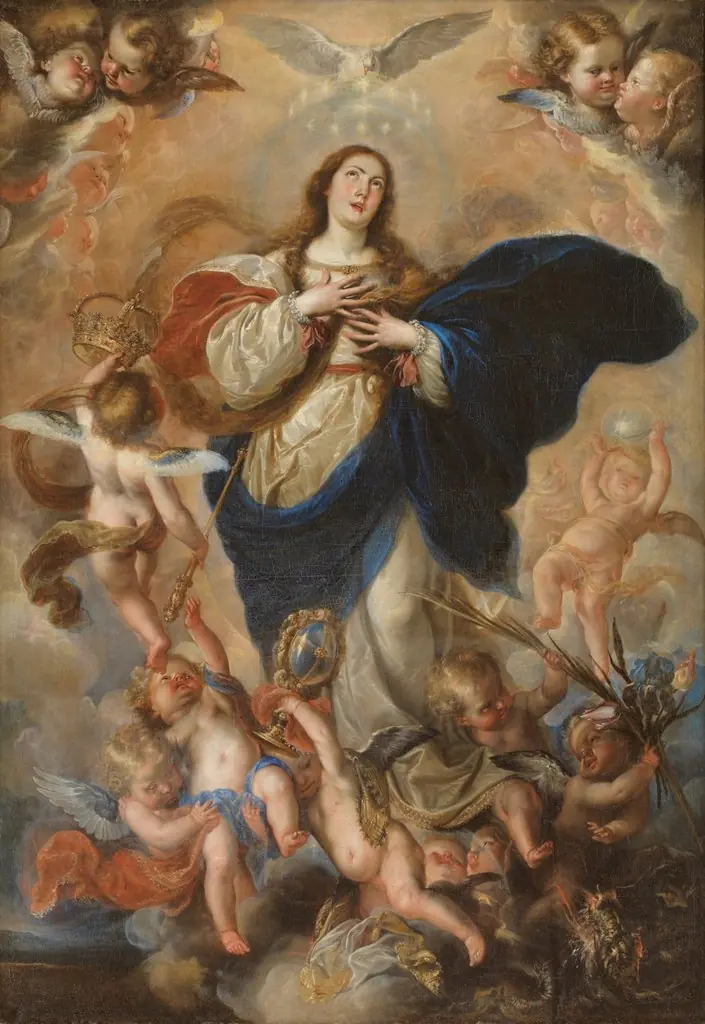
The Immaculate Conception is an oil painting by the Early Baroque Italian artist Francisco Rizi. It dates from 1601 and is held in the collection of the Museo del Prado.
About this work
Overview
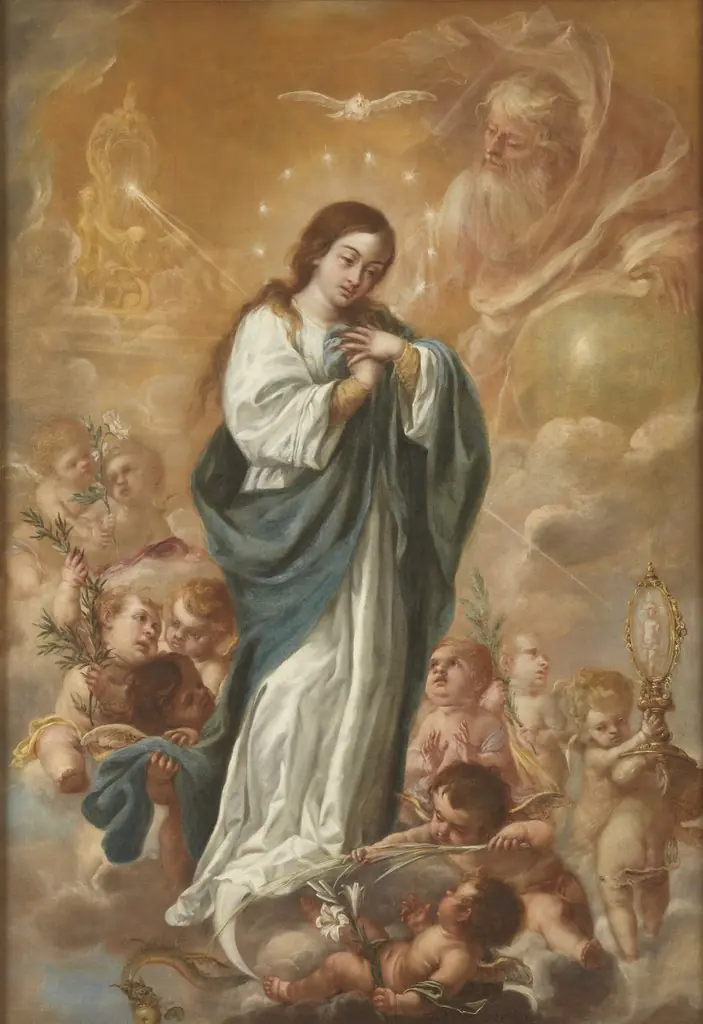
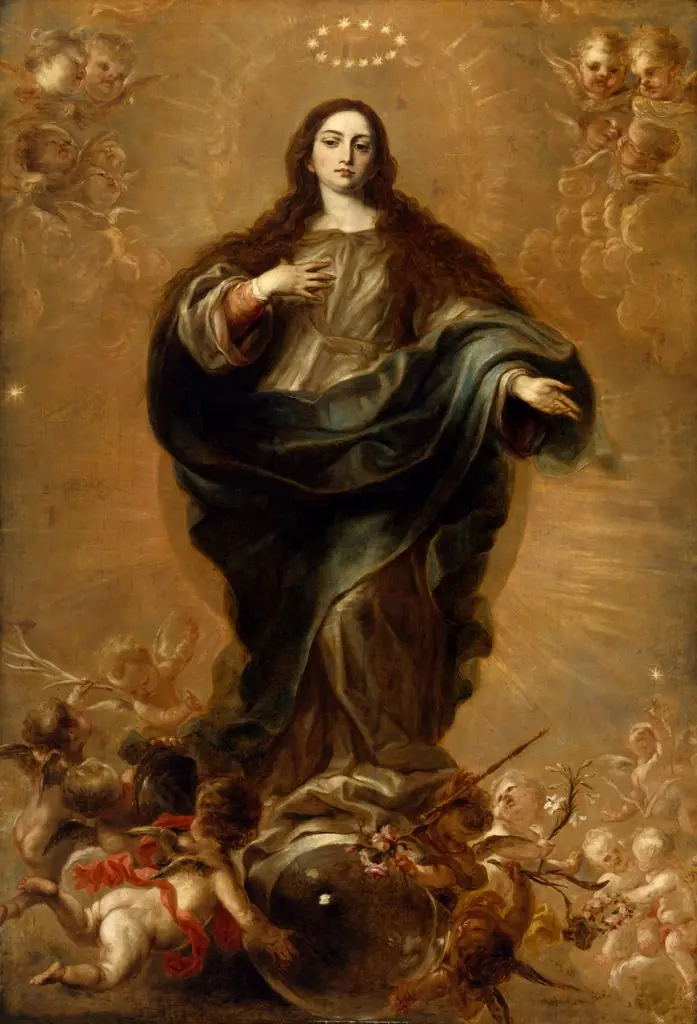
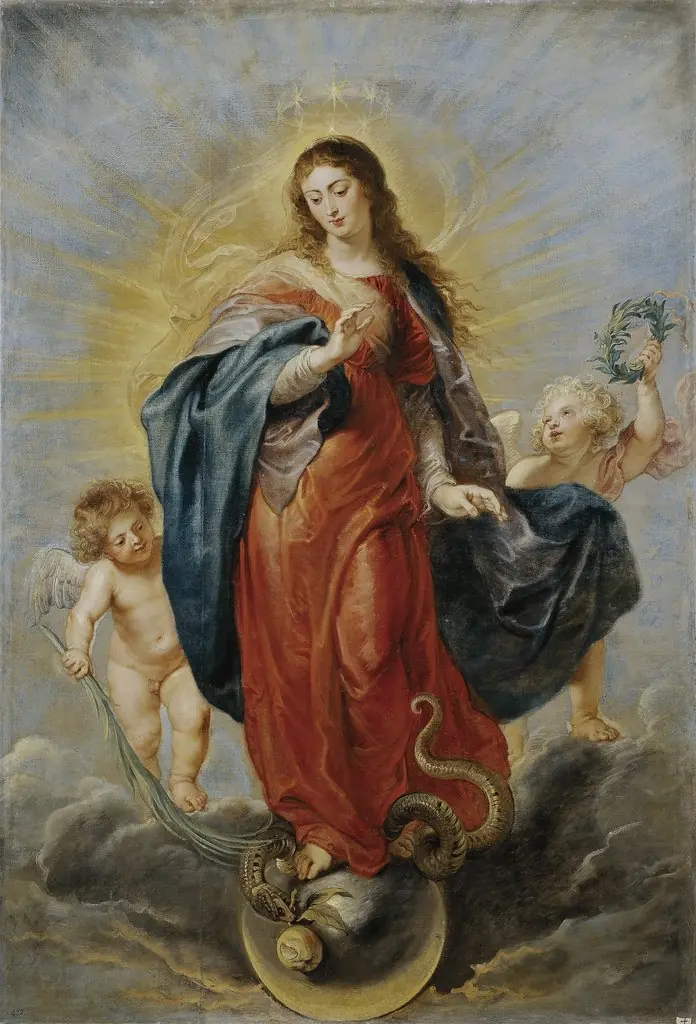
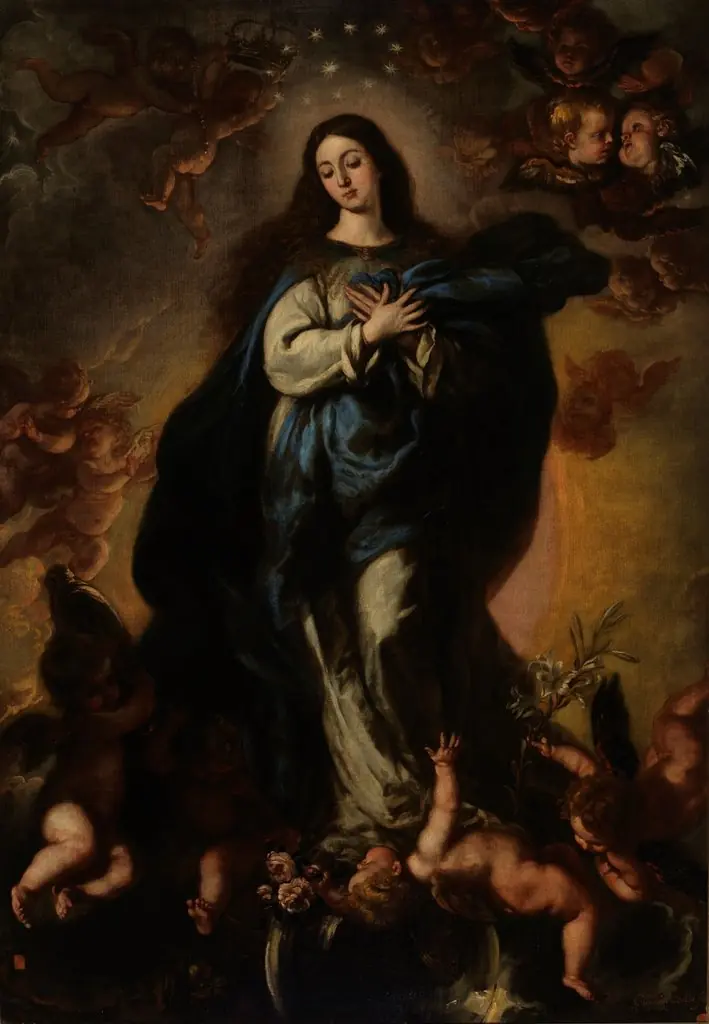
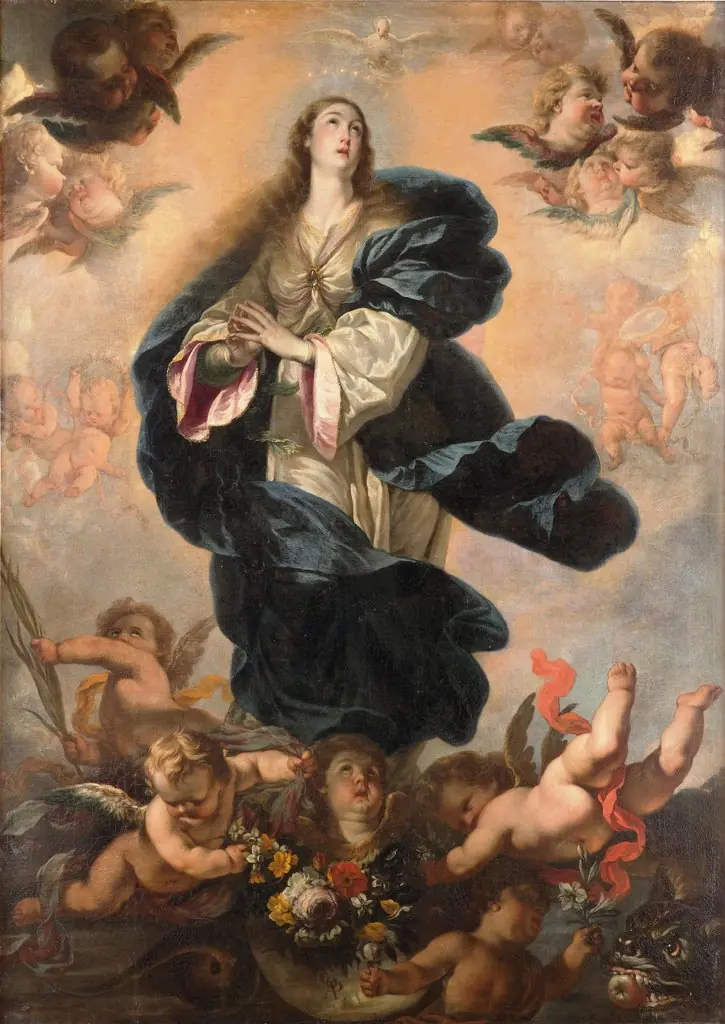
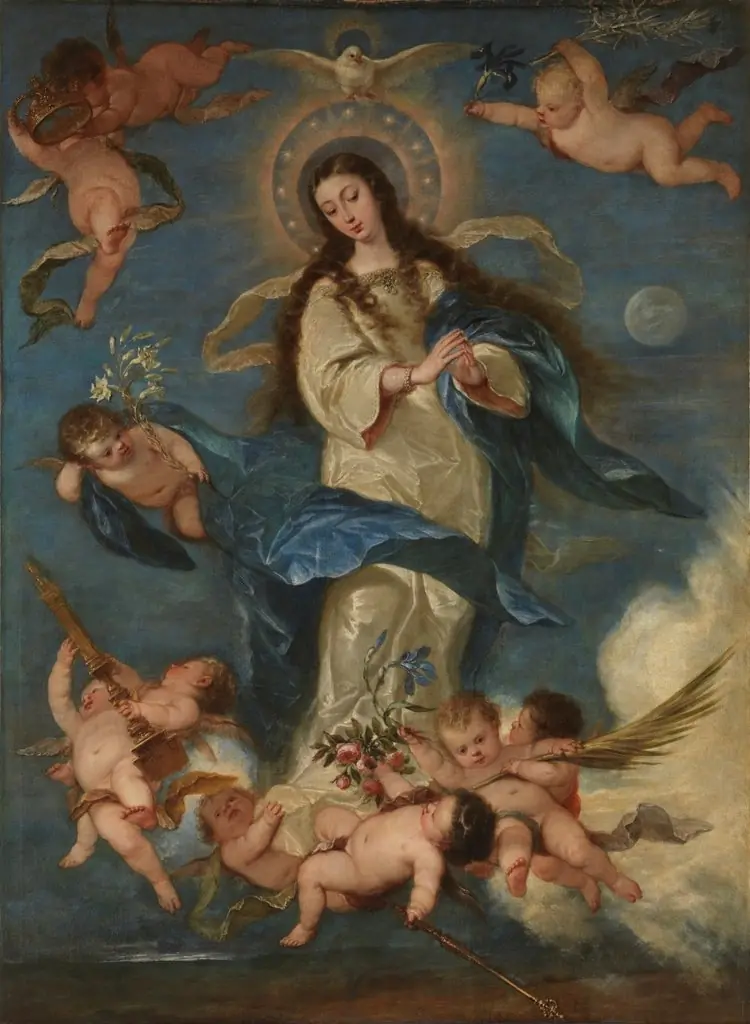
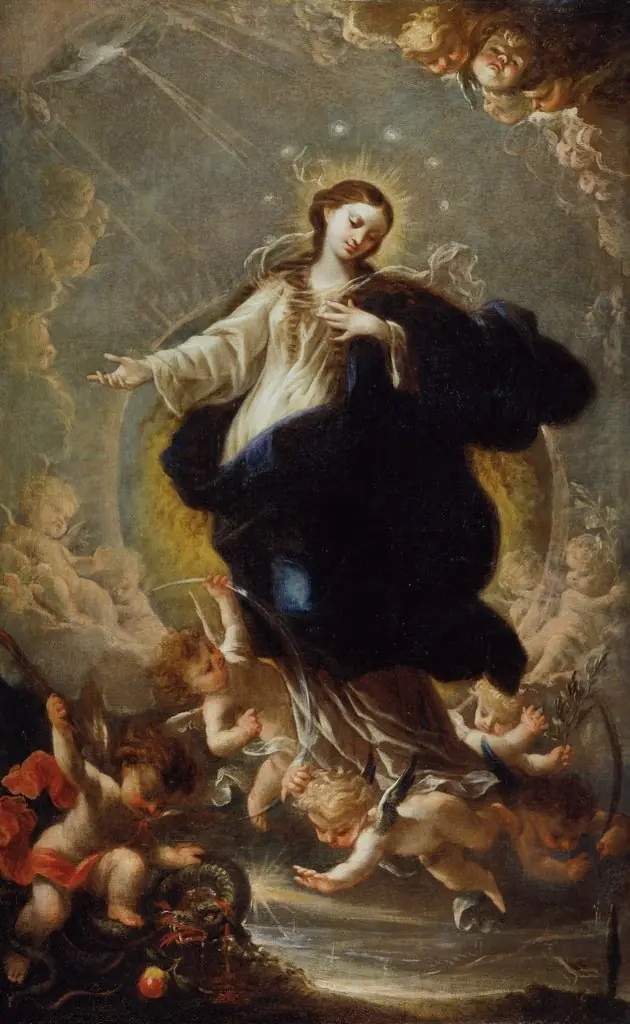
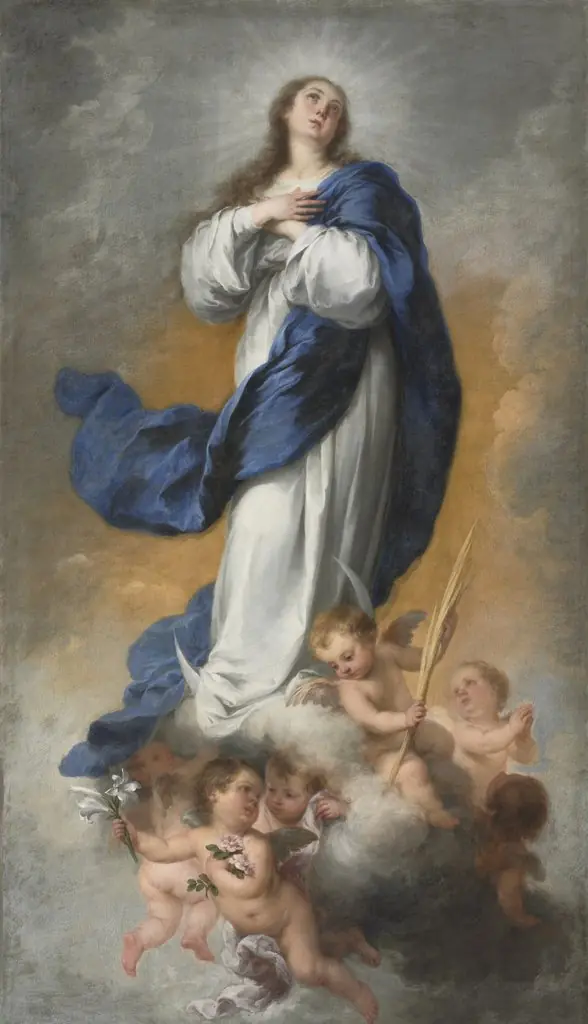
Francisco Rizi’s 1601 oil on canvas, titled *The Immaculate Conception*, is part of the collection at Madrid’s Museo del Prado. The composition centers on a serene female figure in a flowing blue mantle, elevated above a gathering of diminutive, winged children. She cradles a globe, while the surrounding youths engage in varied activities, creating a bustling yet harmonious scene.
Subject & Meaning
The painting depicts the theological concept of the Immaculate Conception, presenting the Virgin Mary as pure and unblemished. The globe she holds symbolizes her universal significance, while the cherubic figures—some bearing flowers, others with musical instruments or a crown—represent the heavenly court that celebrates her immaculate nature.
Technique & Style
Rizi employs chiaroscuro to model the central figure, allowing her illuminated visage to emerge from a surrounding shadow. The soft, radiant light that outlines her form contrasts with the muted, cloud‑filled backdrop, generating depth and a sense of divine presence. The delicate handling of the children’s details adds a lyrical quality to the overall composition.
History & Provenance
Completed in the early seventeenth century, the work entered the Spanish royal collection before being transferred to the national museum in the nineteenth century. Its presence in the Prado reflects the painting’s role in the broader narrative of Spanish Baroque religious art and the patronage of the Catholic Church during that period.
Context
Rizi worked within the Counter‑Reformation milieu, when visual representations of doctrinal themes were encouraged to reinforce Catholic teachings. The Immaculate Conception, a subject especially venerated in Spain, provided an opportunity for artists to combine theological symbolism with the dramatic lighting and dynamic figures characteristic of the era’s devotional imagery.
Artist & collection