Artwork
Ponton
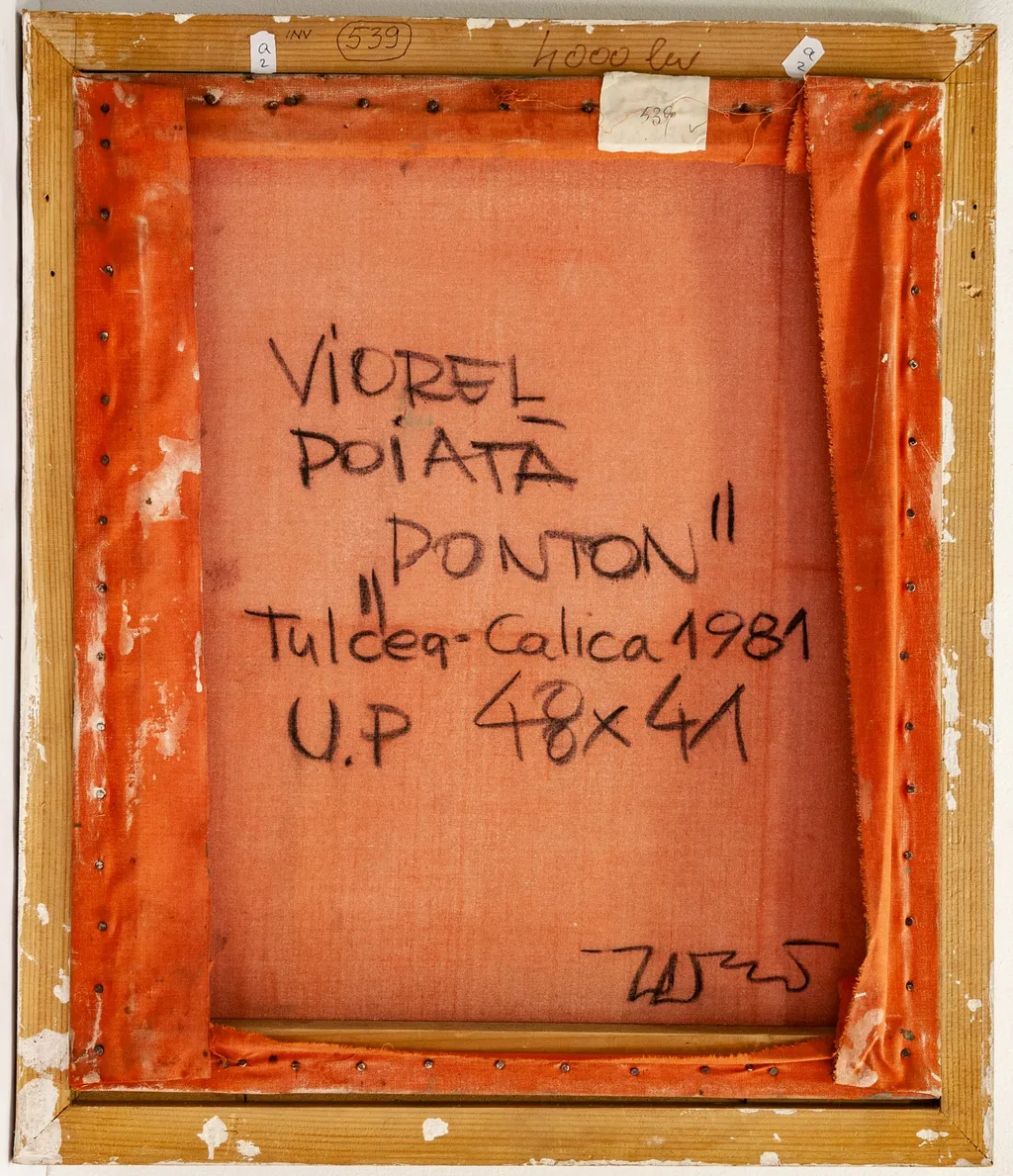
Ponton is an unspecified painting by Viorel Poiată. It is held in the collection of the Gavrila Simion Eco-Museum Research Institute Tulcea.
About this work
Overview
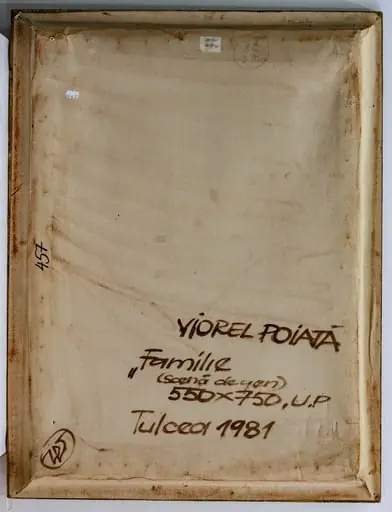
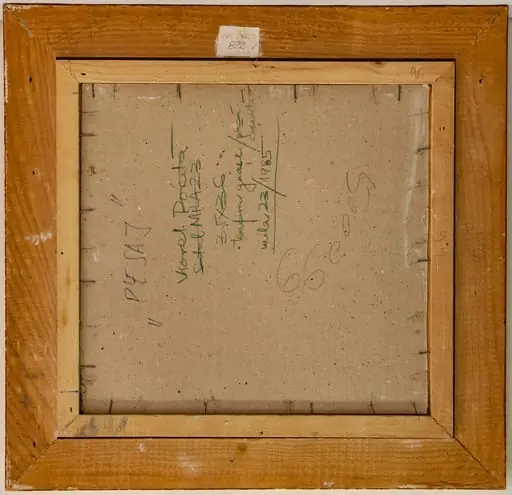
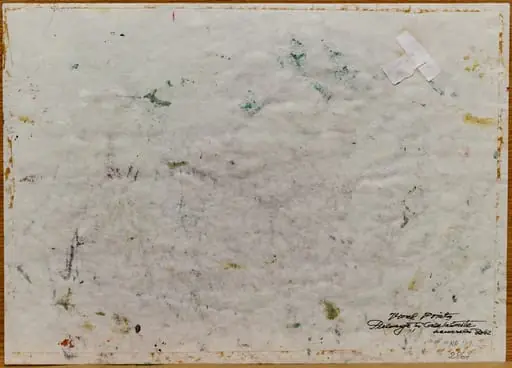
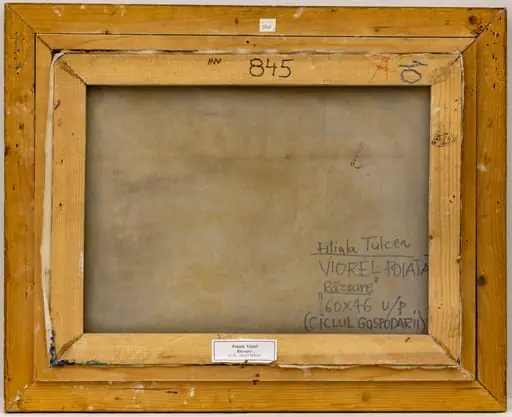
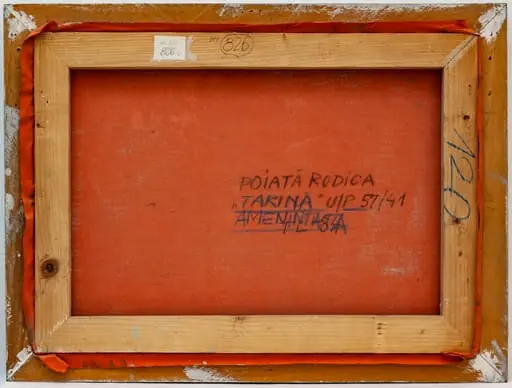
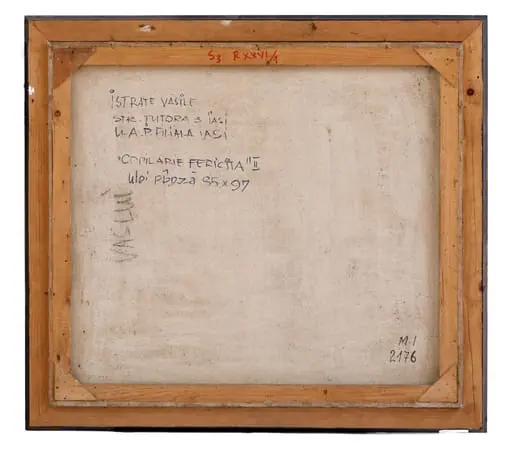
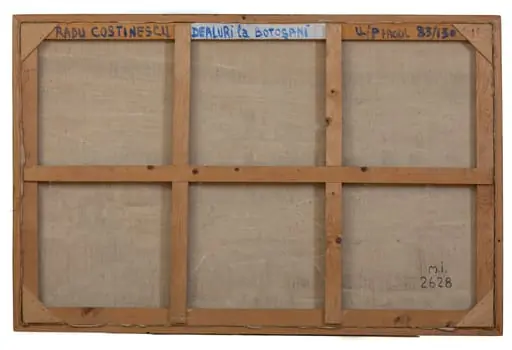
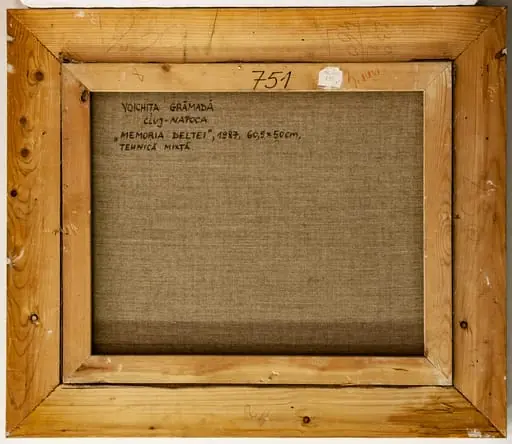
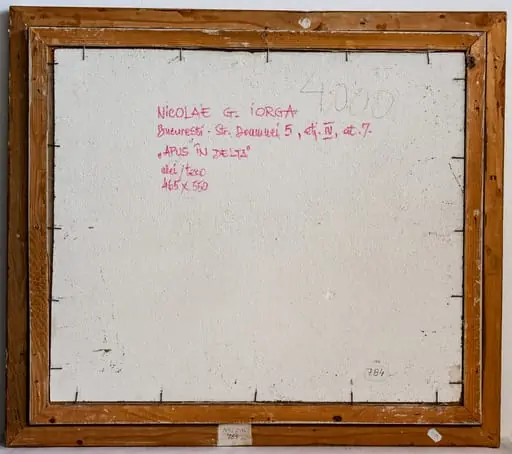
The object identified as “Ponton” is the reverse side of a painted panel. The surface consists of an orange‑brown ground that has faded over time, upon which black ink or pencil marks are visible. The marks include the words “Poiată” and “Ponton” together with assorted numbers and place names, suggesting a label or inventory record attached to the work.
Subject & Meaning
Because the front of the panel is not visible, the visual content of the artwork remains unknown. The back‑side notation appears to serve a documentary purpose rather than an artistic one, possibly indicating the title, the creator’s name, and logistical details such as location or catalogue entry.
Technique & Style
The backing shows a traditional canvas prepared with a warm, earth‑tone ground. The handwriting is executed in a simple, utilitarian script, likely applied with a pen or graphite. No evidence of paint layers or brushwork is discernible from this side, limiting assessment of the artist’s technique.
History & Provenance
The presence of the name “Poiată” aligns the work with the Romanian artist Viorel Poiată, whose practice includes painting and drawing. The frame surrounding the panel is aged, its red paint flaking and held together by small metal pins, indicating a long period of handling and possibly a museum or private collection context.
Context
The combination of a faded canvas, handwritten label, and deteriorating frame points to a historical object that has been stored or displayed for an extended time. Such back‑side markings are common in institutional settings where works are catalogued, moved, or conserved, providing clues to the artwork’s administrative journey rather than its visual narrative.
Artist & collection
Artist
Viorel Poiată’s prints and paintings from the late 1980s capture everyday life in Romania with quiet attention.
Museum
Gavrila Simion Eco-Museum Research Institute Tulcea
Continue through works from the same source collection.