Artwork
Înălțarea lui Iisus
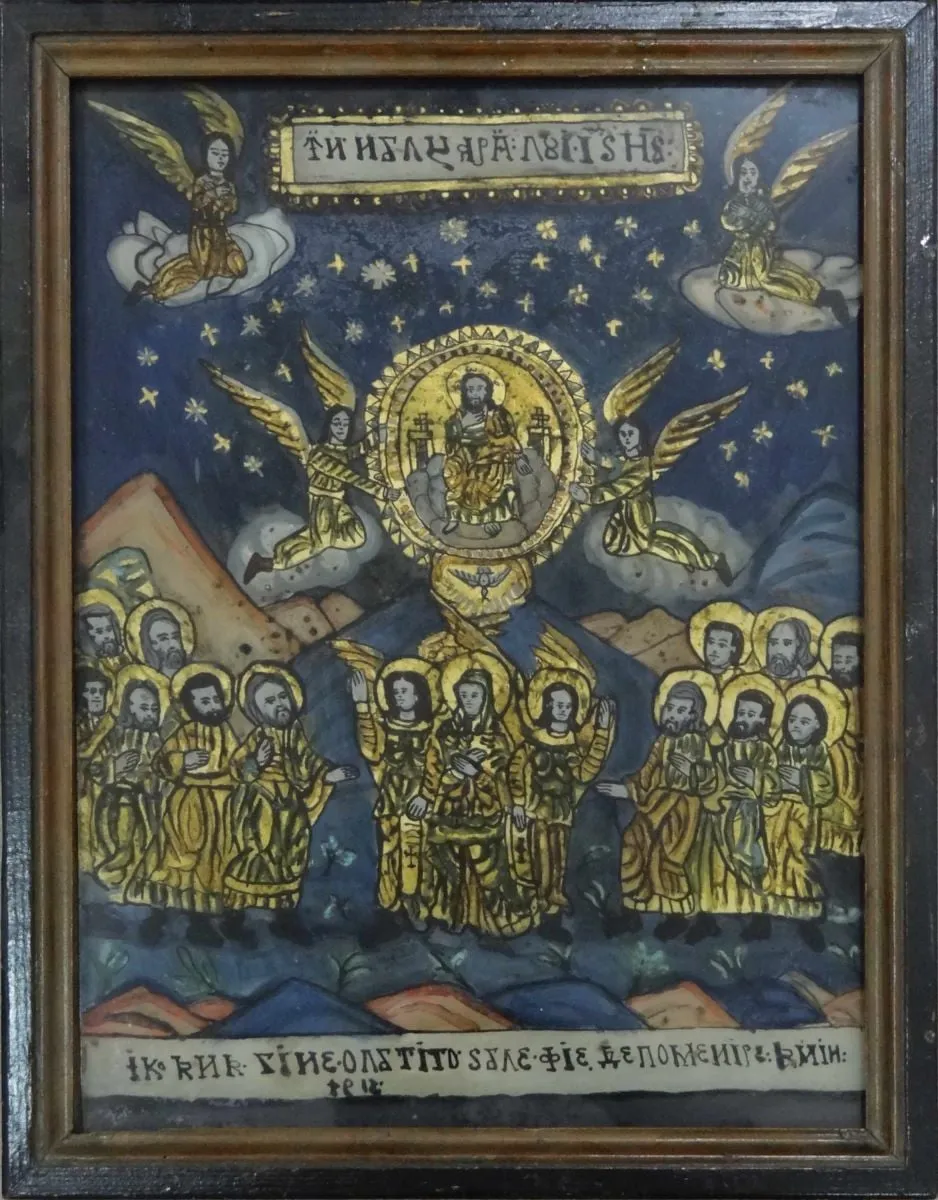
Înălțarea lui Iisus is an unspecified painting by the Byzantine icon painting artist Ilie II Poienaru. It dates from 1912 and is held in the collection of the Alba Iulia Orthodox Archdiocese.
About this work
Overview
The composition is dominated by a dark blue sky strewn with golden stars, beneath which a central figure occupies a throne encircled by a luminous golden halo.
Ilie II Poienaru’s 1912 work titled “Înălțarea lui Iisus” is an oil painting in the collection of the Museum of Ethnography. The composition is dominated by a dark blue sky strewn with golden stars, beneath which a central figure occupies a throne encircled by a luminous golden halo. A semi‑circular group of robed figures and two winged angels frame the scene, while a faintly illuminated village lies below.
Subject & Meaning
The painting depicts the Ascension of Jesus, presenting the risen Christ seated upon a throne as a focal point of divine authority. The surrounding attendants in golden garments and the hovering angels emphasize the celestial celebration, while the distant village suggests the earthly realm witnessing the event. The solemn expressions convey reverence and the transition from earthly to heavenly existence.
Technique & Style
Poienaru employs a flat, decorative approach with bold, saturated colors and minimal shading, giving the figures a carved‑wood appearance. Gold leaf or pigment highlights delineate halos and garments, creating sharp contrast against the deep blue background. The composition relies on strong outlines and a simplified spatial arrangement, characteristic of early 20th‑century folk‑inspired religious art.
History & Provenance
Created in 1912, the painting entered the Museum of Ethnography’s holdings at an unspecified date, where it remains part of the institution’s representation of Romanian religious visual culture. Its attribution to Ilie II Poienaru is documented in the museum’s catalogue, confirming its authorship and dating.
Context
The work reflects a period when Romanian artists revived traditional iconographic motifs within a modern framework, merging folk aesthetics with conventional Christian narratives. The use of gold and flat modeling aligns with Orthodox icon tradition, while the compositional clarity and vivid palette echo contemporary nationalist artistic currents of the early 1900s.
Artist & collection
Artist
Ilie Poienaru kept a studio so cold the ink froze mid-line, yet his religious drawings glow like candlelight.
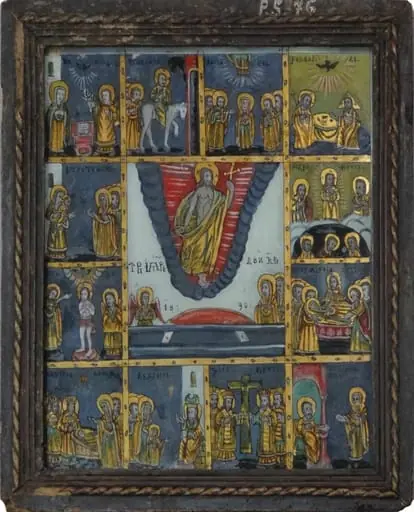 Învierea lui Iisus, cu 12 scene de praznic
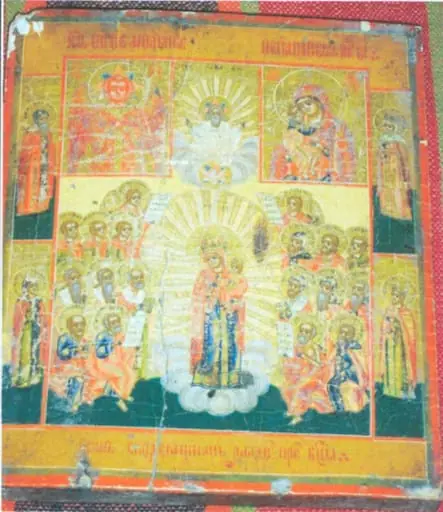 De tine se bucură
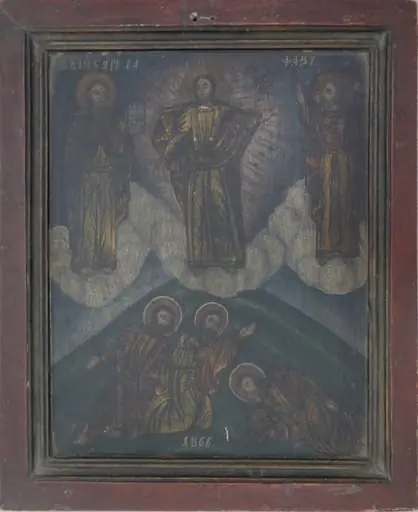 Schimbarea la față
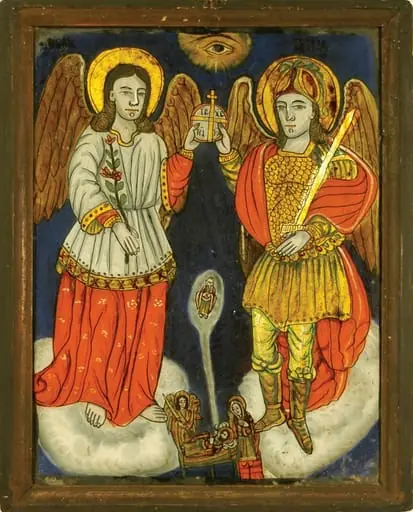
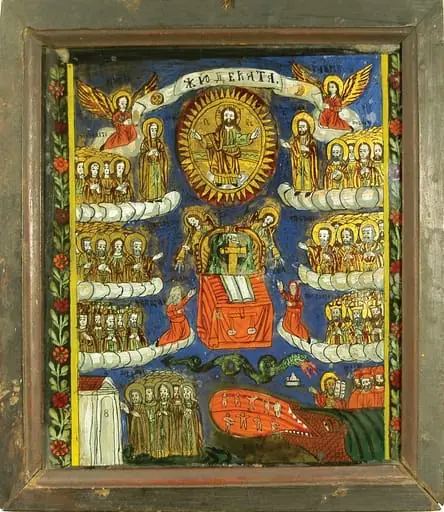 Judecata de Apoi
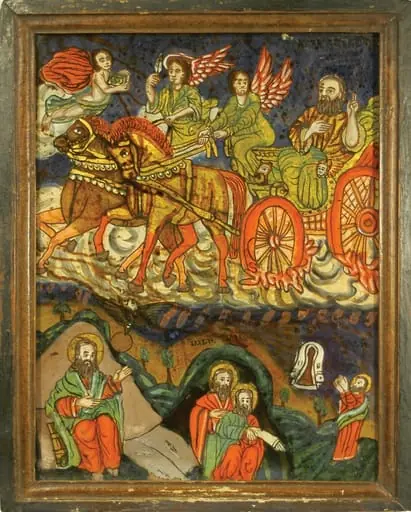
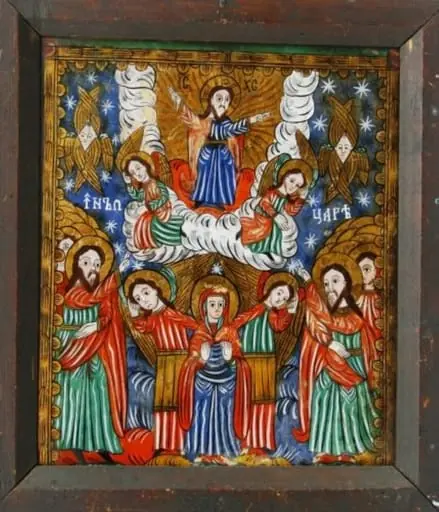 Înălțarea lui Iisus Hristos la ceruri
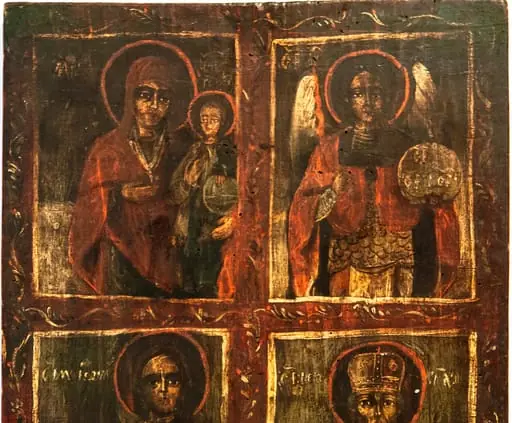 Icoaoziț
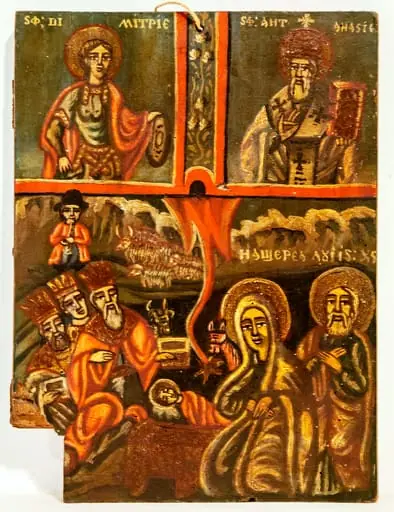 Câmpul icoanei împărțit în 2 registre orizontale inegale(cel de se 1/3 din suprafața icoanei, la rândul lui împărțit în 2 casete separate de o bandă verticală pe care este pictat un lujer cu flori albe. În registru inferior: Nașterea Domnului. În prim plan, Maria si Iosif îngenuncheați, central Pruncul Isus înfășat, așezat în iesle, în stânga lui cei trei magi, cu coroane împărătești pe cap, aducându-i daruri, în plan îndepărtat un cioban(în veșminte orășenești, cu pălărie neagră pe cap, cântând din fluier turmei de oi. În spatele Pruncului se văd capetele animalelor din grajd și o iesle. Steaua își revarsă razele asupra Pruncului(zonă incandescentă, terminată cu o stea deasupra acestuia). Pe fundalul întunecat, nori cu marginile albe. Sfinții din registrul superior sunt redați 3/4, sfântul Dimitrie tânăr, în veșminte militare, lorică, mantie roșie, scut în stânga, suliță în dreapta, Sfântul Atanasie, în veșminte arhierești, binecuvintează cu dreapta, în stânga ține cartea Evangheliilor ridicată. Părul și barba albe, mustățile lungi, veșmintele deschise la culoare, mitra înaltă, surmontată de o cruce albă. Cromatica: roșu, brun, alb, albastru, galben. Colț stânga jos lipsă. Stil naiv, popular.
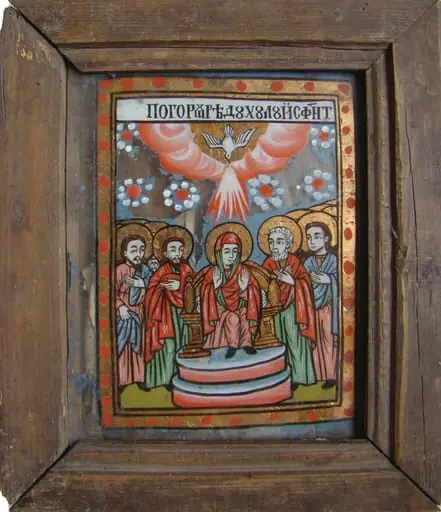 Pogorârea Sf. Duh
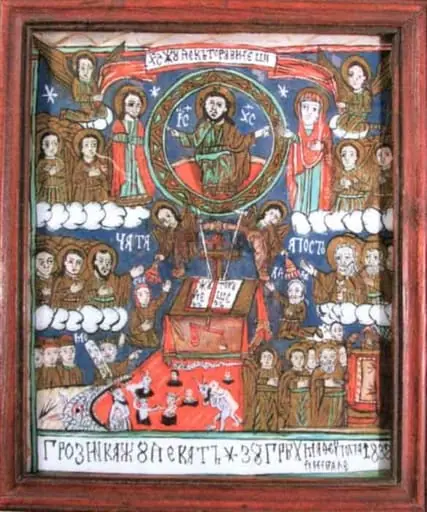 Judecata de Apoi