Artwork
Cina cea de taină
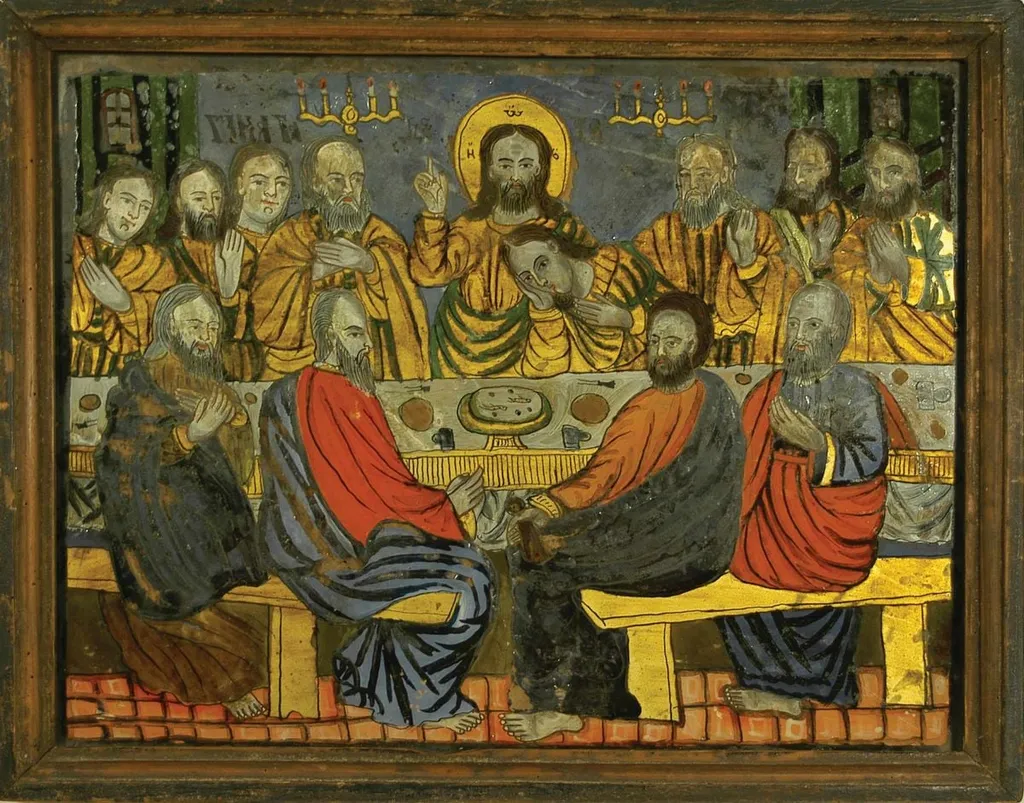
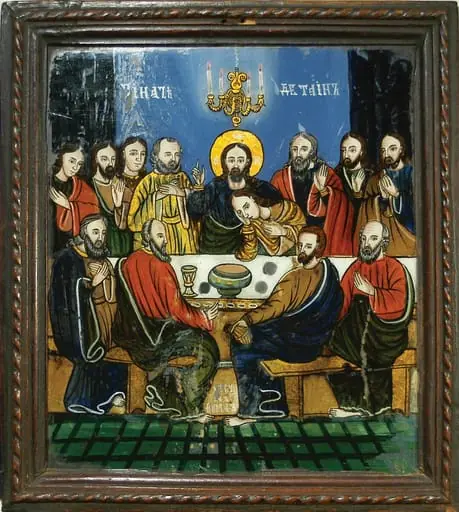
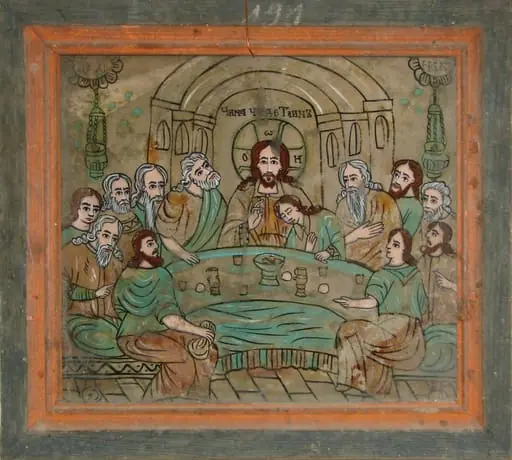
Cina cea de taină is a drawing by Ilie II Poienaru. It is held in the collection of the Alba Iulia Unification National Museum. This work depicts a solemn gathering of figures seated around a table, rendered in flat, stylized forms with strong color contrasts.
About this work
Overview
This work depicts a solemn gathering of figures seated around a table, rendered in flat, stylized forms with strong color contrasts.
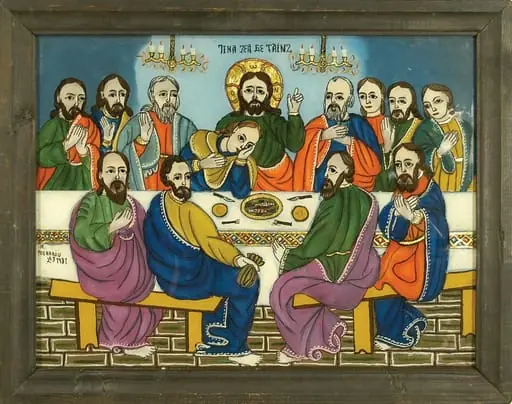
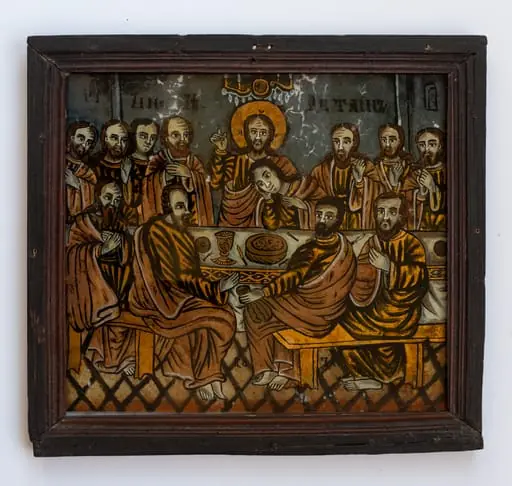
This work depicts a solemn gathering of figures seated around a table, rendered in flat, stylized forms with strong color contrasts. A central figure, marked by a golden halo, gestures upward while others observe in quiet intensity. The setting is dimly lit by a chandelier, and the table holds simple fare: bread and bowls. The palette—deep reds, yellows, and blues—pops against a dark background, emphasizing symbolic presence over naturalism.
Subject & Meaning
The scene likely represents a sacred meal, with the halved figure suggesting a divine or spiritual leader. The upward gesture and shared bread imply ritual or communion. The serious expressions of the others convey reverence or contemplation, reinforcing the moment’s gravity. The absence of individualized features shifts focus from identity to collective spiritual experience.
Technique & Style
The figures are rendered with minimal modeling, using flat planes of color and sharp outlines rather than realistic shading. Cross-hatching may be employed subtly to suggest volume, but the overall approach is deliberately non-naturalistic. Bold hues are applied with clarity, enhancing the symbolic weight of each element and distancing the image from literal representation.
History & Provenance
The work’s origins are not documented in the provided details, but its visual language aligns with medieval or early Renaissance religious iconography, particularly in Eastern Christian traditions. Its stylization and use of gold suggest liturgical function, possibly created for devotional use in a church or private chapel.
Context
In its historical milieu, such imagery served to convey theological narratives to largely illiterate communities. The stylized forms and symbolic colors were conventional tools for communicating sacred stories. The dim interior and centralized composition reflect liturgical spaces designed to focus attention on ritual acts and divine presence.
Legacy
This image exemplifies how pre-modern artists prioritized spiritual meaning over physical accuracy. Its enduring visual language influenced later religious art across regions, reinforcing the use of color, gesture, and composition as carriers of sacred message rather than mere representation.
Artist & collection
Artist
Ilie Poienaru kept a studio so cold the ink froze mid-line, yet his religious drawings glow like candlelight.
Museum
Alba Iulia Unification National Museum
Continue through works from the same source collection.
 Cina cea de taină
 Cina cea de taină
 Cina cea de taină
 Cina cea de taină
 Cina cea de Taină
 Cina cea de Taină
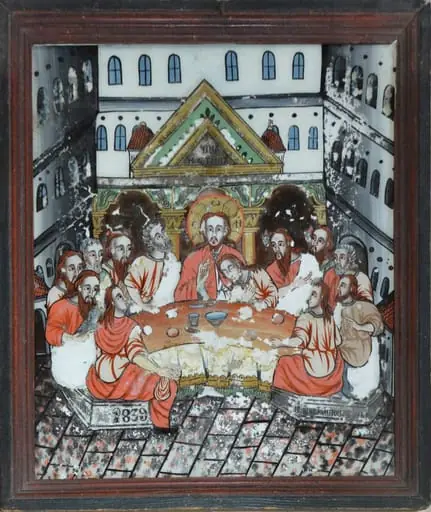
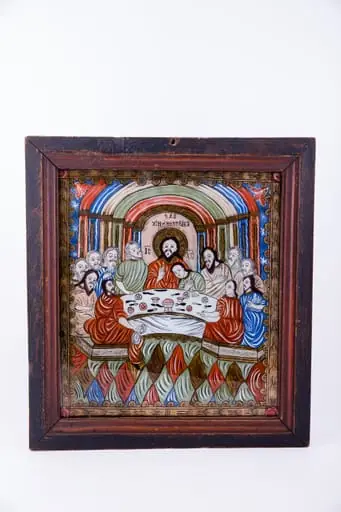 Scena Cinei celei de Taină se desfășoară într-un interior sugerat de elemente arhitectonice, coloane și șase arcade alternativ-cromatic pictate. În centrul icoanei este Mântuitorul Iisus Hristos binecuvântând mâncarea, la masă, alături de ucenici și apostoli. Cu brațul stâng îl ține lipit de piept pe Ioan cel iubit, Sfântul Apostol și Evanghelist Ioan, Teologul. Pe masă sunt așezate un potir pentru vin și tacâmuri și farfurioare mici și pâinici rotunde. Personajele au chipurile expresive, veșmintele personajelor și faldurile feței de masă, cât și draperiile sunt pictate cu măiestrie de pictor. Veșmintele sunt roșii, albastre, vernil și bej, cu liniuțe albe discrete. Cromatica este armonioasă și echilibrată, pornindu-se gradual dinspre exterior înspre interior, de la albastru spre roșu, ajungându-se la albul luminos al mesei celor dăruite. Compoziția este încadrată elemente de arhitectură, draperii, coloane, creându-se, astfel, intimitatea Cinei celei de Taină. Totul este concentric, strângându-se în jurul Potirului. De remarcat este alternanța romboidală din registrul inferior, policromatică. În registrul superior, sunt coloanele și arcadele policrome. Iuda Iscarioteanul este în partea stângă a mesei și se remarcă în mâna lui punga cu cei 30 de arginți, simbolul trădării și vicleniei. Pictura este specifică Țării Făgărașului și datorită compoziției echilibrate, simetrice și circulare. Icoana este pictată de Savu Moga, din Arpașu de Sus, Țara Făgărașului. Inscripția în chirilică se traduce ICXC Iisus Hristos Cina cea de Taină. Cromatica armonioasă este o caracteristică a icoanelor lui Savu Moga: roșu, albastru, vernil, gri, brun, alb, negru. Întreaga narațiune iconografică este încadrată într-un chenar geometrizant, ca de carte veche, asemenea unei dantelării cu colțișori.