Artwork
Arhanghelii Mihail și Gavriil
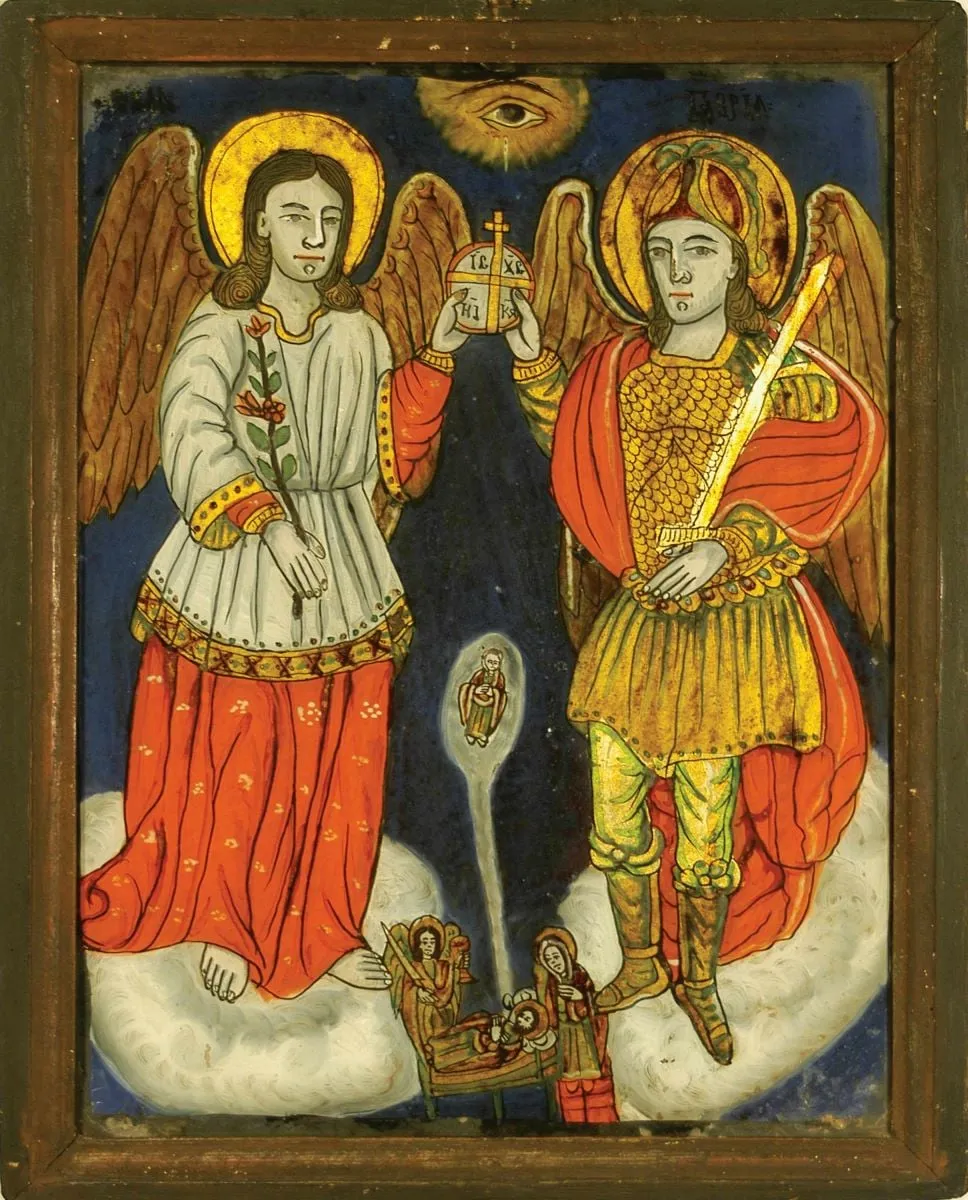
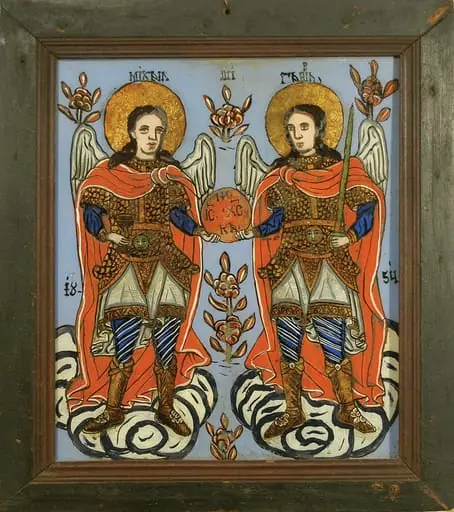
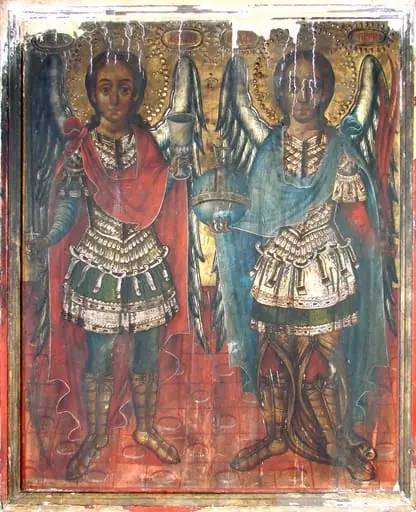
Arhanghelii Mihail și Gavriil is a drawing by Ilie II Poienaru. It is held in the collection of the Alba Iulia Unification National Museum.
About this work
Overview
This work portrays the archangels Michael and Gabriel standing atop clouds, rendered in a devotional style with rich coloration and symbolic detail.
This work portrays the archangels Michael and Gabriel standing atop clouds, rendered in a devotional style with rich coloration and symbolic detail. The figures dominate the composition, set against a minimalist sky featuring a sun and an eye, suggesting divine oversight. A small human figure appears below, reinforcing the angels’ celestial role. The painting is preserved in the Museum of Ethnography, where it reflects regional religious iconography.
Subject & Meaning
Archangel Michael, on the right, holds a sword and a shield bearing a cross, symbolizing divine judgment and protection. Gabriel, on the left, carries a staff topped with a flower, representing divine communication and purity. The eye above them signifies God’s omniscience, while the sun suggests divine light. The diminutive figure beneath underscores human humility before heavenly authority, aligning with traditional theological narratives.
Technique & Style
The angels are depicted with detailed, ornate robes in gold, red, and white, emphasizing their sacred status through luminous fabrics and gilded halos. The background is deliberately subdued—dark blue sky, sparse clouds, and a single sun—to focus attention on the figures. The rendering is flat and stylized, typical of folk religious art, with minimal perspective and symbolic rather than naturalistic forms.
History & Provenance
The painting resides in the Museum of Ethnography, indicating its origin in a local or rural devotional context rather than a formal ecclesiastical setting. Its preservation suggests it was valued within a community as a sacred object, possibly used in home worship or local rituals. The style and materials point to a 19th-century or early 20th-century origin in Eastern European traditions.
Context
This image aligns with Orthodox Christian iconographic traditions that depict archangels as divine messengers and warriors. Its folk aesthetic—simplified forms, bold colors, and symbolic objects—reflects regional interpretations distinct from Byzantine or urban ecclesiastical models. Such works were often produced by itinerant painters for private or village use, blending theological themes with local artistic practices.
Legacy
As a preserved example of vernacular religious art, the painting offers insight into how sacred figures were visualized outside institutional churches. Its continued presence in a museum collection underscores its value as a cultural artifact, documenting the intersection of faith, folk art, and regional identity in Eastern Europe during the modern era.
Artist & collection
Artist
Ilie Poienaru kept a studio so cold the ink froze mid-line, yet his religious drawings glow like candlelight.
Museum
Alba Iulia Unification National Museum
Continue through works from the same source collection.
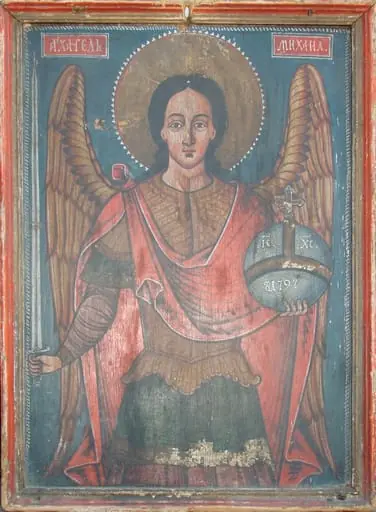 Arhanghelul Mihail
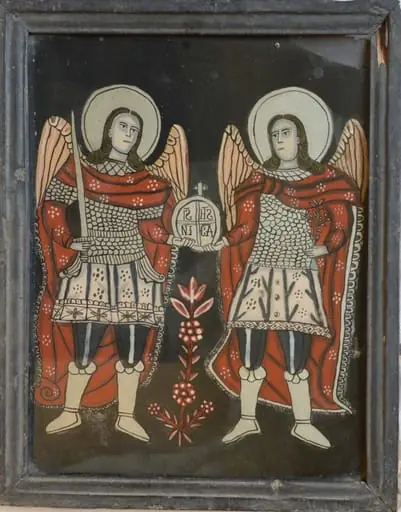 Arhanghelii Mihail și Gavriil
 Arhanghelii Mihail și Gavriil
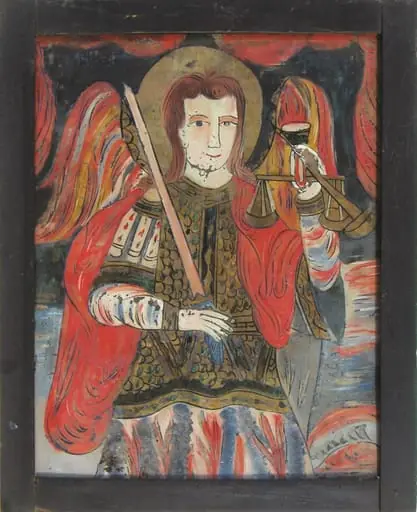 Sf. Arhanghel Mihail
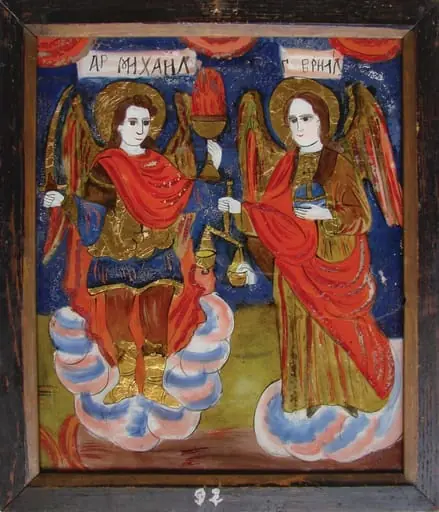 Sfinții Mihail și Gavril
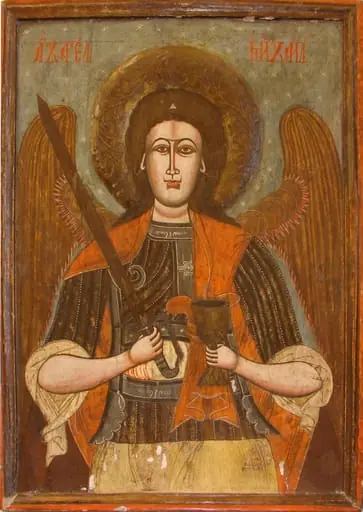 Arhanghelul Mihail
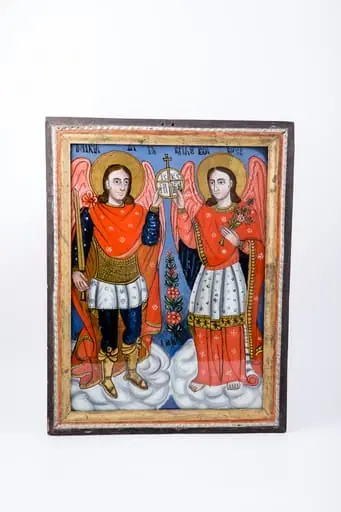 Sfinții Arhangheli Mihail și Gavriil sunt reprezentați împreună, fiind mai-marii voievozi ai oștilor cerești. În această icoană, în stânga este Sfântul Arhanghel Gavriil, îngerul aducător de dar și bunăvestire, iar în dreapta este Sfântul Arhanghel Mihail, slujitorul și apărătorul Legii. Sfântul Gavriil este înveșmântat în sacos-tunică roșie-albă cu broderie și mantie roșie și are în mână crinul simbolul BuneiVestiri aduse Maicii Domnului, iar Sfântul Mihail este îmbrăcat în haine de oștean militar, tunică de cavaler gri cu broderie, cu pantaloni albaștri și tunică și mantie roșie. Amândoi sfinții au aripile roz-diafane, ridicându-le înspre Cer arătând calea și asemănarea. Sfântul Arhanghel Mihail dimpreună cu Sfântul Arhanghel Gavriil țin în mâini oglinda-Asemănării cu crucea deasupra, arătând că întreg pământul este sub semnul Dreptei Credințe, ridicându-l ca pe un chivot sfânt. Fondul icoanei este abastru bleu-ciel deschis, de zorii zilei. Cromatica armonioasă este alcătuită din: roșu vermillon, stacojiu, roz, albastru bleu-ciel, bleumarin, ultramarin, crem, gri, alb, negru. Icoana este a lui Ilie Poienaru I din Laz, Valea Sebeșului. Se remarcă inscripția din româno-chirilică traducându-se Sf Mihail Sf Gavriil IC XC NIKA Iisus Hristos Biruiește! Icoana se remarcă printr-o cromatică elegantă, distinsă și armonioasă. Icoana este datată 1886, ultima cifră este scrisă invers.
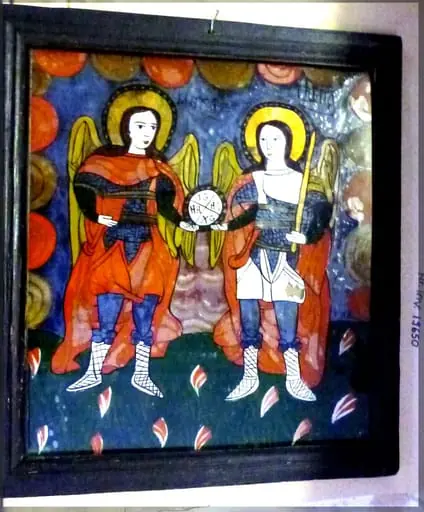 Arhanghelii Mihail și Gavriil
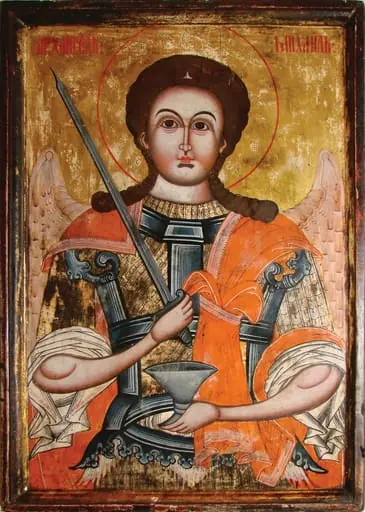 Arhanghelul Mihail
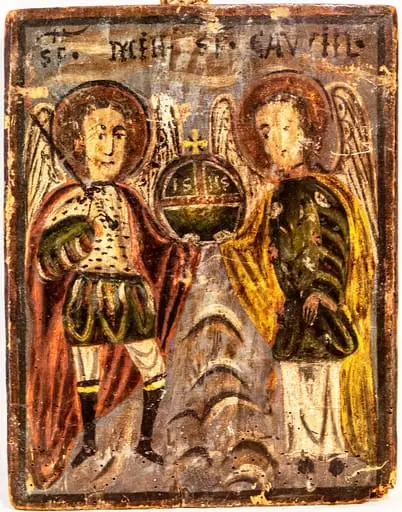 Icoana îi reprezintă pe Arhanghelii Mihail și Gavriil în picioare, din semiprofil,cu aripile strânse, ținând globul pământesc cruciger cu inițialele lui Isus Hristos. . Pictură de factură populară, naivă, stângace. Cei doi arhangheli redați conform erminiilor , Mihail în veșmânt militar, cu o sabie ridicată în mâna dreaptă(sabia de foc), Gavriil cu un crin în mâna stângă. Faldurile redate prin tușe groase de desn și culoare.Fețele sunt mari, ovale, corpurile disproporționate. Membrele mici. Cromatica dominată de contrastul dintre nuanțele pale de gri cu cele tari de verde, roșu și galben. Aureolele cu chenar accentuat. Fundalul gri, cu elemente de relief schițate în partea de jos, nori sus. Inscripție în română, scrisă stângaci cu majuscule negre. Chenar negru.
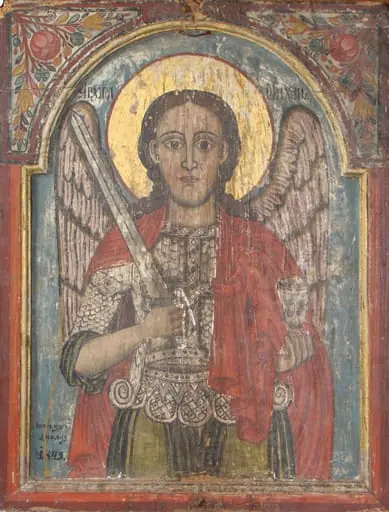 Arhanghelul Mihail
 Arhanghelii Mihail și Gavriil