Artwork
Sfinții împărați Constantin și Elena
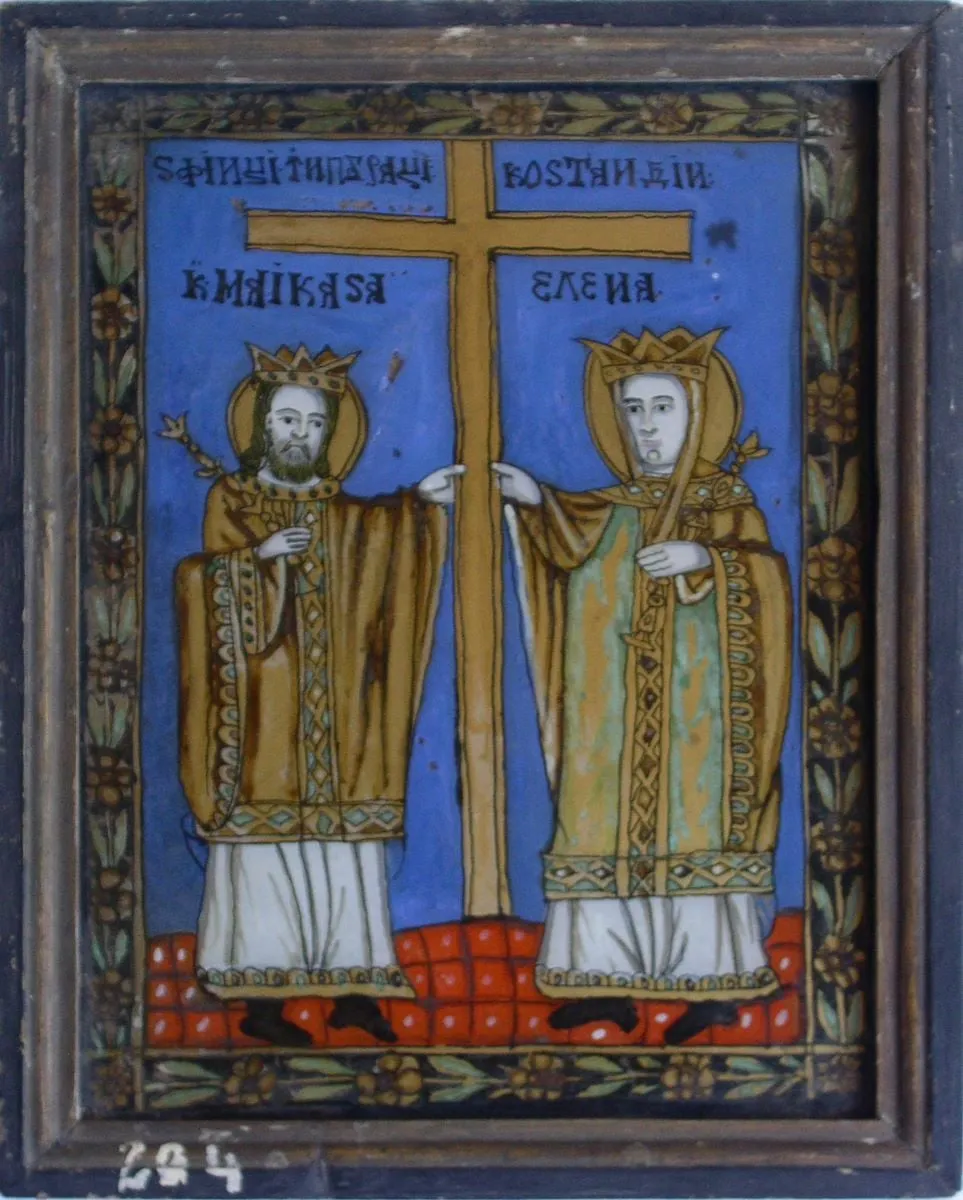
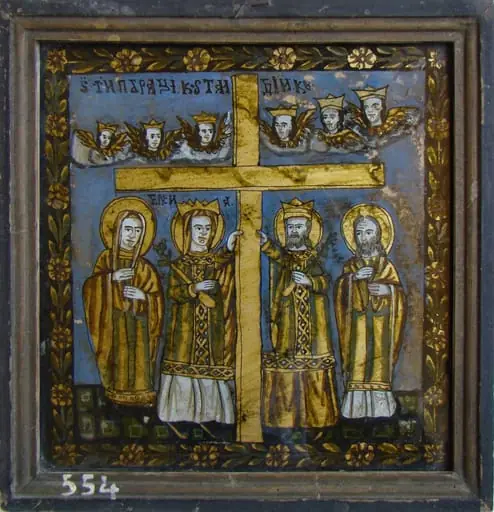
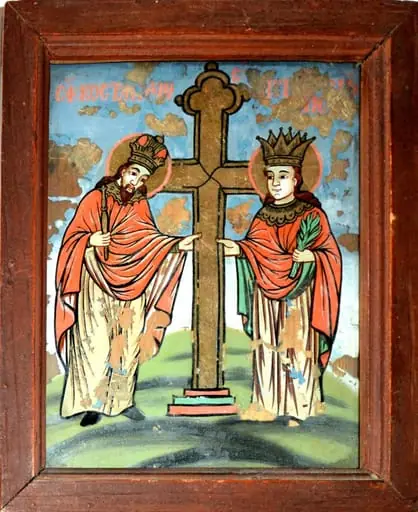
Sfinții împărați Constantin și Elena is an unspecified painting by the Byzantine icon painting artist Ilie II Poienaru. It is held in the collection of the Alba Iulia Orthodox Archdiocese. This religious panel depicts the Byzantine imperial saints Constantine and Helena, portrayed in formal, frontal poses before a golden cross.
About this work
Overview
The composition is symmetrical and hierarchical, emphasizing their sanctity through static posture and symbolic elements rather than naturalistic depth.
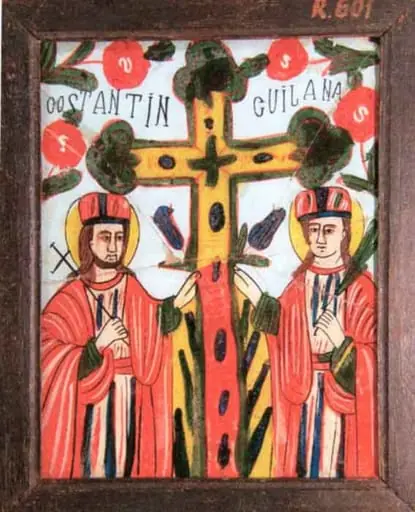
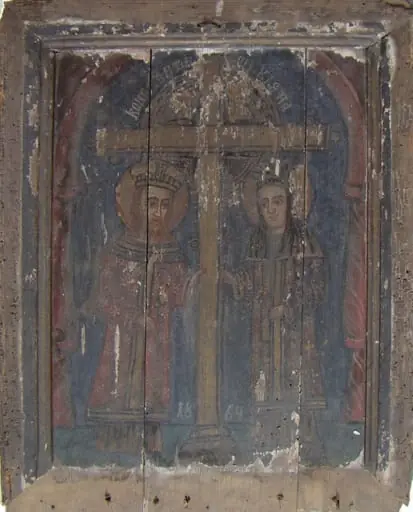
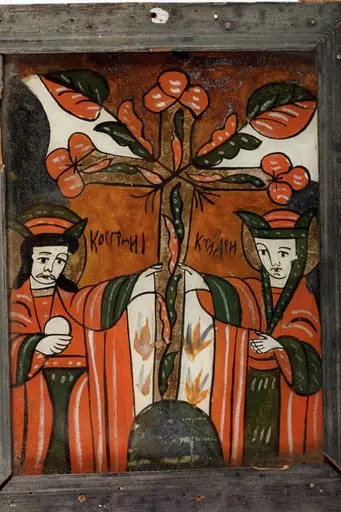
This religious panel depicts the Byzantine imperial saints Constantine and Helena, portrayed in formal, frontal poses before a golden cross. Their regal attire and crowns signify their status as emperor and empress, while the gold background and inscribed script reflect liturgical tradition. The composition is symmetrical and hierarchical, emphasizing their sanctity through static posture and symbolic elements rather than naturalistic depth.
Subject & Meaning
Constantine the Great and his mother Helena are venerated for their roles in the Christianization of the Roman Empire. Constantine, credited with legalizing Christianity, and Helena, associated with the discovery of the True Cross, are shown together to affirm imperial endorsement of the faith. The central cross, inscribed with sacred text, reinforces their divine mission and the union of earthly power with spiritual authority.
Technique & Style
The painting employs a flat, two-dimensional space typical of Byzantine iconography, with no attempt at perspective. Figures are rendered with rigid posture and stylized features, their robes outlined in gold to denote holiness. The background’s blue field and gold lettering follow liturgical conventions, while the red base grounds the composition, symbolizing the earthly realm beneath divine presence.
History & Provenance
Though exact origins are unrecorded, the style and script align with late Byzantine or post-Byzantine devotional panels, likely produced in the Balkans or Eastern Mediterranean between the 13th and 16th centuries. Such icons were often commissioned for private chapels or monastic use, serving as objects of veneration. The preservation of inscriptions suggests continued liturgical function over centuries.
Context
In Orthodox Christian tradition, imperial saints like Constantine and Helena were depicted together to legitimize the connection between church and state. Their imagery reinforced the idea that rulers were chosen by divine will. This panel fits within a broader corpus of icons used in liturgy and personal devotion, where symbolic clarity outweighed individual expression.
Legacy
The enduring presence of such icons in Orthodox churches reflects a sustained theological emphasis on the sanctity of rulership and the material witness of relics. This work contributes to a visual language that continues to shape religious identity, preserving medieval conceptions of holiness through standardized form and sacred symbolism rather than innovation.
Artist & collection
Artist
Ilie Poienaru kept a studio so cold the ink froze mid-line, yet his religious drawings glow like candlelight.