Artwork
Sfinții împărați Constantin și Elena
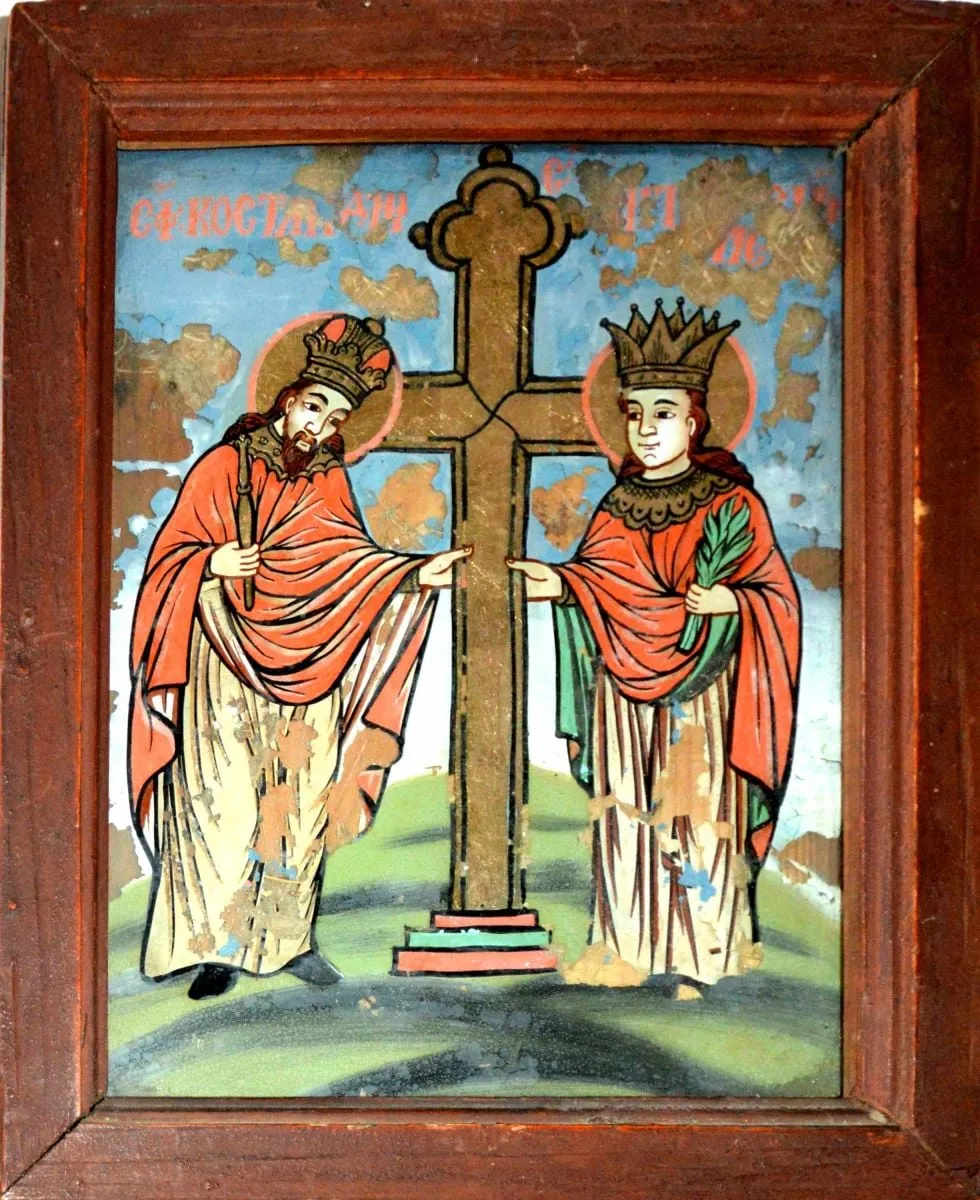
Sfinții împărați Constantin și Elena is an unspecified painting by the Baroque artist Ioan Pop de la Făgăraș. It is held in the collection of the Alba Iulia Orthodox Archdiocese.
About this work
Overview
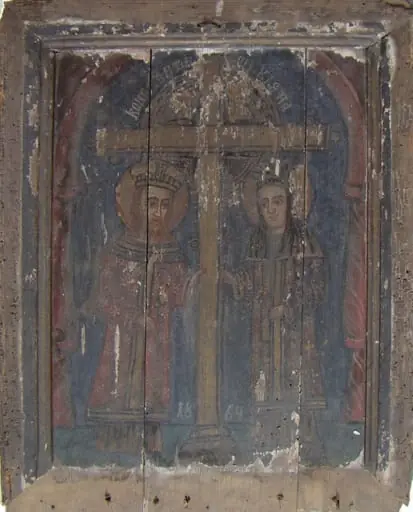
This painting depicts the Byzantine imperial saints Constantine and Helena, portrayed in ceremonial regalia as they jointly hold a large cross.
This painting depicts the Byzantine imperial saints Constantine and Helena, portrayed in ceremonial regalia as they jointly hold a large cross. Their frontal stance, richly adorned robes, and halos signal their sacred status. The composition is symmetrical and static, emphasizing their divine authority rather than movement. The background is minimal, with a pale sky and subtle landscape, directing focus to the figures and the cross they bear.
Subject & Meaning
Constantine and Helena are venerated for their roles in the Christianization of the Roman Empire. Constantine, credited with legalizing Christianity, and Helena, known for her pilgrimage to Jerusalem and discovery of the True Cross, are shown united in their spiritual mission. The cross between them symbolizes the faith they championed, while the scroll and small object likely represent imperial decrees or relics, reinforcing their dual role as rulers and patrons of the Church.
Technique & Style
The figures are rendered in a flat, stylized manner typical of Byzantine iconography, with little attempt at naturalistic perspective. Bold reds and golds dominate the palette, conveying holiness and imperial dignity. Facial features are idealized and serene, with minimal modeling. The absence of chiaroscuro confirms the work’s adherence to traditional iconographic conventions, prioritizing symbolic presence over spatial depth or emotional expression.
History & Provenance
The painting originates from a Byzantine or post-Byzantine context, likely created in a monastic or imperial workshop between the 13th and 15th centuries. Its preservation suggests it was venerated in a church or private chapel. While its exact origin and early ownership are undocumented, its stylistic consistency with Orthodox devotional art points to a region under Byzantine cultural influence, possibly the Balkans or Anatolia.
Context
During the late Byzantine period, images of imperial saints served both devotional and political functions, reinforcing the link between divine favor and imperial rule. This painting reflects a tradition in which rulers were depicted as instruments of God’s will. The enduring popularity of Constantine and Helena in Orthodox iconography underscores their symbolic role as models of piety and statecraft during a time of territorial decline and religious consolidation.
Legacy
The image of Constantine and Helena holding the cross became a standard motif in Eastern Christian art, replicated across centuries in frescoes, icons, and manuscripts. Its enduring presence in liturgical settings highlights the lasting integration of imperial history into Orthodox spiritual identity. Though stylistically archaic by later standards, the painting remains a key example of how sacred authority was visually codified in medieval Christian traditions.
Artist & collection
Artist
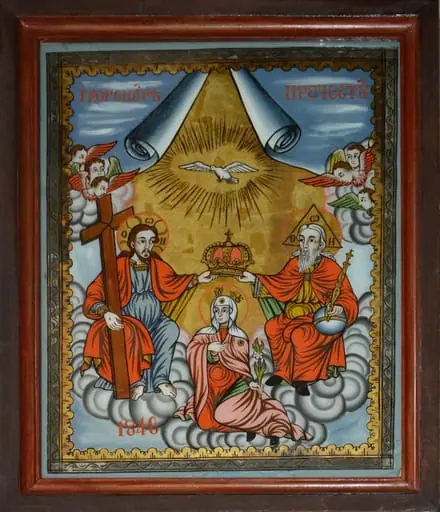
Ioan Pop de la Făgăraș painted religious scenes in the mid-1800s, like *Încoronarea Fecioarei* (1846) and *Duminica Floriilor*.
 Sfinții împărați Constantin și Elena
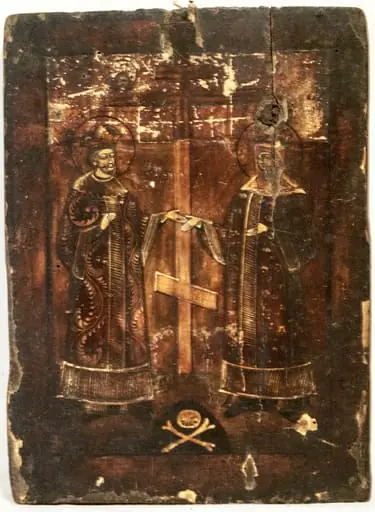 Sfinții împărați Constantin și Elena sunt redați conform erminiilor, de o parte și de alta a crucii răstignirii(aici de tip rusesc, cu 6 brațe), cruce găsită de împărăteasa Elena la Ierusalim. La baza crucii, craniul lui Adam, sugerând răscumpărarea păcatelor omenirii prin jertfa lui Iisus. Cei doi poartă coroane și veșminte împărătești, bogat decorate cu motive fitomorfe, la împărat în volute mari, la sfânta Elena mici, punctiforme. Gestul mâinilor, de arătare a crucii. În partea stângă a crucii, pe latura de sus, imediat sub chenar, chipul lui Iisus, așa cum s-a imprimat pe mahrama Veronicăi. Cromatica specifică, tonuri de roșu, brun, valorate de fondul foiței(aplicată în partea de sus, incluzând coroanele celor doi sfinți. Bordura roșiatică o înscrie în categoria icoanelor de tip krasnushka, caracteristice pentru centrul Holui. Pe spatele icoanei lipit un timbru al miliției RPR cu numele Zoe Apostolescu cu cerneală neagră..
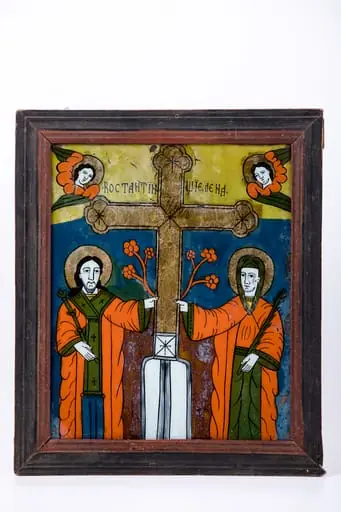 În centrul icoanei este Crucea albă la bază și bronzie în rest, cu capetele brațelor împodobite trilobat, iar în dreapta crucii este Sfântul Împărat Constantin, și în stânga este Împărăteasa Elena, mama sa. În spatele Crucii, sunt flori roșii agățătoare și unduitoare dintr-o grhirlandă de trandafiri. Crucea găsită este susținută cu bucurie de cei doi sfinți. Veșmintele Sfinților Constantin și Elena sunt într-o combinație de roșu vermillon și verde-iarbă de vară. Spațiul albastru-galben de lumină, din fondul icoanei, duce gândul la Crucea de lumină apărută pe cer In hoc signo vinces - prin acest semn vei învinge. Fondul icoanei este cerul albastru cobalt, lumina galbenă și o panglică albă, în josul crucii. În registrul superior, în colțurile stânga-dreapta sunt 2 îngeri serafimi. Cromatica este armonioasă, bogată și senină: roșu vermillon, galben-ocru, albastru cobalt, verde-iarbă de vară nuanță spanac-avocado, alb, negru. Icoana este de Nicula. Inscripția din româno-chirilică se traduce Constantin Elena.
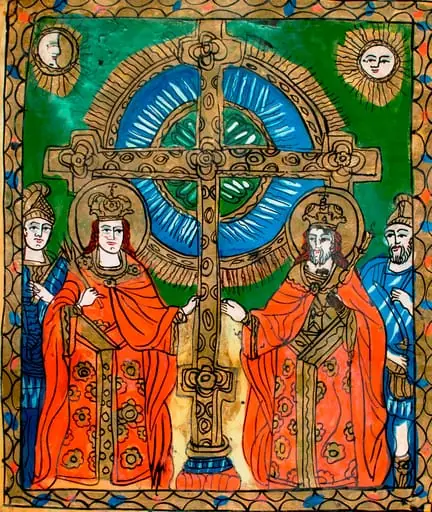 Icoana este pictată "în oglindă", pe un suport de sticlă de formă dreptunghiulară în ax vertical. Sfinții Împărați Constantin și Elena(1/1), susținând crucea pe care a fost răstignit Isus, cruce găsită de Împărăteasa Elena la Ierusalim. Crucea, dreaptă, cu brațele trilobate, aurită, decorată cu cercuri și semicercuri duble și flori la intersecția brațelor,este plasată pe un postament înalt, în centrul compoziției, având lungimea egală cu cea a suprafeței pictate.De la întretăierea brațelor iradiază cercuri concentrice de raze în culori reci, albastru, bleu, cel exterior auriu. Sfânta Elena(stânga) și sfântul Constantin(dreapta), plasați sub brațele crucii, reprezentați cu veșminte împărătești(tunici roșii brodate cu motive florale aurite, mantii lungi roșii, capă aurită pe umeri), coroane pe cap, aurite, la fel cu nimbul. Împăratul Constantin are în mâna stângă un sceptru, împărăteasa ține o ramură în mâna liberă. Amândoi sunt tineri, cu părul lung, roșcat-castaniu revărsat pe umeri. Sf. Constantin are barba scurtă. Cei doi împărați sunt flancați de un soldat roman și unul dac, în vestimentația militară specifică, având săbii în mâini. Acest Amănunt, cromatica și modul de realizare al desenului duc atribuirea către un zugrav cult. În colțurile de sus sunt redate luna și soarele antropomorfizate, într-un cerc aurit aplicat neglijent. Fondul este verde închis, cu degardeuri, la baza crucii zonă de culoare gălbuie. Întreaga compoziție este încadrată de un chenar dublu, cel de la interior aurit, cu două rânduri de semicercuri dispuse longitudinal, cel exterior de culoare roz gălbui. Desenul este dezordonat, cu linii redundante, culoarea aplicată inexact, nerespectând desenul. Compoziția este echilibrată, expresivă. Rama, din lemn de brad, culoare închisă.Îmbinare oblică la colțuri. Dosul - scânduri de brad, dispuse orizonal și fixate în cuie.
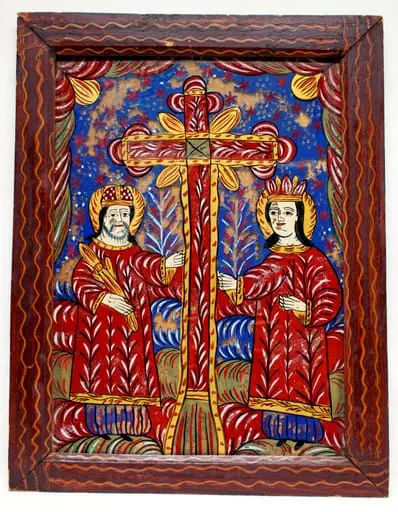 Icoana îi reprezintă pe Sfinții Împărați Constantin și Elena, susținând crucea pe care a fost răstignit Isus, cruce găsită de Împărăteasa Elena la Ierusalim. Crucea, tipul Calvarului, având brațele trilobate este în centrul compoziției pe care o domină.Cei doi sfinți sunt reprezentați cu însemnele împărătești, coroane pe cap și sceptru(împăratul Constantin). Veșmintele sunt simple, decorate doar cu șiruri de ghirlande fitomorfe verticale, în alternanță cromatică. Crucea decorată cu motive fitomorfe Câmpul icoanei, albastru ultramarin, decorat cu motive astrale și florale. În colțurile superioare sunt pictate falduri de draperii iar jumătatea inferioară a icoanei este "umplută" cu un relief vălurit și elemente vegetale. Compoziția foarte încărcată. Rama decorată cu căte trei șiruri de linii vălurite de culoare mai deschisă. Paleta cromatică: roșu, negru, alb, verde-oliv, gri, fond albastru cu decor roșu și alb. Rama - lemn de brad, "dosul" din șipci orizontale fixate de ramă.
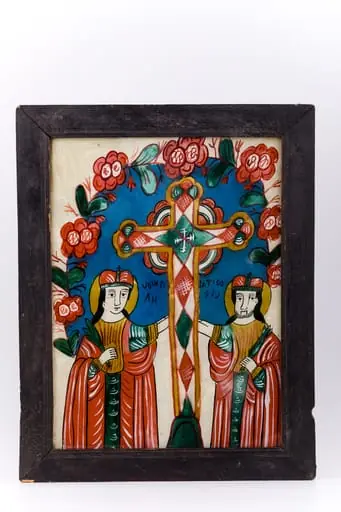 În centrul icoanei este Crucea, iar în dreapta crucii este Sfânta Împărăteasă Elena, și în stânga este Împăratul Constantin. Veșmintele sfinților împărați sunt pictate cu roșu vermillon și ocru-muștar și mânecile și epitrahile-patrafire vernil-gri. Poartă coroane împărătești și aureole de sfinți, mantiiile de împărați le au prinse la gât cu fibulă. Crucea este alb-crem cu elemente decorative geometrizante romboidale roșii-verzi și are capetele brațelor cu elemente decorative trilobate roșii vermillon-vernil. Fondul este cerul albastru ceruleum-regal foarte senin. Împrejurul Crucii este un spațiu luminos de alb-ivoriu Întreaga compoziție iconografică este încadrată de un chenar decorativ geometrizant alb-luminos și un chenar fitomorf, format dintr-o ghirlandă de 7 ruje - trandafiri și bujori roșii vermillon și 2 boboci de măceș - cu frunze gri-verzui. Cromatica este armonioasă: roșu vermillon-stacojiu-rose, albastru cobalt-regal, ocru-muștar, bronziu, brun, galben-chihlimbar, verde brad, vernil-gri, alb, negru. Inscripția în româno-chirilică se traduce Constantin și Elena. Icoana este din Nordul Transilvaniei, Nicula.
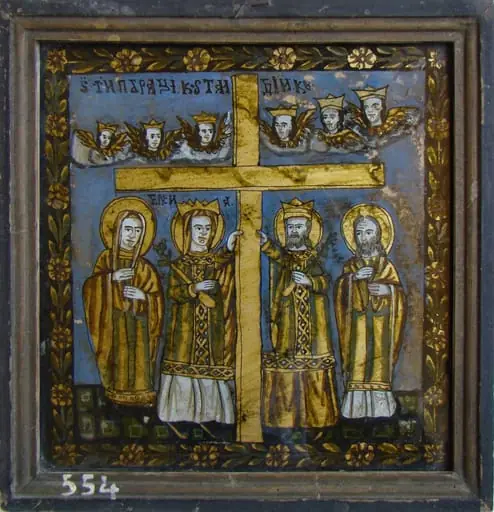 Înălțarea Sfintei Cruci