Artwork
Răstignirea lui Iisus/Maica Domnului cu Pruncul
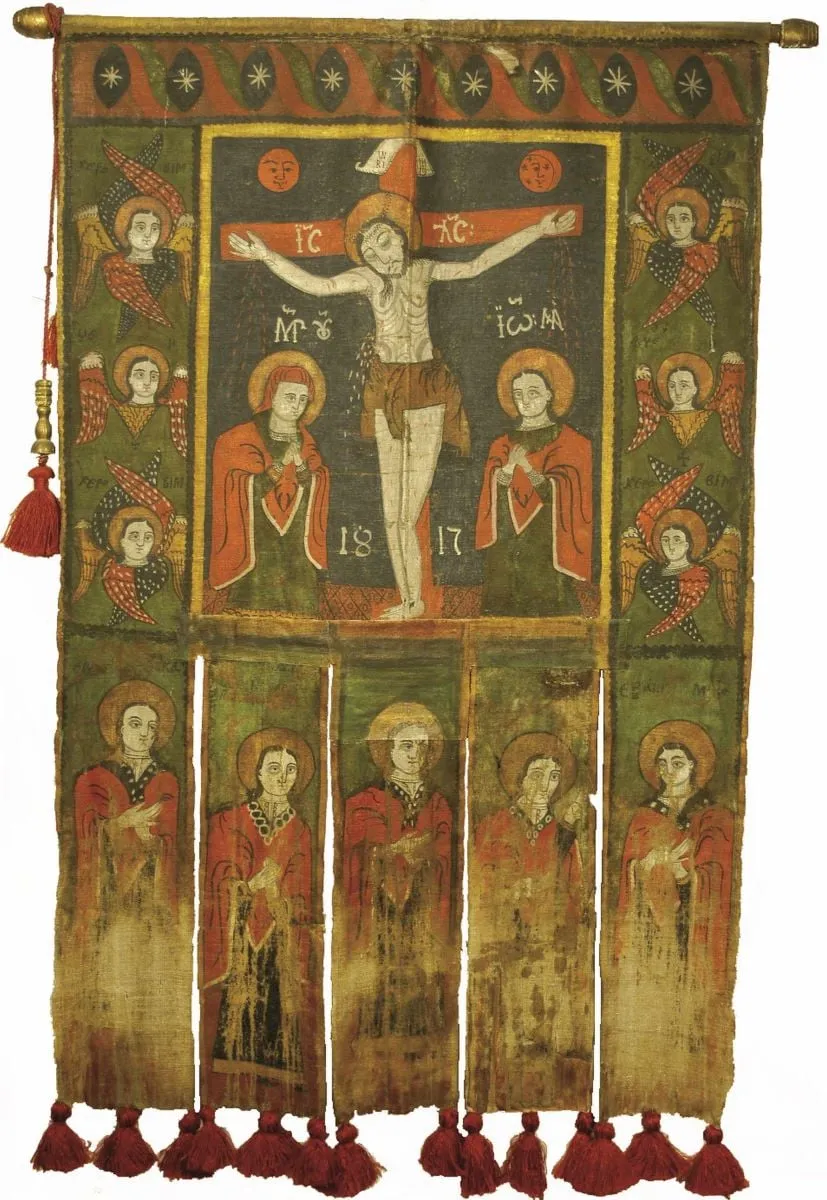
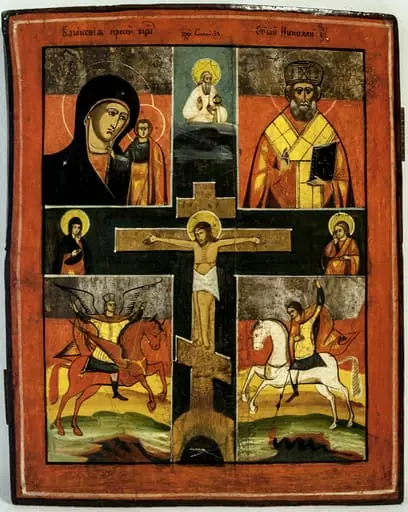
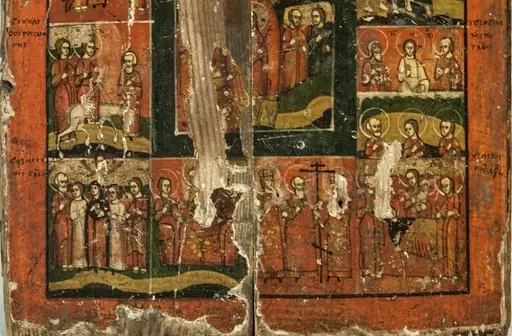
Răstignirea lui Iisus/Maica Domnului cu Pruncul is an unspecified painting by the Byzantine icon painting artist Unknown. It dates from 1817 and is held in the collection of the Alba Iulia Unification National Museum. Created in 1817, this panel presents a crucifixion scene framed by a dark green backdrop edged with gold.
About this work
Tiny stars and sun symbols line the top edge, while the bottom has red tassels hanging from a fringe.
This painting shows a central figure nailed to a cross, surrounded by angels and mourners. The background is dark green with gold trim, and the figures wear bright red robes with gold halos. Tiny stars and sun symbols line the top edge, while the bottom has red tassels hanging from a fringe.
The numbers "1817" appear near the bottom of the cross, matching the year this was painted. The style feels flat and symbolic, not realistic.
Look up composition to see how artists arrange figures to tell a story.
Overview
Created in 1817, this panel presents a crucifixion scene framed by a dark green backdrop edged with gold. At its center, a figure of Christ hangs on the cross, surrounded by angels and grieving figures. The composition is topped with a row of tiny stars and sun motifs, while the lower edge is adorned with red tassels.
Subject & Meaning
The central figure represents the crucified Jesus, accompanied by the Virgin Mary holding the infant, a pairing that underscores both sacrifice and maternal intercession. Angelic presences and mourners convey a narrative of divine sorrow and redemption, while the celestial symbols above suggest heavenly witness to the event.
Technique & Style
Rendered in a flat, symbolic manner, the work eschews naturalistic depth in favor of bold coloration and clear outlines. Figures are clothed in vivid red robes edged with gold halos, emphasizing sanctity. The limited palette and decorative borders reflect a devotional aesthetic common in early‑19th‑century Eastern European religious painting.
History & Provenance
The date “1817” is inscribed near the base of the cross, confirming its early‑19th‑century origin. Though specific ownership records are scarce, the piece aligns with regional iconographic traditions and likely served a liturgical or private devotional function within a church or household setting.
Artist & collection
Museum
Alba Iulia Unification National Museum
Continue through works from the same source collection.
 Domestic Scene
 Giacomo and Cardinal Marco, investing Andrea, Abbot of San Zeno, with his Benefice
 The Nymph of Fontainebleau
 Portrait of a Woman
 Madonna and Child with Saints in the Enclosed Garden
 Venus and Minerva
 Family Group of Four on Sofa
 Wall painting from Room H of the Villa of P. Fannius Synistor at Boscoreale
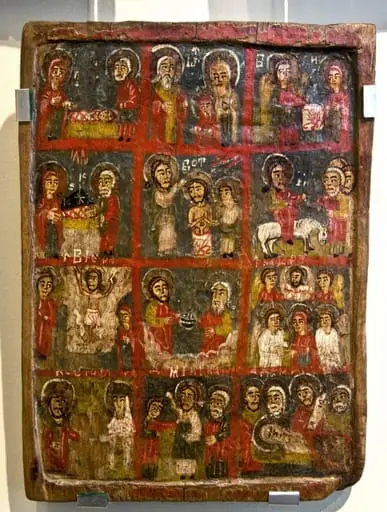 Prăznicar – Scene din Viața lui Iisus; Dodekaortion
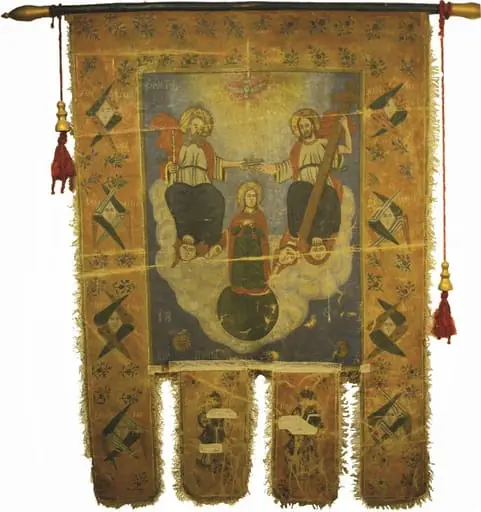 Încoronarea Fecioarei/Apostolii Petru și Pavel
 Icoasunt
 Răstrile
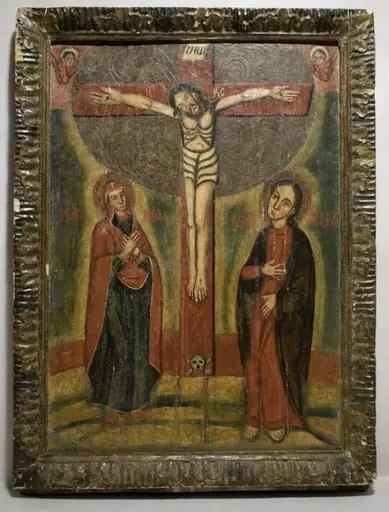
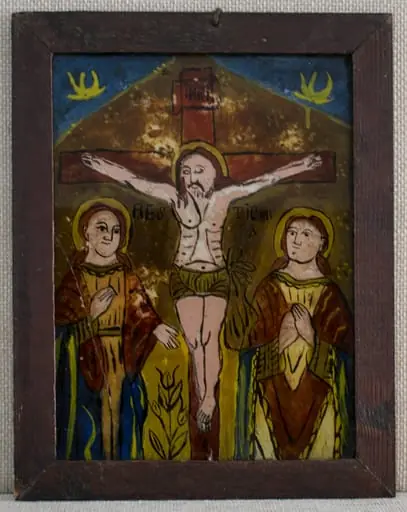 Icoana este pictată "în oglindă", pe un suport de sticlă de formă dreptunghiulară în ax vertical. Scena Răstignirii este redată într-o manieră specifică zonei Nicula - Gherla,(faza târzie, de decadență a acestei arte),după stil(în special desenul ochilor) putând fi atribuită lui Gheorghe Feur sau fiice sale Mariana. Crucea simplă, dreaptă, este axul de simetrie al compoziței, Isus răstignit are corpul destul de bine proporționat, anatomia studiată, ochii închiși, capul ușor aplecat pe umărul stâng, părul lung,castaniu roșcat, redat ca o meșă stângace, înconjurat de nimbul simplu, trasat cu mai mare atenție decât în icoanele vechi. În jurul mijlocului are un veșmânt bogat. De o parte și de alta a crucii, în prim plan, Fecioara Maria și Ioan Evanghelistul, 3/4, din ușor semiprofil, amândoi cu expresii nedefinite, fețele rotunde, diforme, bărbiile exagerat de mari. Vestimentația aproape identică, predomină roșul stins accentuat de alb și verdele amestecat cu albastru. Inscripția cu majuscule negre, dezordonat, sub brațele crucii se pierde pe fond. Câmpul în nuanțe de brun roșcat, voit sau din neglijență în degrade, se completează cu pământul galben violent(1/3 inferior) cu un contur de floare la baza crucii. Brațele crucii sunt delimitate într-un triunghi de culoare, făcând loc în colțurile superioare la două zone de albastru decorate cu o floare stilizată galbenă. Desenul nesigur este ușor estompat de cromatica ce încearcă o imitație(studiată sau nu) a realizărilor vechilor iconari de la Nicula. Rama, realizată din patru șipci de brad, culoare brun, îmbinate oblic la colțuri. Pe spate are bătut un dos din placaj. Colțul stâng este crăpat. Izvodul este identic cu cel utilizat la nr 27199.
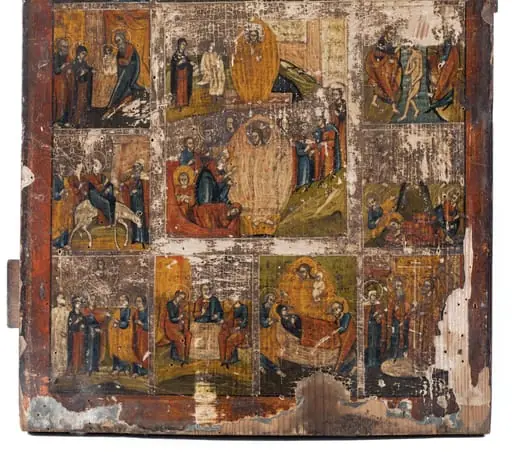 Scene biblice
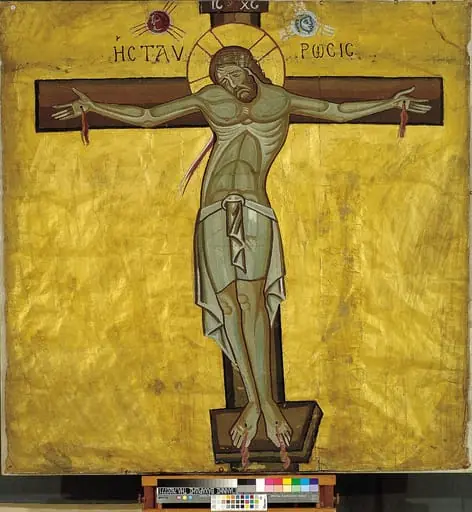 O Εσταυρωμένος Χριστός
 Compului