Artwork
Christ in Glory with Two Saints
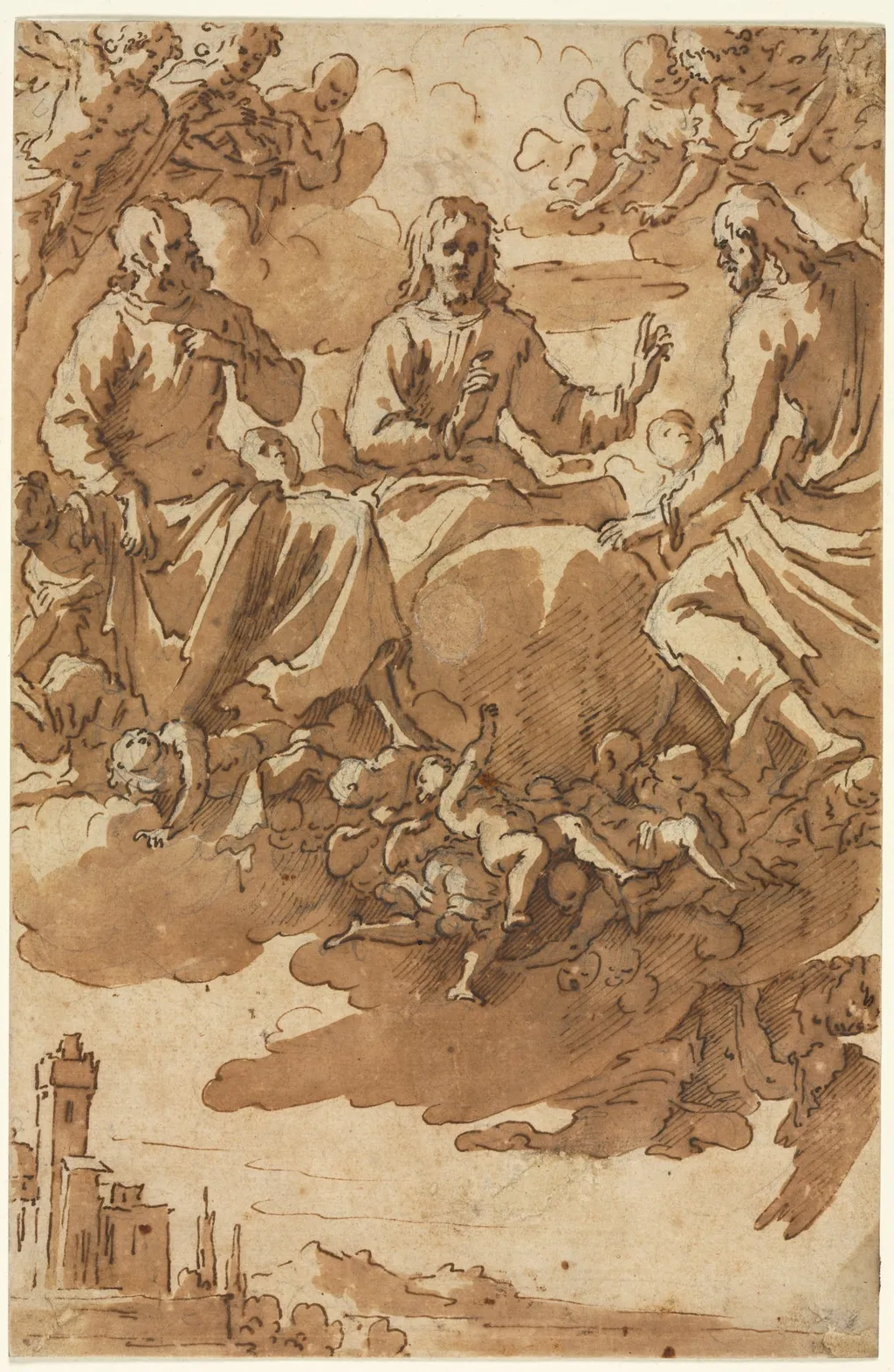
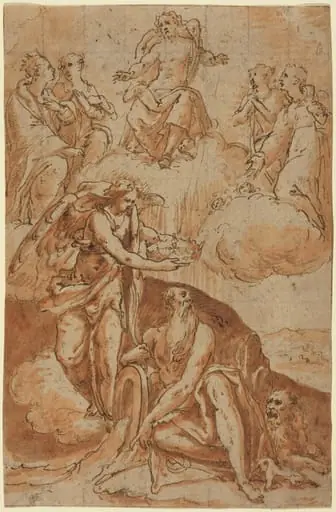
Christ in Glory with Two Saints is a drawing by the Baroque artist Marco Antonio Bassetti. It dates from 1615 and is held in the collection of the Cleveland Museum of Art.
About this work
Overview
This unfinished drawing by Marcantonio Bassetti, dated around 1615, depicts a celestial scene with Christ at its center, flanked by two saints.
This unfinished drawing by Marcantonio Bassetti, dated around 1615, depicts a celestial scene with Christ at its center, flanked by two saints. Executed in a rapid, expressive hand, the work captures a moment of divine intervention amid earthly turmoil. Its loose, energetic lines and lack of finish suggest it was a preparatory study, prioritizing compositional dynamics over polished detail. The piece resides in The Cleveland Museum of Art.
Subject & Meaning
Christ, seated calmly in the heavens, gestures downward as if bestowing grace or judgment. Below, a throng of figures writhes in distress, their postures conveying desperation or supplication. Two elderly saints flank him—one holding a staff, a symbol of authority—while a child reaches upward, perhaps representing innocence or faith. The contrast between Christ’s serenity and the chaos beneath underscores a theological theme of divine stillness amid human suffering.
Technique & Style
Bassetti employed quick, fluid strokes in ink or chalk to define forms, leaving the background in a state of energetic abstraction. Clouds and architectural elements are suggested with minimal, sketchy lines, emphasizing motion over precision. The figures’ drapery and gestures are rendered with urgency, revealing the artist’s focus on emotional intensity. The unfinished state highlights the drawing’s role as a working study, not a final presentation.
History & Provenance
Created circa 1615, the drawing entered The Cleveland Museum of Art’s collection through documented acquisition. While little is known of its early ownership, its style aligns with Bassetti’s known workshop practices during the early Baroque period in northern Italy. Its survival as a preparatory sketch offers rare insight into the artist’s process, distinct from his more finished altarpieces.
Context
This work emerged during a period when Italian artists were embracing the Baroque emphasis on movement, emotion, and dramatic contrast. Bassetti’s sketch reflects broader trends in religious art, where divine figures were depicted as transcendent anchors amid turbulent human scenes. The unfinished nature suggests it was made for internal planning, possibly as a model for a larger commission now lost.
Legacy
Though not widely reproduced, the drawing remains a valuable example of early 17th-century Italian draftsmanship. It illustrates how artists used rapid studies to explore spiritual narratives through gesture and composition. Its preservation allows modern viewers to witness the raw, unpolished thought behind religious imagery of the era, offering a window into the artist’s creative process.
Artist & collection
Artist
Marco Antonio Bassetti (1586–1630) was an Italian artist, born in Verona.

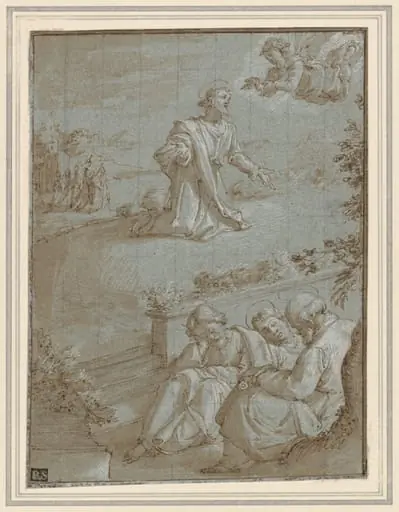 The Agony in the Garden
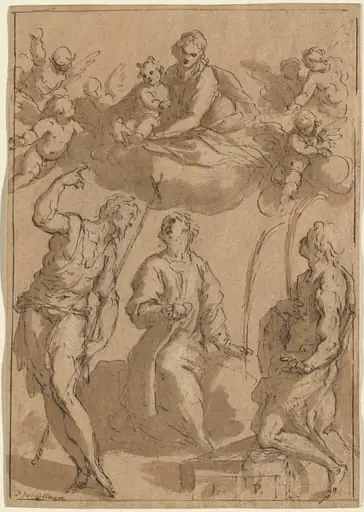 Madonna and Child in Glory with Saints John the Baptist, Stephen, and Lawrence
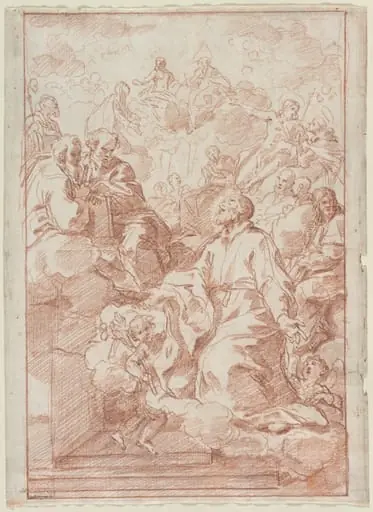 Vision of St. Philip Neri
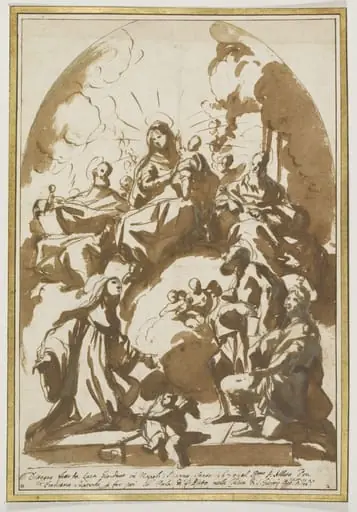 The Virgin and Child
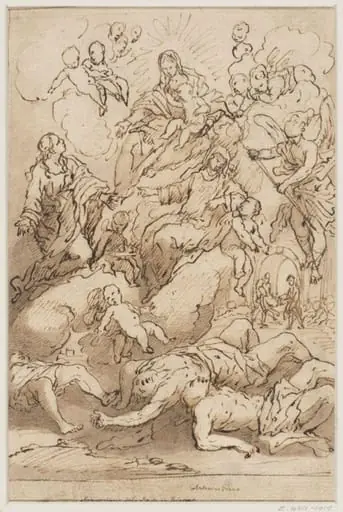 Anniversary of the Plague at Palermo
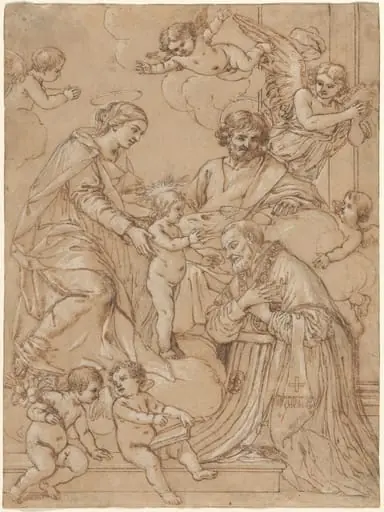 The Holy Family with Saint Philip Neri in Adoration, an Angel, and Putti
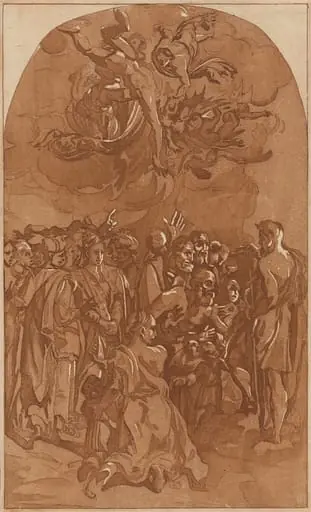 Saint John Preaching
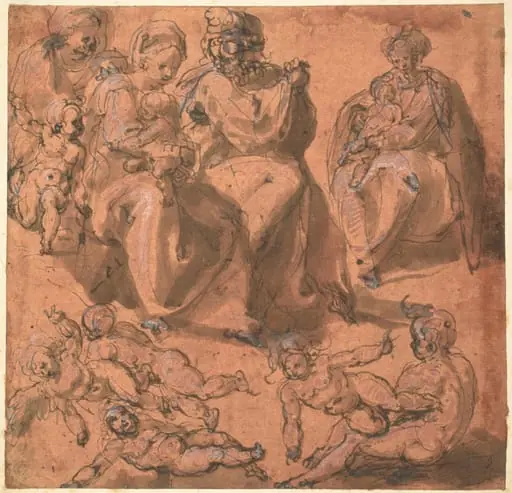 Studies of a Holy Family
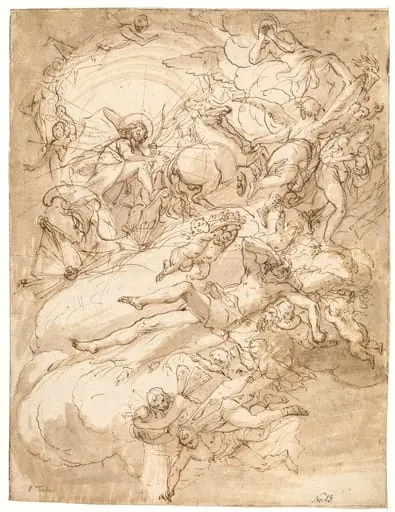 Apollo in his chariot, design for a ceiling painting
 Saint Jerome (?)