Artwork
Les cerises
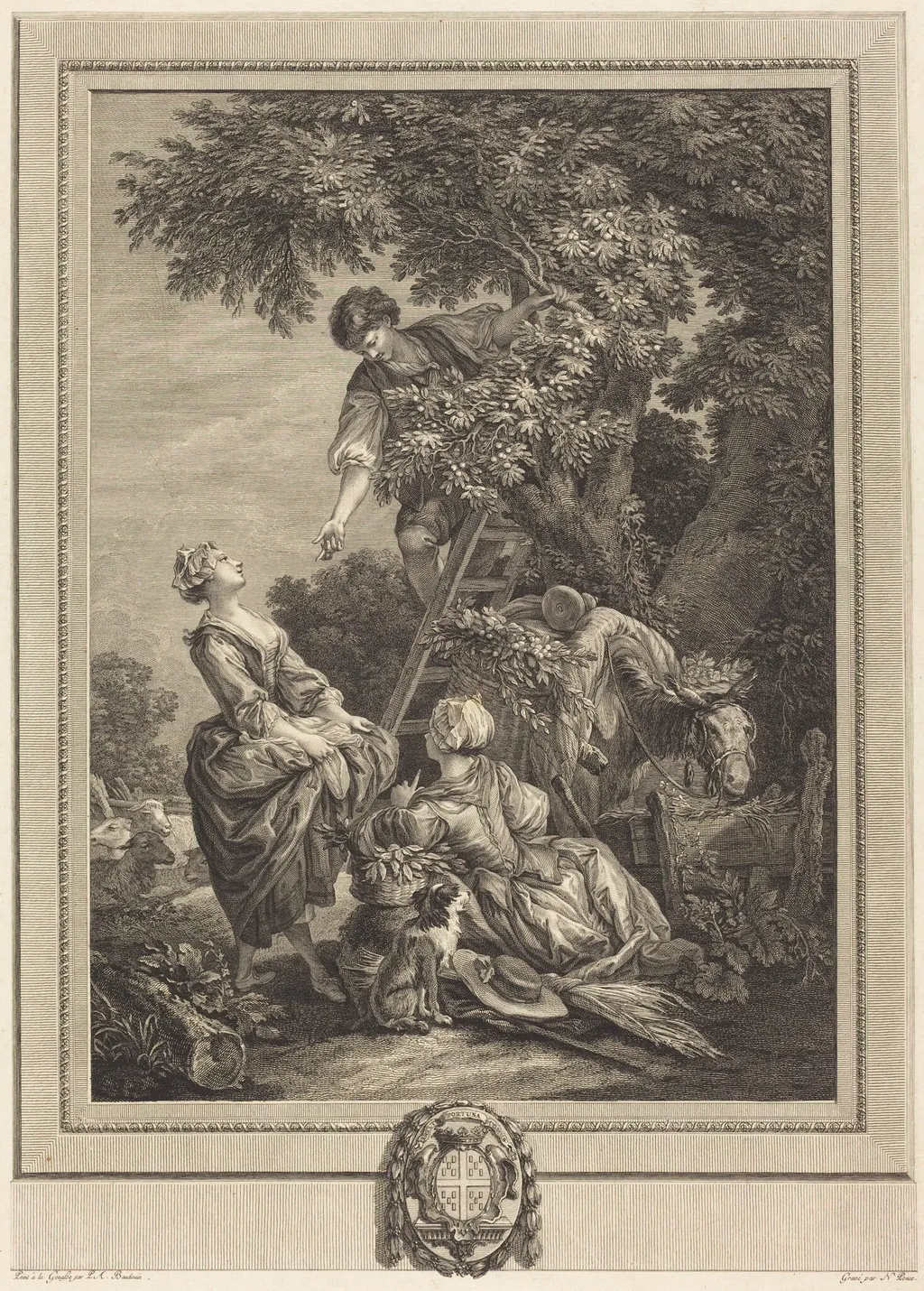
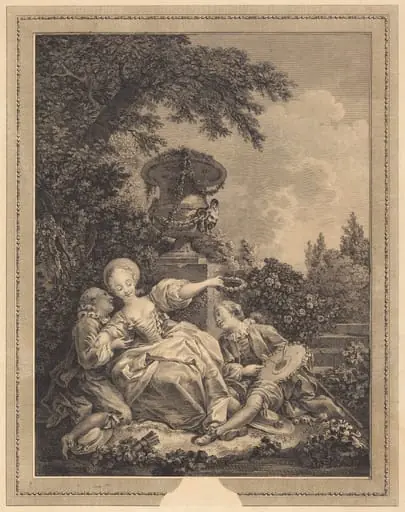
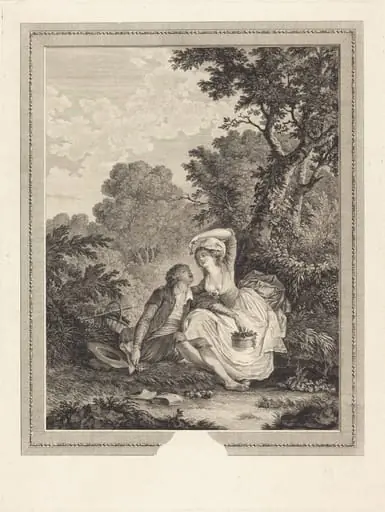
Les cerises is an ink print by the Baroque artist Nicolas Ponce. It dates from 1788 and is held in the collection of the National Gallery of Art.
About this work
Overview
The composition captures a moment of rural labor, rendered with careful attention to naturalistic detail and spatial depth.
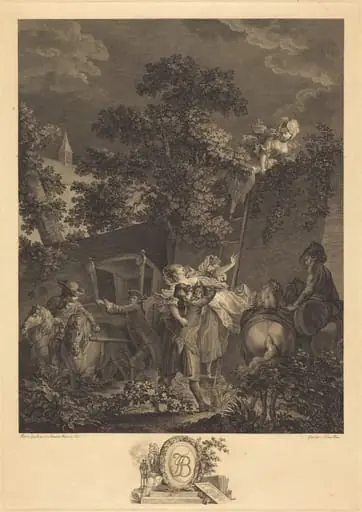
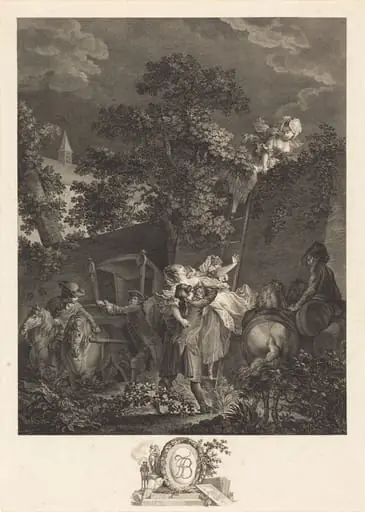
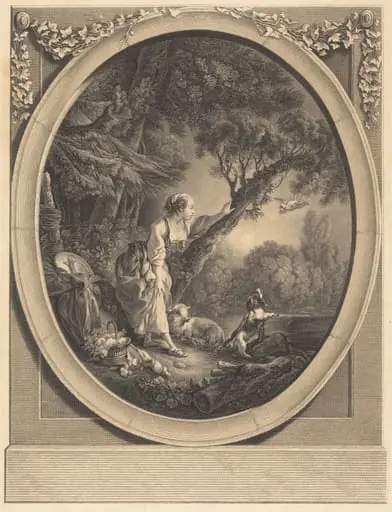
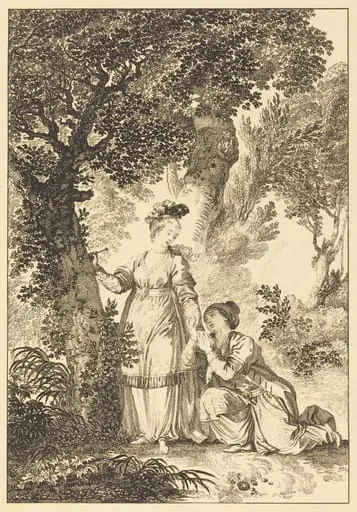
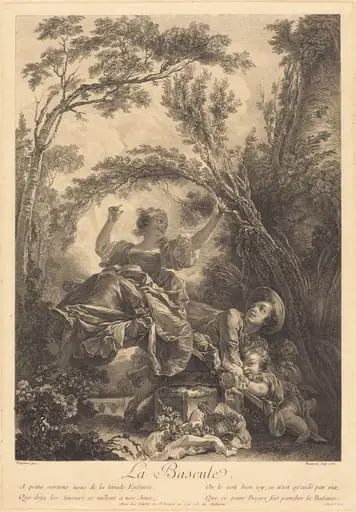
Les cerises is an 18th-century print by Nicolas Ponce, executed in etching and engraving. It depicts a quiet garden scene where four individuals gather cherries from a tree. The composition captures a moment of rural labor, rendered with careful attention to naturalistic detail and spatial depth. The technique combines fine lines and tonal shading to suggest texture and movement within a contained, intimate setting.
Subject & Meaning
The scene portrays a modest, everyday activity—harvesting cherries—with no overt symbolism or narrative climax. Each figure engages with the task at hand: one reaches upward, another climbs, a child holds a basket, and a man kneels to collect fallen fruit. The presence of a sleeping dog adds a sense of stillness, reinforcing the calm rhythm of seasonal work. The focus is on quiet diligence rather than spectacle.
Technique & Style
Ponce employed etching and engraving to achieve fine detail and subtle gradations of tone. The folds of clothing, the texture of leaves, and the play of light across skin and bark are rendered with precise line work. Shading is built through cross-hatching and controlled ink density, giving the figures volume without heavy contrast. The background recedes softly, using lighter, sparser lines to suggest depth without distraction.
History & Provenance
Created in 1788, the print reflects the late 18th-century European interest in pastoral subjects and domestic labor. While Ponce was not a widely documented artist, his work aligns with the tradition of printmakers who documented rural life for middle-class collectors. The print likely circulated as a standalone image, valued for its quiet realism rather than as part of a larger series.
Context
In the decades before the French Revolution, images of rural labor gained popularity among urban audiences seeking idealized visions of simplicity. Les cerises fits within this trend, presenting work as harmonious and orderly. Unlike theatrical genre scenes, it avoids sentimentality, instead offering a restrained observation of daily life grounded in observable detail and spatial coherence.
Legacy
Though not widely reproduced or studied today, Les cerises exemplifies the skill of lesser-known printmakers who captured everyday moments with technical precision. Its quiet composition and careful rendering contribute to a broader understanding of 18th-century print culture, where domestic and agricultural scenes served as both aesthetic pleasure and subtle social documentation.
Artist & collection