Artwork
Recipient din lut de uz casnic, nesmălțuit, de formă circulară, cu profil tronconic și buza rotunjită. Acesta este decorat pe toată suprafața cu motive geometrice și florale, realizate cu gaița și cornul. În partea centrală este redată o floare cu petale multiple. Pereții se termină cu o linie ondulată. Cromatică: fond: alb; motive: gri, maro închis, maro deschis.
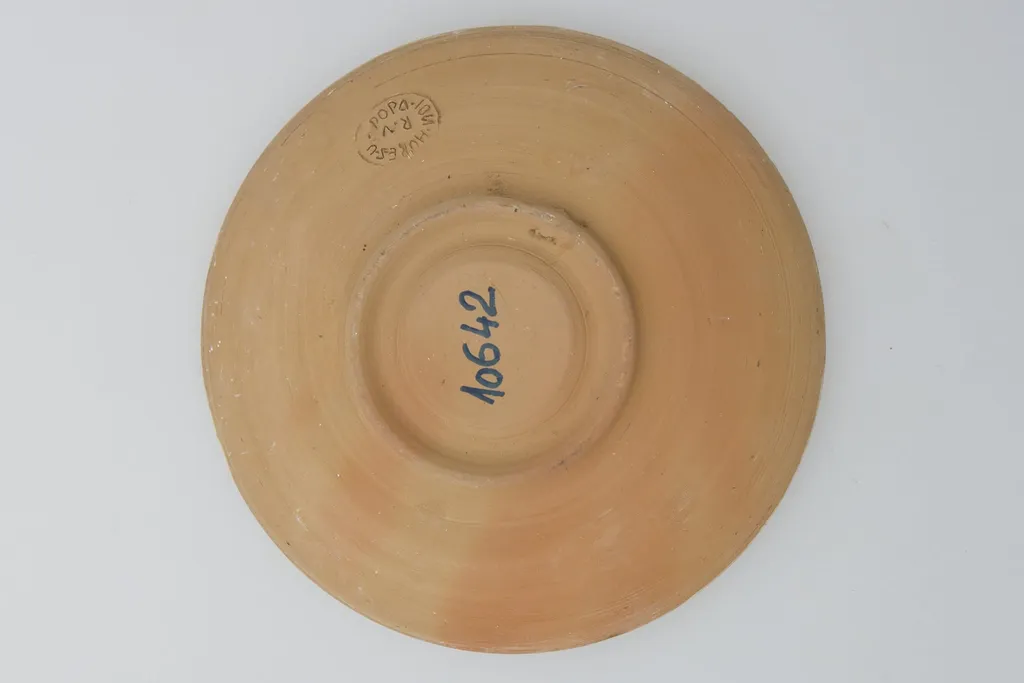
Recipient din lut de uz casnic, nesmălțuit, de formă circulară, cu profil tronconic și buza rotunjită. Acesta este decorat pe toată suprafața cu motive geometrice și florale, realizate cu gaița și cornul. În partea centrală este redată o floare cu petale multiple. Pereții se termină cu o linie ondulată. Cromatică: fond: alb; motive: gri, maro închis, maro deschis. is a print by Popa Ion. It is held in the collection of the ASTRA National Museum Complex. This is a hand-formed, unglazed clay vessel with a shallow, circular profile and a gently flaring rim.
About this work
If you like this kind of handmade pottery, check out Museum of Ethnography for more pieces like it.
This is a simple clay pot, round and shallow, with a smooth, earthy orange color. The surface looks unglazed and slightly rough. In the center, there’s a small, raised circle with a handwritten number "1601" in blue ink.
The pot’s shape is wide at the top and narrows slightly toward the middle, like a shallow bowl. The edges are rounded, not sharp. There’s also some faded writing near the rim, but it’s hard to read.
If you like this kind of handmade pottery, check out Museum of Ethnography for more pieces like it.
Overview
This is a hand-formed, unglazed clay vessel with a shallow, circular profile and a gently flaring rim. Its surface retains the natural texture of fired earthenware, with no glaze or polish. Decorative elements are incised into the clay using organic tools, suggesting a pre-industrial craft tradition. The form is utilitarian in silhouette, yet carefully shaped to balance function and aesthetic restraint.
Subject & Meaning
The central motif is a stylized flower with multiple petals, surrounded by geometric and floral patterns carved along the entire exterior. These designs likely held symbolic significance within the community, possibly relating to fertility, seasonal cycles, or domestic rituals. The absence of figural imagery points to an abstract, non-representational visual language common in regional ceramic traditions.
Technique & Style
The decoration was executed using bone or horn tools to incise fine lines into the leather-hard clay. Pigments in shades of gray and dark brown were applied to enhance the carved patterns against a pale background. The surface remains unglazed, preserving the raw texture of the clay. The rim’s rounded edge and subtle taper reflect a deliberate shaping process, prioritizing both usability and visual harmony.
History & Provenance
A faint blue ink inscription, '1601', appears at the center of the base, likely a later inventory mark rather than a date of creation. The vessel shows no signs of industrial production, indicating it was made by hand in a local context. Its current condition suggests prolonged use and storage, with surface wear consistent with domestic handling over time.
Context
This vessel belongs to a broader tradition of unglazed pottery from rural communities in Eastern Europe, where functional ware was often adorned with regionally specific motifs. Similar forms appear in ethnographic collections from the Carpathian region, where such ceramics were used for storage, serving, or ritual purposes within household settings.
Legacy
Though not signed or attributed to a known maker, the vessel reflects a sustained craft practice passed through generations. Its preservation in institutional collections underscores its value as a material record of everyday life. Contemporary studies of similar objects continue to inform understanding of pre-modern domestic aesthetics and regional identity.
Artist & collection
Artist

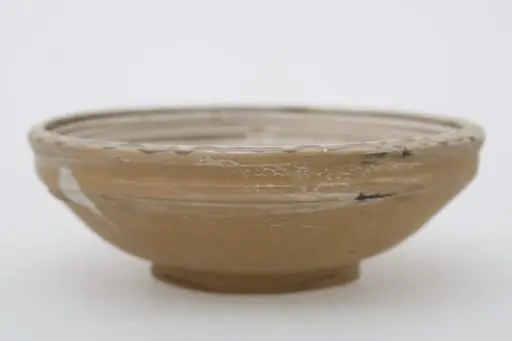 Recipient din lut de uz casnic, nesmălțuit, angobat, de formă tronconică, cu buza dreaptă și înaltă. Pe pereții interiori, vasul este decorat cu motive geometrice și florale: un șir de flori stilizate urmate spre buză de linii concentrice, pictate cu cornul și cu pensula. În centrul vasului este pictată o spirală delimitate de cercuri maro. Buza vasului este ornată cu o linie ondulată. Cromatică: fond: alb; motive: gri; maro închis; maro deschis.
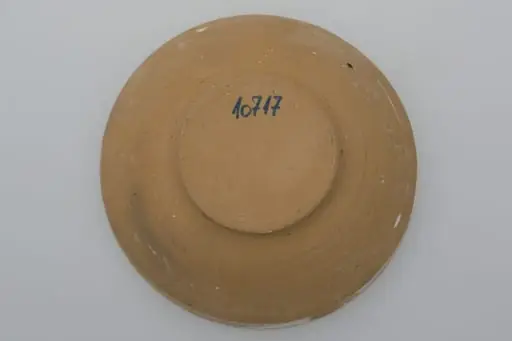 Recipient din lut de uz casnic, nesmălțuit, angobat, de formă circulară, cu profil tronconic, cu buza dreaptă și înaltă. Pe pereții interiori, vasul este decorat cu cornul, cu motive geometrice și florale: un contur de floare urmat de un șir de flori mici stilizate. Spre gura strachinii, la interior, sunt prezente linii concentrice, maro. În centrul vasului este pictată o spirală. Buza vasului este ornată cu o linie ondulată. Cromatică: fond: alb; motive: gri, maro închis, maro deschis.
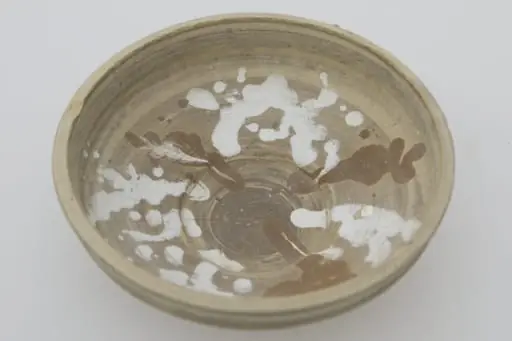 Recipient din lut de uz casnic, nesmălțuit, nears, de formă tronconică, cu buza dreaptă și înaltă. Pe pereți, vasul este decorat prin stropire cu pete neregulate, de diferite culori. Prezintă fisură pe mijlocul vasului. Cromatică: fond: cărămiziu; motive: alb; maro.
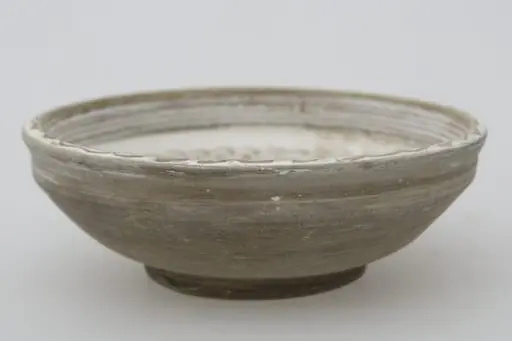 Vas din lut de uz casnic, nesmălțuit, nears, angobat, de formă tronconică, cu buza dreaptă și înaltă. Pe pereții interiori, vasul este decorat prin jirăvire cu gaița (motive florale stilizate și geometrice), continuând spre buză, cu linii ondulate și concentrice, pictate cu cornul. În centru, farfuria nu este ornată. Cromatică: fond: alb; motive: gri; negru; maro.
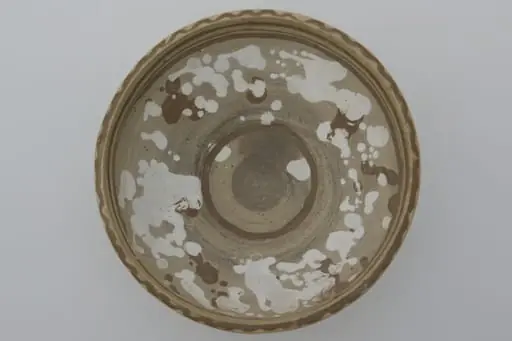 Recipient din lut de uz casnic, nesmălțuit, de formă circulară, cu profil tronconic, cu buza dreaptă și înaltă. Vasul este decorat pe pereți cu pete neregulate realizate prin stropire iar spre buză, cu linii concentrice, pictate cu pensula. În centrul vasului este pictat un cerc. Buza este ornată cu o linie ondulată. Cromatică: fond: cărămiziu; motive: alb, maro.
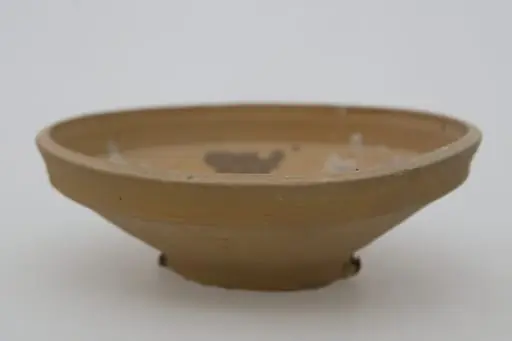 Recipientul este realizat din lut. Acesta era folosit în gospodărie, fiind nesmălțuit, de formă circulară, cu profil tronconic, cu buza dreaptă și înaltă. Pe pereți, vasul este decorat prin stropire cu pete neregulate, de diferite culori. Cromatică: fundal cărămiziu; motive: gri, maro.
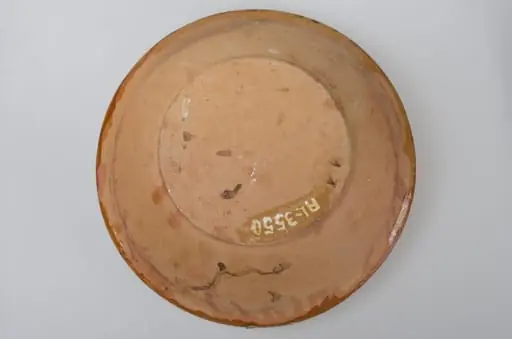 Vas de formă tronconică cu buza dreapta. Decorul este amplasat pe toată suprafața interioară și parțial în exterior, pe buză. Acesta este compus din motive geometrice (val); motive fitomorfe, plasate pe fund (frunza) și motive florale, tot pe fund (pansea). Blidul este smălțuit la interior și pe zona exterioară a buzei. Cromatică: fond: maron; motive: alb, verde.
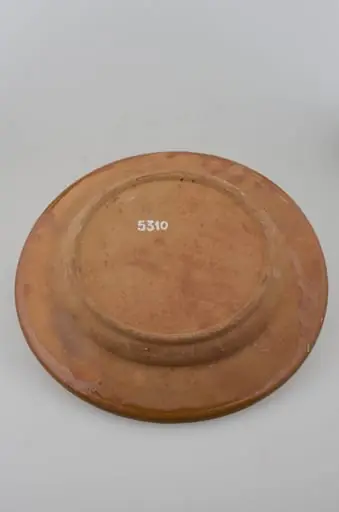 Blid tronconic cu fund plat, margine puțin ridicată și buza ușor oblică. Decor cu motive aviforme și florale: cocoș pe centru și o floare; pe margine, circular, motive geometrice (semicercuri, liniare, punctate, zig-zag). Cromatică: fond: cărămiziu; motive: maro; verde; alb; galben.
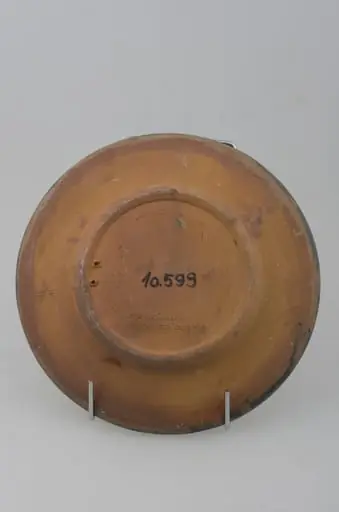 Farfurie de formă tronconică cu pereții rotunjiți, marginea oblică, lată și buza crestată. Decor cu motive geometrice pe margine: linii frânte și curbe; pete de culoare; central prezintă o floare stilizată. Cromatică: fond: verde; motive: brun; verde deschis; alb.
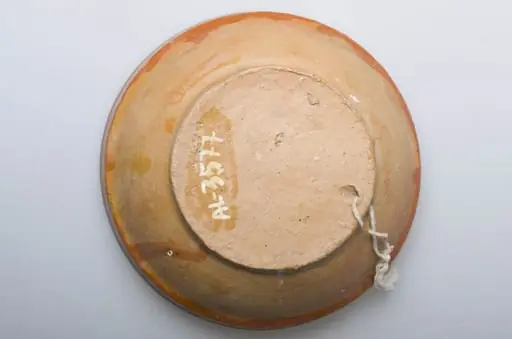 Blid de formă tronconică, cu gura largă, înaltă și dreaptă, smălțuit integral în partea interioară și în exterior doar la nivelul buzei. Este decorat din interior cu motive florale: trei flori - una albă central încadrată de doi brăduți și două verzi lateral; motive geometrice: trei linii ondulate deasupra florii albe și unghiuri de diferite dimensiuni între cele două flori verzi. Fundul este circular și prezintă un orificiu pentru agățare. Cromatică: fond: cărămiziu; motive: alb; verde; negru.
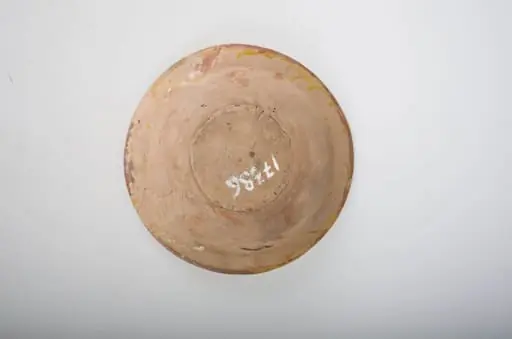 Vas din lut de formă tronconică, cu gura mai largă decât baza și smălțuită la interior. Ornamentată cu motive geometrice și vegetale în felul următor: pe fundul vasului este pictată cu pensula o crenguță cu frunze, împrejmuită în continuare spre pereții vasului de o spirală. Tot aici, este pictat cu negru, litera ”F” și ”R”. Pe marginea vasului, sunt flori dispuse circular cu tulpini și frunze mari, având petalele rotunde, bicolore. Prezintă uzură funcțională. Cromatică: fundal cărămiziu; motive: galben; negru.
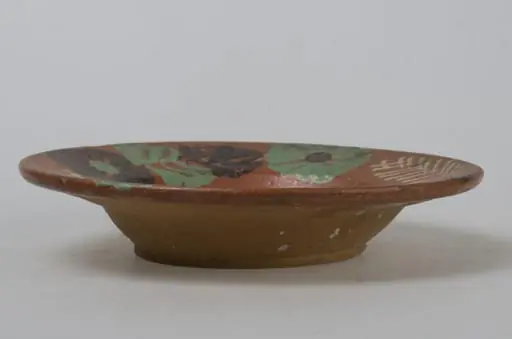 Vas de formă tronconică cu buza largă și evazată. Decorul este amplasat pe toată suprafața interioară a farfuriei. Acesta este compus din motive florale. Blidul este smălțuit la interior și pe zona exterioară a buzei. Cromatică: fond: maron; motive: alb, verde, maron închis.
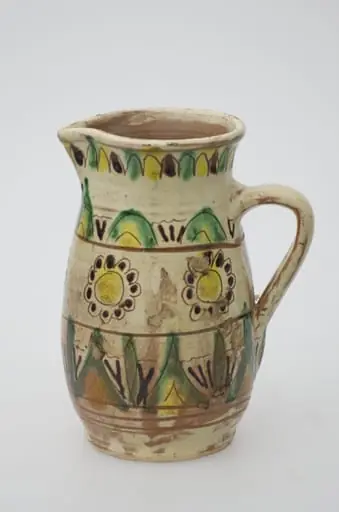 Recipient tronconic smălțuit, pe bază inelară, de formă aproximativ ovoidală cu gura largă prevăzută cu cioc. Prezintă toartă laterală. Decor delimitat de trei linii dispuse circular, ilustrând șiruri de linii arcuite, triunghiuri, semiovaluri, buline maron înscrise în cercuri. Cromatică: fond: alb; motive: verde, galben, maron.