Artwork
Loggia del Consiglio, Padua
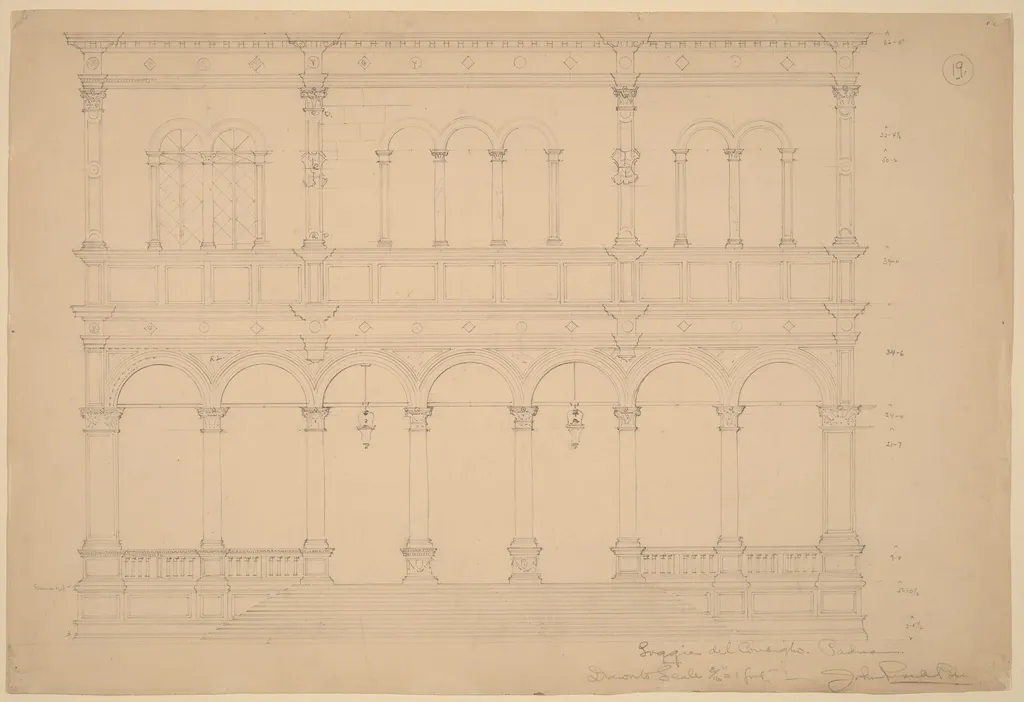
Loggia del Consiglio, Padua is a graphite drawing by the Impressionist artist John Russell Pope. It dates from 1898 and is held in the collection of the National Gallery of Art.
About this work
Overview
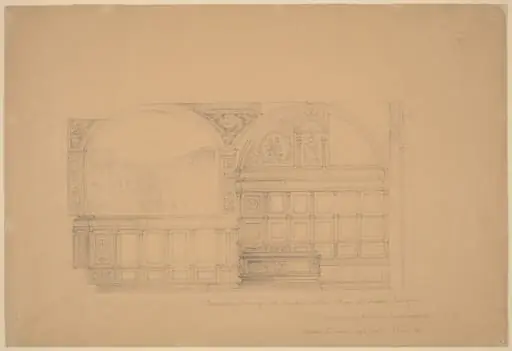
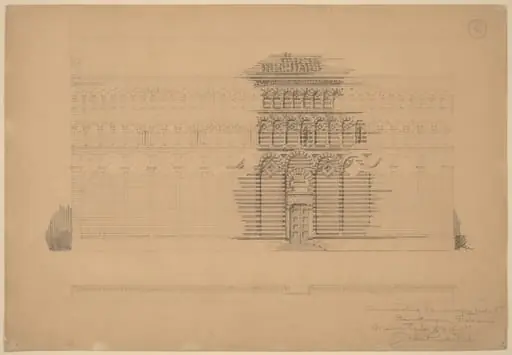
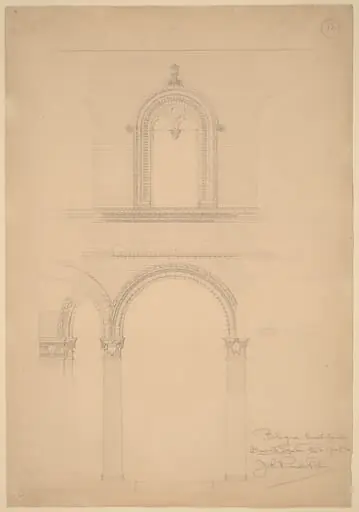
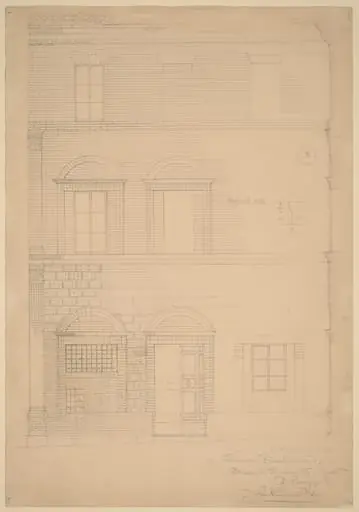
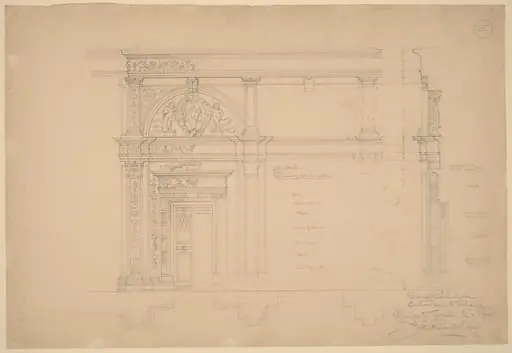
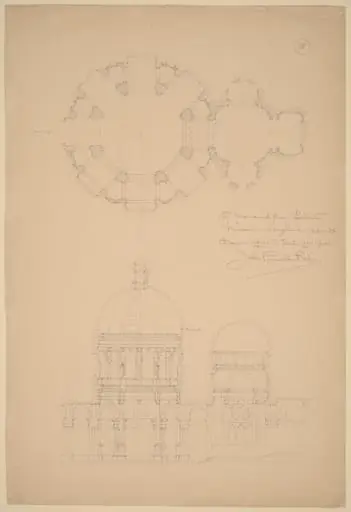
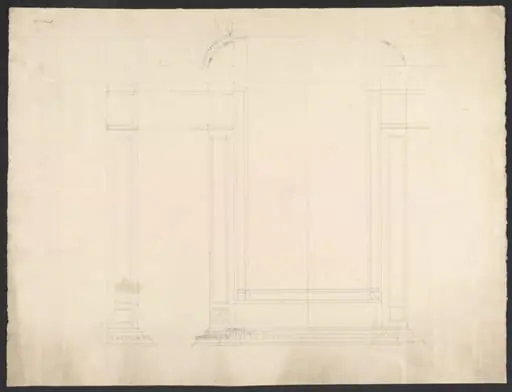
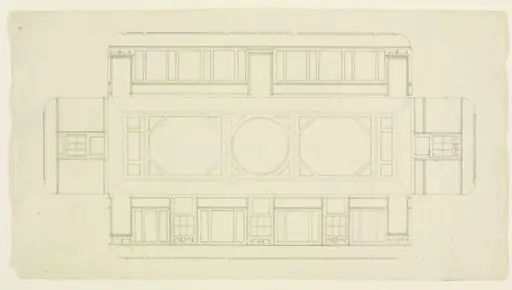
This graphite drawing, dated around 1898, depicts the Loggia del Consiglio in Padua, executed by American architect John Russell Pope. Rendered with meticulous line work, it functions as both an observational study and a technical record. The composition emphasizes architectural structure over ornament, capturing the building’s rhythmic arcade and elevated balcony with clarity and restraint.
Subject & Meaning
The subject is a public loggia, a covered arcade typical of Italian civic architecture. Pope’s focus on its structural elements—columns, arches, and staircases—reflects an interest in spatial organization and classical proportion. The drawing does not idealize the building but documents its form as a functional, enduring public space, suggesting an academic engagement with historical precedents.
Technique & Style
Executed in graphite, the drawing employs precise, controlled lines that mimic architectural drafting conventions. Shading is minimal, reserved to suggest volume and light direction without emotional emphasis. Measurements are annotated directly on the surface, aligning the work with the tradition of architectural studies meant for reference or replication rather than artistic display.
History & Provenance
Created during Pope’s formative years, likely while studying in Europe, the drawing reflects his immersion in Renaissance architecture. It was produced before his major commissions in the United States, serving as part of his training in classical design. Its survival suggests it was retained as a working document, not a finished artwork, indicating its role in his professional development.
Context
The Loggia del Consiglio, a 14th-century civic structure, offered a model of harmonious proportion that informed his later neoclassical designs.
In the late 19th century, American architects often traveled to Europe to study classical and Renaissance buildings firsthand. Pope’s drawing aligns with this practice, participating in a broader tradition of architectural sketching as a method of learning. The Loggia del Consiglio, a 14th-century civic structure, offered a model of harmonious proportion that informed his later neoclassical designs.
Legacy
This drawing exemplifies Pope’s early commitment to architectural rigor and historical fidelity. Though not widely exhibited, it contributes to understanding the foundations of his career, which included significant public buildings in the U.S. Its technical precision and restrained aesthetic foreshadow the disciplined classical language he would employ in his mature work.
Artist & collection


![The Erectheum, West Elevation [left half], by John Russell Pope](https://artifactworldgallery.com/img/john-russell-pope--the-erectheum-west-elevation-left-half--10b9b48e87f30a0f-w320.webp)