Artwork
Copii olandezi
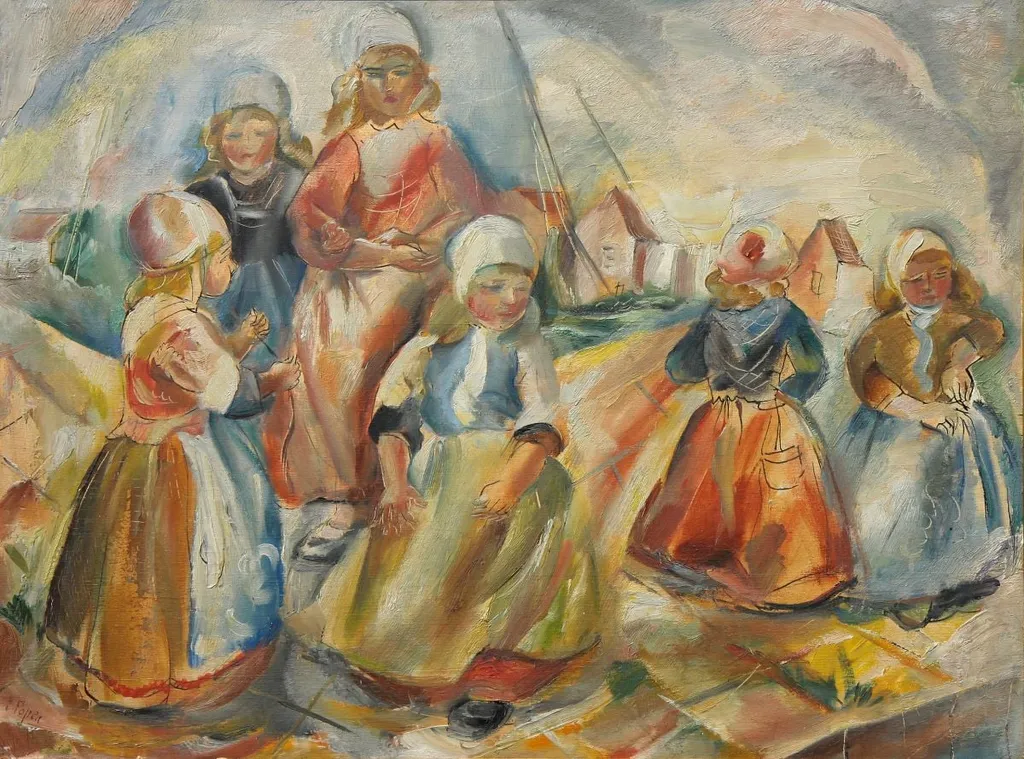
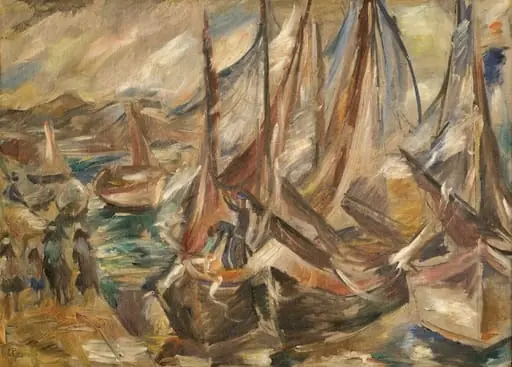
Copii olandezi is an unspecified painting by Elena Popea. It dates from 1920 and is held in the collection of the Museum of Art Cluj-Napoca.
About this work
Overview
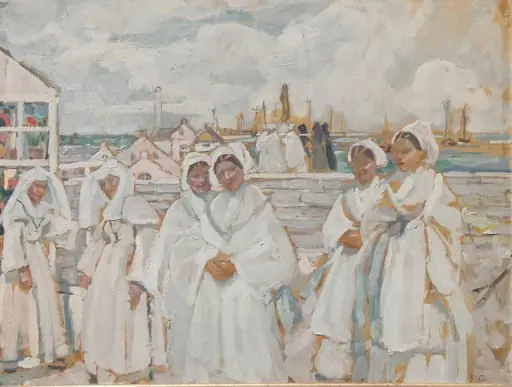
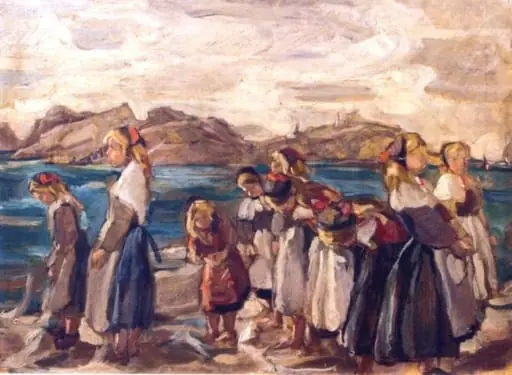
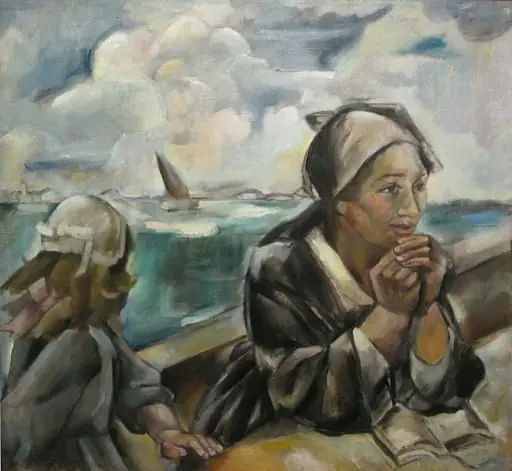
Created around 1920 by Elena Popea, a Romanian Modernist of Austro-Hungarian origin, *Copii olandezi* is a small-scale oil painting depicting a quiet outdoor scene of children in a Dutch environment. It resides in the Museum of Ethnography’s collection and reflects Popea’s engagement with early 20th-century European avant-garde trends, blending observation with expressive brushwork.
Subject & Meaning
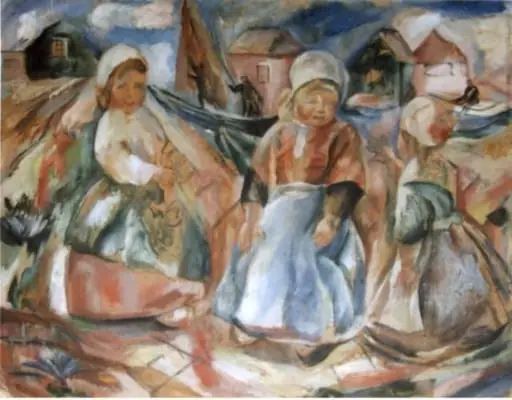
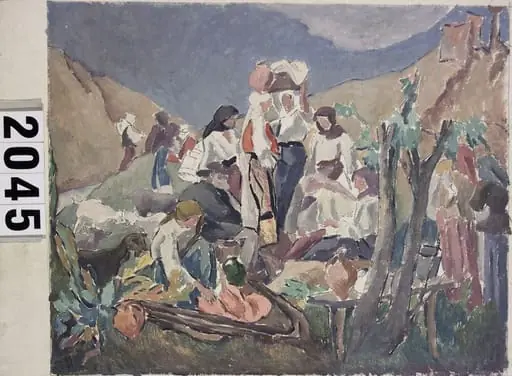
The painting shows six children in traditional attire, arranged loosely in a rural Dutch setting. Their postures suggest informal moments—some seated, others standing—as if caught in a pause between play and duty. The focus on children in regional dress hints at cultural documentation, though the work avoids sentimentality, instead emphasizing presence and atmosphere over narrative.
Technique & Style
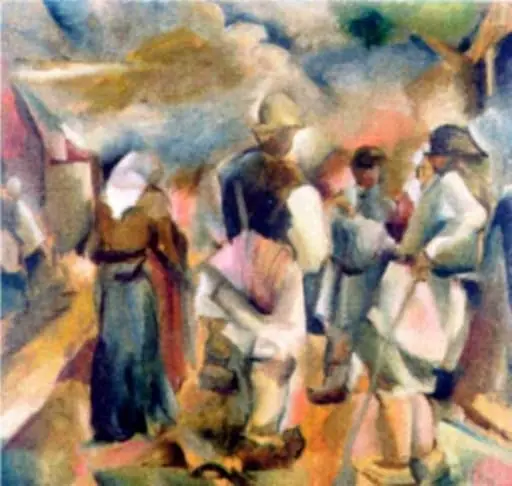
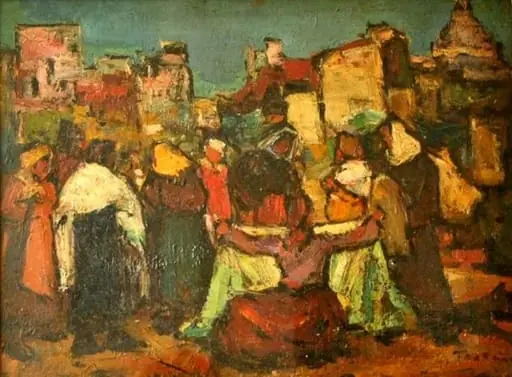
Popea applied paint with visible, thick strokes, creating a tactile surface that emphasizes texture over smoothness. Colors are vivid but unrefined, with bold contrasts between light fabrics and darker garments. The background—water, boats, and buildings—is rendered with looser, softer handling, allowing the figures to emerge with physical weight and immediacy.
History & Provenance
The painting entered the Museum of Ethnography’s holdings in the early 20th century, likely through institutional acquisition or donation. Its presence in a museum focused on cultural artifacts suggests an interest in folk life and regional identity. Popea’s Romanian context and the Dutch subject matter reflect the transnational currents of artistic exchange during the interwar period.
Context
Painted shortly after World War I, *Copii olandezi* emerges amid a broader European fascination with childhood, folk traditions, and non-urban life. Popea’s synthesis of Impressionist light, Expressionist energy, and Cubist simplification aligns with modernist efforts to reinterpret everyday scenes through new formal languages, distancing herself from academic realism.
Legacy
Though not widely exhibited outside Romania, the work remains a representative example of Popea’s unique position within Romanian Modernism. Its combination of ethnographic detail and painterly freedom offers insight into how female artists of the era navigated international styles while grounding their vision in local and observed realities.
Artist & collection
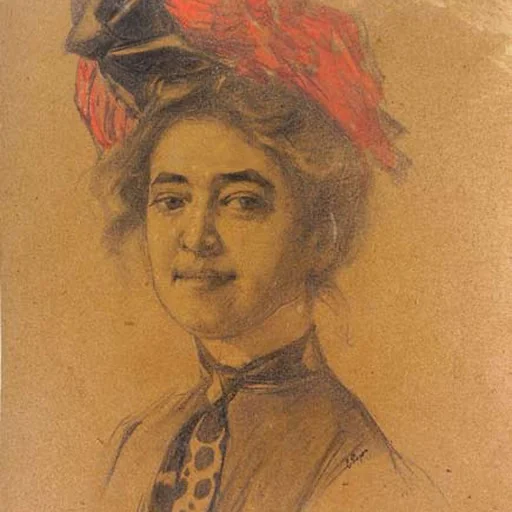
Artist
Elena Popea (15 April 1879, Brașov – 19 June 1941, Bucharest) was an Austro-Hungarian-born Romanian Modernist painter whose influences included Impressionism, Expressionism and Cubism.