Artwork
Călugărițe din Bretania
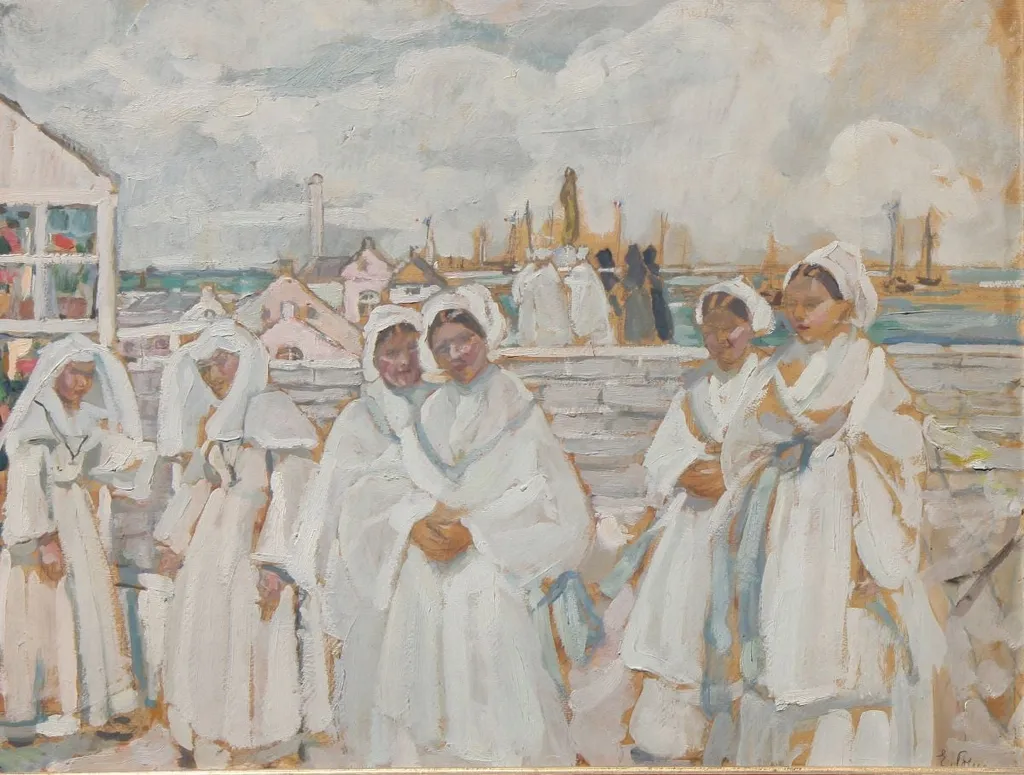
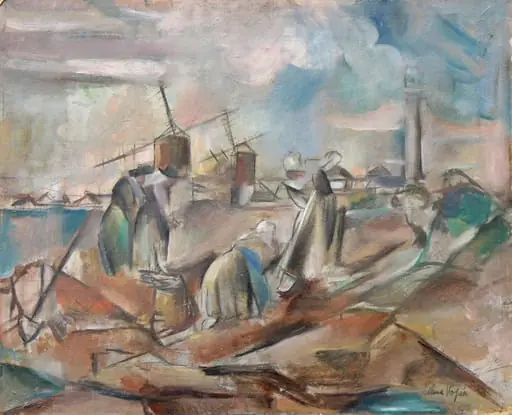
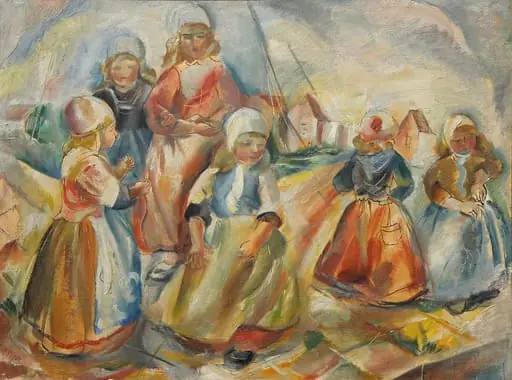
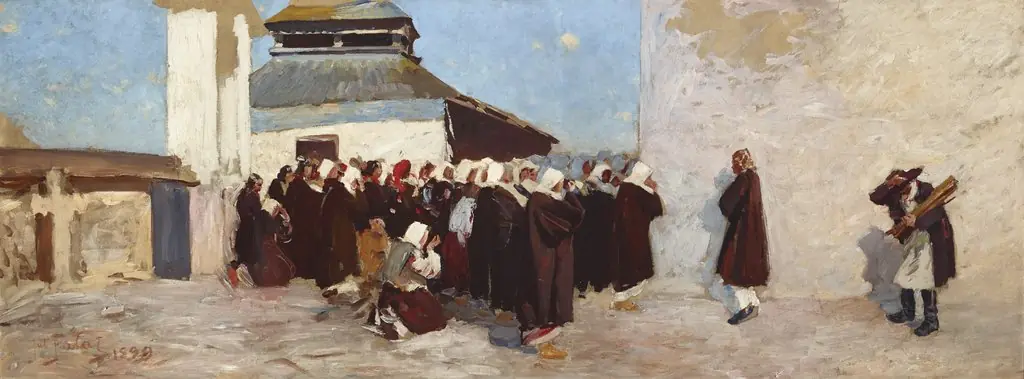
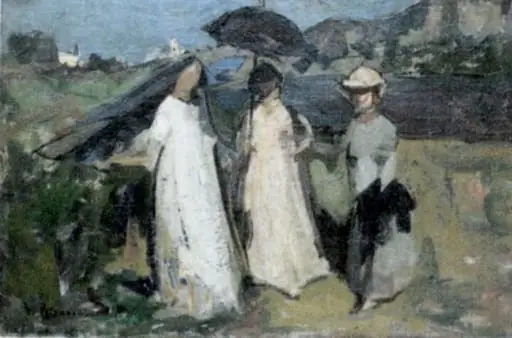
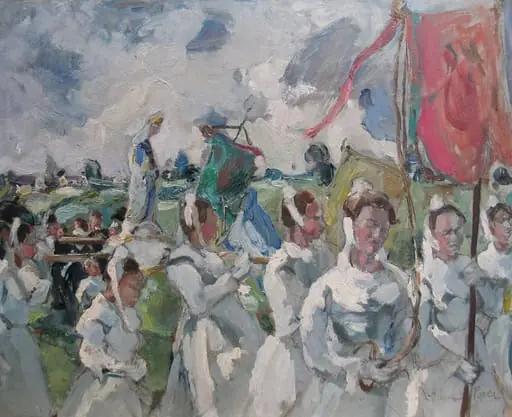
Călugărițe din Bretania is an unspecified painting by Elena Popea. It dates from 1920 and is held in the collection of the Museum of Art Cluj-Napoca.
About this work
Overview
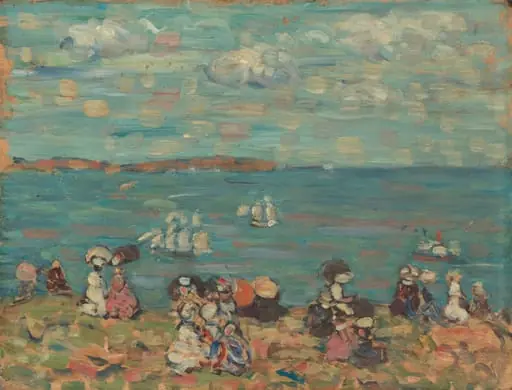
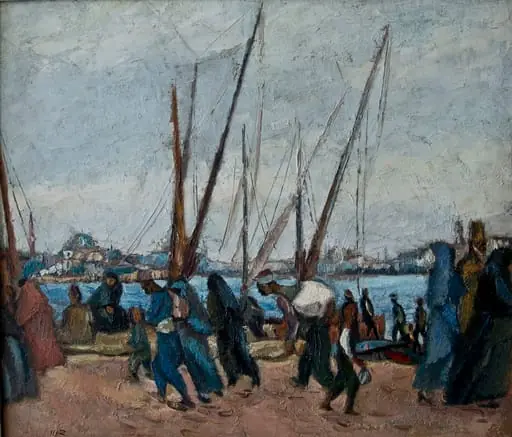
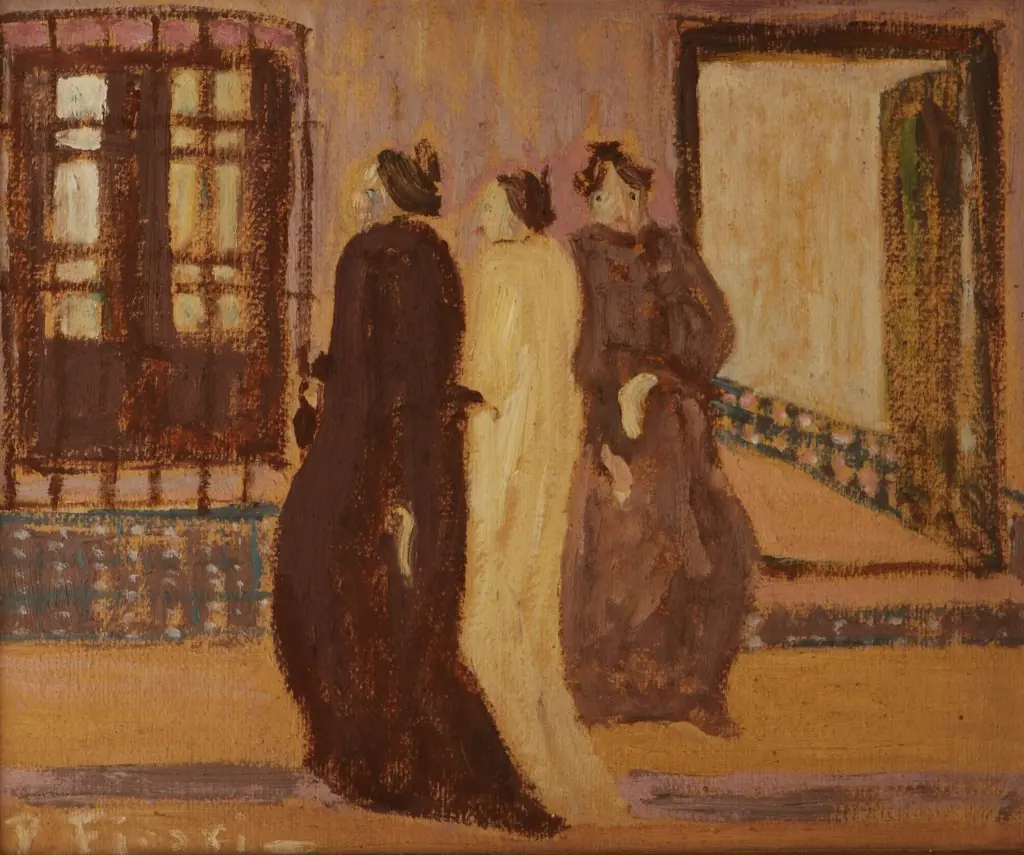
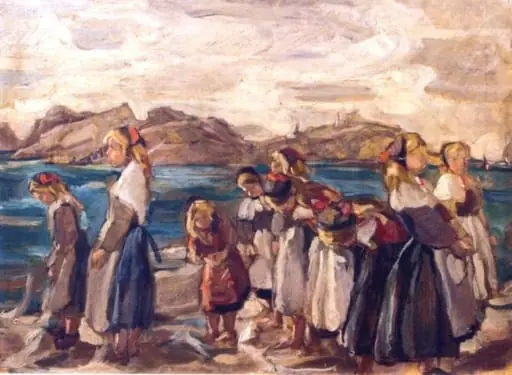
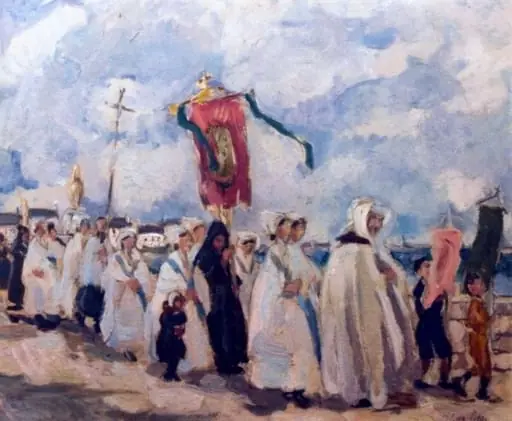
Created circa 1920 by Elena Popea, a Romanian modernist who trained in the Austro‑Hungarian milieu, this oil painting depicts a group of five nuns standing together on a Breton waterfront. The work is part of the Museum of Ethnography’s holdings and presents a quiet, communal moment against a cloudy sky and a harbor scene.
Subject & Meaning
The composition centers on the five women in white habits and headscarves, their expressions calm and slightly weary, suggesting a pause in daily religious routine. The surrounding boats and buildings anchor the figures in a specific locale—Brittany—highlighting the intersection of spiritual life with the everyday life of a coastal community.
Technique & Style
Popea employs a thick, impasto application that gives the surface a tactile quality, especially in the rendering of the figures’ garments. While the palette remains muted and soft, the stark whiteness of the habits stands out. The handling of form reflects a synthesis of Impressionist light, Expressionist mood, and Cubist simplification of space.
History & Provenance
The painting entered the Museum of Ethnography’s collection after the artist’s death, joining a broader assemblage of works that document cultural practices across Europe. Its acquisition reflects the museum’s interest in visual records of regional customs and religious attire.
Context
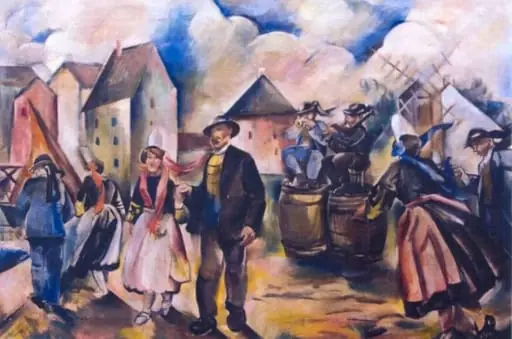
Popea’s oeuvre frequently explored communal scenes, often focusing on ordinary people in public or work settings. This piece aligns with her broader interest in portraying cultural identity through everyday moments, a concern shared by many early‑20th‑century modernists who sought to document social life beyond the urban avant‑garde.
Artist & collection
Artist
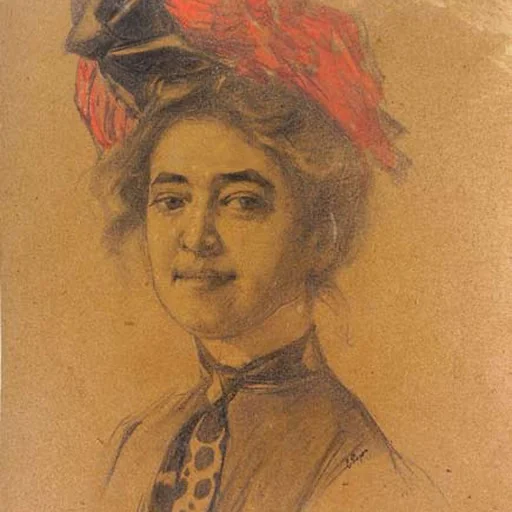
Elena Popea (15 April 1879, Brașov – 19 June 1941, Bucharest) was an Austro-Hungarian-born Romanian Modernist painter whose influences included Impressionism, Expressionism and Cubism.