Artwork
Peisaj din Olanda
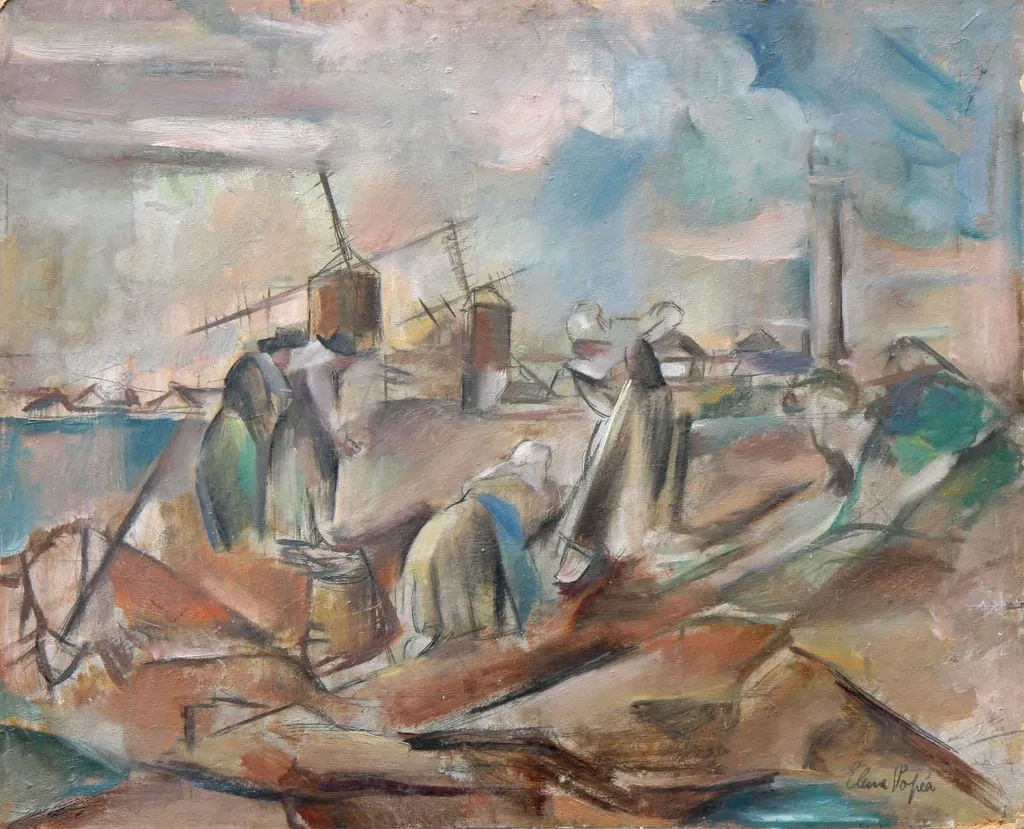
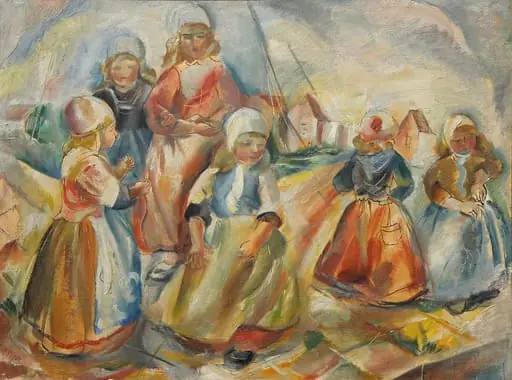
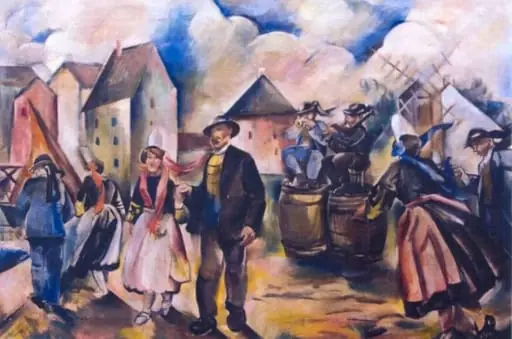
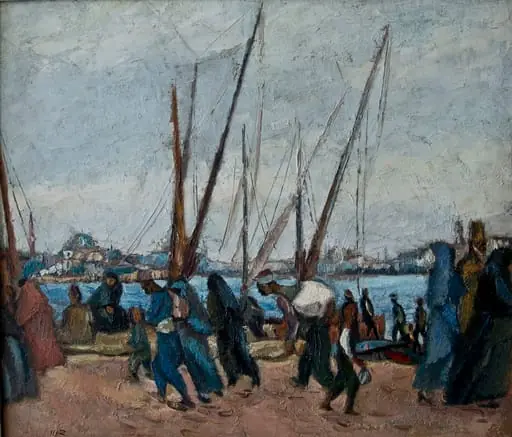
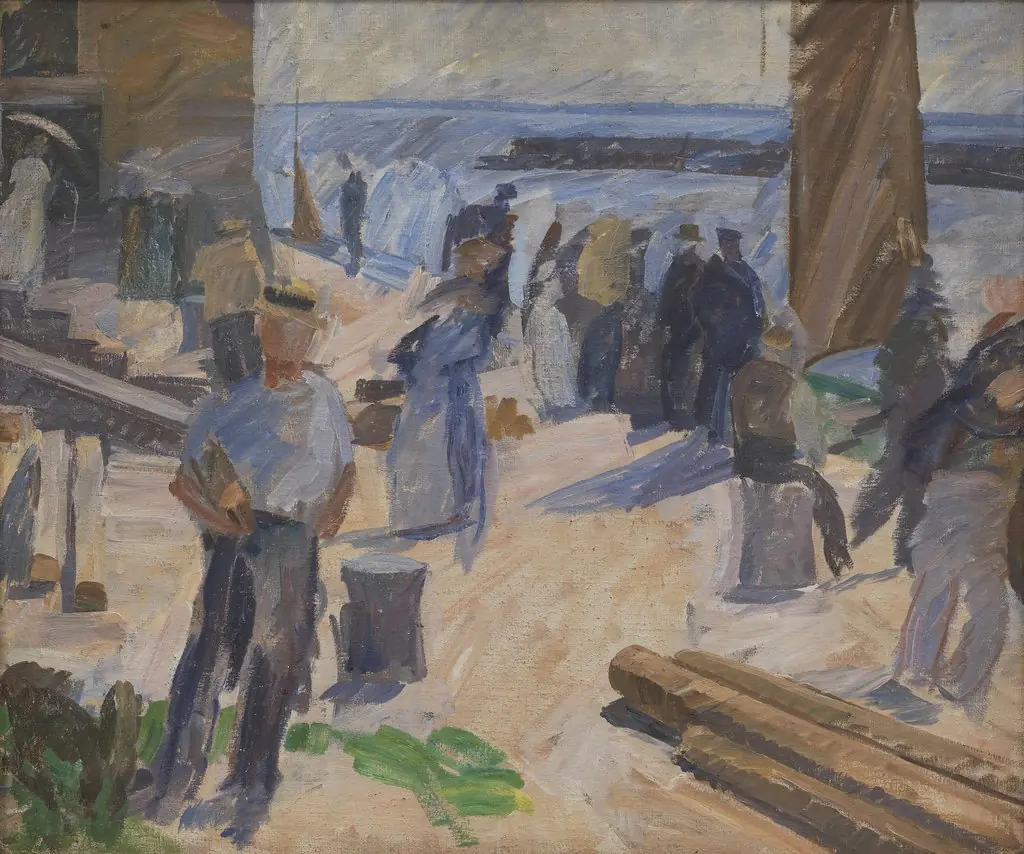
Peisaj din Olanda is an unspecified painting by Elena Popea. It dates from 1920 and is held in the collection of the Museum of Art Cluj-Napoca.
About this work
Overview
Popea, born in Austro-Hungary and active in Romania, blended elements of Impressionism, Expressionism, and Cubism in her work.
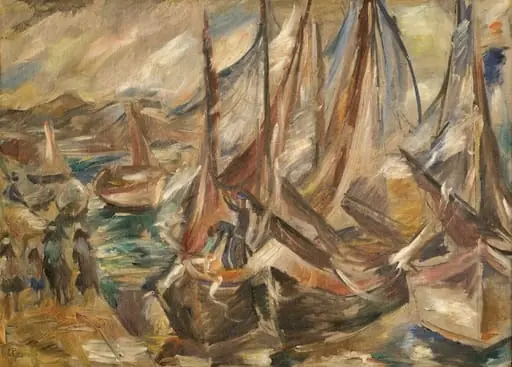
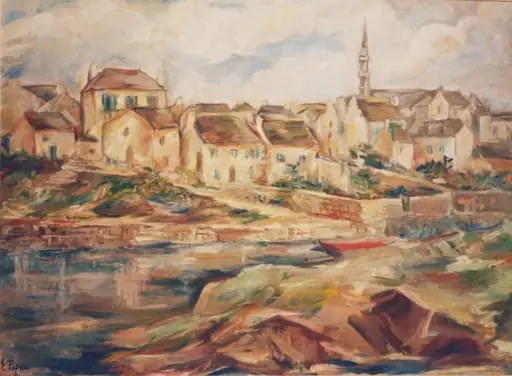
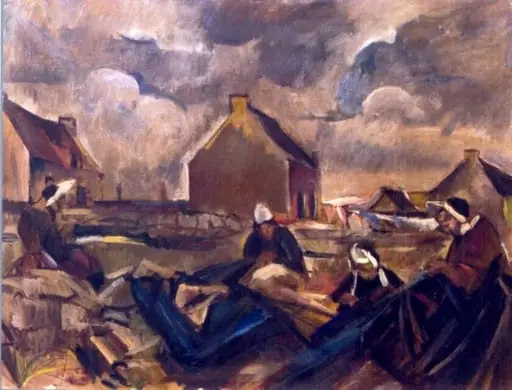
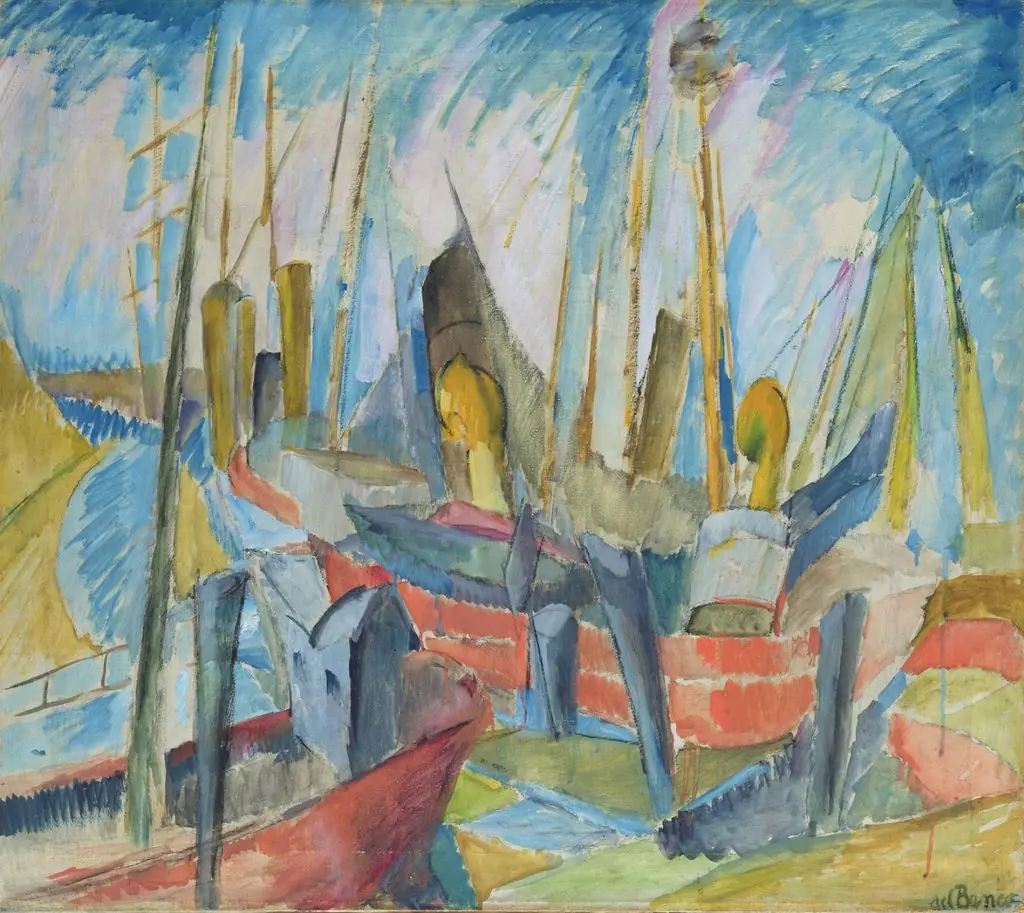
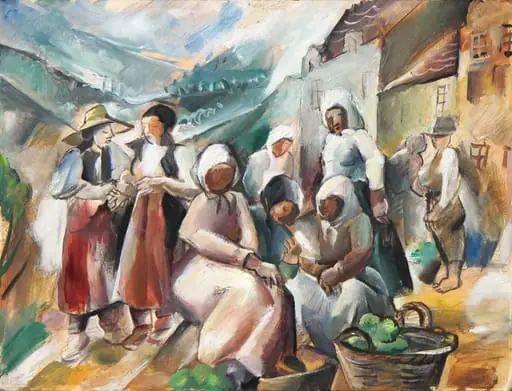
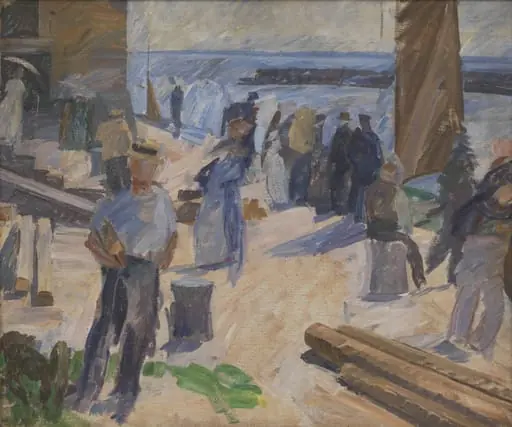
Painted around 1920 by Elena Popea, *Peisaj din Olanda* is a landscape depicting a Dutch waterfront. Popea, born in Austro-Hungary and active in Romania, blended elements of Impressionism, Expressionism, and Cubism in her work. This piece, held by the Museum of Ethnography, reflects her interest in everyday rural and coastal life, rendered with a tactile, energetic brushwork that distinguishes it from more polished academic traditions.
Subject & Meaning
The scene captures laborers and animals engaged in routine tasks along a canal—horses pulling carts, figures handling ropes, boats moored nearby. Windmills rise in the distance, anchoring the setting in the Dutch countryside. The absence of dramatic narrative emphasizes quiet, unromanticized work, suggesting a focus on the rhythm of daily life rather than idealized scenery. The composition invites contemplation of human and animal labor within a structured natural environment.
Technique & Style
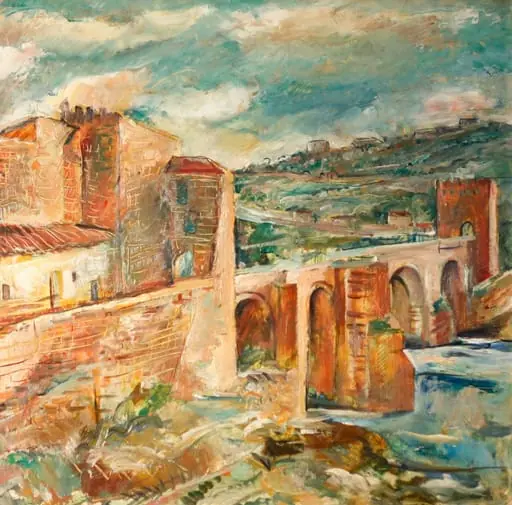
Popea employed thick, visible brushstrokes to build texture, using impasto to convey the roughness of earth, water, and fabric. Colors are restrained—earthy browns, muted blues, and subdued greens—creating a harmonious, atmospheric tone. The loose handling of forms and soft sky suggest Impressionist influence, while the simplified shapes and flattened space hint at early modernist abstraction. The brushwork gives motion to the scene without sacrificing structural clarity.
History & Provenance
The painting entered the collection of the Museum of Ethnography in Romania, where it remains today. Its presence there reflects the institution’s broader interest in cultural representations of rural and regional life. While little is documented about its early ownership, its inclusion in a museum focused on ethnographic material suggests it was valued for its depiction of everyday labor and landscape, rather than as a purely aesthetic object.
Context
Created in the aftermath of World War I, the painting aligns with a broader European trend of artists turning to ordinary subjects amid social upheaval. Popea’s engagement with modernist styles was part of a Romanian artistic movement seeking to reconcile local themes with international trends. The Dutch landscape, though foreign, resonated with Romanian artists drawn to its agrarian rhythms and accessible realism, offering a model of quiet, dignified labor.
Legacy
Though not widely exhibited beyond Romania, *Peisaj din Olanda* exemplifies Popea’s role in expanding Romanian modernism beyond urban portraiture into rural and international landscapes. Her use of expressive brushwork and muted palettes influenced later generations interested in emotional texture over formal precision. The work endures as a quiet testament to the intersection of personal style and broader artistic currents in early 20th-century Eastern Europe.
Artist & collection
Artist
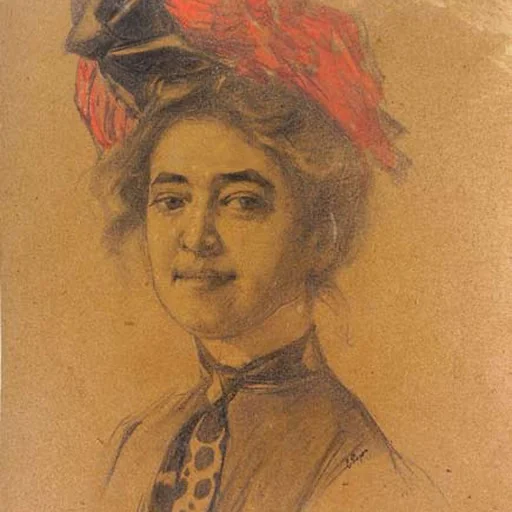
Elena Popea (15 April 1879, Brașov – 19 June 1941, Bucharest) was an Austro-Hungarian-born Romanian Modernist painter whose influences included Impressionism, Expressionism and Cubism.