Artwork
Elanul
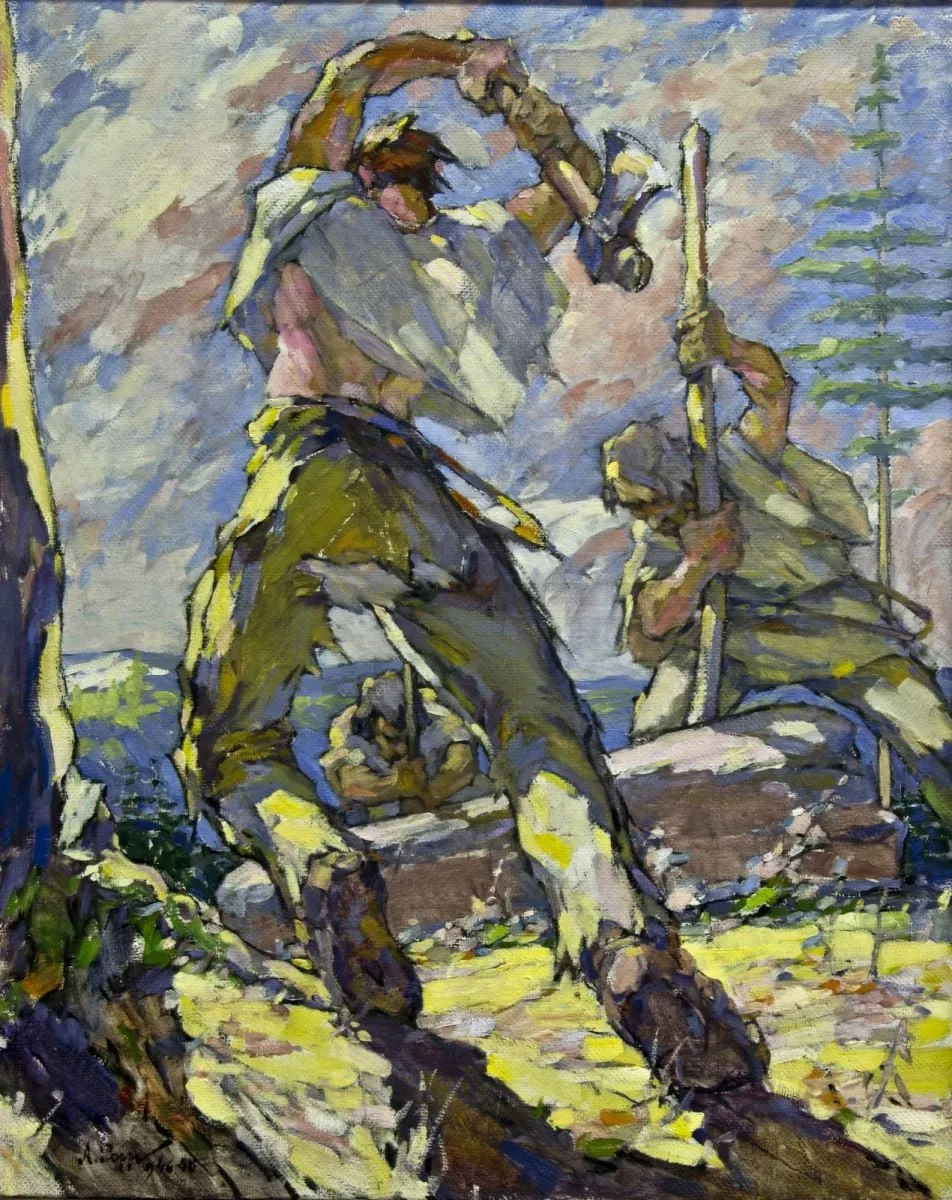
Elanul is a print by Aurel Popp. It dates from 1947 and is held in the collection of the National Museum of Art of Romania.
About this work
Overview
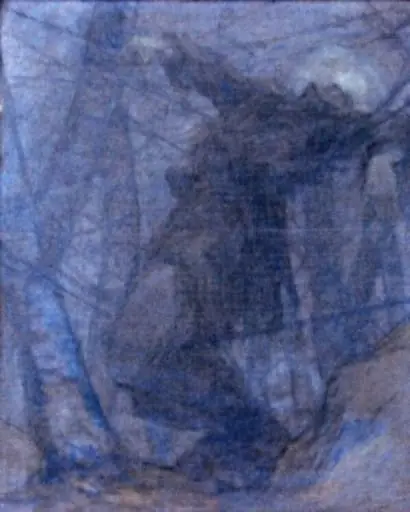
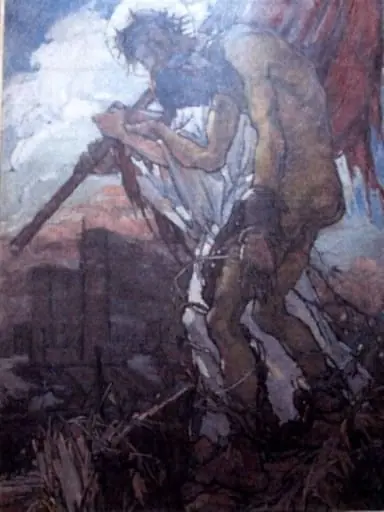
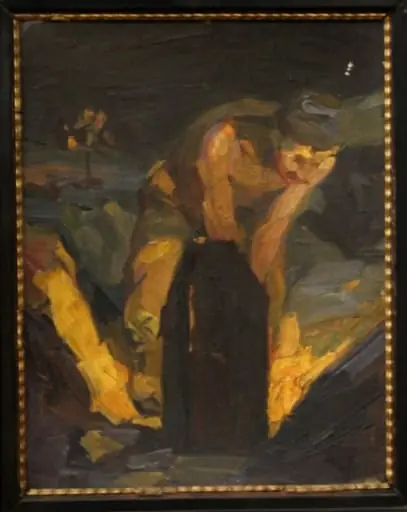
The composition centers on a seated individual holding a stick and a curved implement, rendered with energetic, unrefined brushwork.
Elanul, painted around 1947 by Aurel Popp, is a small-scale oil work depicting a solitary figure in a rugged natural setting. The composition centers on a seated individual holding a stick and a curved implement, rendered with energetic, unrefined brushwork. The surface is heavily textured, suggesting urgency or spontaneity in execution. The palette is restrained, dominated by earth tones and muted blues and yellows, contributing to an atmosphere of quiet isolation.
Subject & Meaning
The figure, neither clearly identified nor engaged in a specific action, appears as a silent observer within the landscape. The stick and curved tool suggest utility—perhaps for gathering or labor—but their purpose remains ambiguous. The lack of narrative detail invites interpretation as a meditation on solitude, rural existence, or the human relationship with terrain. There is no indication of time or place beyond the rawness of the environment.
Technique & Style
Popp employs thick, visible brushstrokes that build form through texture rather than detail. The paint is applied in a manner reminiscent of impasto, with layers piled unevenly across the canvas. Colors are blended roughly, creating a tactile, almost weathered surface. The absence of smooth transitions and the deliberate roughness suggest an intentional rejection of polished finish, favoring immediacy and physical presence over refinement.
History & Provenance
Elanul was produced in the immediate postwar period in Romania, during a time of cultural reevaluation. While little documentation exists about its early ownership, it is known to have remained within Romanian collections. Its survival through political shifts suggests it was not deemed ideologically problematic, though its non-conformist style likely kept it outside official artistic circles of the era.
Context
Created in the late 1940s, Elanul emerged amid Romania’s shifting artistic landscape, where socialist realism was becoming state-mandated. Popp’s approach—unpolished, emotionally restrained, and focused on the individual within nature—contrasts with the heroic, idealized figures promoted by the regime. The work reflects a quieter, personal response to a turbulent time, rooted in observation rather than propaganda.
Legacy
Elanul remains a modest but significant example of postwar Romanian painting that resisted official aesthetics. It is rarely exhibited but acknowledged in scholarly discussions of non-conformist art from the period. Its raw technique and introspective tone have influenced later generations seeking alternatives to state-sanctioned imagery, preserving a voice of individual expression during a repressive era.
Artist & collection