Artwork
The Wedding Procession
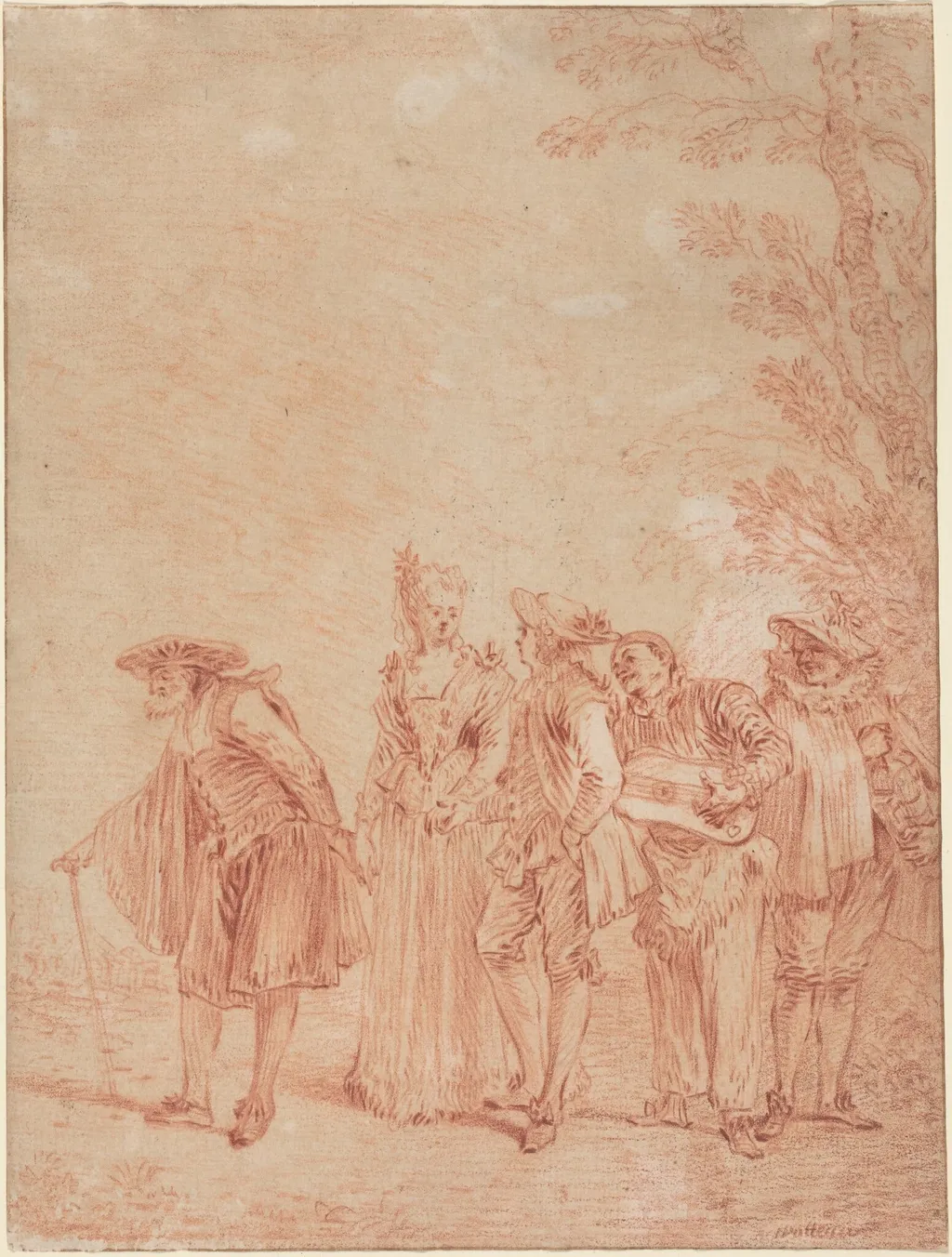
The Wedding Procession is a chalk drawing by the Baroque artist Jean Antoine Watteau. It dates from 1712 and is held in the collection of the National Gallery of Art.
About this work
Overview
Antoine Watteau’s drawing titled The Wedding Procession, executed around 1712, is a red‑chalk composition on laid paper. The work presents a small group of five figures moving together, rendered in a delicate, monochromatic palette that emphasizes line over colour. Though modest in scale, the drawing captures a moment of collective motion within a lightly suggested landscape.
Subject & Meaning
The scene depicts a procession of elegantly dressed participants, likely en route to a nuptial ceremony. Two men in hats and coats, one supporting a cane, accompany three women whose gowns cascade in soft folds. The arrangement suggests a ceremonial atmosphere, with the figures’ forward stride and attentive poses conveying a sense of communal anticipation.
Technique & Style
Watteau employed red chalk applied over a red‑chalk counterproof, allowing the underlying drawing to inform the final marks. Through layered, light strokes he built form and volume, achieving a translucency that renders the figures both lively and slightly ethereal. The faint background—suggested trees and sky—remains subordinate to the gestural outlines of the participants.
History & Provenance
Created circa 1712, the drawing belongs to Watteau’s early 18th‑century output, a period when he explored figural studies in red chalk. While specific ownership records are limited, the work is recognized as part of the artist’s corpus of preparatory sketches that illuminate his approach to composition and costume design.
Artist & collection
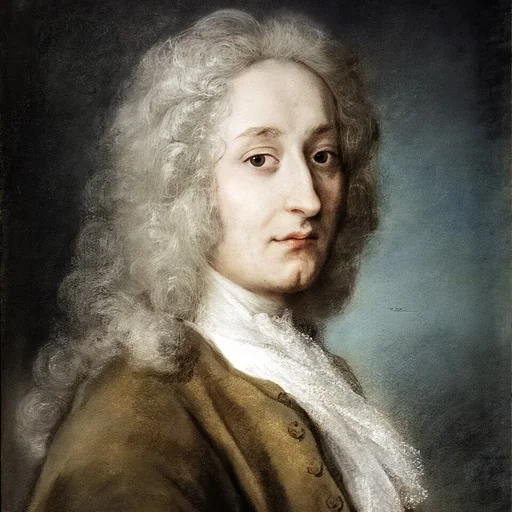
Artist
Jean-Antoine Watteau was a French painter and draughtsman whose brief career spurred the revival of interest in colour and movement, as seen in the tradition of Correggio and Rubens.

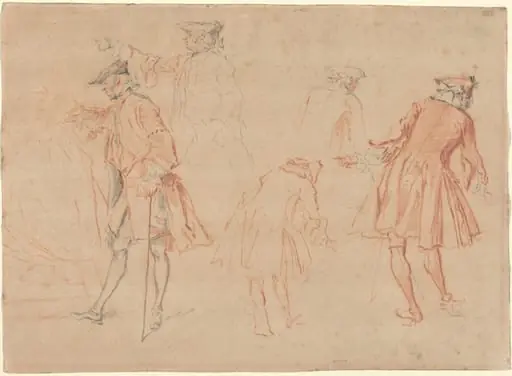 Sketches of a Gentleman
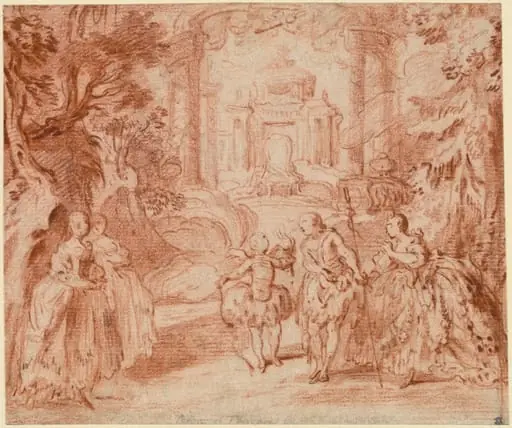 The Divertissement from Voltaire's "La princesse de Navarre"
 An Old Man with a Cape and a Rustic with a Backpack
 Quoi! Vous servez Valois...
 Children Parodying a Triumph of Bacchus
 A Fête Galante with Falconers
 A Shepherd and Shepherdess Seated under a Tree
 Ballet at the Opera
 Ladies and Gentlemen in a Country Park
 Oui, je la connais Traitre, et je connais ton Coeur
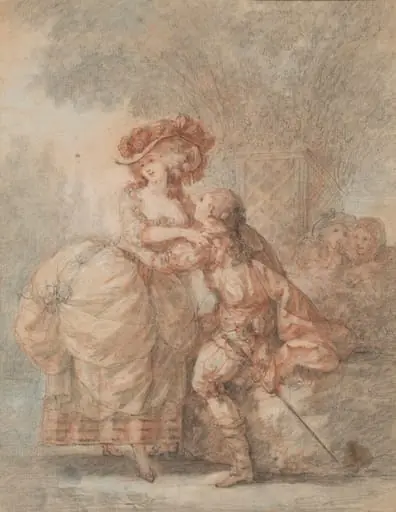 The Declaration of Love
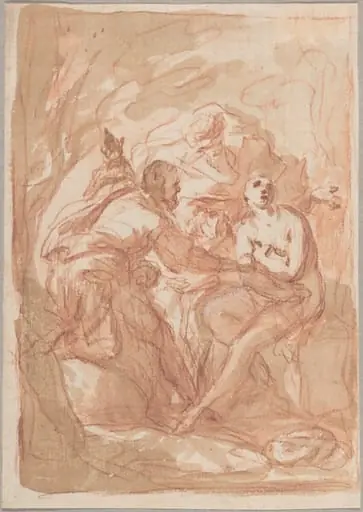 Susanna and the Elders