Artwork
Hellandshoin
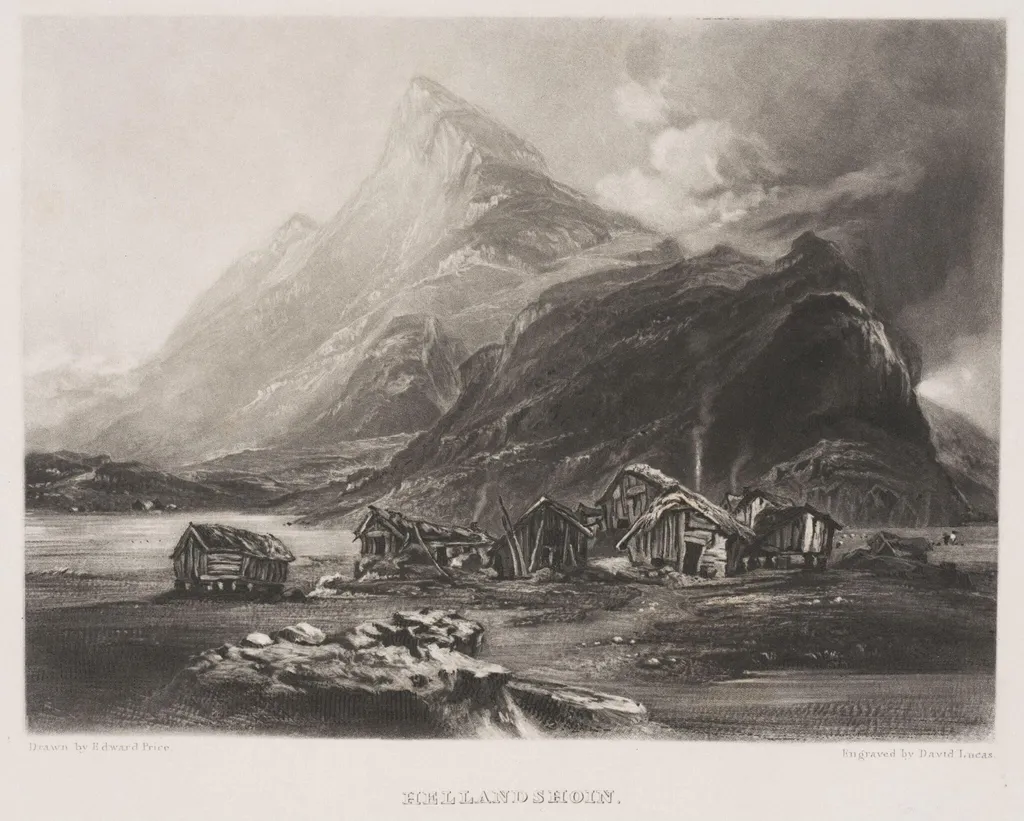
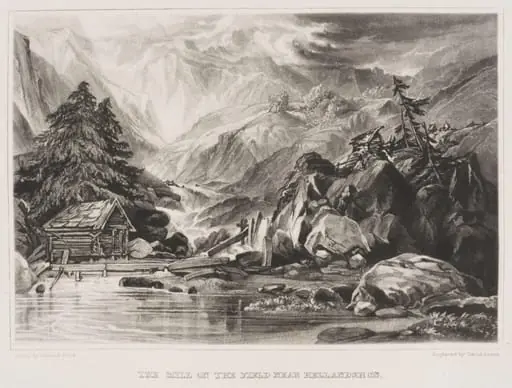
Hellandshoin is a print by the Romanticist artist Edward Price. It dates from 1834 and is held in the collection of the Victoria and Albert Museum.
About this work
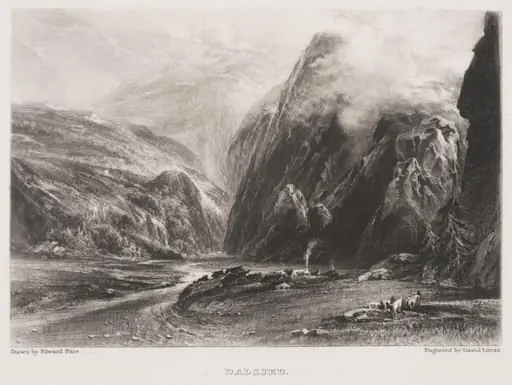
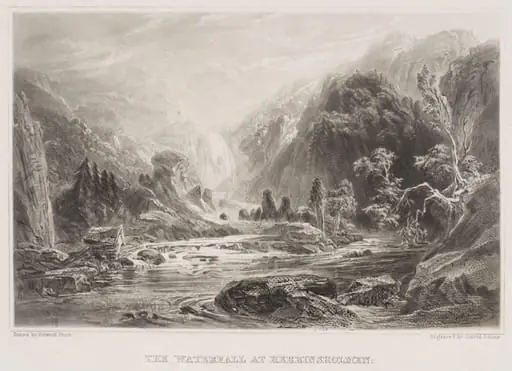
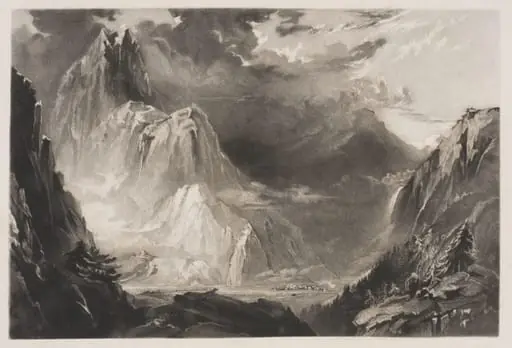
This print shows a big mountain looming over a small village. The buildings look old and weathered, with smoke rising from one chimney. The ground is rocky, and the water near the shore is calm.
The artist used shading to make the mountain look dramatic. The title is *Hellandshoin*, and it’s from 1834.
Check out Romanticism to see how artists used nature this way.
Overview
Hellandshoin is a mezzotint print created by Edward Price in 1834. It depicts a serene landscape of a small, weathered village nestled beneath a dominant mountain, with calm water at the shore and smoke rising from a single chimney. The piece showcases Price's use of shading to emphasize the mountain's dramatic presence.
Subject & Meaning
The subject of Hellandshoin is a contrast between the tranquility of a small village and the imposing grandeur of nature, as embodied by the looming mountain. This juxtaposition aligns with Romantic-era themes that often highlighted the awe-inspiring power of natural landscapes in relation to human habitation.
Technique & Style
Technically, Hellandshoin demonstrates Price's skill in mezzotint, a printmaking technique that allows for subtle, expressive shading. The dramatic shading used to render the mountain showcases the artist's ability to evoke depth and atmosphere, characteristic of the medium's capabilities.
History & Provenance
Originally part of the Lennox-Boyd collection, known for its extensive holdings of British mezzotints (notably those by David Lucas after John Constable), Hellandshoin was transferred to the Victoria and Albert Museum in 2015 as part of an inheritance tax settlement. The collection also included diverse artifacts such as 18th-century picture frames and printed ephemera.
Context
Created in 1834, Hellandshoin reflects the artistic tendencies of the Romantic era, where nature was often depicted as a force of immense power and beauty. For deeper understanding, the work can be contextualized within the broader movement of Romanticism, which influenced how artists represented the natural world.
Artist & collection

![The Alps [recto], by John Singer Sargent](https://artifactworldgallery.com/img/john-singer-sargent--the-alps-recto--be3c1d8551c9fe49-w320.webp)