Artwork
Sf. Arhidiacon Ștefan
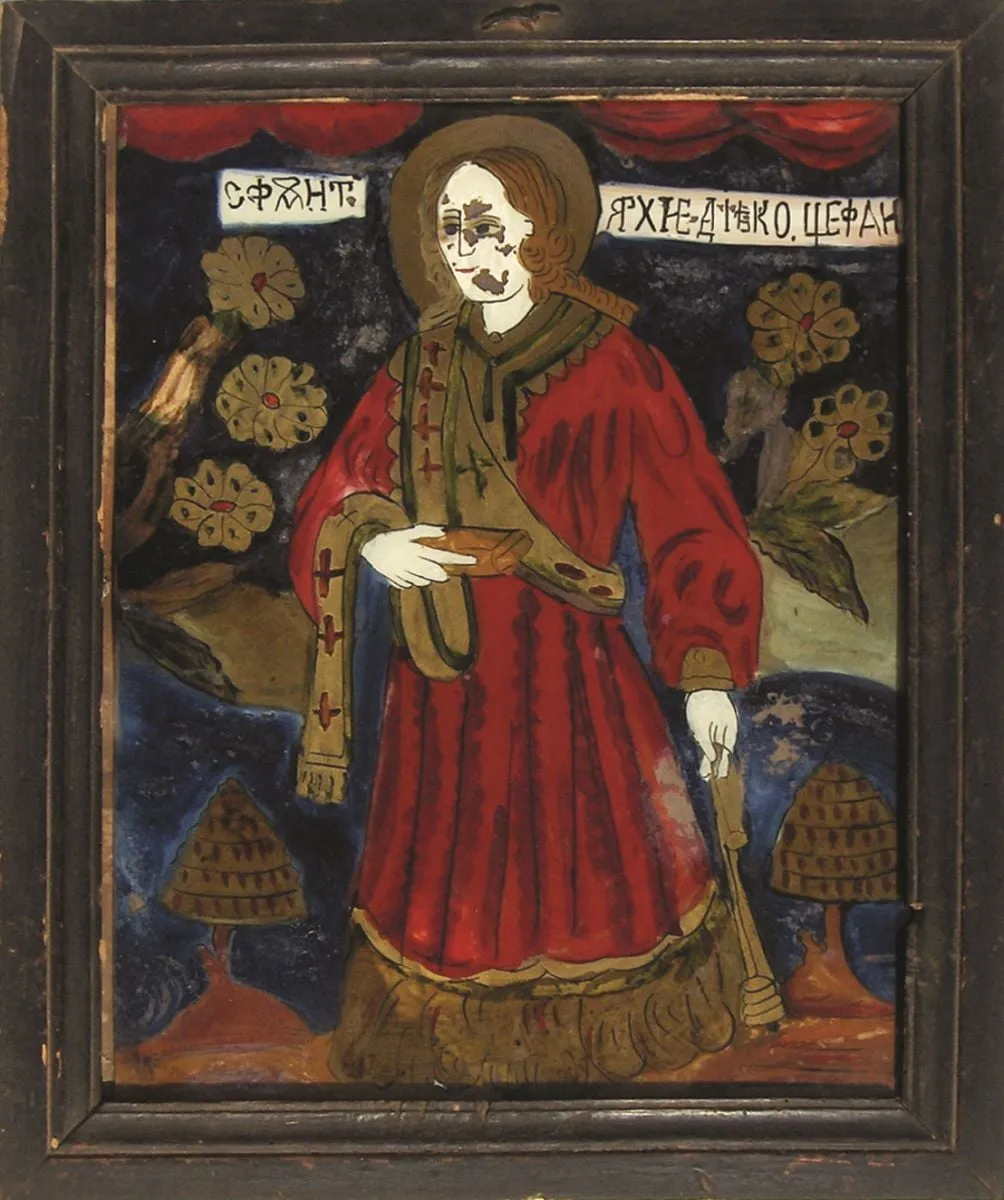
Sf. Arhidiacon Ștefan is a drawing by Maria Prodan. It is held in the collection of the Alba Iulia Unification National Museum. This religious panel painting depicts Saint Stephen, archdeacon and first martyr, rendered in a folk-inspired style.
About this work
Overview
The figure stands against a dark blue field adorned with ornamental motifs, suggesting a sacred space beyond earthly time.
This religious panel painting depicts Saint Stephen, archdeacon and first martyr, rendered in a folk-inspired style. Executed with flat planes of color and strong outlines, the work emphasizes symbolic presence over naturalism. The figure stands against a dark blue field adorned with ornamental motifs, suggesting a sacred space beyond earthly time. The piece is held in the collection of the Museum of Ethnography.
Subject & Meaning
The figure represents Saint Stephen, identified by his halo and the cross on his robe, attributes common in Orthodox iconography. He holds a long object, likely a palm branch or Gospel, symbolizing his martyrdom and devotion. His downward gaze conveys solemnity and spiritual introspection. The floral and decorative background may reference heavenly abundance or liturgical textiles, reinforcing his sanctity.
Technique & Style
The painting employs bold, unmodulated colors and simplified forms typical of regional religious art. Facial features are minimally rendered, prioritizing symbolic recognition over individual likeness. The background is densely patterned with stylized flowers and geometric elements, contrasting with the figure’s solid silhouette. Brushwork is direct, with no shading or perspective, aligning with traditional icon-painting methods.
History & Provenance
The work is attributed to Maria Prodan, though documentation remains sparse. It entered the Museum of Ethnography’s collection as part of a broader effort to preserve vernacular religious artifacts. Its origin likely lies in a rural Romanian community, where such panels were used in domestic or small chapel settings. No precise date is recorded, but stylistic traits suggest late 19th or early 20th century creation.
Context
This painting reflects a tradition of lay-produced religious imagery in Romanian villages, where trained iconographers were scarce. Local artisans adapted ecclesiastical models using available materials and regional aesthetics. Such works bridged official liturgy and popular piety, serving as devotional aids in homes. The emphasis on pattern and color, rather than realism, aligns with broader Eastern European folk art practices.
Legacy
As a representative of non-elite religious art, the piece contributes to understanding how faith was visually expressed beyond urban monasteries. Its preservation in an ethnographic museum underscores its cultural value as a witness to communal belief systems. While not part of canonical iconographic canons, it remains a meaningful artifact of local spiritual life in historical Romania.
Artist & collection
Artist
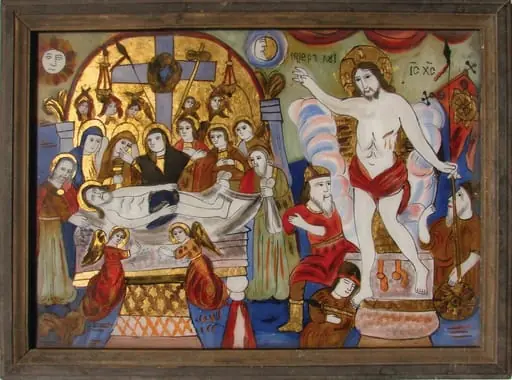
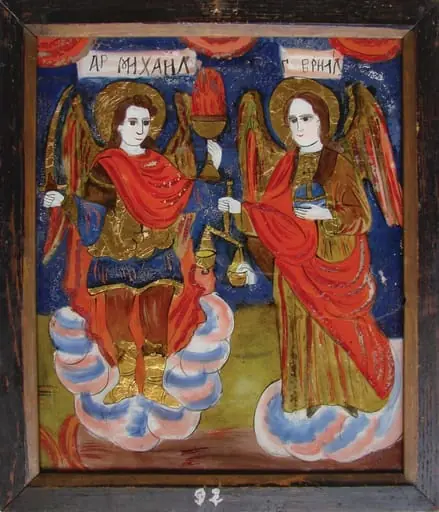
Maria Prodan's work belongs to a traditional era of religious art. She painted "Sfinții Mihail și Gavril" and drew "Prohodul și Învierea lui Iisus". These pieces, along with "Iisus Hristos arhiereu și învățător,…
Museum
Alba Iulia Unification National Museum
Continue through works from the same source collection.
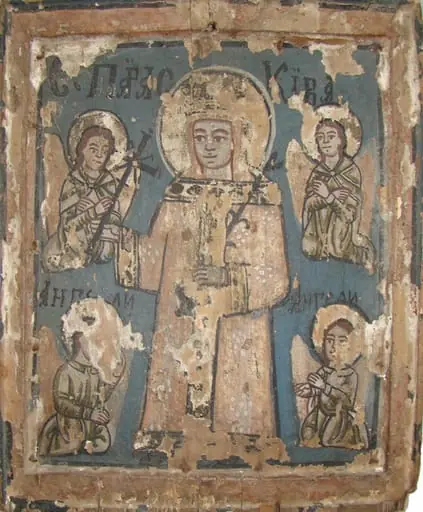 Sf. Paraschiva
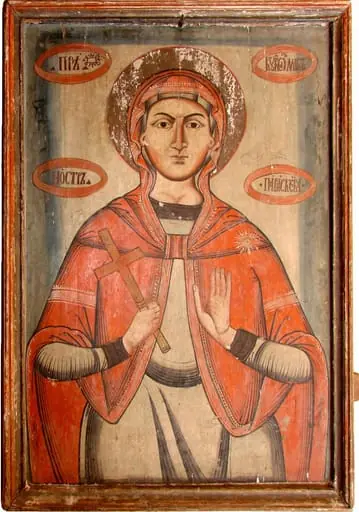 Sf. Paraschiva
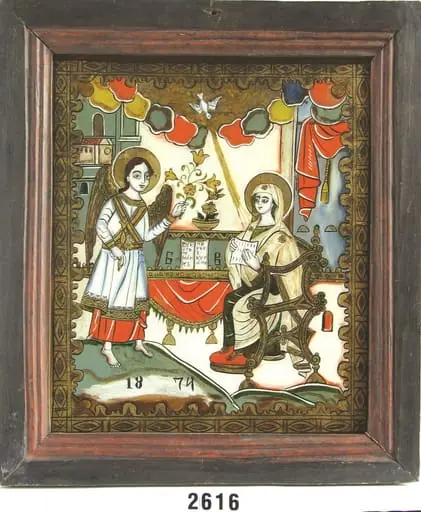 Bunavestire
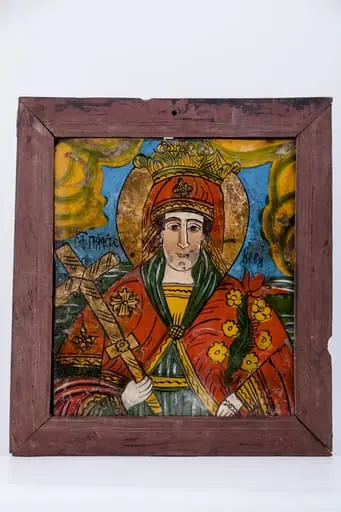 Sfânta Mare Cuvioasă Parascheva de la Iași are crucea în mâna dreaptă și ramură înflorită, cu 6 flori galbene și una roșie în vârf în mâna stângă. Este îmbrăcată în veșmânt roșu vermillon, cu interiorul căptușit cu verde și galben. Peste maforionul roșu, sfânta cuvioasă are aureolă. Fondul icoanei este cerul albastru regal, cu o arcadă de lumină galbenă, în registrul superior și bronziu, în jurul chipului și aureolei Sfintei Paraschiva și o alternanță de câmpuri verzi, dispuse paralel, în registrul mediu și inferior. Este o icoană cu aer cald, tomnatic, de octombrie 14, Praznicul Sfintei Cuvioase Parascheva. Inscripția din româno-chirilică se traduce Sf Paraschiva. Cromatica este armonioasă: roșu vermillon, albastru regal, verde văratic și forest, brun-cafeniu, negru, galben chihlimbar, ocru, bronziu, gri, negru, alb. Icoana este din Țara Oltului.
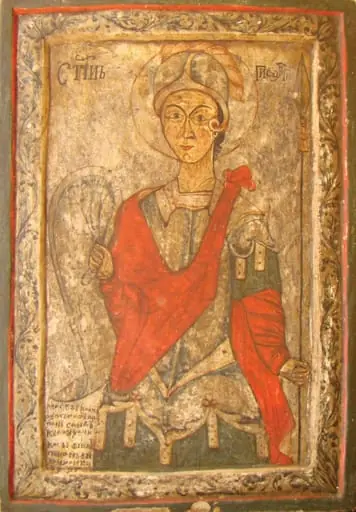 Sf. Gheorghe
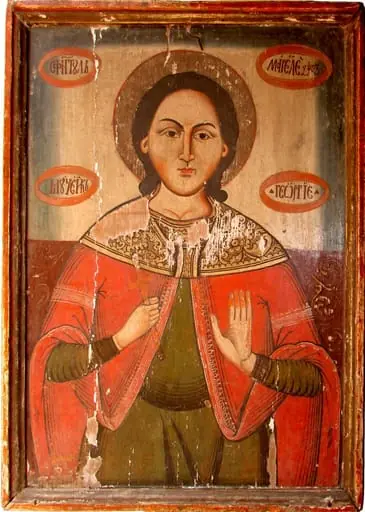 Sf. Gheorghe
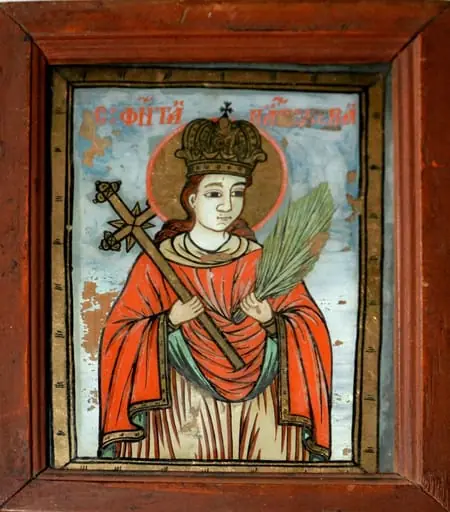 Sf. Paraschiva
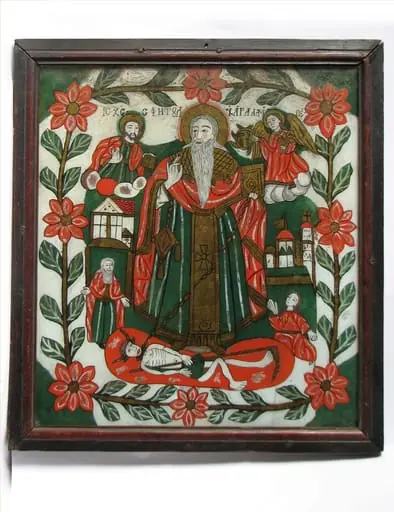 Sfântul Mare Mucenic Haralambie
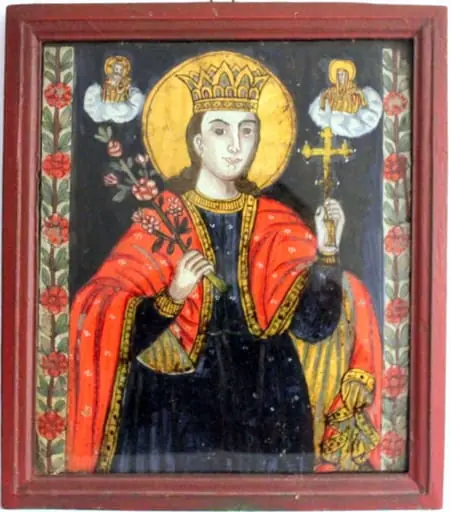 Sf. Paraschiva