Artwork
Making Shoes
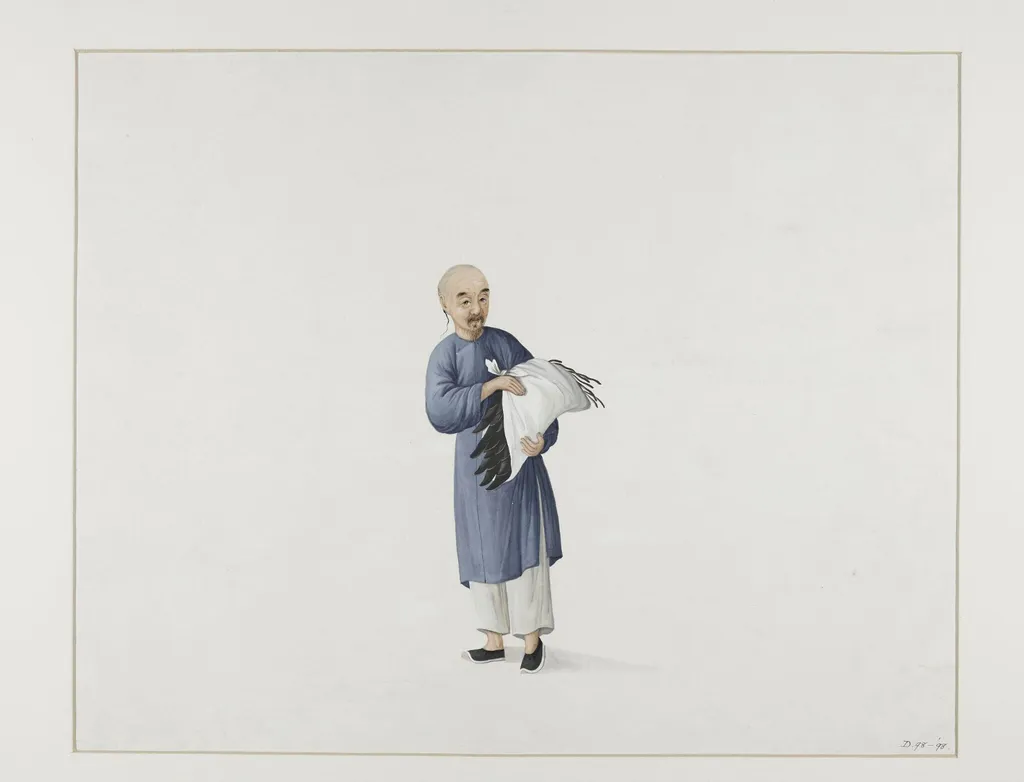
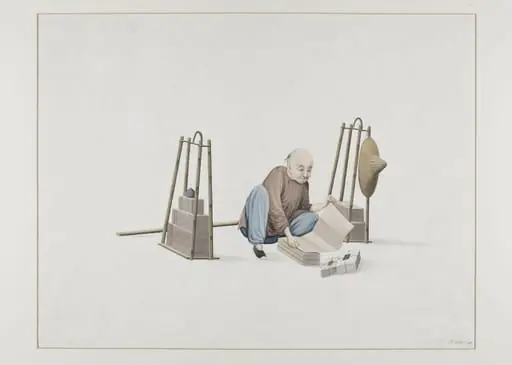
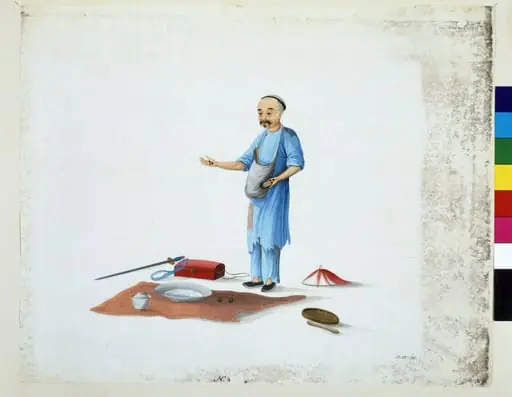
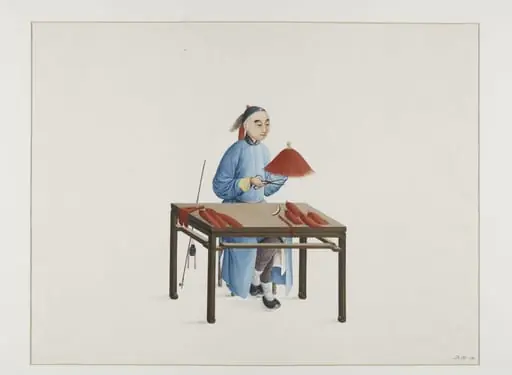
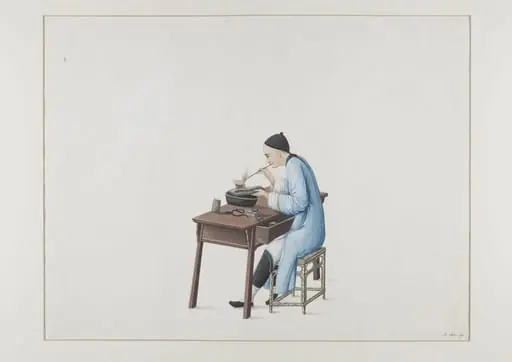
Making Shoes is a paint painting by the Romanticist artist Puqua. It dates from 1790 and is held in the collection of the Victoria and Albert Museum.
About this work
Overview
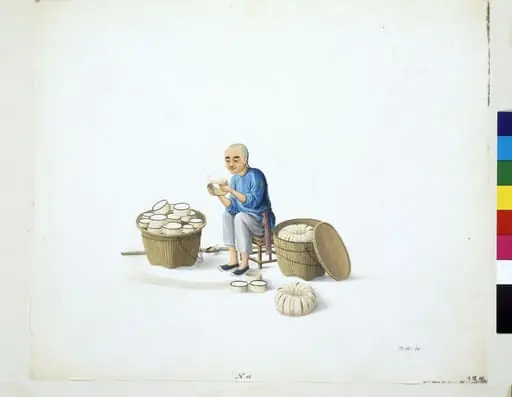
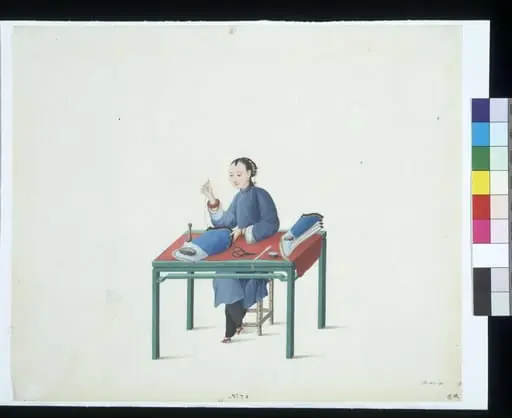
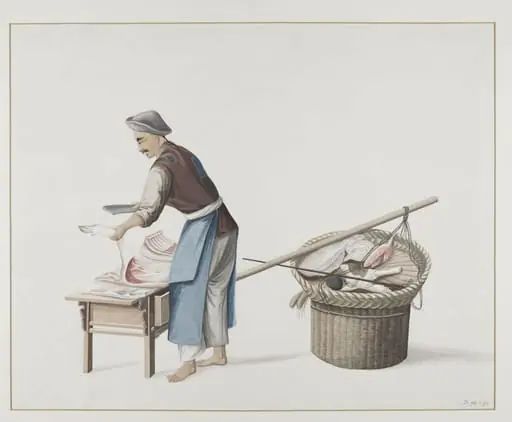
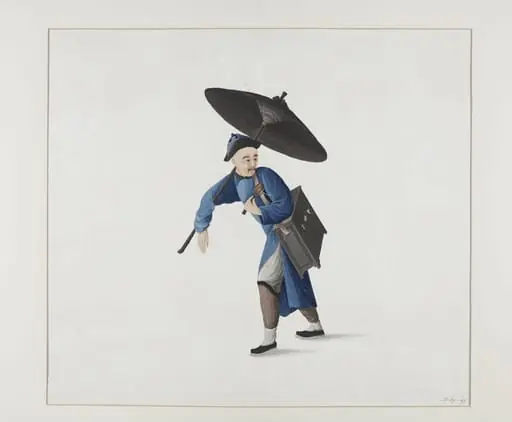
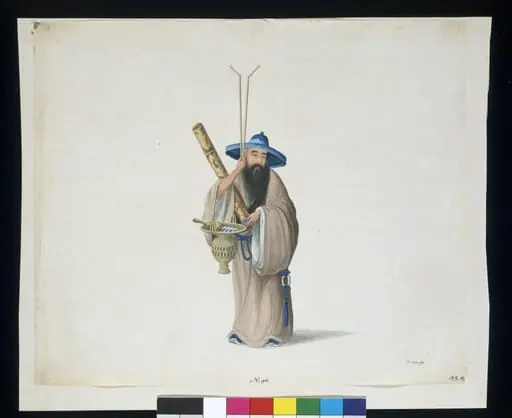
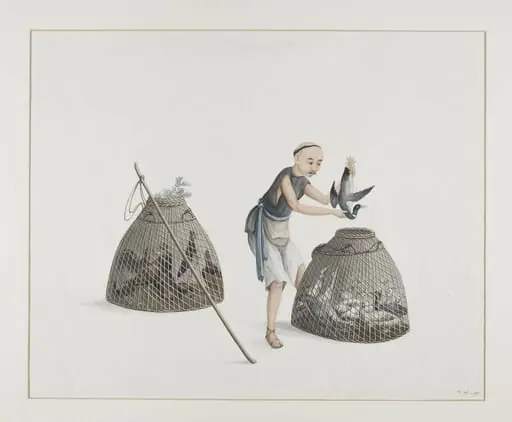
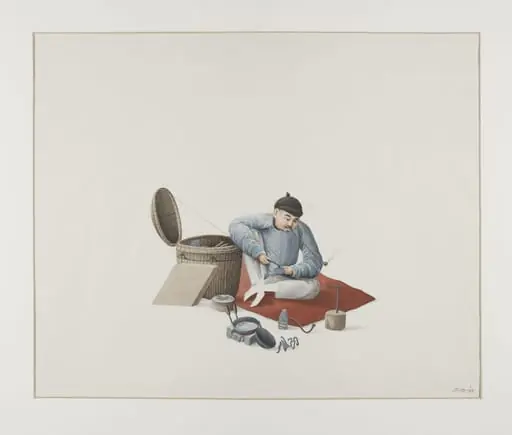
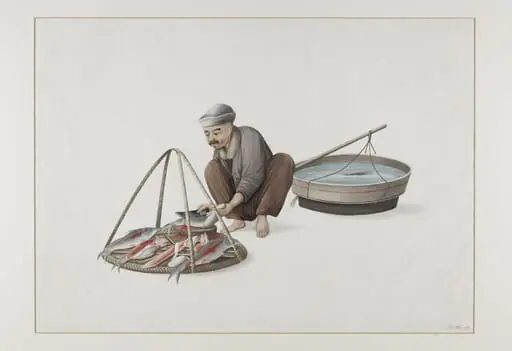
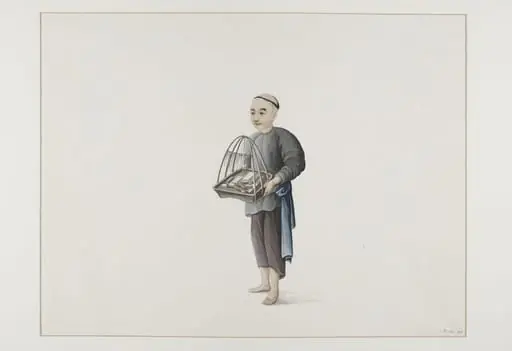
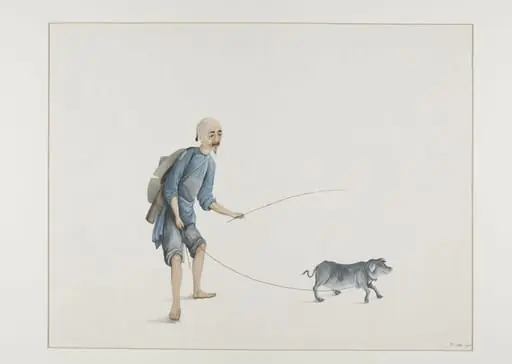
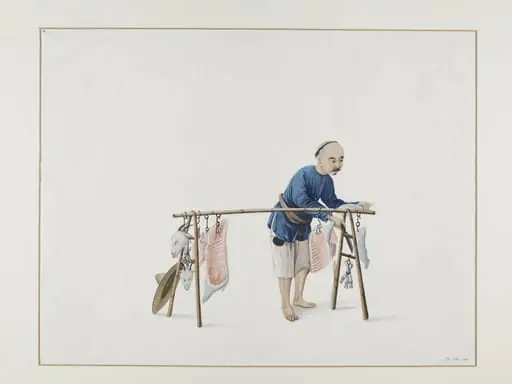
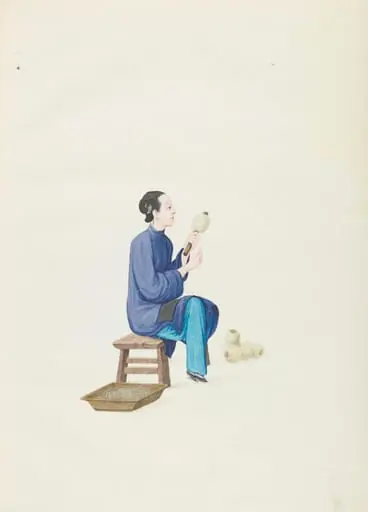
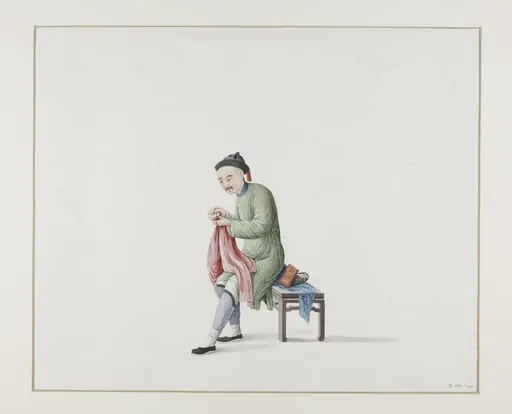
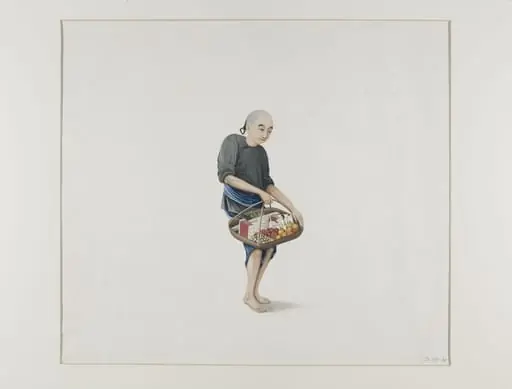
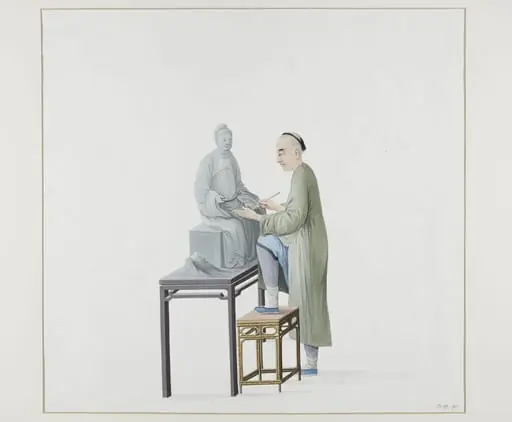
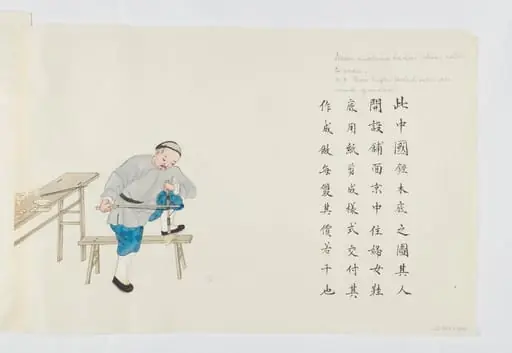
Made in 1790, this watercolor painting by Puqua is one of a hundred works documenting occupational life in Canton. It portrays a solitary figure engaged in a quiet, routine task, rendered with restrained brushwork and muted tones. The composition avoids decorative detail, focusing instead on the dignity of labor through minimalism and calm atmosphere.
Subject & Meaning
The shoes he holds, wrapped in white cloth, suggest preparation or trade, reinforcing the theme of skilled work as a quiet, enduring practice.
The central figure, an elderly man in plain blue robes, holds a crane—its white body and black wings rendered with delicate precision. In Chinese visual tradition, the crane symbolizes longevity and wisdom, subtly elevating the laborer’s role beyond mere craft. The shoes he holds, wrapped in white cloth, suggest preparation or trade, reinforcing the theme of skilled work as a quiet, enduring practice.
Technique & Style
Puqua employed soft watercolor washes and fine, controlled lines to create a serene, uncluttered scene. The plain white background isolates the figure, directing attention to his posture and gesture. Colors are subdued—blue robes, black slippers, and the crane’s contrasting plumage—enhancing the painting’s meditative quality and emphasizing the harmony between human and symbol.
History & Provenance
The painting entered the collection in 1898 after acquisition from Parsons & Sons. Its inclusion in the Asia Department registers was confirmed during a 2022 provenance review. As part of a larger series commissioned to document Cantonese trades, it reflects 18th-century commercial and cultural interests in recording everyday life for both local and foreign audiences.
Context
This work belongs to a set of hundred paintings produced in late 18th-century Canton, likely for export to European markets. Such series served as ethnographic records, capturing artisans at their trades with observational accuracy. While intended as commercial products, they preserve intimate glimpses of daily life, blending documentary intent with traditional aesthetic values.
Legacy
The painting contributes to a broader corpus of Chinese export art that shaped Western perceptions of Chinese labor and culture. Its quiet composition and symbolic elements distinguish it from more ornate contemporaries, offering a nuanced counterpoint to exoticized depictions. Today, it remains a valuable artifact for understanding cross-cultural exchange and the visual representation of work in pre-modern China.
Artist & collection