Artwork
Man Driving a Pig
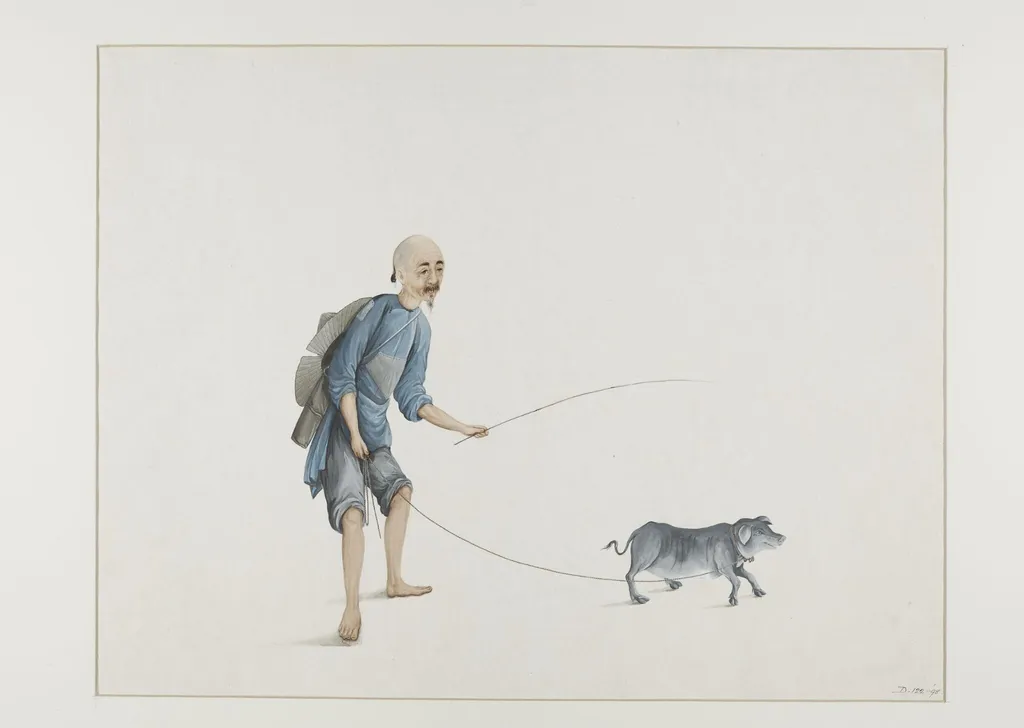
Man Driving a Pig is a paint painting by the Romanticist artist Puqua. It dates from 1790 and is held in the collection of the Victoria and Albert Museum.
About this work
Overview
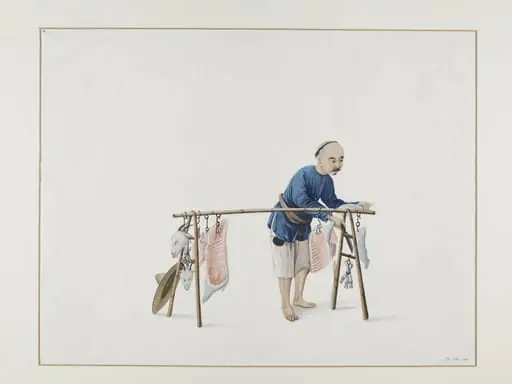
Man Driving a Pig is a rectangular watercolor dated 1790, attributed to the artist Puqua. The composition centers on a barefoot figure in blue attire, guiding a gray pig with two elongated sticks. The background is rendered in plain white, framed by a narrow brown border, giving the scene a quiet, orderly appearance.
Subject & Meaning
The work portrays a man leading a pig on a leash, the animal turning its head to glance back. The figure’s neutral expression and focused posture suggest a routine activity, while the pig’s attentive gaze adds a subtle interaction. The scene conveys a calm, everyday moment rather than a narrative drama.
Technique & Style
Executed in watercolor, the painting employs flat washes of blue and gray to define the figures, with minimal shading. The limited palette and simplified forms align with the late‑eighteenth‑century interest in clear, didactic illustration, while the serene mood reflects broader Romantic sensibilities toward nature and ordinary life.
History & Provenance
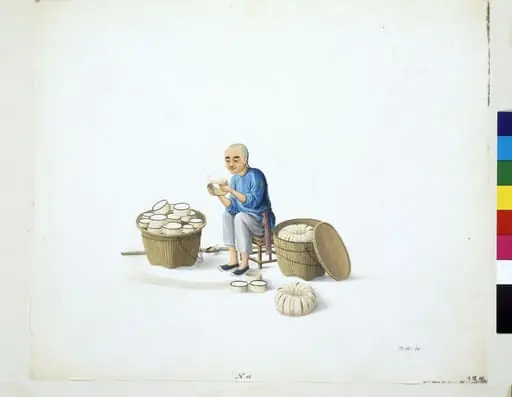
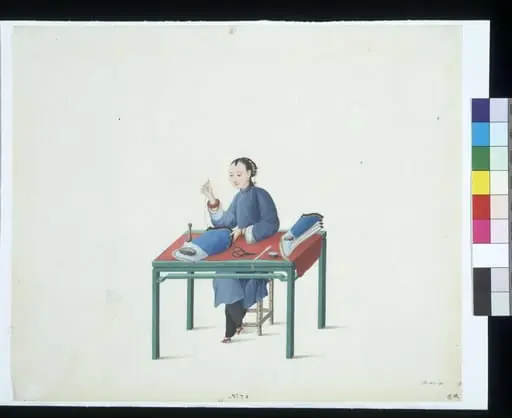
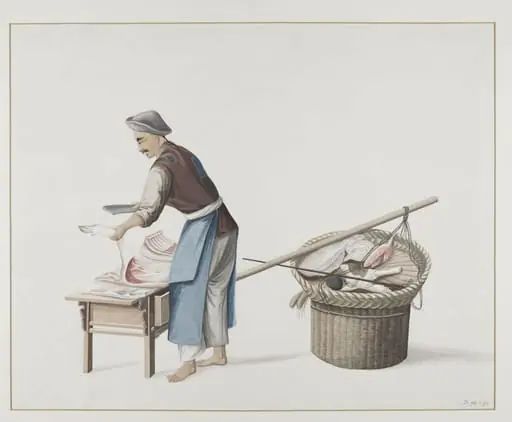
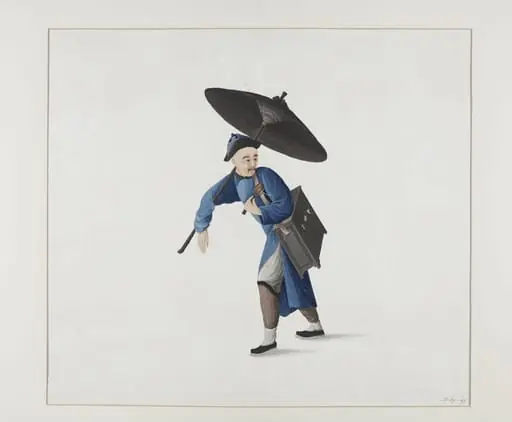
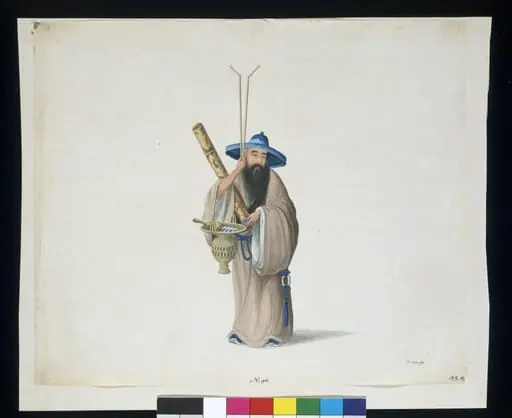
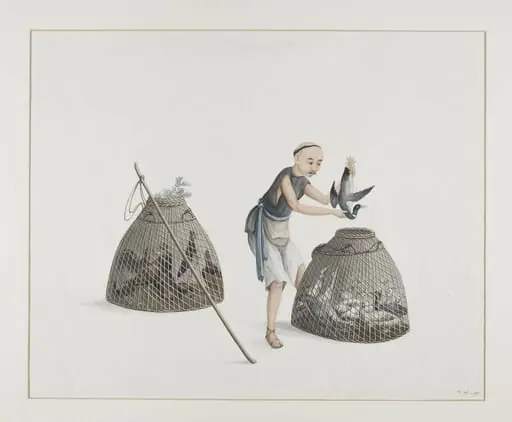
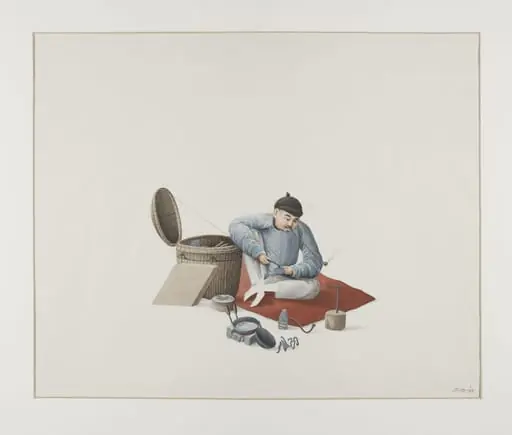
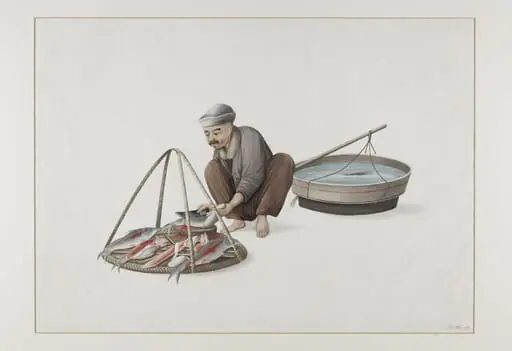
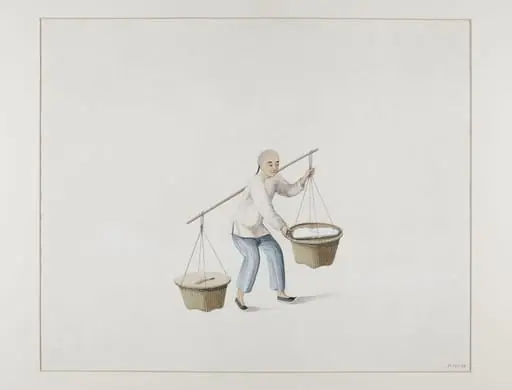
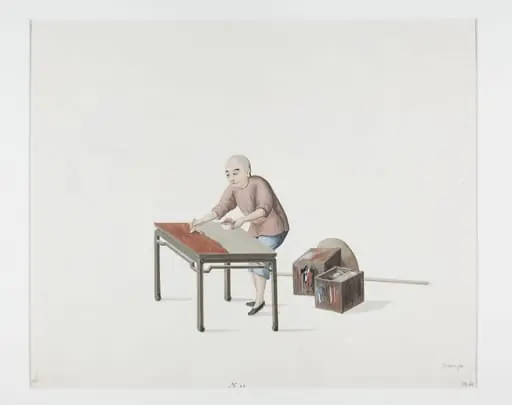
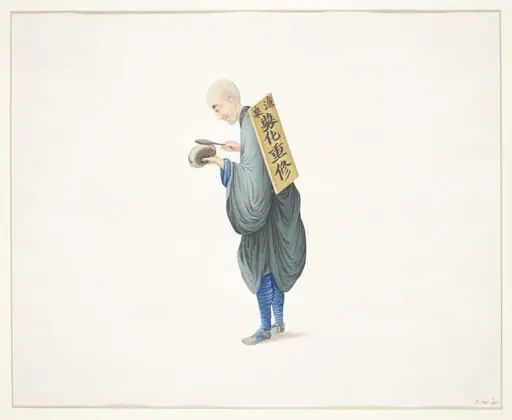
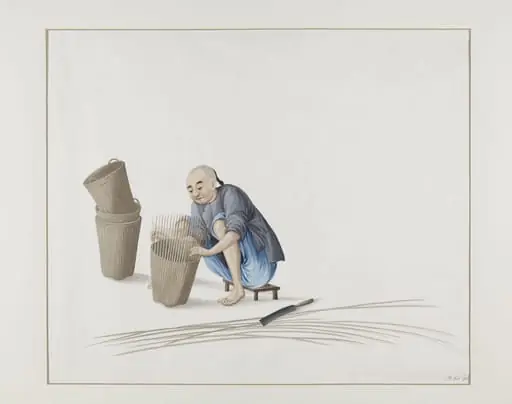
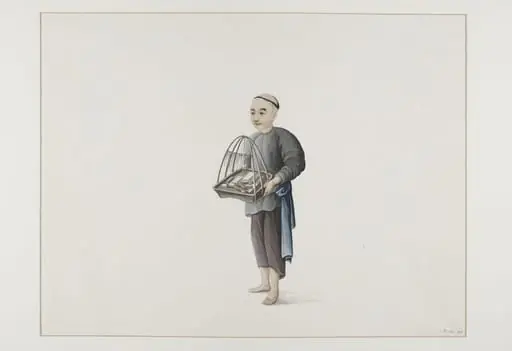
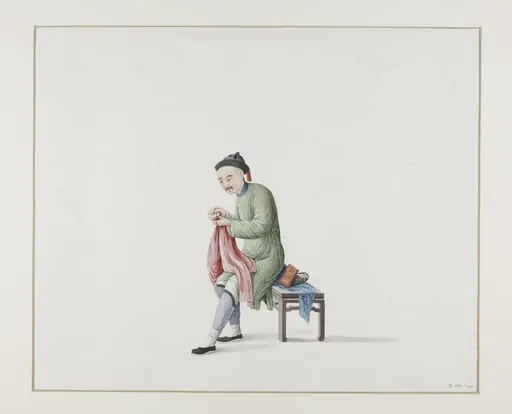
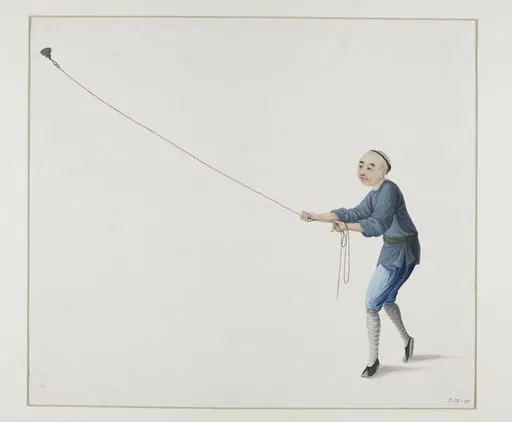
Man Driving a Pig belongs to a series of one hundred paintings documenting various trades and occupations in Canton. Acquired from the dealers Parsons & Sons, it entered the museum’s collection in 1898. The provenance was confirmed through Asia Department registers during a research project completed in 2022.
Context
The series to which this painting belongs served as visual records of occupational practices in late‑Qing China, intended for both local and foreign audiences. Such works were often used as educational material, illustrating the diversity of labor and daily routines within the Canton region during a period of increasing cross‑cultural exchange.
Artist & collection