Artwork
Making the Scale
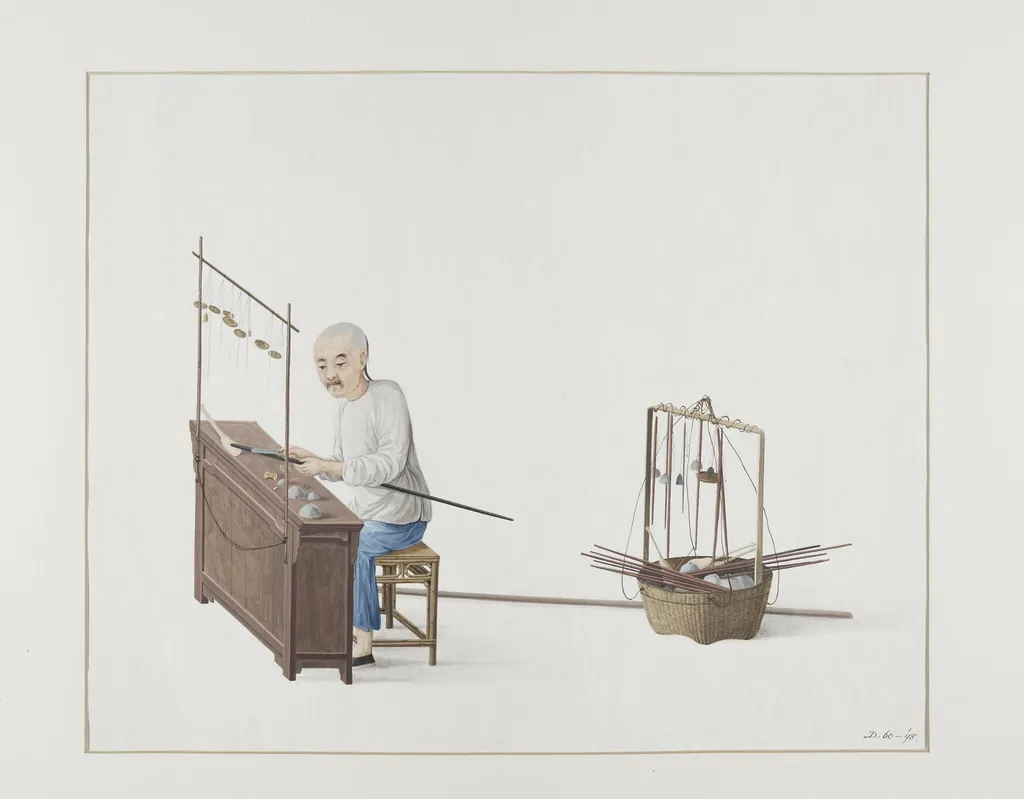
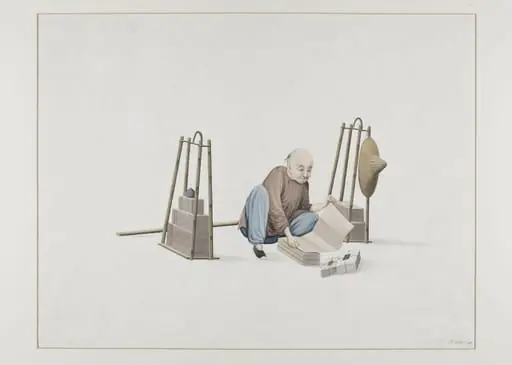
Making the Scale is a paint painting by the Romanticist artist Puqua. It dates from 1790 and is held in the collection of the Victoria and Albert Museum.
About this work
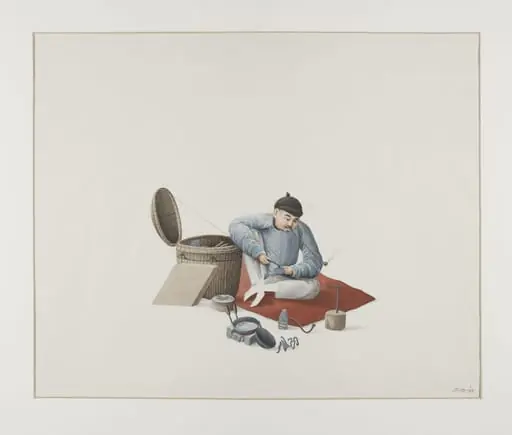
To the right of the man, a basket contains several long, thin objects, possibly the components of the scale he is constructing.
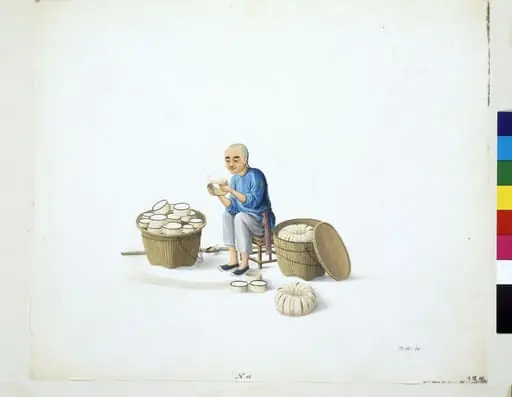
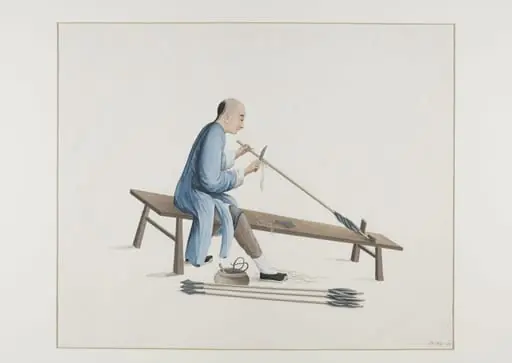
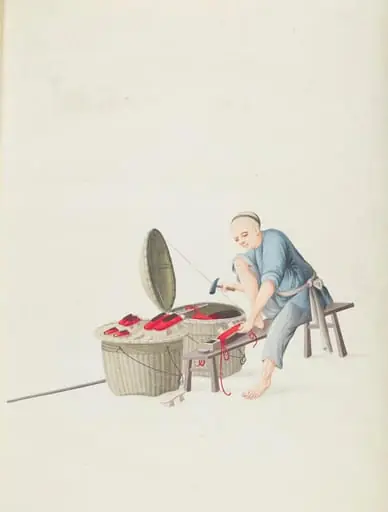
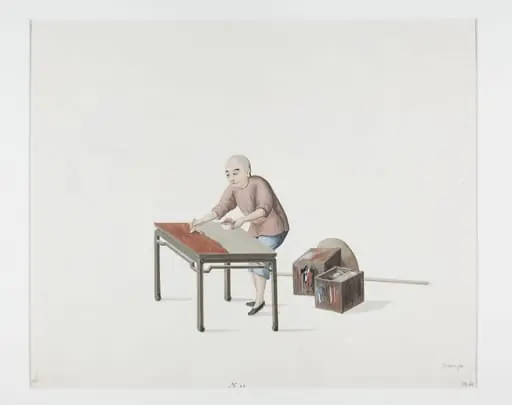
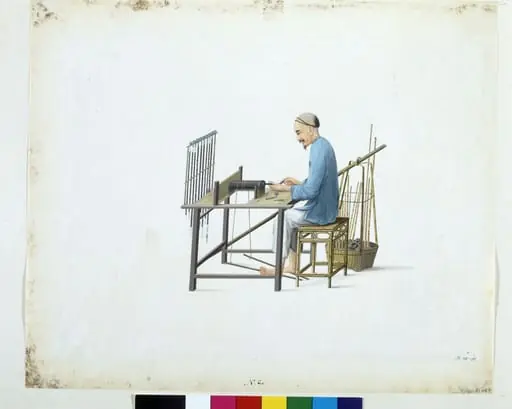
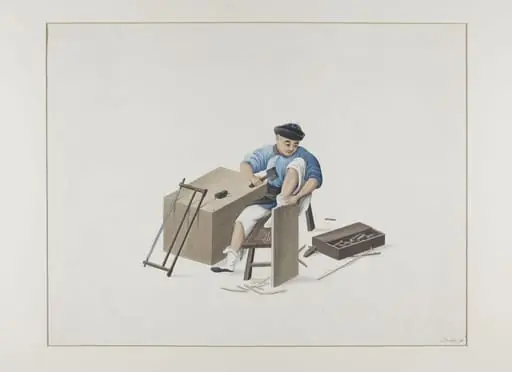
This painting, titled "Making the Scale," depicts a man engaged in the process of creating a scale. He is seated on a stool, facing a wooden cabinet with a hinged lid, and is holding a tool in his right hand. The man is dressed in a white shirt and blue pants.
To the right of the man, a basket contains several long, thin objects, possibly the components of the scale he is constructing. The background of the painting is a plain white wall.
The artist, Puqua, was a Chinese painter who worked in Guangzhou during the late 18th century. The painting is held at the Victoria and Albert Museum.
Overview
Made in 1790, *Making the Scale* is a small oil painting attributed to the Chinese artist Puqua, who was active in Guangzhou at the end of the eighteenth century. The work shows a lone craftsman seated at a workbench, surrounded by the implements of his trade, and is part of a larger series of one‑hundred images that document a variety of occupations in Canton.
Subject & Meaning
The central figure is a man in a white shirt and blue trousers, poised over a wooden cabinet with a hinged lid. He holds a tool in his right hand while a basket to his right contains slender components, suggesting the assembly of a weighing scale. The composition emphasizes the meticulous nature of the craft and offers a straightforward visual record of a specific trade.
Technique & Style
Rendered with a restrained palette and clear linear outlines, the painting combines a realistic observation of objects with a flat, almost documentary background of plain white wall. The careful rendering of texture—wood grain, fabric folds, and metal parts—reflects the late‑Qing Chinese painting tradition that catered to foreign collectors.
History & Provenance
The work entered the Victoria and Albert Museum’s collection in 1898 after being purchased from the London dealers Parsons & Sons. Its inclusion in the series of occupational studies indicates it was likely produced for export, satisfying a European market interested in visual accounts of Chinese daily life and industry.
Context
During the late eighteenth century, Canton was the sole Chinese port open to Western trade, prompting a surge in demand for images that could convey the customs and labor of the region to distant audiences. Artists like Puqua responded by creating systematic series that functioned as both ethnographic records and decorative objects for foreign patrons.
Artist & collection