Artwork
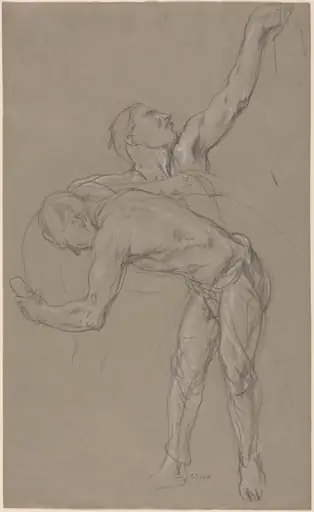
Étude
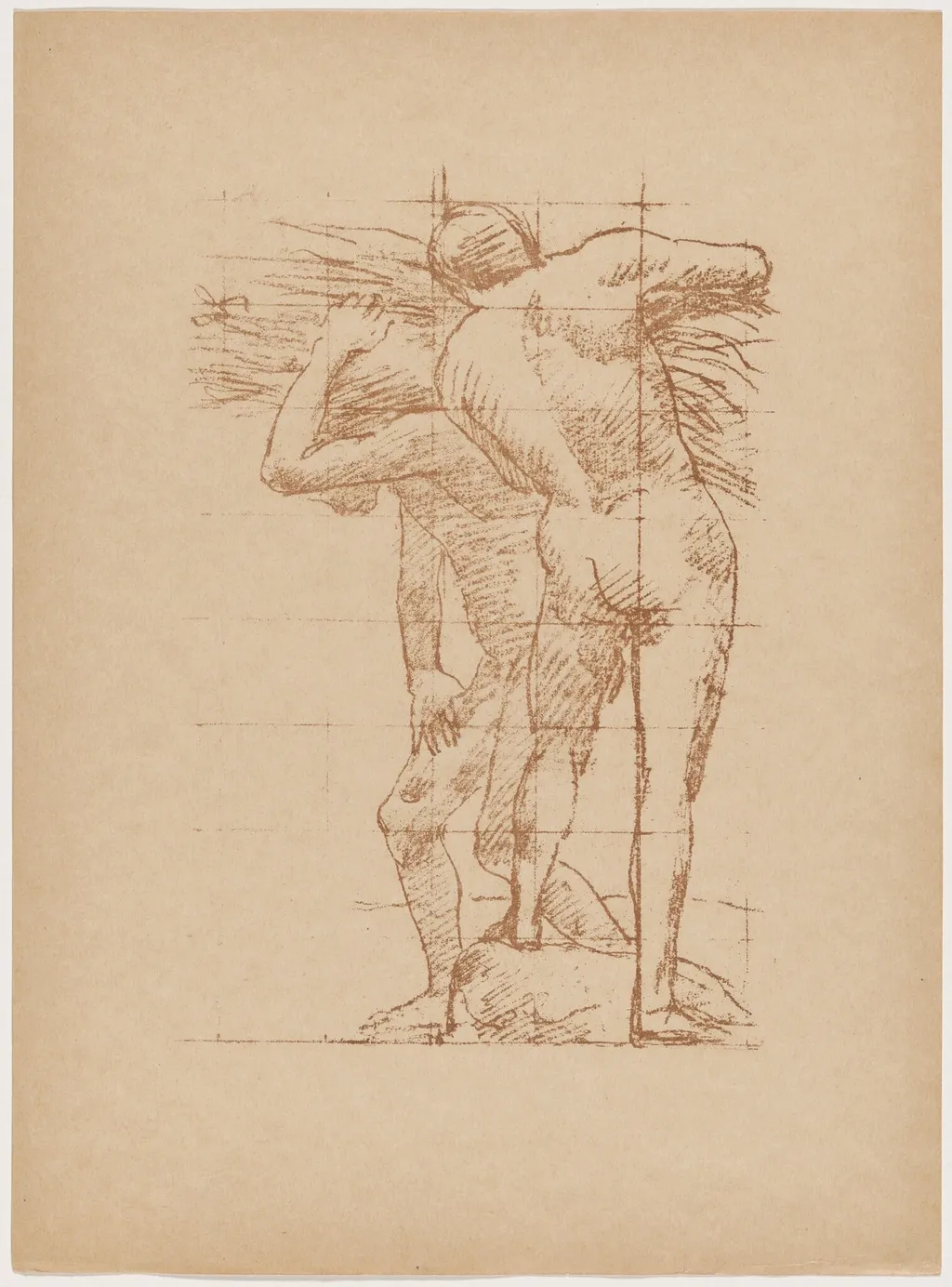
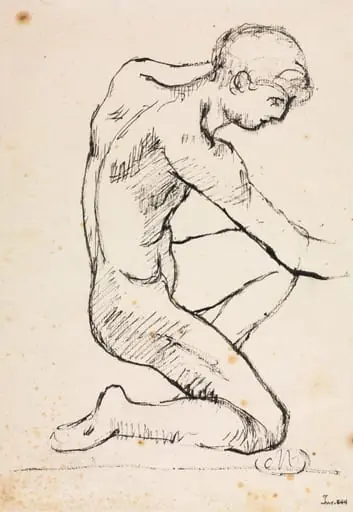
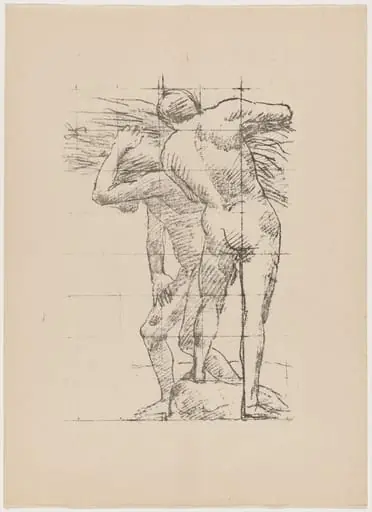
Étude is an ink print by the Impressionist artist Pierre Puvis de Chavannes. It dates from 1895 and is held in the collection of the National Gallery of Art.
About this work
Overview
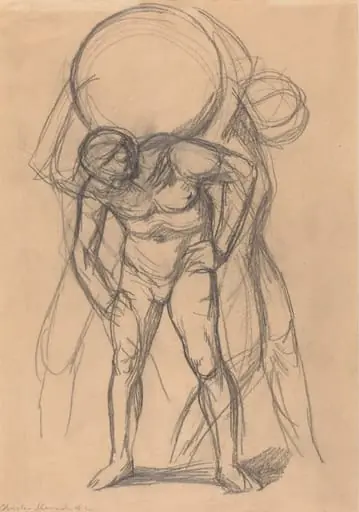
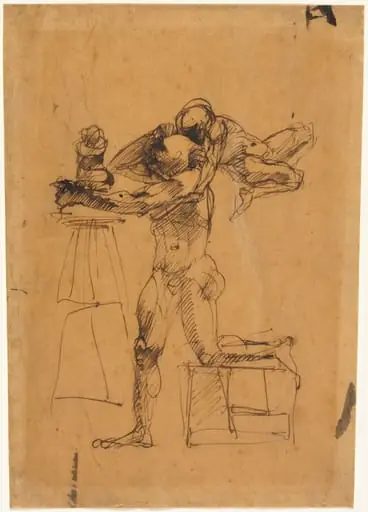
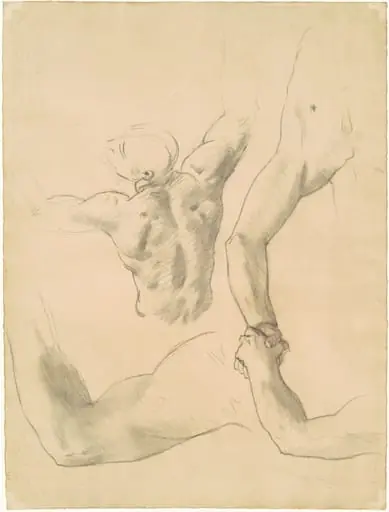
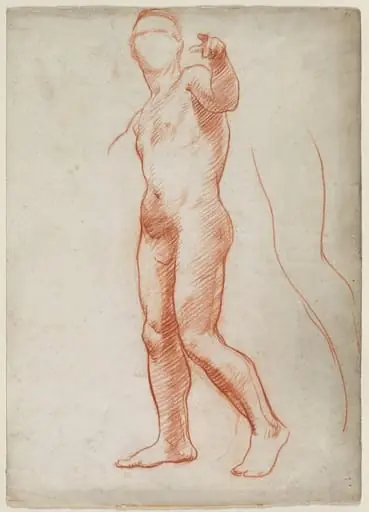
Created in 1895, Étude is a lithographic print executed in brown tones on heavy Japan paper. The work presents a single nude figure rendered in swift, gestural lines that emphasize the body's silhouette and movement rather than detailed modeling.
Subject & Meaning
The composition depicts a standing nude seen in profile, with the left arm bent to hold an object near the chest and the right arm relaxed at the side. The pose suggests a moment of introspection or preparation, inviting contemplation of the figure's inner state.
Technique & Style
Executed as a lithograph, the image is built from loose, quickly drawn lines that convey form through suggestion. Light grid markings beneath the drawing indicate a preparatory framework for proportion, while the brown ink on the textured Japan paper creates a muted, tonal effect characteristic of the artist’s restrained yet expressive approach.
History & Provenance
The print was produced by Pierre Puvis de Chavannes, a prominent French muralist of the early Third Republic who co‑founded the Société Nationale des Beaux‑Arts. Étude reflects the artist’s practice of producing studies that informed larger decorative and allegorical projects.
Context
Puvis de Chavannes’s work was praised by contemporaries such as Émile Zola for balancing rational composition with emotional vigor. This study exemplifies that equilibrium, aligning with the artist’s broader oeuvre that combined classical motifs with a modern, simplified visual language.
Artist & collection
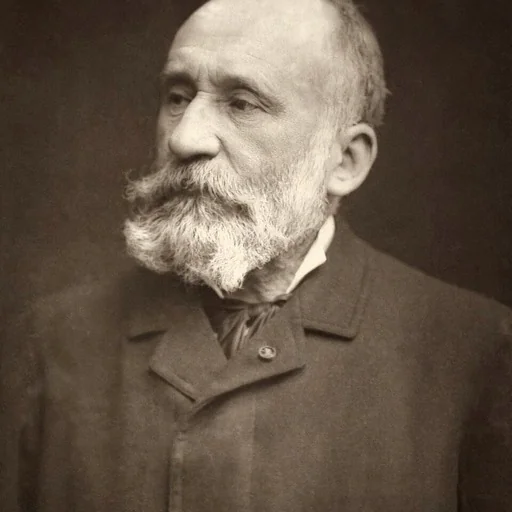
Artist
Pierre Puvis de Chavannes (French pronunciation: ; 14 December 1824 – 24 October 1898) was a French painter known for his mural painting, who came to be known as "the painter for France".