Artwork
Lyons from the Left Bank of the Saone
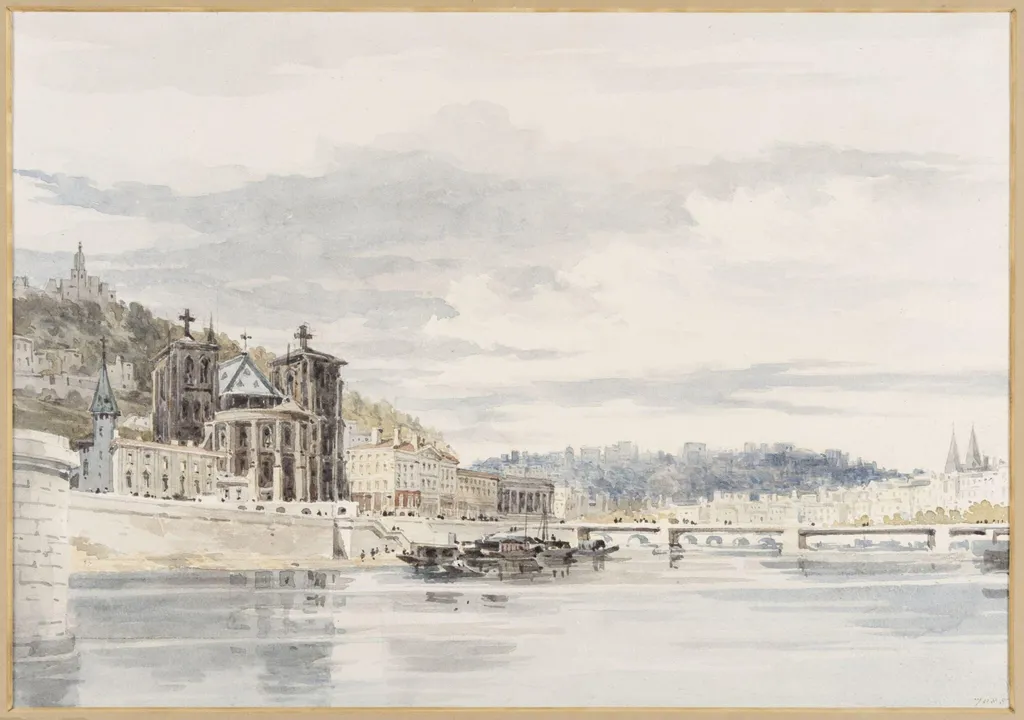
Lyons from the Left Bank of the Saone is a watercolor work on paper by Charles Claude Pyne. It dates from 1850 and is held in the collection of the Victoria and Albert Museum.
About this work
Overview
The composition centers on the city’s elevated terrain, where religious architecture rises above dense urban fabric.
Charles Claude Pyne's watercolour captures a quiet panorama of Lyon as seen from the left bank of the Saône. The composition centers on the city’s elevated terrain, where religious architecture rises above dense urban fabric. A bridge arches across the river in the distance, while small boats rest near the shore. The palette is restrained—soft greys, browns, and beiges—enhancing the subdued, contemplative tone of the scene.
Subject & Meaning
The painting presents Lyon as a layered urban landscape shaped by both commerce and faith. The cathedral, dominant in the foreground, anchors the view, while the Basilica of Notre-Dame de Fourvière, perched on the hill behind, signals the city’s spiritual hierarchy. The quiet river activity and distant bridge suggest daily life unfolding without drama, reflecting a 19th-century appreciation for orderly, observed topography rather than dramatic spectacle.
Technique & Style
Pyne employs transparent watercolour washes to build subtle gradations of tone, avoiding bold outlines in favor of atmospheric blending. The muted hues and delicate handling of light convey a sense of stillness, with clouds softly diffusing the natural illumination. Buildings are rendered with loose, suggestive strokes, emphasizing mass over detail, while the river reflects the sky’s pale tones, reinforcing the painting’s tranquil mood.
History & Provenance
Created in the early 19th century, the work is one of several topographical watercolours by Pyne, an English artist known for documenting French and Swiss cities during his travels. The piece likely served as a personal record or commission for a collector interested in regional architecture. Its survival in private collections until its public acquisition reflects its modest but enduring appeal among topographical art enthusiasts.
Context
During Pyne’s time, watercolour was widely used by amateur and professional artists to record landscapes and urban views, particularly in Britain and France. Lyon, a major commercial hub, attracted such depictions as interest in regional identity grew. This work aligns with a broader trend of documenting cities with precision and restraint, distinct from the romanticized landscapes of the period.
Legacy
Though not widely exhibited, Pyne’s watercolour contributes to a quiet archive of 19th-century urban observation. It offers insight into how foreign artists perceived French cities—not as grand monuments, but as lived environments shaped by geography and routine. The work remains a modest but valuable example of topographical watercolour practice outside the mainstream art historical canon.
Own this work as a print
Artist & collection

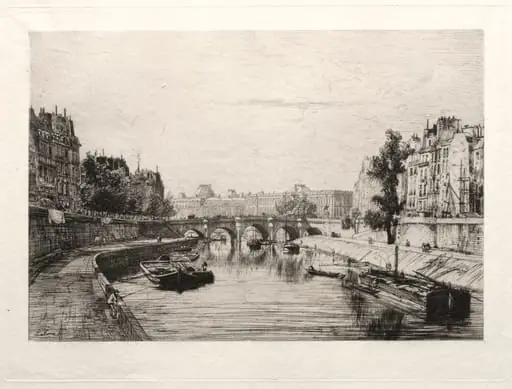 View from Pont St. Michel
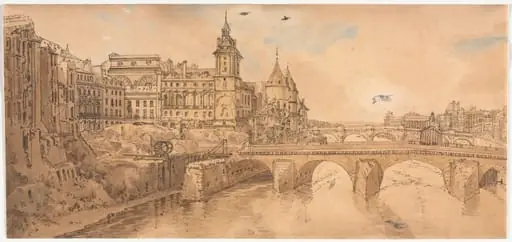 A Selection of Twenty of the Most Picturesque Views in Paris: View of Pont au Change, the City Theatre, Pont Neuf, Conciergerie Prison, and taken from Pont Notre Dame
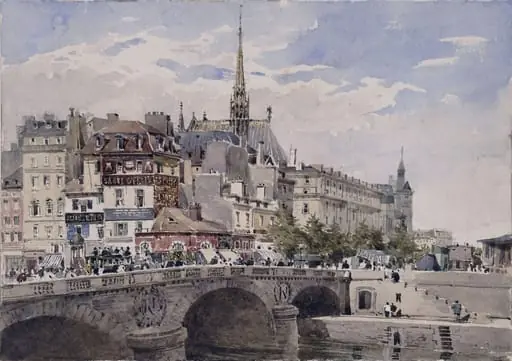 Sainte Chapelle, Palais de Juste, Paris,
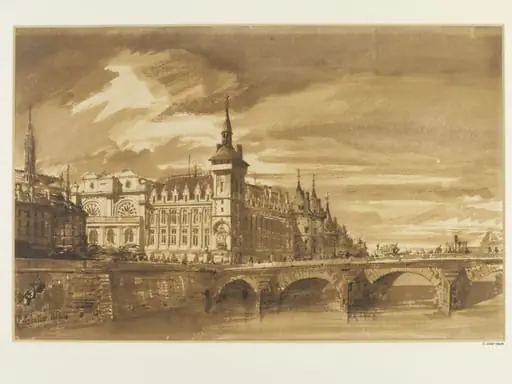 View of the Pont au Change and the Palais de Justice, Paris
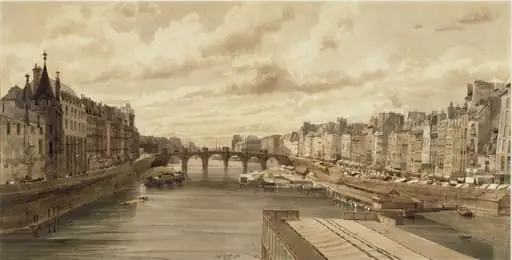 The Pont Neuf, Paris
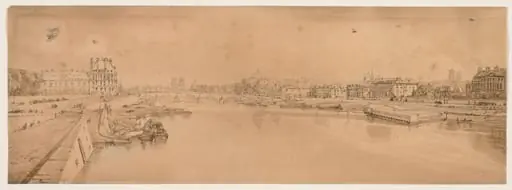 A Selection of Twenty of the Most Picturesque Views in Paris: View of the Tuilleries and Bridge and taken from Pont de la Concorde
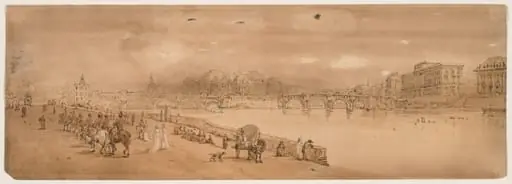 A Selection of Twenty of the Most Picturesque Views in Paris: View of Pont Neuf, and the Mint
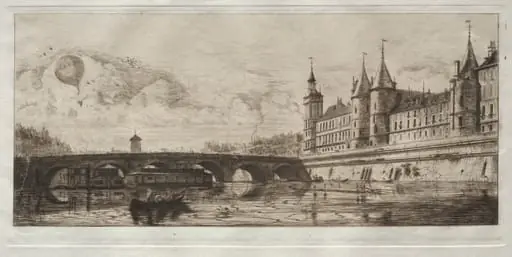 Le Pont-au-Change
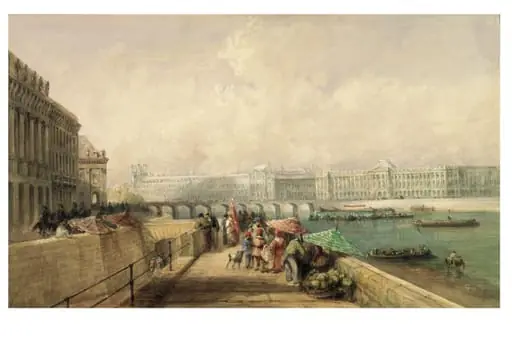 The Pont des Arts and the Louvre from the Quai Conti
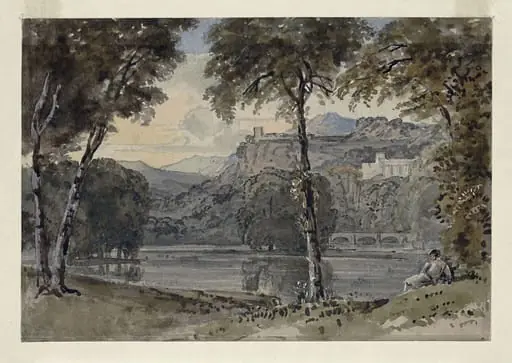 A classical composition
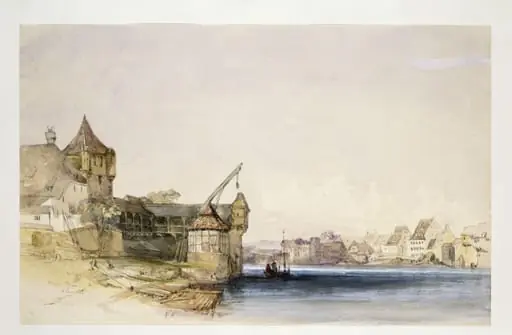 View at Basle