Artwork
A village fete
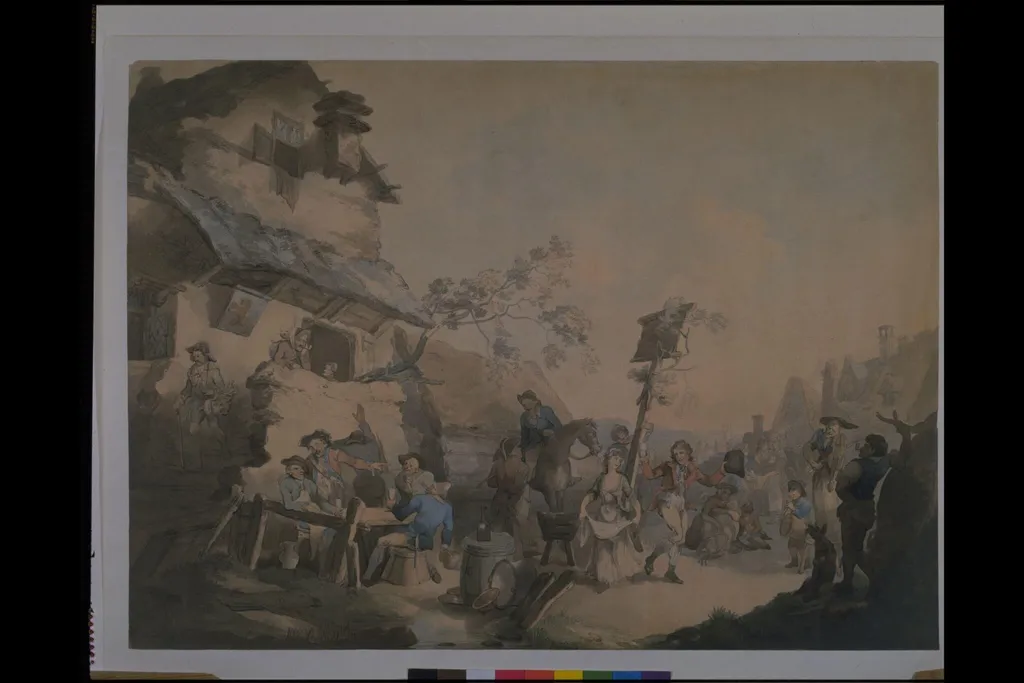
A village fete is a watercolor work on paper by the Romanticist artist William Henry Pyne. It dates from 1795 and is held in the collection of the Victoria and Albert Museum.
About this work
Overview
The scene unfolds before a thatched pub nestled against a gentle hillside, with figures engaged in leisure activities under soft daylight.
William Henry Pyne created this watercolour depicting a rural celebration in a modest English village. The scene unfolds before a thatched pub nestled against a gentle hillside, with figures engaged in leisure activities under soft daylight. Pyne’s signature appears in the composition, affirming authorship. The medium’s transparency enhances the lightness of the moment, capturing a fleeting, communal gathering without theatrical flourish.
Subject & Meaning
The painting portrays a village fete, a traditional local festival marked by music, drinking, and dance. Figures are arranged in casual groupings: some seated at wooden tables, others dancing or playing instruments. A woman on horseback carries a banner, suggesting ceremonial order amid spontaneity. Children play near the edges, reinforcing the scene’s generational inclusivity. The event reflects communal ritual rather than grand spectacle, emphasizing quiet social cohesion.
Technique & Style
Pyne employed watercolour with restrained washes and delicate linework to suggest movement and atmosphere. The palette remains muted, with pale greens, ochres, and soft blues evoking natural light. Buildings and figures are rendered with loose precision, avoiding sharp detail in favor of suggestive form. The background landscape fades gently into haze, reinforcing the sense of a quiet, sunlit afternoon suspended in time.
History & Provenance
Created in the early 19th century, the work belongs to Pyne’s series documenting English rural life. It was likely produced for private collectors interested in topographical and genre scenes. The painting has remained in private hands since its creation, with no record of public exhibition until the 20th century. Its survival reflects a growing interest in vernacular subjects during the Romantic era.
Context
During the 1820s–1840s, British artists increasingly turned to everyday rural life as subject matter, reacting against grand historical narratives. Pyne, known for his illustrations of architecture and customs, contributed to this trend by capturing unidealized village moments. The fete depicted aligns with contemporary accounts of seasonal festivals that sustained community bonds in pre-industrial England.
Legacy
Though not widely exhibited, Pyne’s watercolours like this one influenced later topographical artists and documentarians of rural England. Their quiet observation of ordinary life offered an alternative to romanticized pastoral imagery. Today, such works serve as visual records of social habits and vernacular architecture, valued more for their historical fidelity than artistic novelty.
Artist & collection


 The Village Dance
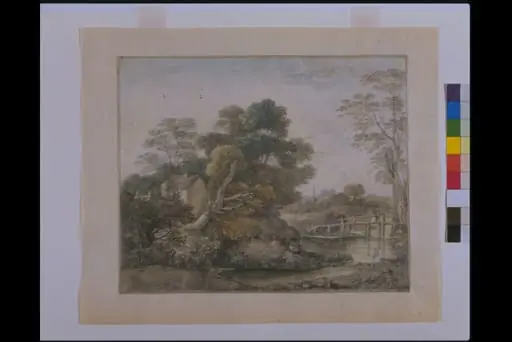 Landscape with Cottage and Stream
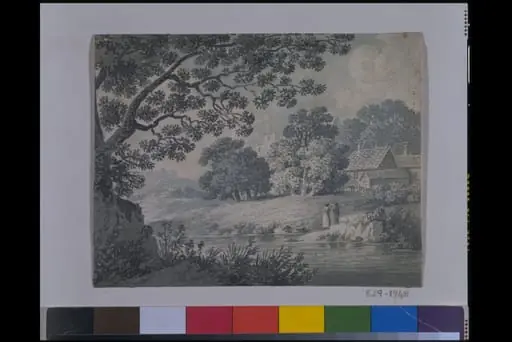 Untitled
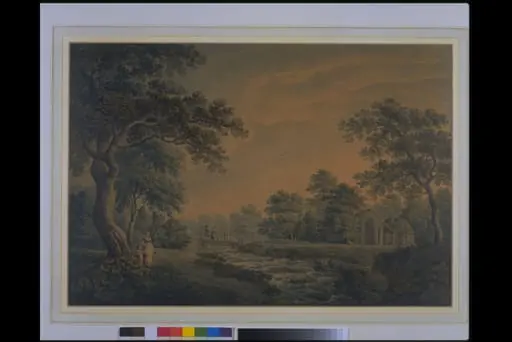 Landscape with stream and bridge
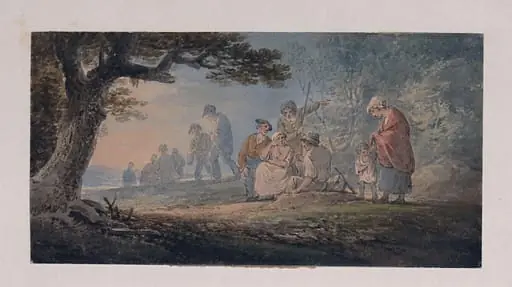 Landscape with figures
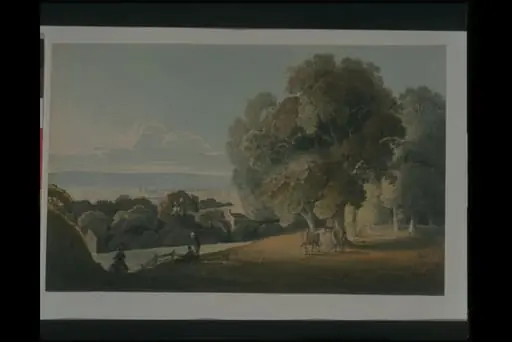 Exeter seen from Alphinton Fields, 1796
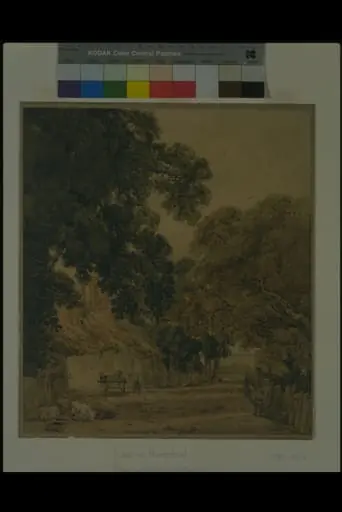 Lane at Hampstead
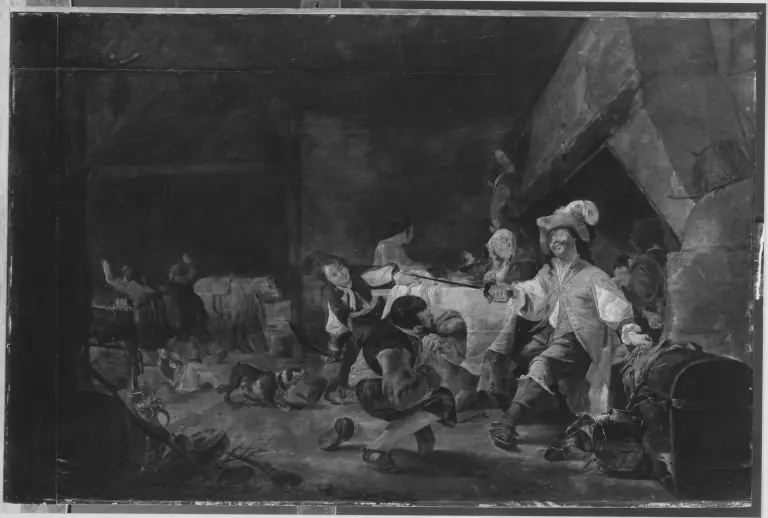 Marodeure
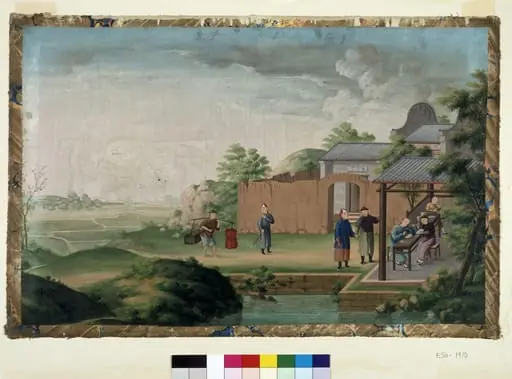 Potters Painting in Underglaze Blue
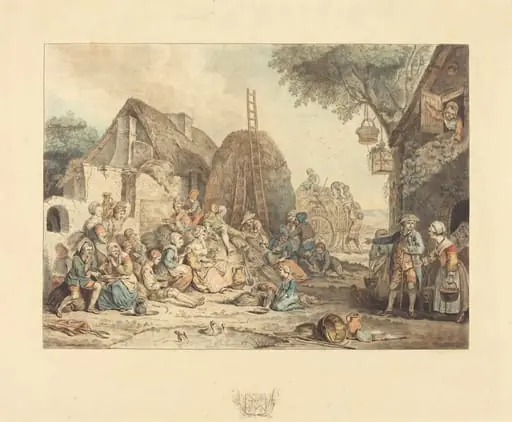 The Harvesters' Lunch
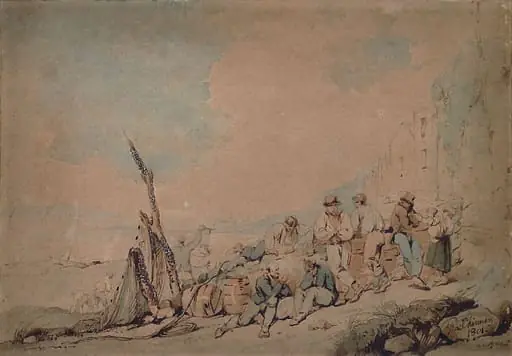 Coast scene, with group of figures near a wall
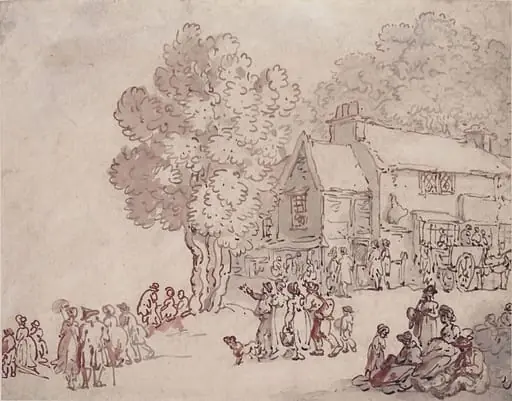 The Mitre, Paddington Canal