Artwork
Old Cottages
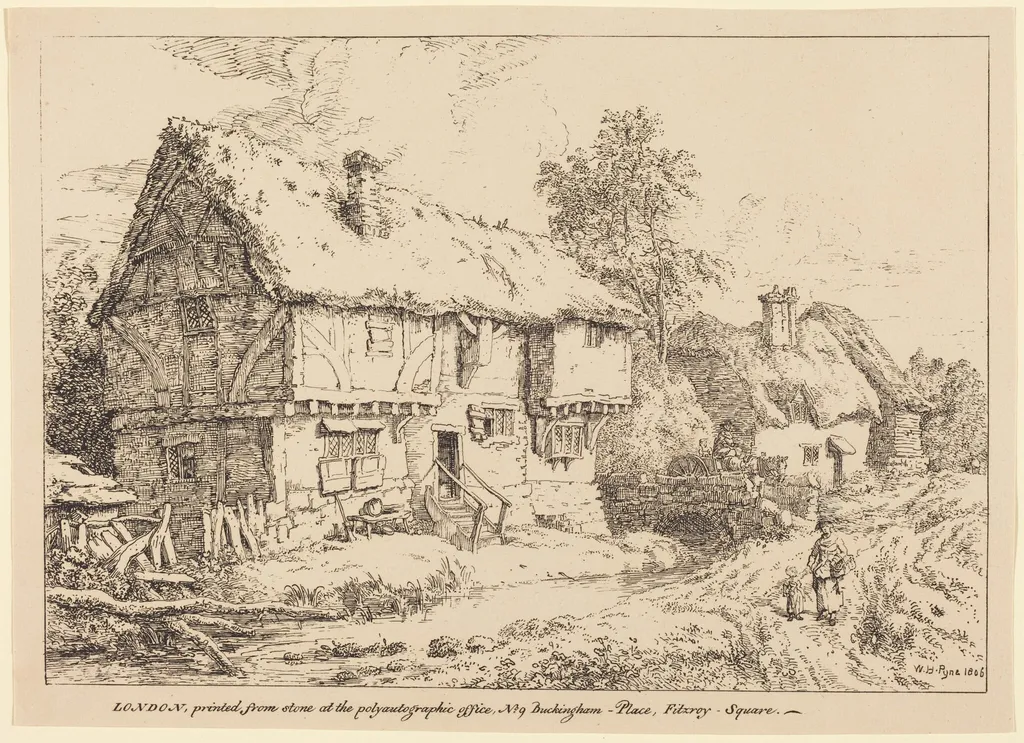
Old Cottages is an ink print by the Romanticist artist William Henry Pyne. It dates from 1806 and is held in the collection of the National Gallery of Art.
About this work
Lithography was still new in 1806, so Pyne used it to capture fine textures in the rough stone and weathered wood.
This print shows three old, crumbling stone cottages along a dirt path, one with a sagging roof. The buildings look rough but full of quiet character—one doorway leans crooked, another window slants off-kilter. Sunlight warms the walls but can’t hide the cracks.
Lithography was still new in 1806, so Pyne used it to capture fine textures in the rough stone and weathered wood. This method let him print many copies fast, which was rare back then.
Look up lithography next if you want to see how this technique changed art.
Overview
William Henry Pyne’s lithograph Old Cottages, dated 1806, presents a modest rural scene. Three stone cottages, weathered and uneven, line a narrow dirt track. One roof sags, a doorway tilts, and a window leans, suggesting long use and neglect. The light falls across the stone, highlighting cracks while preserving the structures’ quiet presence.
Subject & Meaning
The work captures a moment of everyday rural life, emphasizing the endurance of humble dwellings amid decay. By focusing on the irregularities of the cottages—crooked doors, slanted windows—Pyne invites contemplation of the passage of time and the character that accumulates in ordinary architecture.
Technique & Style
Created with pen‑and‑tusche on a lithographic stone, the print exploits the medium’s capacity for fine line work and subtle tonal variation. Pyne’s handling of texture renders the rough stone and weathered timber with remarkable fidelity, a notable achievement given lithography’s recent emergence as a reproducible art form in the early nineteenth century.
History & Provenance
Issued in 1806, Old Cottages is among Pyne’s early printed works, produced at a time when lithography was still gaining acceptance among British artists. The print was likely circulated in limited editions, reflecting the period’s experimental approach to mass‑produced images, and it remains a documented example of the medium’s early adoption.
Artist & collection


 Cottages at the Bank
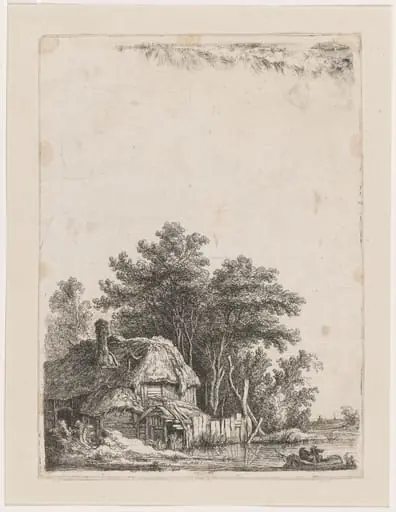 Landscape with Cottage on the Water
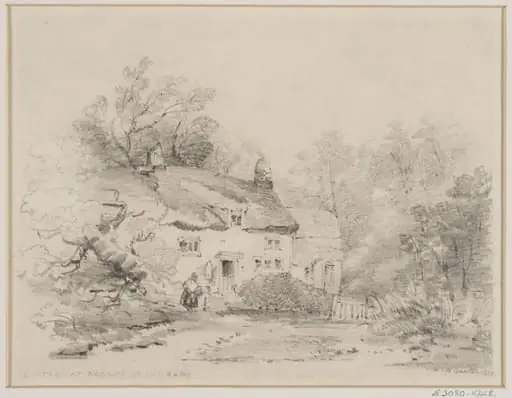 Cottage at Scalby, nr. Scarborough
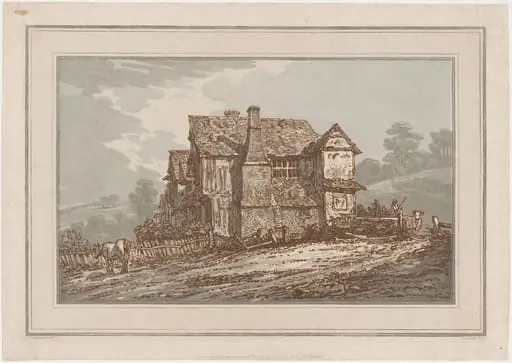 A Rustic House with a Tottering Wood Fence
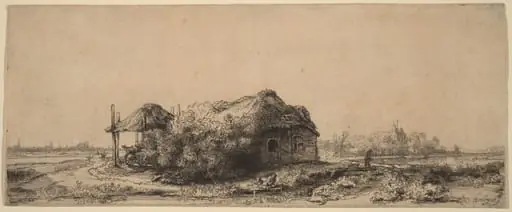 Landscape with a Cottage and Hay Barn: Oblong
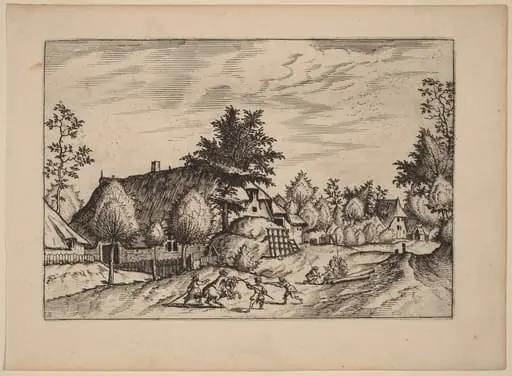 Village Street
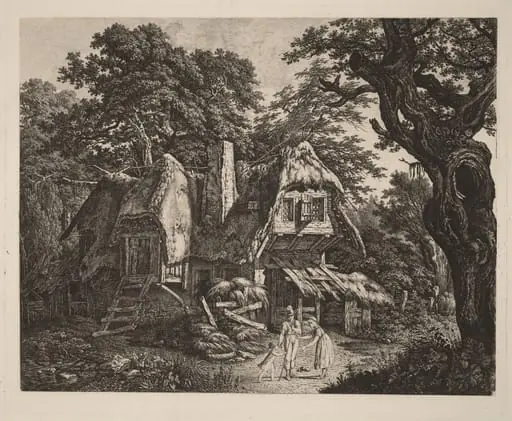 Straw-Thatched Hut with Landscape and Figures
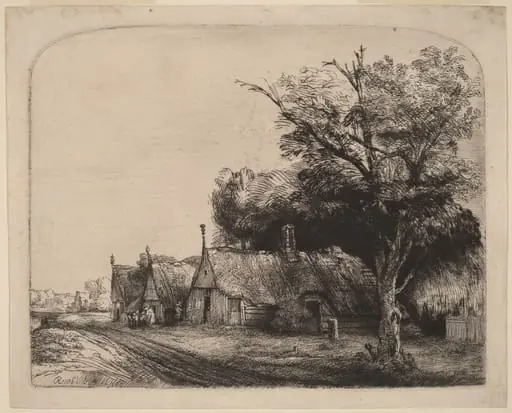 Landscape with Three Gabled Cottages beside a Road
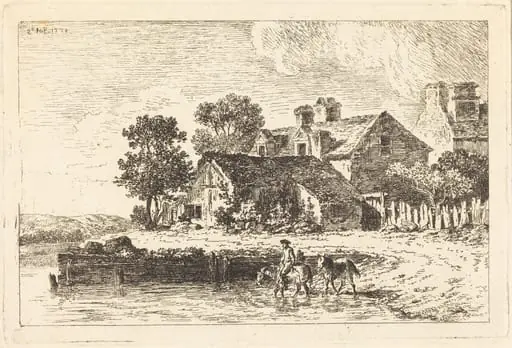 Horses Being Led to Water on a Winding Riverbank
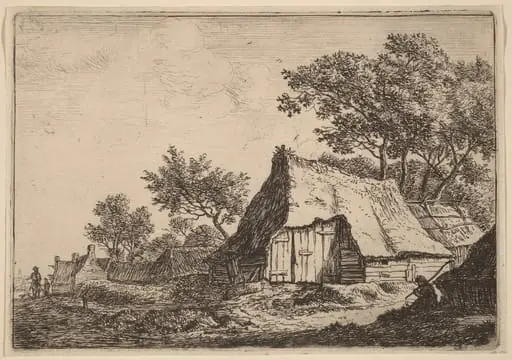 The Small Hamlet
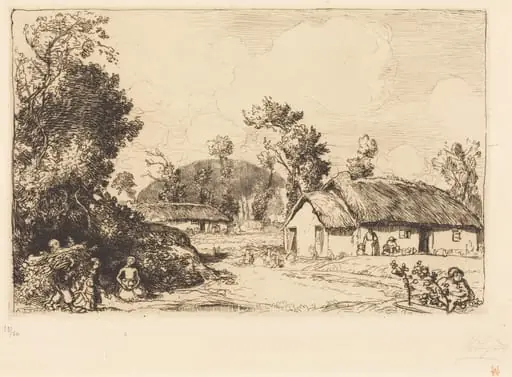 Pastime of Rest, Vendee (Le jeu du reposoir, Vendee)
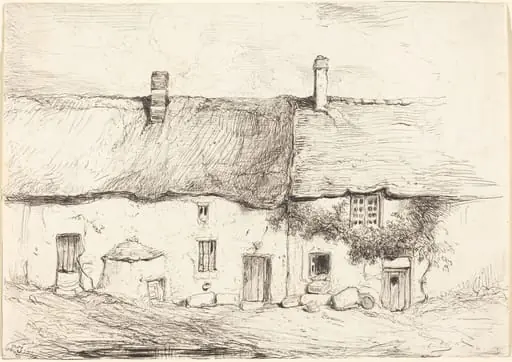 Two Cottages