Artwork
Tancred and Erminia
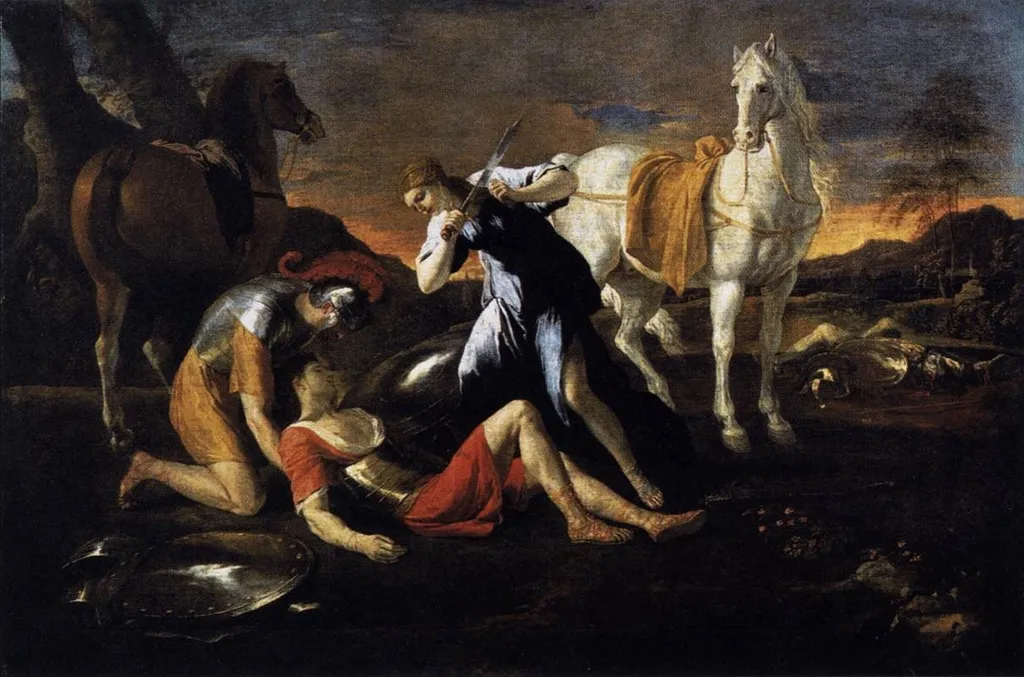
Tancred and Erminia is an oil painting by Nicolas Poussin. It dates from 1649 and is held in the collection of the Hermitage Museum.
About this work
Overview
This 1649 oil painting by Nicolas Poussin captures a dramatic moment involving three figures and two horses, set against a somber, cloudy landscape with hills and trees. The scene conveys intense tension and conflict.
Subject & Meaning
The painting depicts a scene from a narrative, featuring Erminia, a woman in blue holding a sword, Tancred, a kneeling armored man, and a prostrate figure in red. Their interactions suggest a narrative of confrontation or surrender, though the specific moment is not explicitly stated.
Technique & Style
Poussin employs chiaroscuro to create depth and emphasize the central figures, guiding the viewer's eye through contrasting light and shadow. The composition balances dynamic elements (figures in action, horses) with a serene, yet ominous, natural backdrop.
History & Provenance
Created in 1649, the painting is now part of the collection at the State Hermitage Museum. Its history prior to this is not detailed here.
Context
Part of Poussin's oeuvre, this work reflects his interest in depicting dramatic, often classical or literary, scenes with emotional depth, characteristic of 17th-century European painting's engagement with narrative and psychological complexity.
Legacy
As with many of Poussin's works, 'Tancred and Erminia' contributes to the artist's reputation for nuanced, emotionally charged historical and literary interpretations, influencing subsequent artistic explorations of drama and light.
Artist & collection
Artist
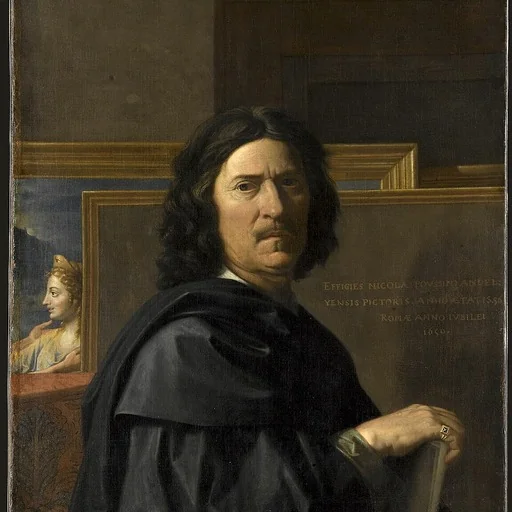
Nicolas Poussin (UK: , US: , French: ; June 1594 – 19 November 1665) was a leading painter of the classical French Baroque style, although he spent most of his working life in Rome.

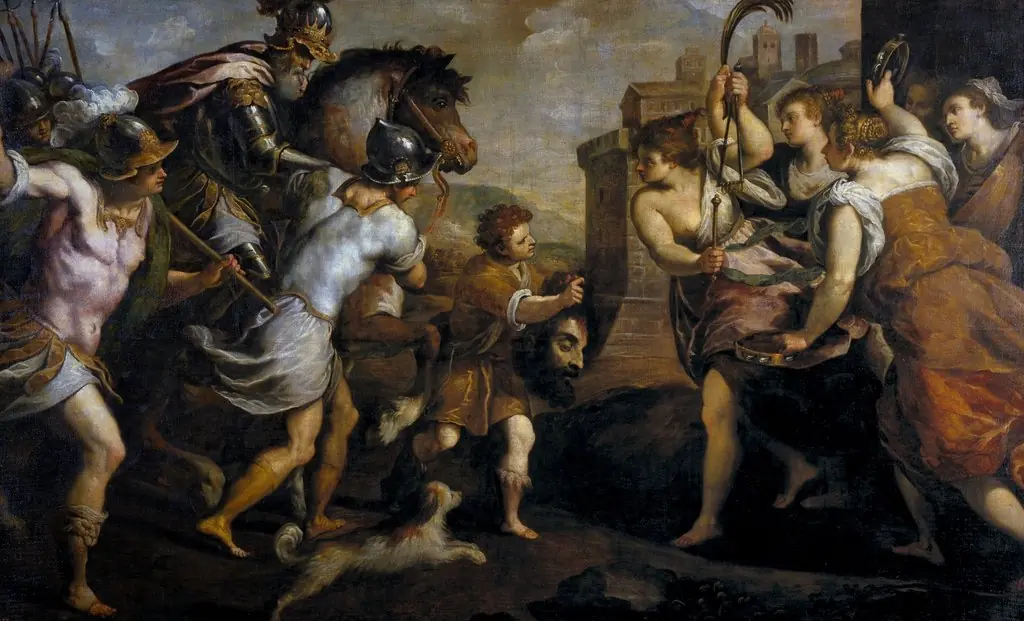 David with Goliath's Head
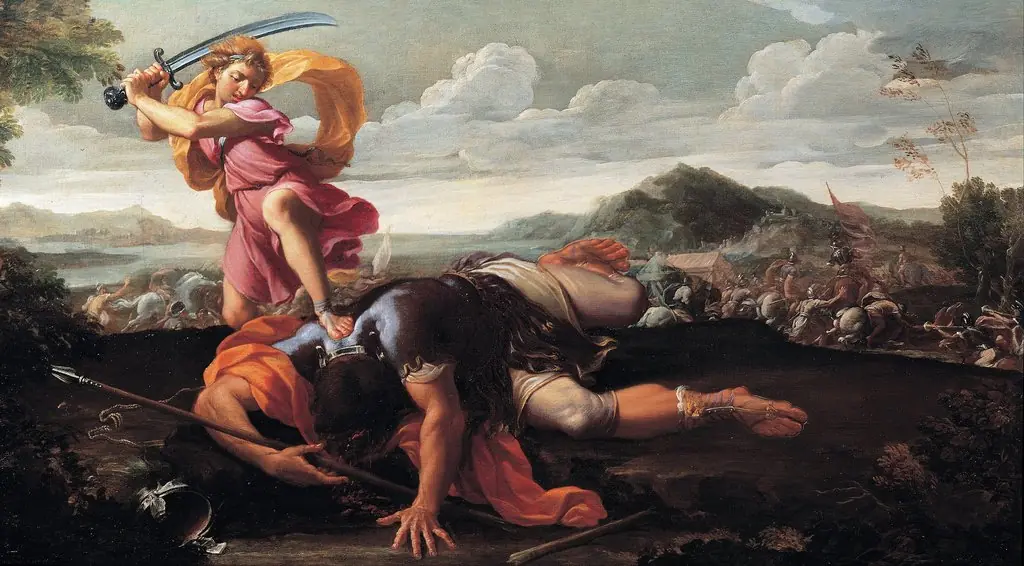 David and Goliath
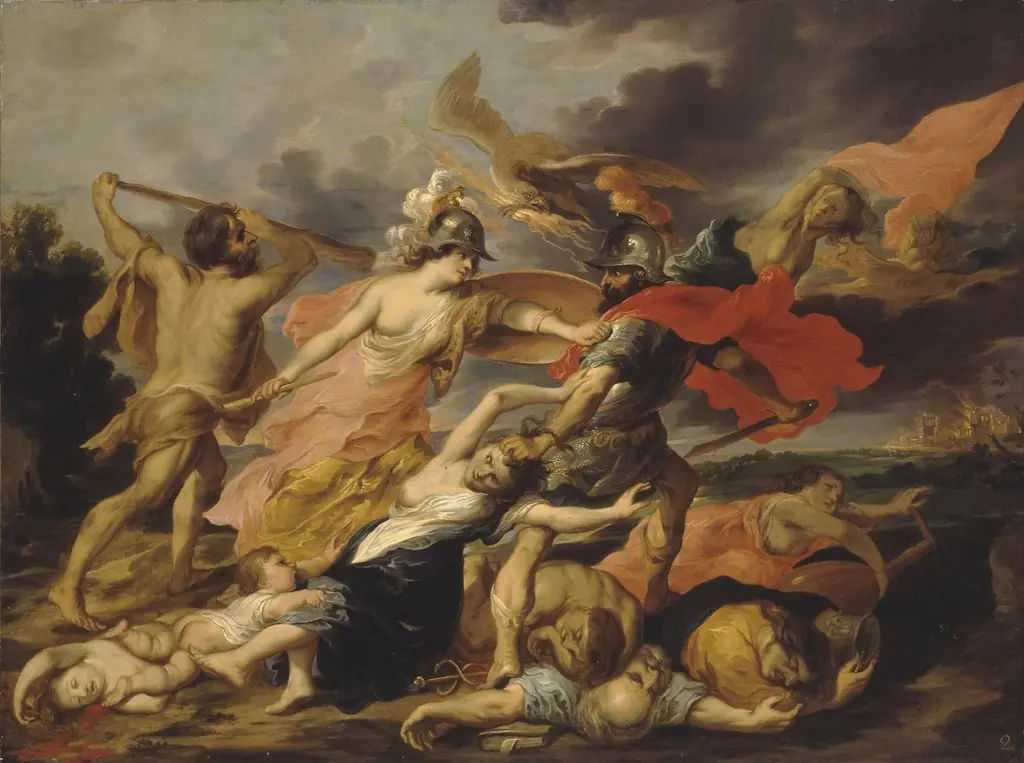 Hercules and Minerva Expelling Mars
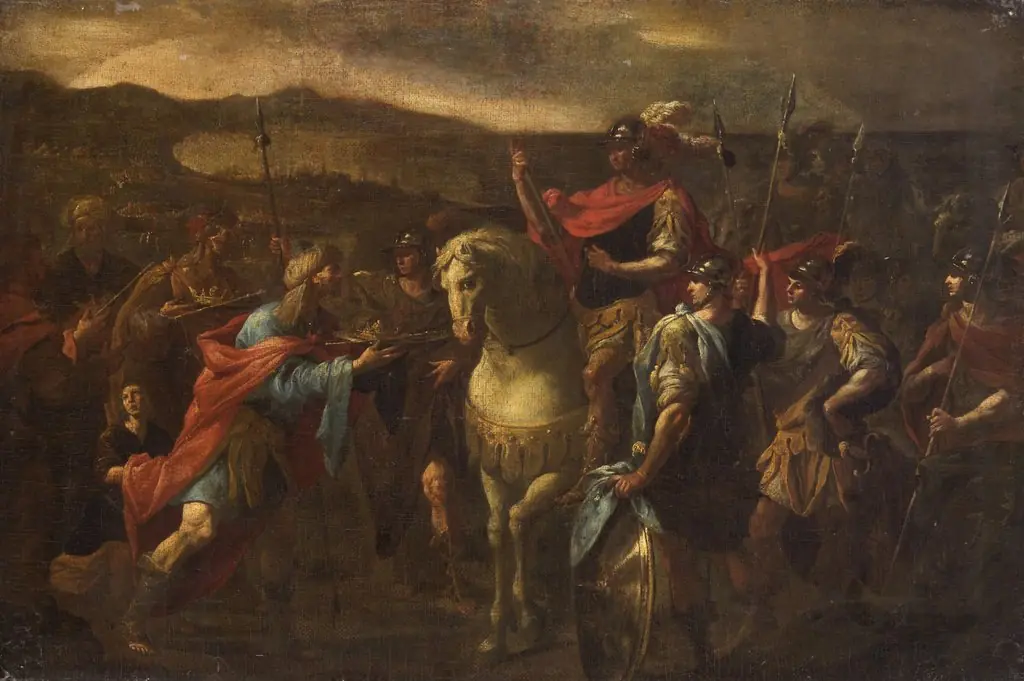 Indische Könige huldigen Alexander dem Großen
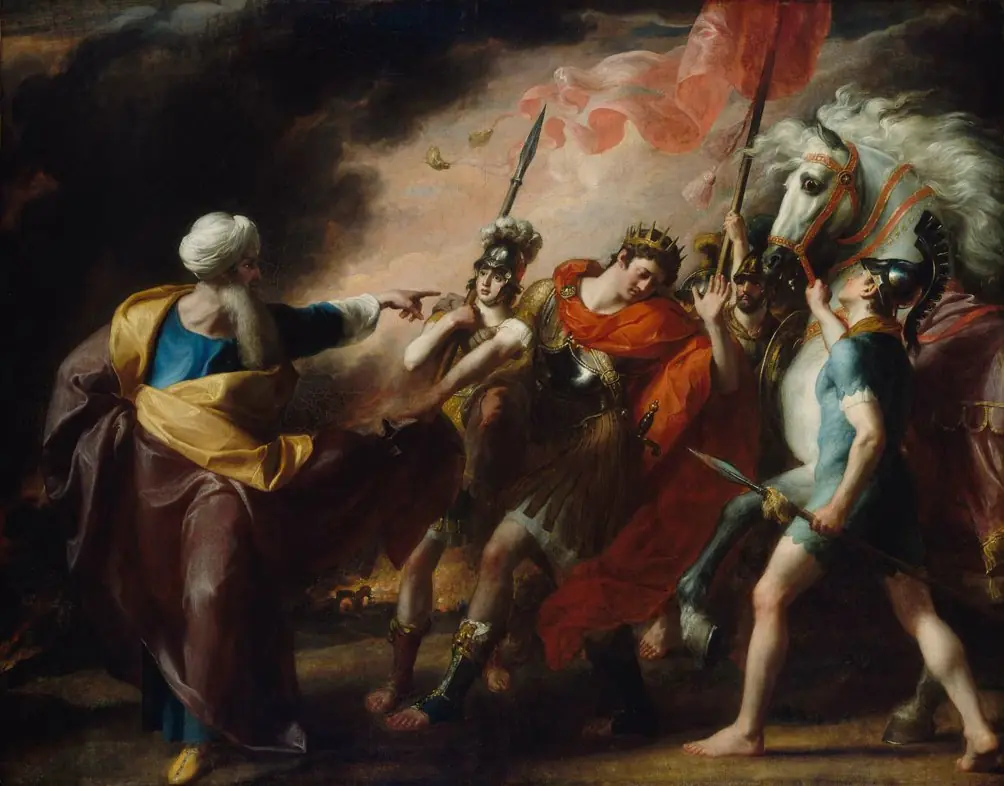 Saul Reproved by Samuel
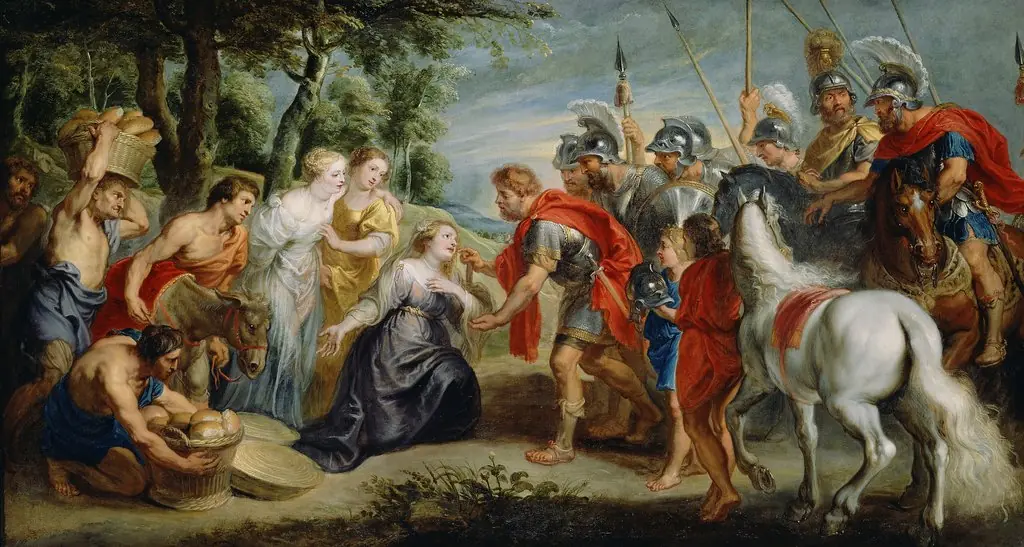 David Meeting Abigail
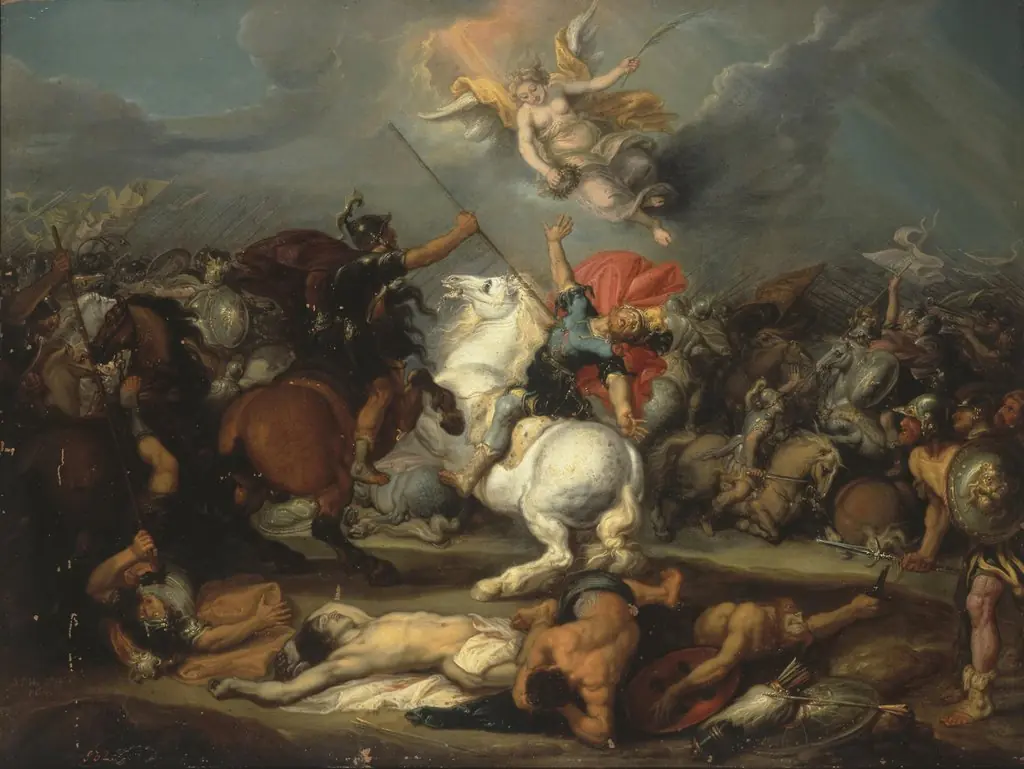 Death of Decius Mus
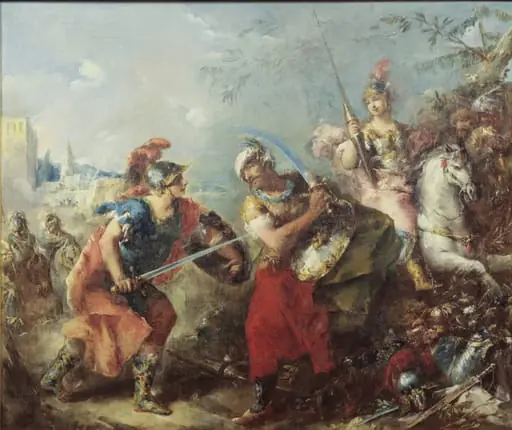 The Fight between Tancred and Argante With Clorinda in the Background
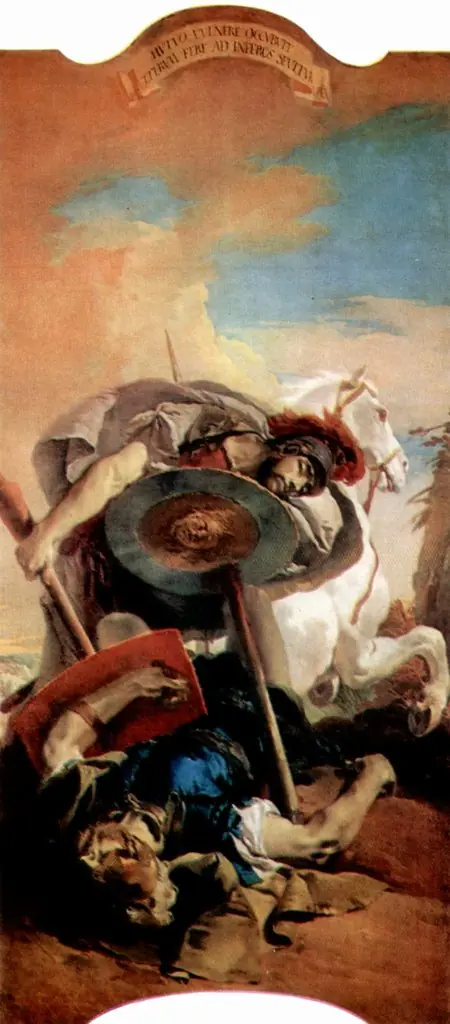 Death of Consul L. J. Brutus in a duel with Aruns
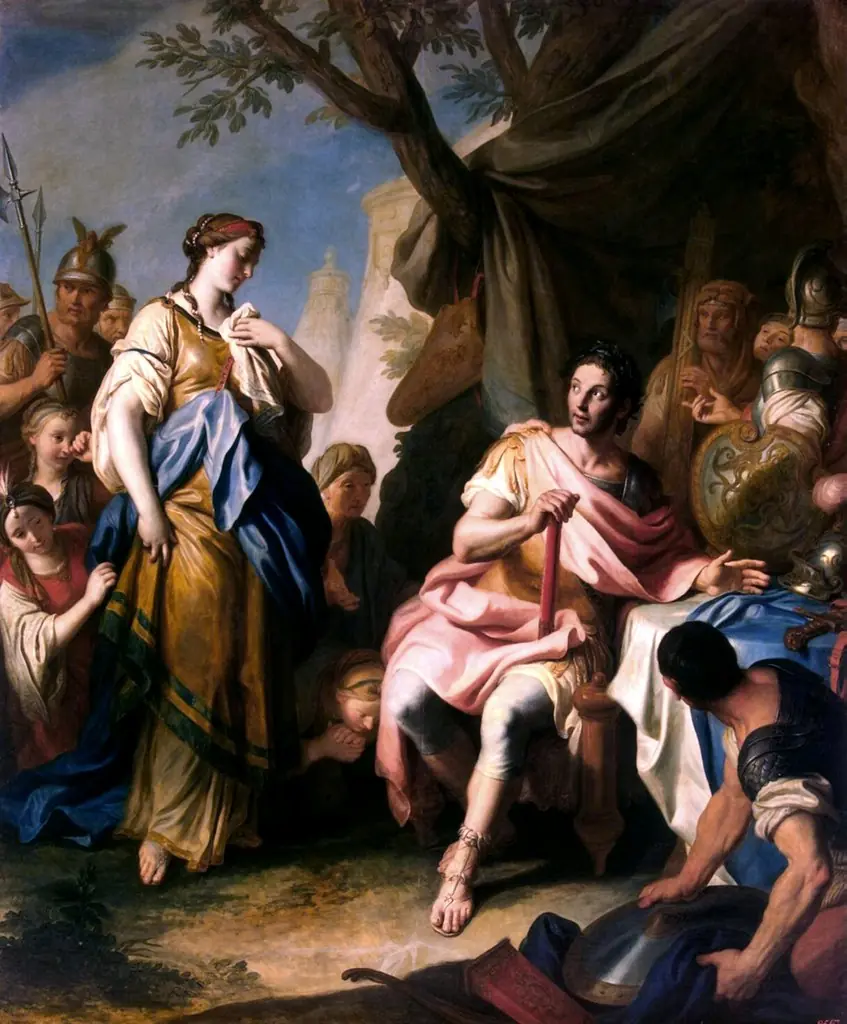 Alexander the Great and Roxana
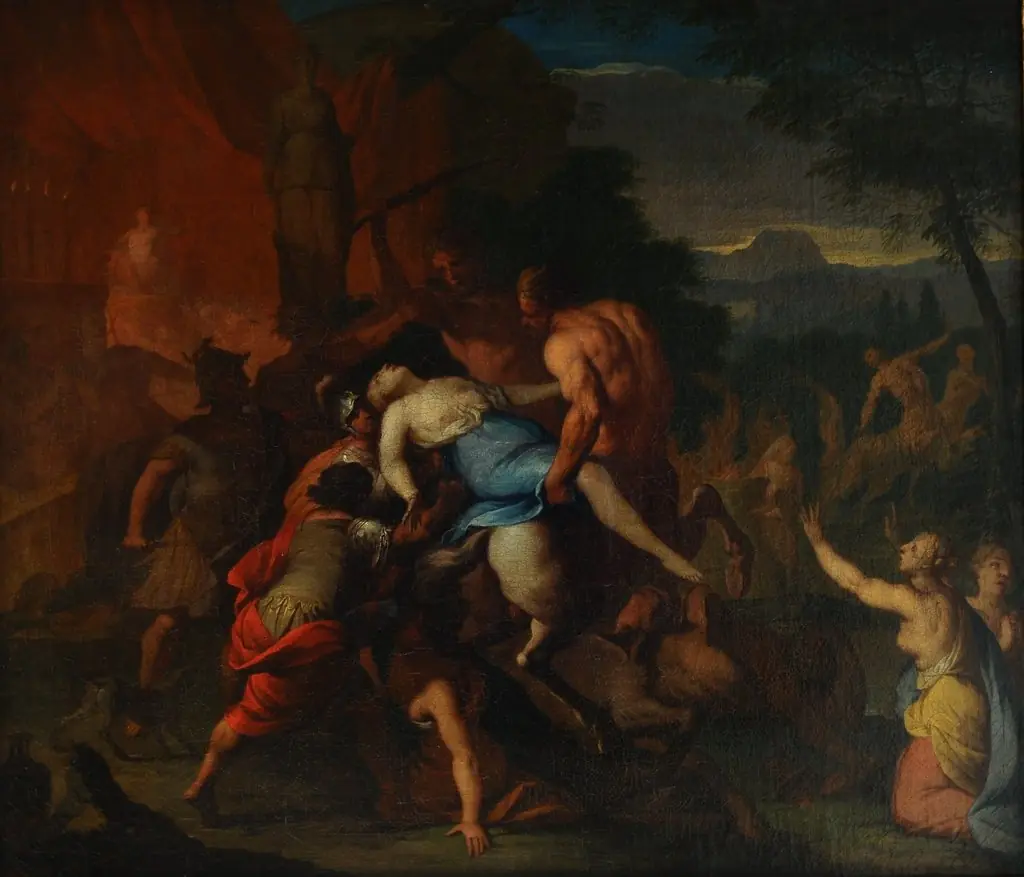 Combate de centauros y lapitas. (Tit. Ant.: Centauros e ilotas)
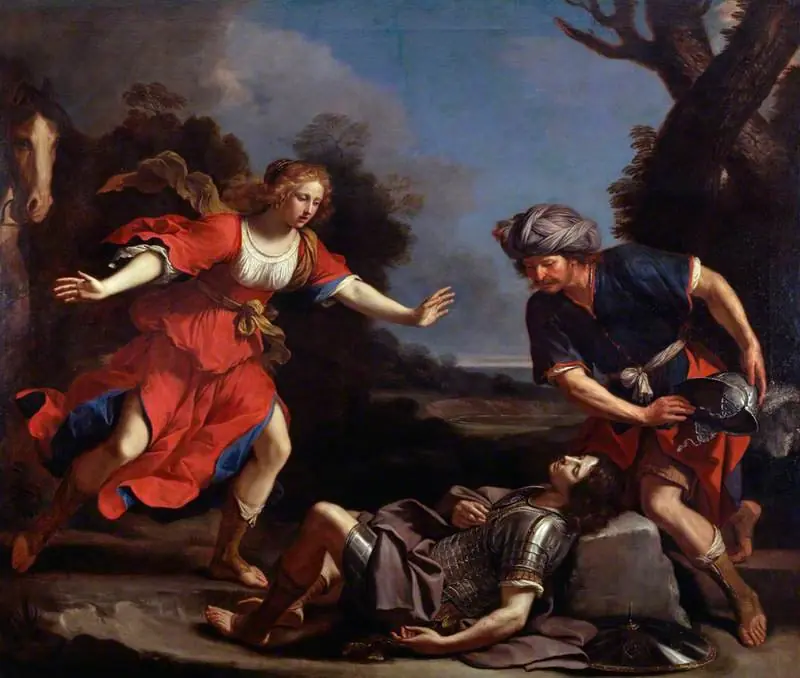 Erminia Finding the Wounded Tancred