Artwork
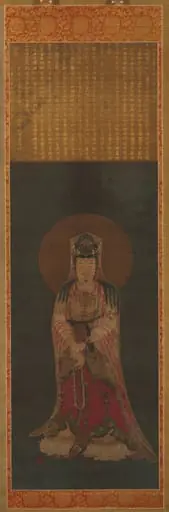
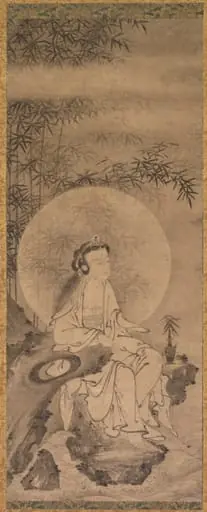
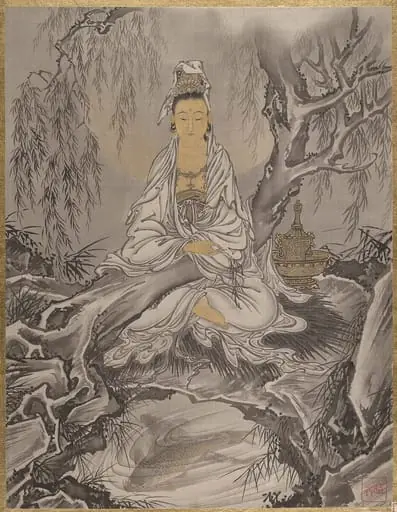
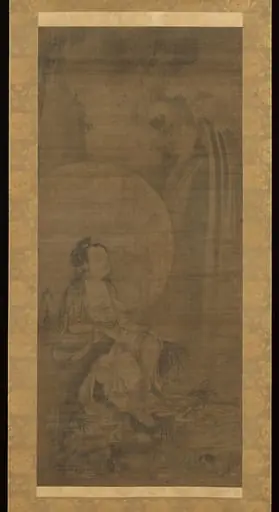
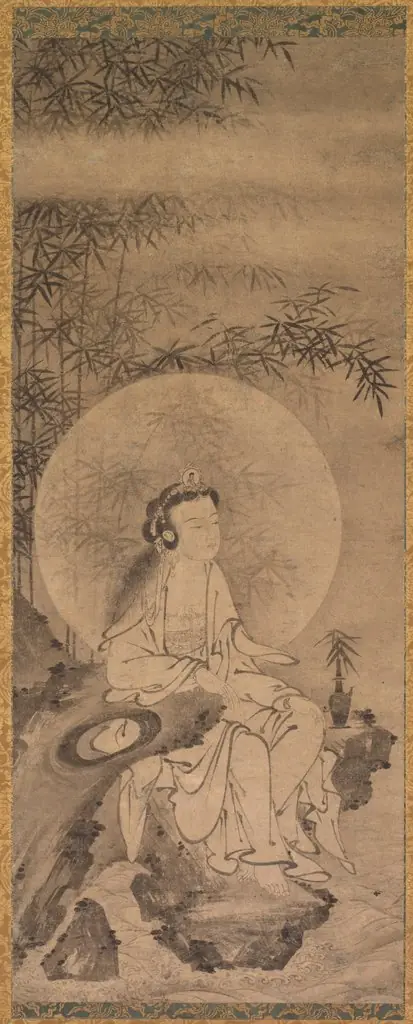
White-robed Guanyin Bodhisattva
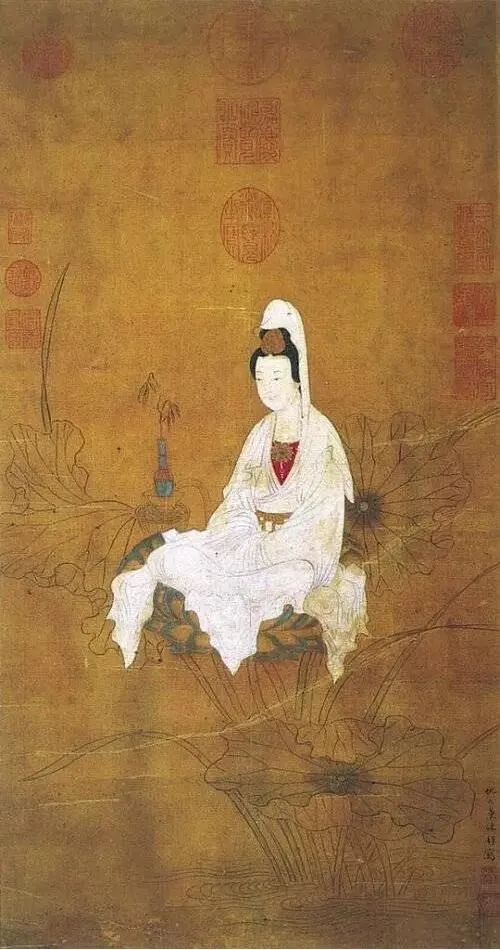
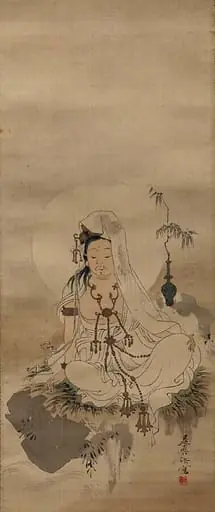
White-robed Guanyin Bodhisattva is an unspecified painting by the Ming dynasty painting artist Qiu Zhu. It dates from 1550 and is held in the collection of the National Palace Museum.
About this work
Overview
It is currently preserved in the National Palace Museum’s collection.
Painted around 1550 by Qiu Zhu, a female artist of the Ming dynasty, this work portrays Guanyin in the form of Pāṇḍara-vāsinī, a feminine manifestation of the bodhisattva of compassion. Executed in ink and color on silk, the painting reflects Qiu Zhu’s focus on religious figure painting, a domain less commonly pursued by women artists of her time. It is currently preserved in the National Palace Museum’s collection.
Subject & Meaning
The figure represents Guanyin as Pāṇḍara-vāsinī, a white-robed bodhisattva associated with purity and maternal compassion. Seated calmly on a rock, her serene expression and closed eyes suggest inner stillness and spiritual presence. The red undergarment subtly contrasts with the white robe, symbolizing the balance between transcendence and earthly grace. The composition invites contemplation, aligning with devotional practices in Chinese Buddhism.
Technique & Style
Qiu Zhu employed fine, controlled brushwork to define the flowing lines of the robe and the soft contours of the face. The background, rendered in a warm golden wash with faint decorative patterns, creates a luminous atmosphere without distracting from the central figure. Subtle layering of pigments enhances the texture of the fabric, while the lack of detailed landscape elements focuses attention on the figure’s stillness and presence.
History & Provenance
The painting has been part of imperial collections since at least the Ming period and was later transferred to the National Palace Museum in Taipei. Its survival as a signed work by a female artist from the 16th century is rare, offering insight into the role of women in religious art production. Documentation confirms Qiu Zhu’s authorship, distinguishing it from anonymous devotional works of the era.
Context
During the mid-Ming dynasty, Buddhist iconography remained influential despite the dominance of Confucian scholarship. Female artists like Qiu Zhu contributed to devotional art within private or monastic settings, often working outside the male-dominated literati tradition. This painting reflects a blend of popular Buddhist imagery and refined courtly aesthetics, catering to both spiritual devotion and aesthetic appreciation.
Legacy
Qiu Zhu’s work stands as one of the few surviving signed paintings by a woman from the Ming period focused on Buddhist subjects. It contributes to broader scholarly recognition of female artists in pre-modern China and offers a rare visual record of how gender and spirituality intersected in religious art. The painting continues to inform studies on iconography, artistic practice, and gender in Chinese art history.
Artist & collection
Artist
Qiu Zhu (Chinese: 仇珠; Wade–Giles: Ch'iu Chu; fl. 1565–1585), commonly known as Miss Qiu and by her art name Duling Neishi (Chinese: 杜陵内史), was a Chinese painter during the Ming dynasty, noted for paintings with figures…