Artwork
Ennio Quirino Visconti
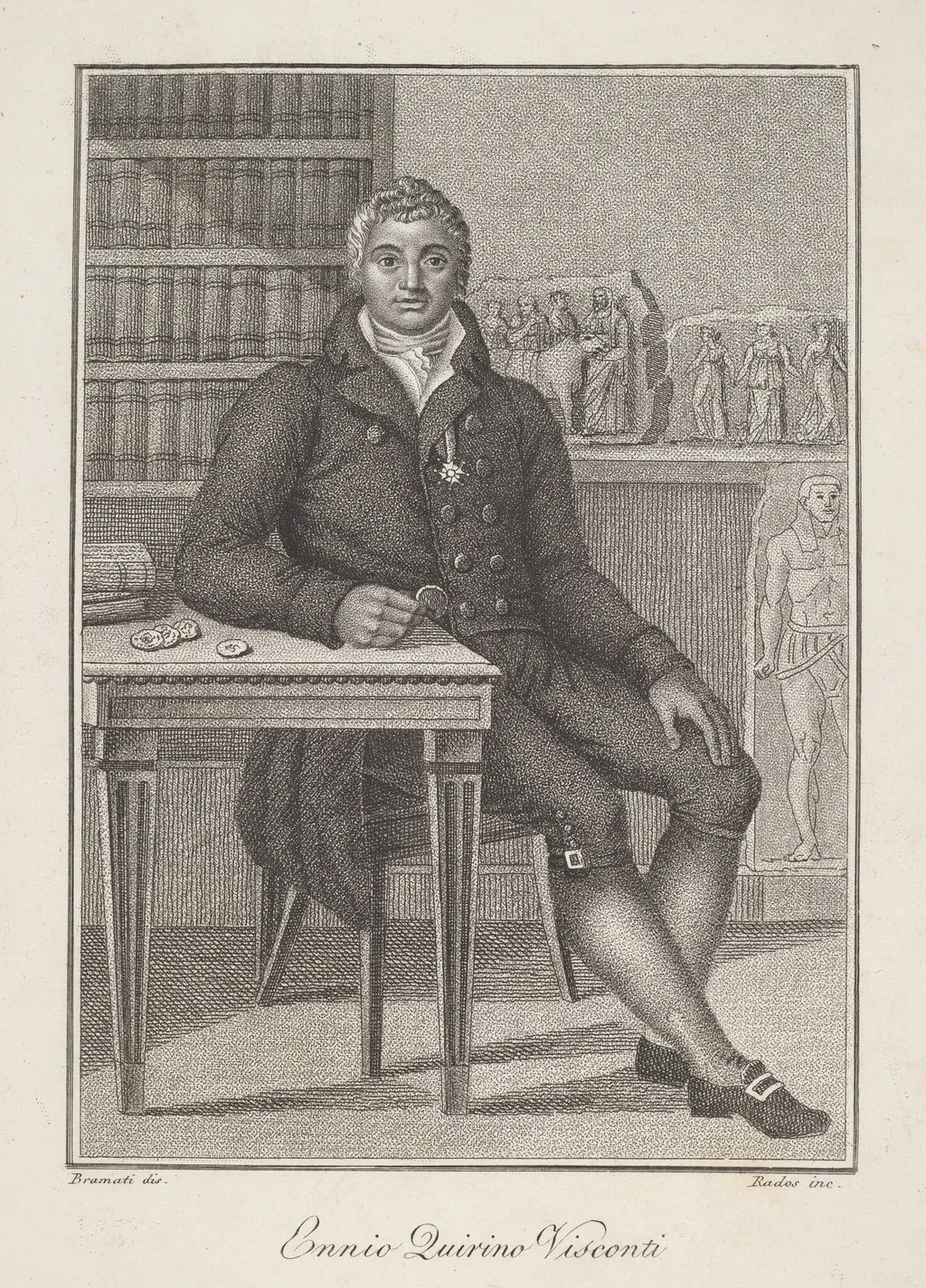
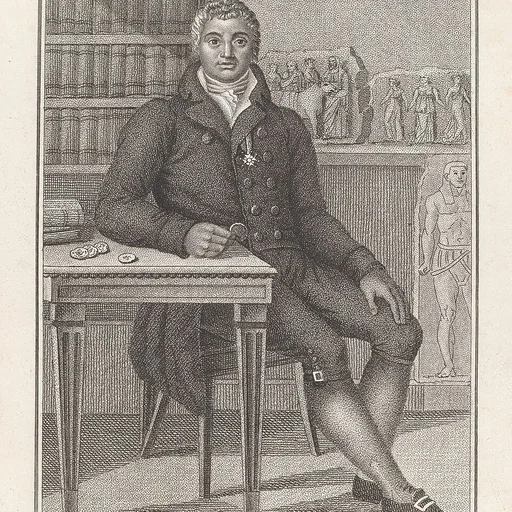
Ennio Quirino Visconti is an ink print by the Romanticist artist Luigi Rados. It dates from 1816 and is held in the collection of the National Gallery of Art.
About this work
Overview
The technique emphasizes texture and subtle tonal gradations, distinguishing it from line-based engraving methods common at the time.
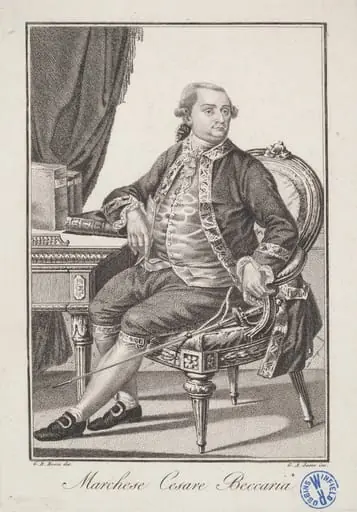
This 1816 print depicts Ennio Quirino Visconti, an Italian antiquarian and scholar, rendered in black-and-white through etching and stipple engraving by Luigi Rados. The composition presents him in a scholarly setting, surrounded by objects associated with intellectual life. The technique emphasizes texture and subtle tonal gradations, distinguishing it from line-based engraving methods common at the time.
Subject & Meaning
Visconti is portrayed seated at a desk, engaged in quiet contemplation. His attire—high collar, ornate buttoning, and a star pin—signals his status within academic and cultural institutions. The books, bust, and small statue around him reflect his role as a custodian of classical heritage. The dog at his side suggests companionship and loyalty, reinforcing the image of a thoughtful, grounded scholar.
Technique & Style
Rados employed stipple engraving, using fine dots rather than lines to model light and shadow. This method produces a soft, atmospheric effect, lending the portrait a sketchlike intimacy. The delicate texture contrasts with the sharper outlines of the furniture and objects, guiding the viewer’s eye toward Visconti’s face and hands. The etched lines defining the desk and shelves provide structural contrast to the tonal richness of the figure.
History & Provenance
Created in 1816, the print was likely commissioned to honor Visconti’s position as a leading figure in Rome’s cultural circles. He served as director of the Vatican Museums and was instrumental in preserving antiquities after the Napoleonic looting. The print may have circulated among scholars or been displayed in academic institutions, affirming his legacy within Italy’s intellectual elite.
Context
In early 19th-century Italy, portraiture of scholars often emphasized their connection to classical antiquity. Visconti’s image aligns with this trend, blending contemporary dress with symbolic references to ancient art. The presence of a bust and statue underscores the era’s reverence for classical heritage, while the domestic setting humanizes the intellectual, reflecting Enlightenment ideals of reasoned, private study.
Legacy
The print endures as a visual record of a key conservator of Roman antiquities. Its technique reflects the transition from bold linear engraving to more nuanced tonal methods in printmaking. Though not widely reproduced, it remains a significant artifact in understanding how scholarly identity was visually constructed during the post-Napoleonic cultural revival in Italy.
Artist & collection