Artwork
Principal and Teachers of Bishop Cotton School, Shimla (recto); Middle Class Students and Staff, Bishop Cotton School, Shimla (verso)
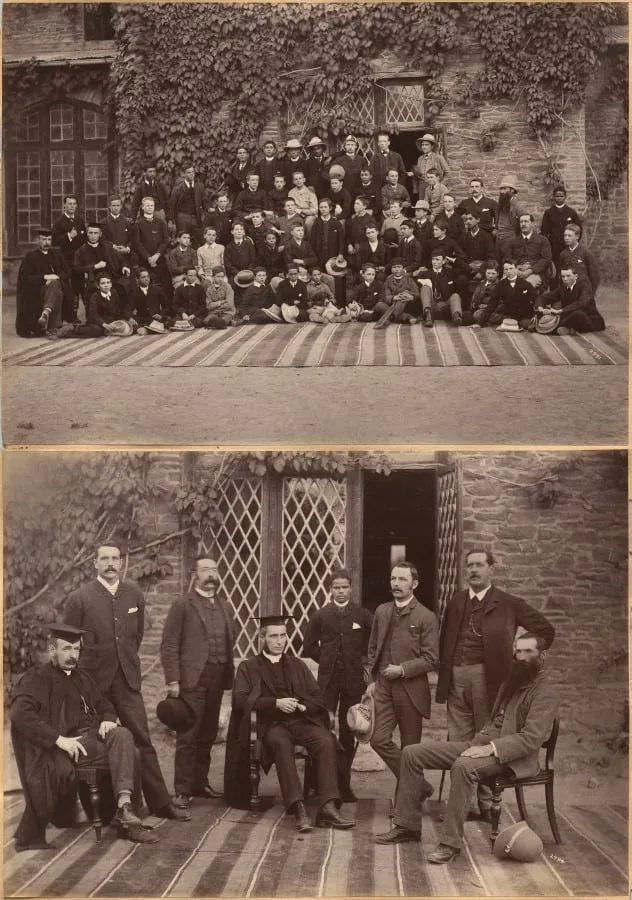
Principal and Teachers of Bishop Cotton School, Shimla (recto); Middle Class Students and Staff, Bishop Cotton School, Shimla (verso) is a photography by the Impressionist artist Raja Deen Dayal. It dates from 1884 and is held in the collection of the Cleveland Museum of Art. Two sides of a single photographic print depict distinct groups from Bishop Cotton School in Shimla, captured between 1885 and 1887.
About this work
Overview
Two sides of a single photographic print depict distinct groups from Bishop Cotton School in Shimla, captured between 1885 and 1887.
Two sides of a single photographic print depict distinct groups from Bishop Cotton School in Shimla, captured between 1885 and 1887. The recto shows British staff in formal attire, while the verso presents Indian students in uniform, arranged on a sloping hillside. These images originated from a larger album of approximately 105 photographs, likely compiled as a personal record by a British official stationed in India during the late 1880s. The album has since been disassembled, with portions dispersed across collections.
Subject & Meaning
The images reflect the hierarchical structure of colonial education in India. The teachers, dressed in Western suits, embody institutional authority, while the students, lined up in整齐 uniforms, represent the assimilationist goals of British schooling. The contrast between rigid postures and the untamed greenery behind them suggests a tension between imposed order and the natural environment. These portraits serve as quiet documents of cultural transmission and colonial social engineering.
Technique & Style
The photographs exhibit early gelatin silver print characteristics: sharp detail, limited tonal range, and careful composition. Subjects are posed formally, typical of studio conventions adapted to outdoor settings. The natural backdrop—lush trees and uneven terrain—introduces organic irregularity against the controlled arrangement of figures. Lighting is even, suggesting midday exposure, and the lack of motion blur indicates long exposure times, consistent with photographic limitations of the period.
History & Provenance
The album containing these images was likely assembled by a British civil servant during a posting in India around 1888, serving as a private memento. Around 105 photographs were originally compiled, with 37 now held by the museum under accession 2016.266. The remaining images, including this bifacial print, were separated over time. The school’s location in Shimla, a colonial hill station, underscores the practice of relocating education to cooler climates for British personnel and their children.
Context
Bishop Cotton School, founded in 1859, was among the earliest English-medium boarding schools in India, designed to educate the sons of British officials and Indian elites. Photography was emerging as a tool for documenting social order and progress under colonial rule. Images like these aligned with broader imperial narratives, yet also preserved unintended details—such as the surrounding vegetation—that reveal the physical reality of colonial life beyond official rhetoric.
Legacy
These photographs contribute to a visual archive of colonial education in South Asia, offering insight into how institutions shaped identity and social stratification. They stand alongside works by photographers like Raja Deen Dayal, who similarly recorded daily life under British administration. While intended as personal records, they now serve as historical evidence of cultural exchange, control, and the quiet persistence of local environments within colonial frameworks.
Artist & collection

Artist
Raja Lala Deen Dayal, famously known as Raja Deen Dayal) was an Indian photographer.

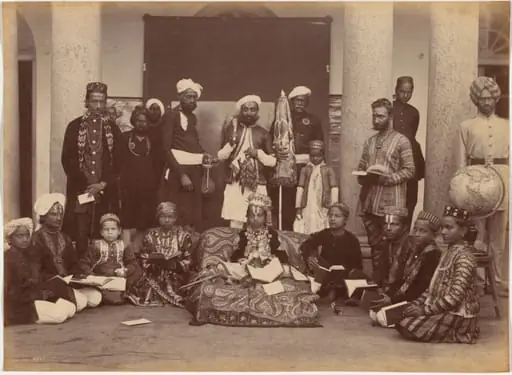 Maharaja of Rewa and Classmates
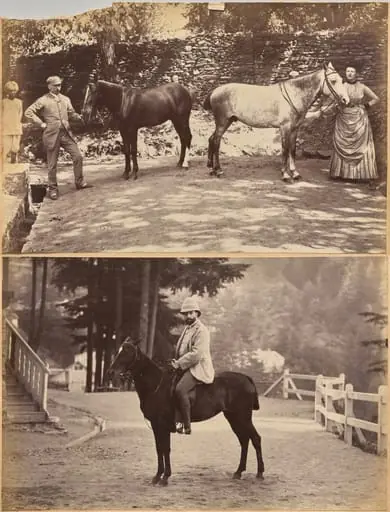 Col. F. G. Oldham (recto, top); Mr. Nowell, Shimla (recto, bottom)
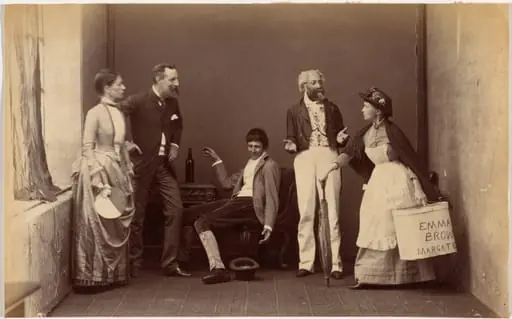 Fancy Group, Indore I
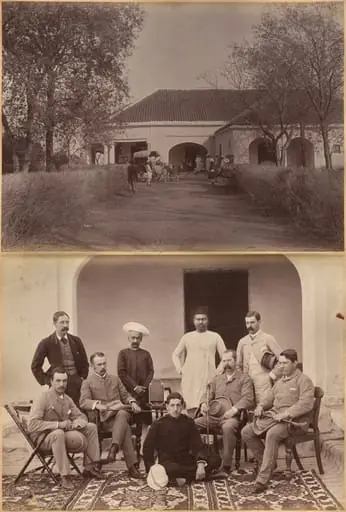 Civil officers at Jhansi (recto); Mr. William's House, Jhansi (verso)
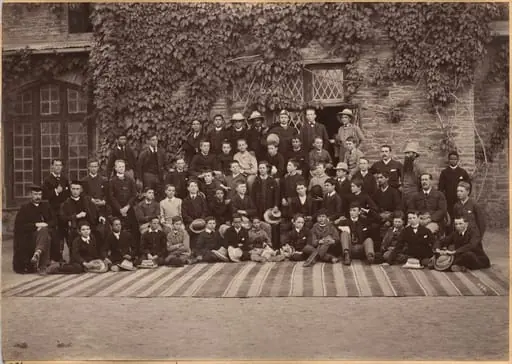 Middle Class Students and Staff, Bishop Cotton School, Shimla (verso)
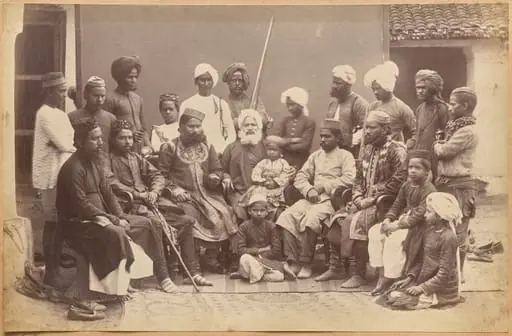 Mowhri Rahman Alli Khan family, Rewa (recto, bottom)
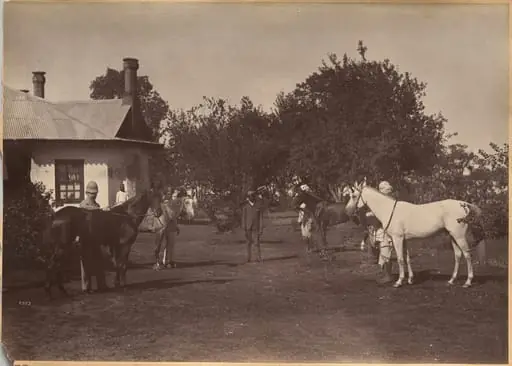 Lord William Beresford's horses
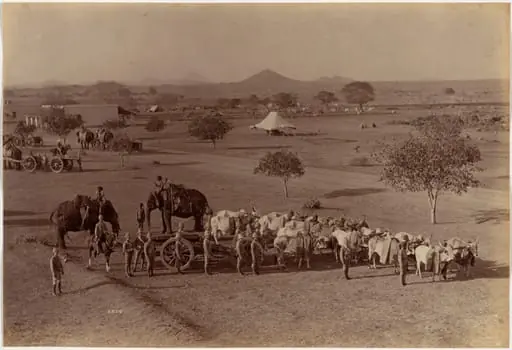 Heavy Field Battery, Jhansi
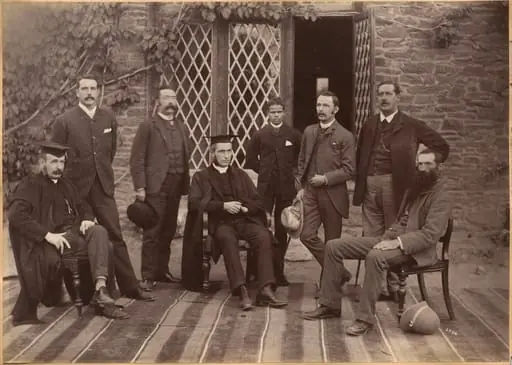 Principal and Teachers of Bishop Cotton School, Shimla (recto)
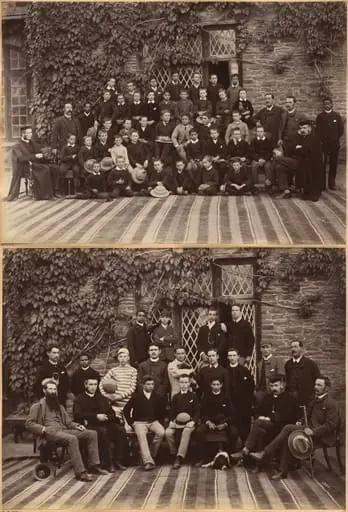 Primary Class Bishop Cotton School, Shimla (recto); High Class Students and Teachers at Bishop Cotton School, Shimla (verso)
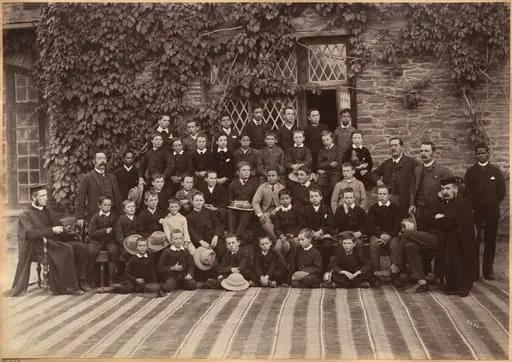 Primary Class, Bishop Cotton School, Shimla (recto)
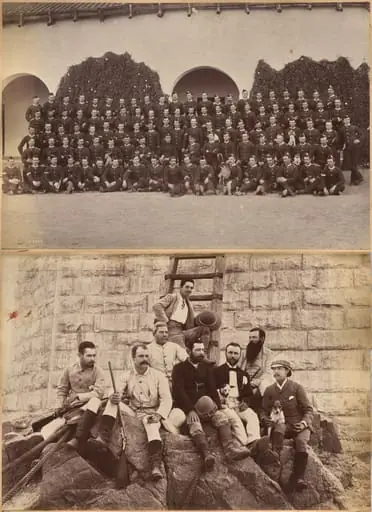 B. c/o Devonshire Regiment, Jhansi (recto); Staff of Messrs. Glover & Co., Sindh Bridge (verso)
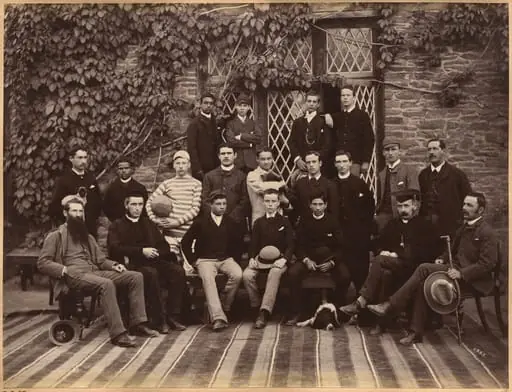 High Class Students and Teachers at Bishop Cotton School, Shimla (verso)
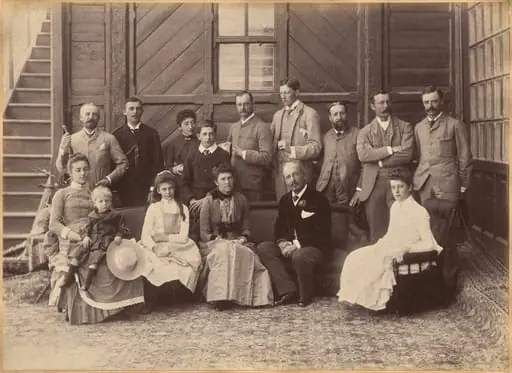 Viceregal Party Shimla (verso)
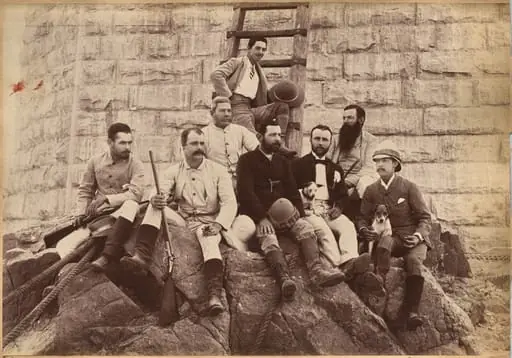 Staff of Messrs. Glover & Co., Sindh Bridge (verso)
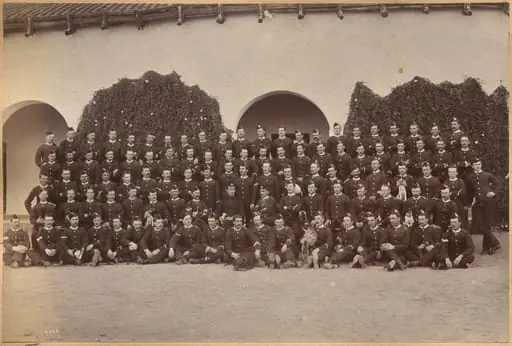 B. c/o Devonshire Regiment, Jhansi (recto)
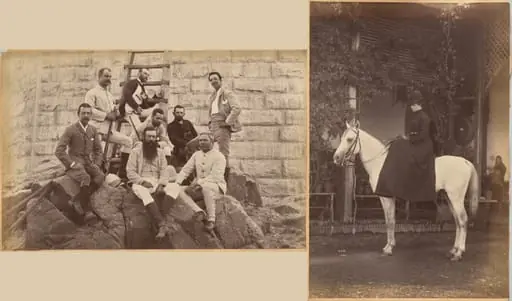 Managing staff of Meprs. Glover & Co. at Sindh Bridge (recto, top); Untitled: Woman on horse (verso, right)