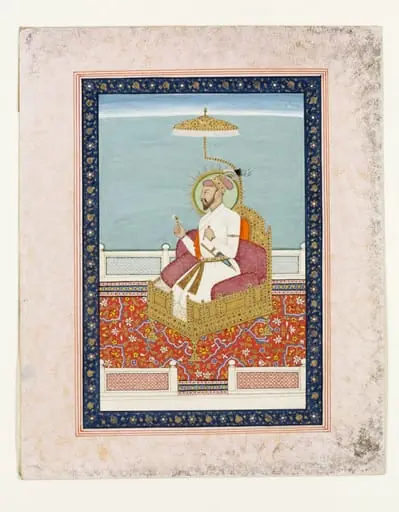
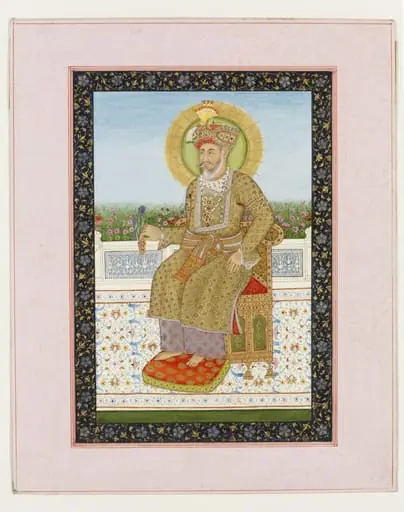
Artwork
Emperor Bahadur Shah
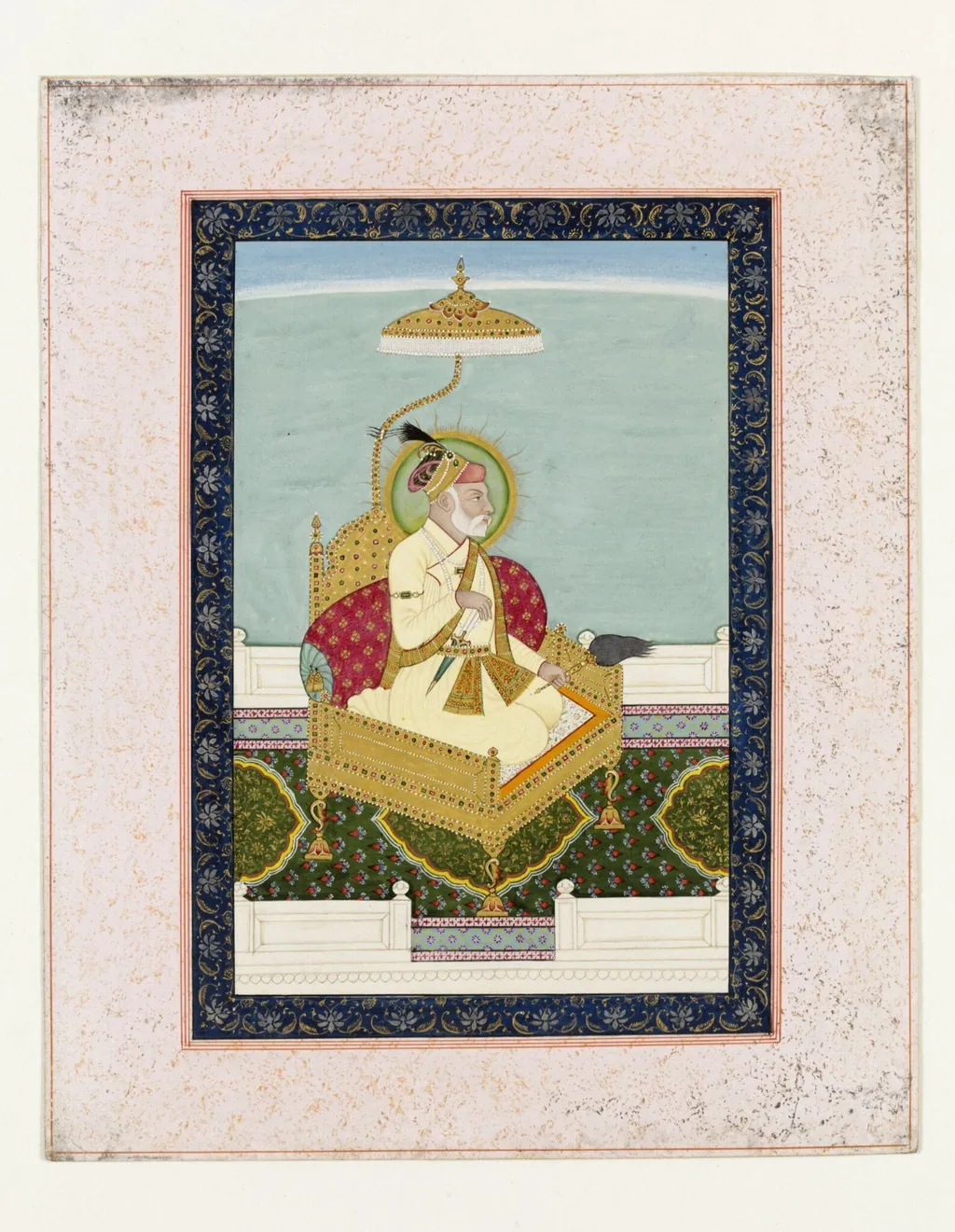
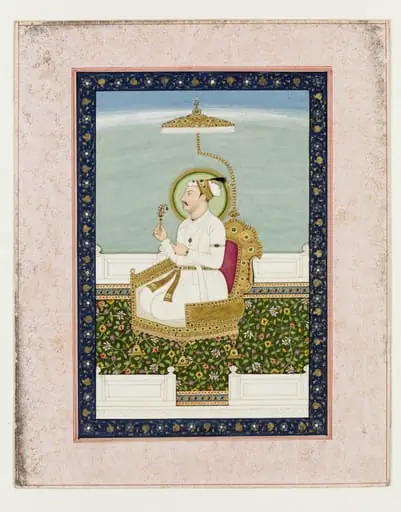
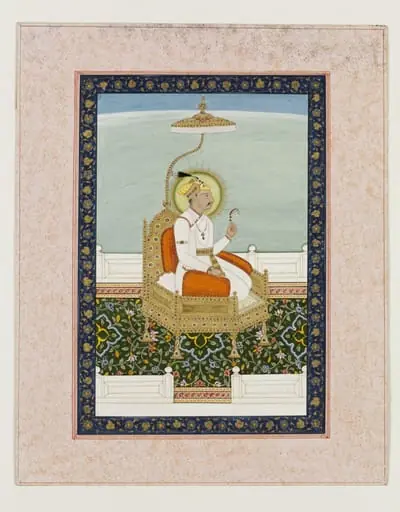
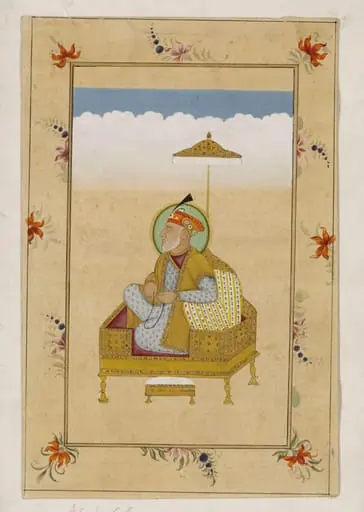
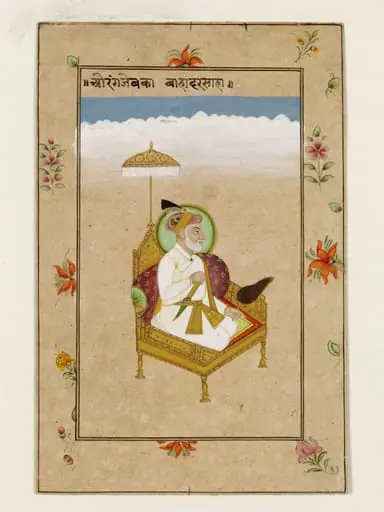
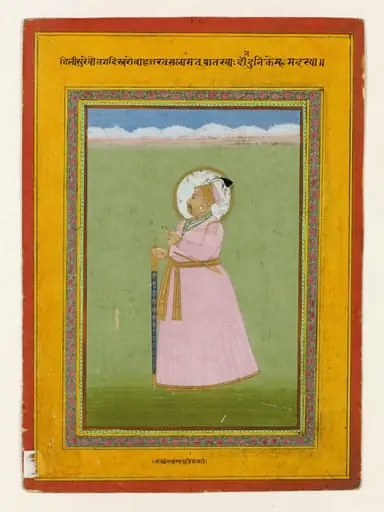
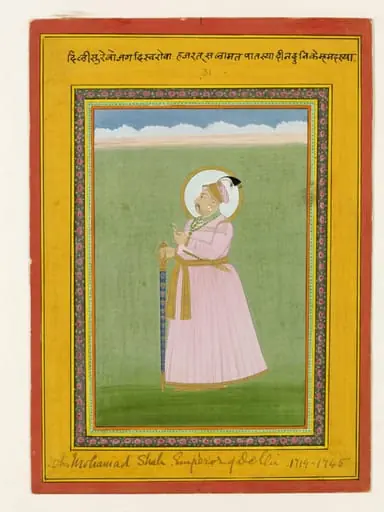
Emperor Bahadur Shah is a paint painting by the Romanticist artist Unknown. It dates from 1840 and is held in the collection of the Victoria and Albert Museum. This painting portrays Bahadur Shah, Mughal emperor from 1707 to 1712, rendered in opaque watercolor and gold on paper.
About this work
Overview
This painting portrays Bahadur Shah, Mughal emperor from 1707 to 1712, rendered in opaque watercolor and gold on paper. It belongs to a documented series depicting Muslim sovereigns, emphasizing imperial dignity through refined materials and symbolic elements. The work reflects the late Mughal court’s continued investment in portraiture despite political decline.
Subject & Meaning
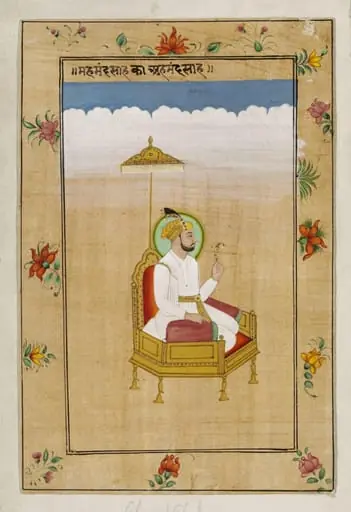
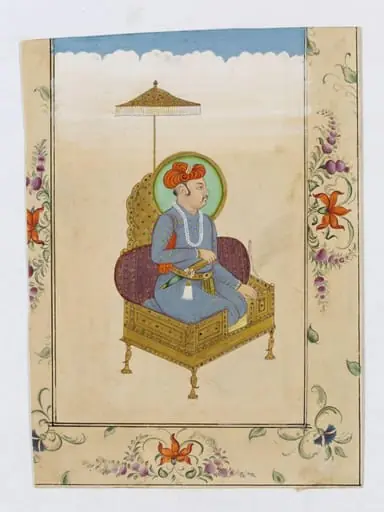
Bahadur Shah is depicted seated on an ornate throne, clad in a cream robe with red trim and a jeweled gold belt, signifying authority without ostentation.
Bahadur Shah is depicted seated on an ornate throne, clad in a cream robe with red trim and a jeweled gold belt, signifying authority without ostentation. His white beard and turban convey age and piety, while the golden parasol overhead denotes royal status. The object in his right hand—possibly a scepter or sword—suggests both governance and martial duty, aligning with traditional Mughal iconography of balanced rule.
Technique & Style
The artist employed fine brushwork and metallic pigments to achieve luminous detail, particularly in the throne’s floral motifs and the emperor’s attire. The background’s muted blue-green tone enhances the richness of gold and red elements, creating visual hierarchy. The composition is frontal and static, prioritizing symbolic presence over narrative action, typical of late Mughal imperial portraiture.
History & Provenance
The painting was once in the collection of the Earl of Auckland, Governor General of India from 1836 to 1842, suggesting it entered British hands during the East India Company’s ascendancy. Its inclusion in a series of Muslim rulers implies it was gathered as part of a broader colonial interest in documenting imperial lineages, possibly for administrative or antiquarian purposes.
Context
Created during a period of Mughal fragmentation, the portrait preserves courtly traditions even as central power waned. Similar works from this era reflect an effort to maintain visual legitimacy through inherited forms. The use of gold and precise detail signals continuity with earlier imperial styles, even as regional courts began to diverge stylistically.
Legacy
This painting stands as a quiet testament to the endurance of Mughal visual culture into the early 18th century. Though political authority diminished, the aesthetic language of sovereignty persisted in portraiture. Its survival and later acquisition by a British official underscore its role as both cultural artifact and colonial collectible.
Artist & collection

 Domestic Scene
 Giacomo and Cardinal Marco, investing Andrea, Abbot of San Zeno, with his Benefice
 The Nymph of Fontainebleau
 Portrait of a Woman
 Madonna and Child with Saints in the Enclosed Garden
 Venus and Minerva
 Family Group of Four on Sofa
 Wall painting from Room H of the Villa of P. Fannius Synistor at Boscoreale