Artwork
Apparition of God to Noah
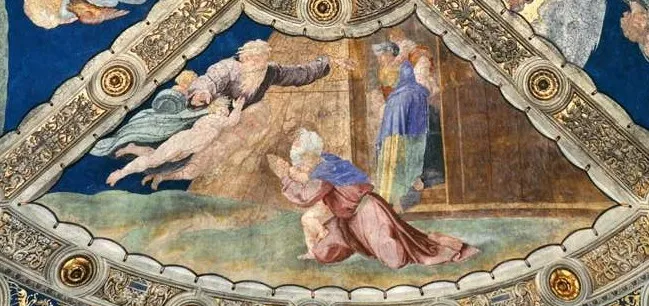
Apparition of God to Noah is an unspecified painting by the High Renaissance artist Raphael. It dates from 1511 and is held in the collection of the Vatican Museums.
About this work
Overview
Created in 1511 by the Italian master Raphael, this oil painting belongs to the High Renaissance period. It is part of the Vatican Museums collection and portrays a biblical moment in which Noah encounters a divine presence. The composition centers on a kneeling figure in humble prayer, illuminated against a deep‑blue sky.
Subject & Meaning
The work shows the patriarch Noah, identifiable by his beard and simple garments, kneeling with clasped hands. Above him a winged, white‑robed figure extends a hand, suggesting an appearance of God or an angel delivering a covenant. A doorway in the distance hints at the Ark’s entrance, reinforcing themes of obedience and divine promise.
Technique & Style
Raphael employs chiaroscuro to model the figures, creating a subtle gradation of light that gives the scene three‑dimensional depth. The palette combines soft pinks and blues for Noah’s attire with the luminous white of the heavenly figure, while the darkened background enhances the sense of reverence. The composition reflects the balanced harmony characteristic of High Renaissance art.
History & Provenance
The painting has remained in papal ownership since its creation, eventually entering the Vatican Museums where it is displayed among other works by Raphael. Its attribution to Raphael has been consistently accepted by scholars, and the piece serves as an example of the artist’s religious commissions during the early 16th century.
Artist & collection
Artist
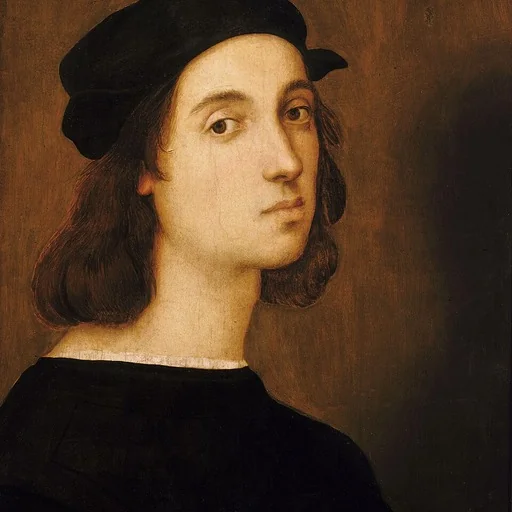
Raphael was born Raffaello Sanzio in Urbino on April 6, 1483, the son of Giovanni Santi, a painter and poet attached to the ducal court.

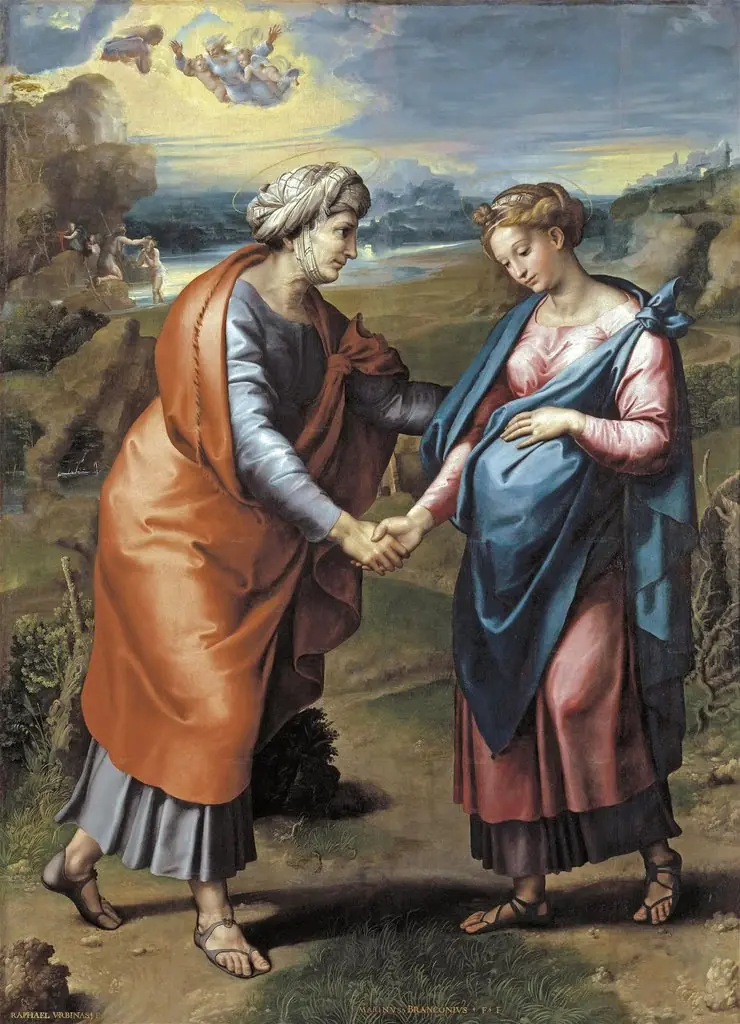
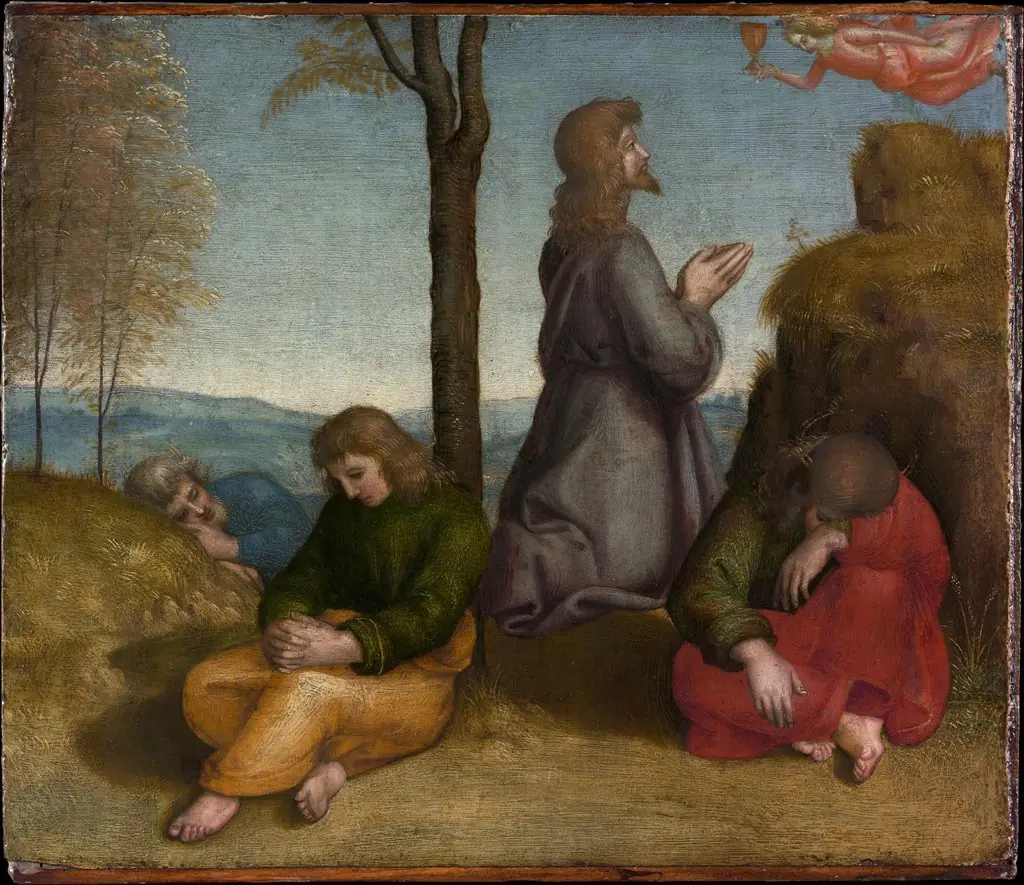
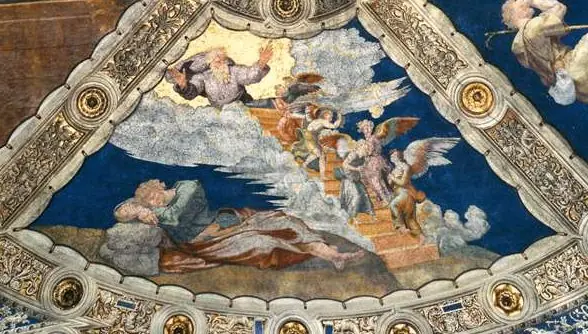 Jacob's dream of the ladder to heaven
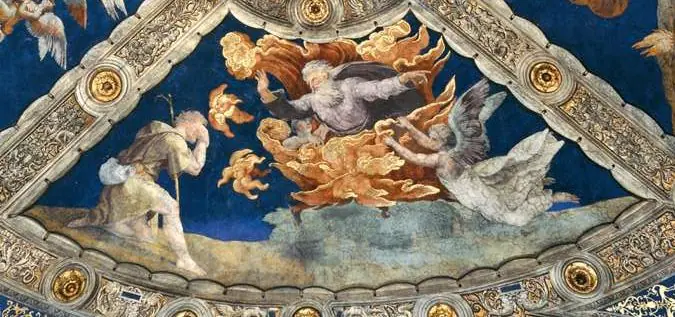 Burning bush
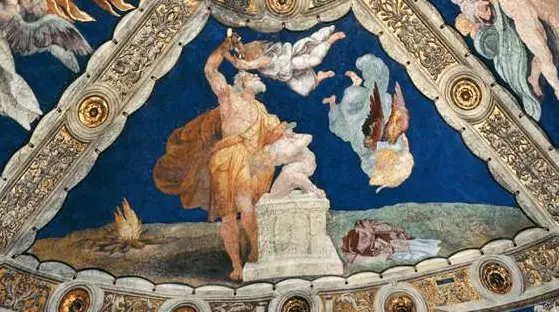 Sacrifice of Isaac
 Predella of the Barbadori altarpiece
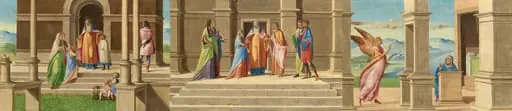 The Presentation and Marriage of the Virgin, and the Annunciation
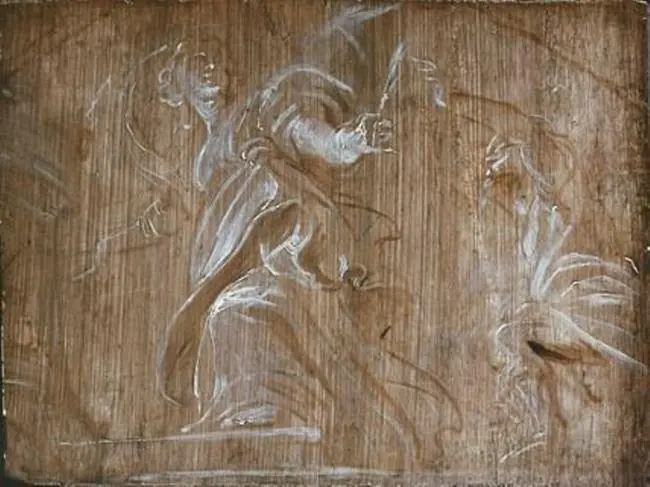 St Barbara pursued by her Father
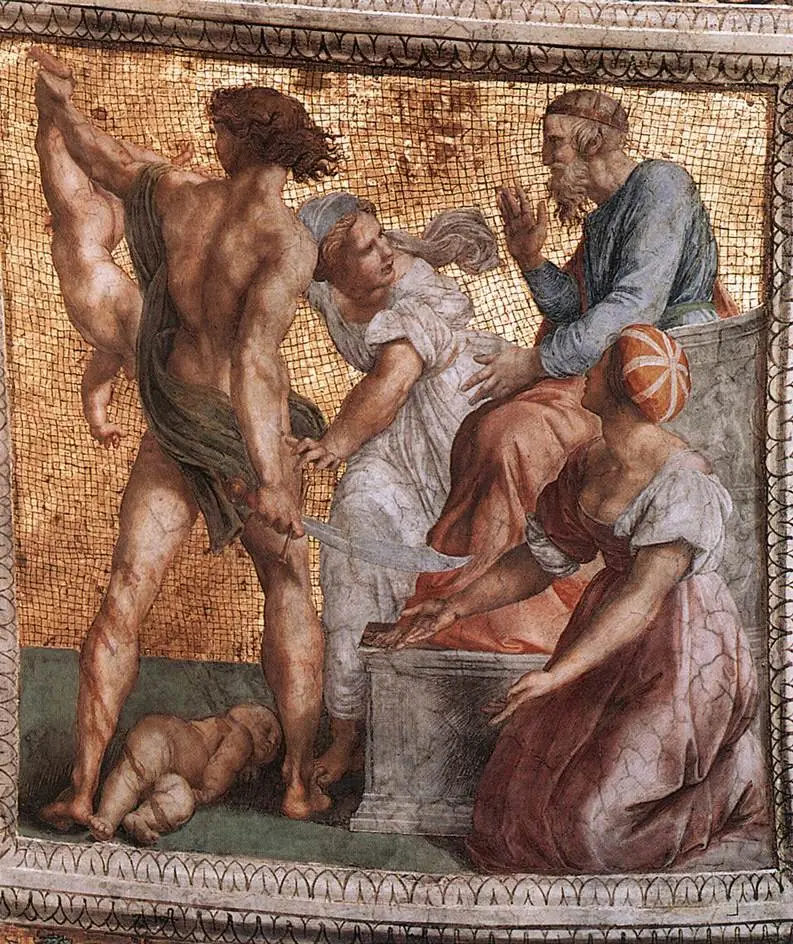 Judgement of Solomon
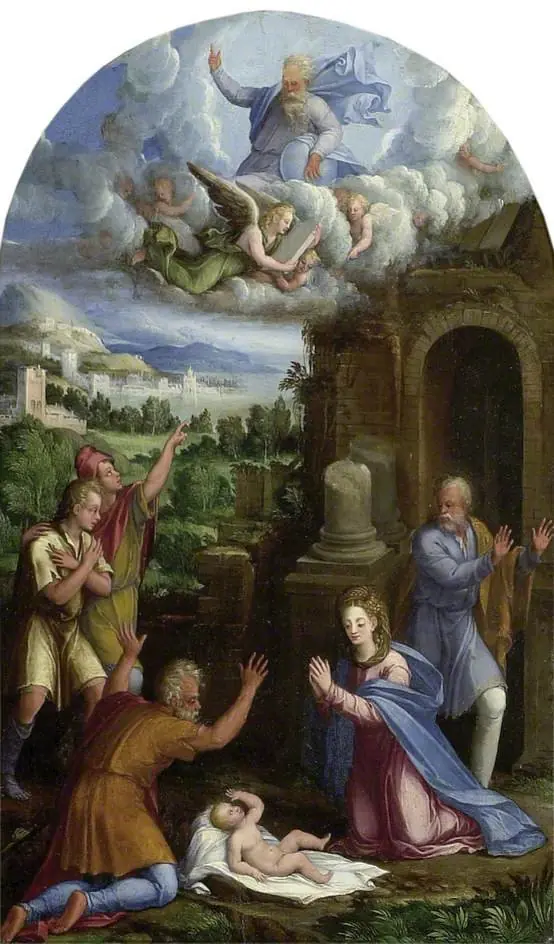 The Adoration of the Shepherds
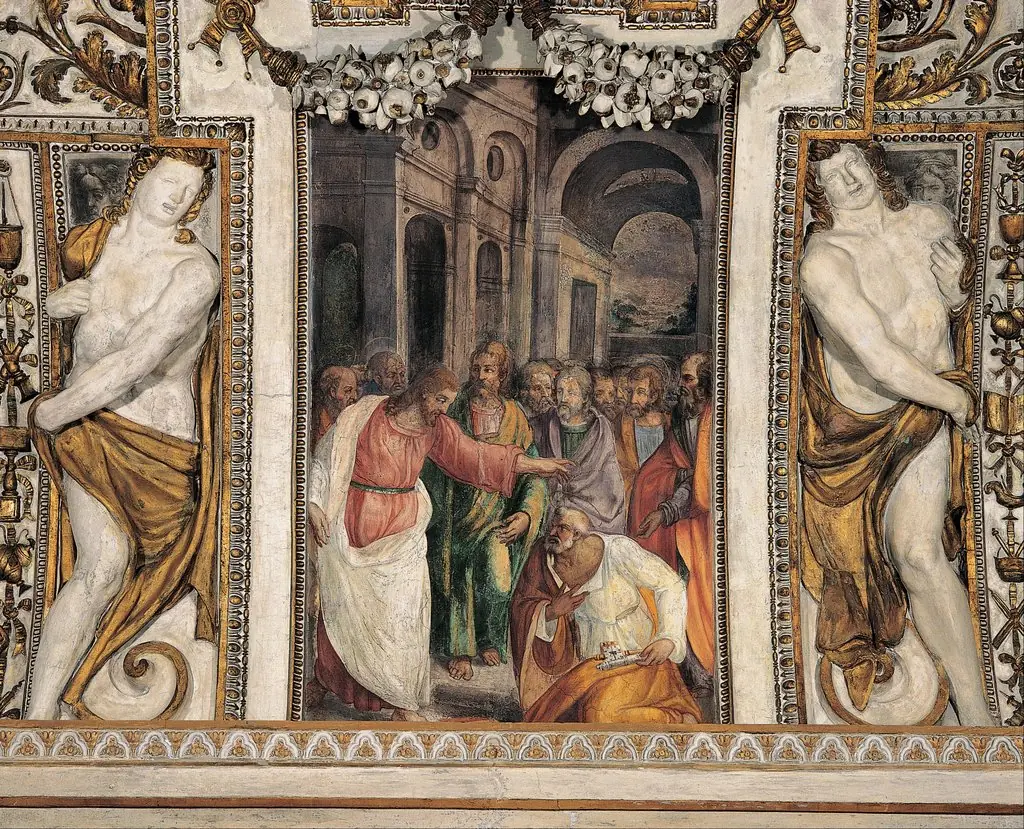 Deliver of the Keys to Saint Peter
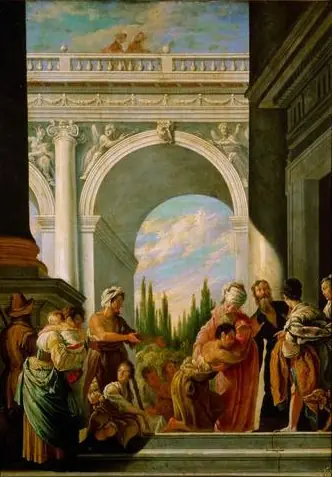 Gleichnis vom verlorenen Sohn
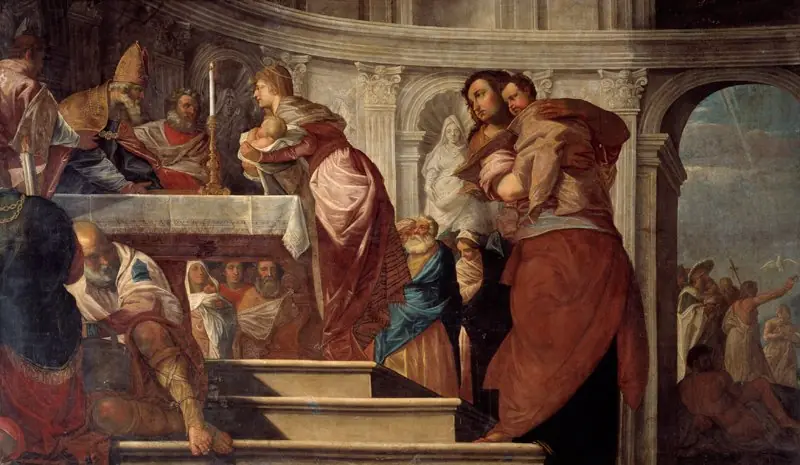 The Presentation of Christ in the Temple, and the Baptism of Christ
 Saint Peter