Artwork
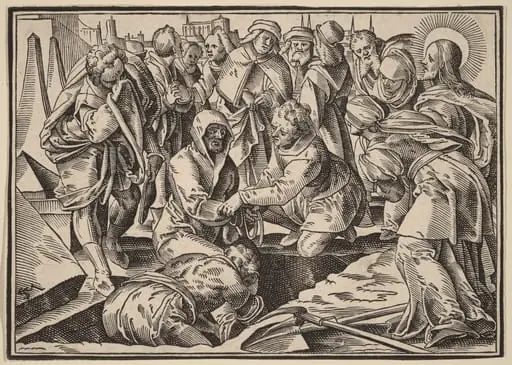
Christ Tells His Disciples of the Last Judgment
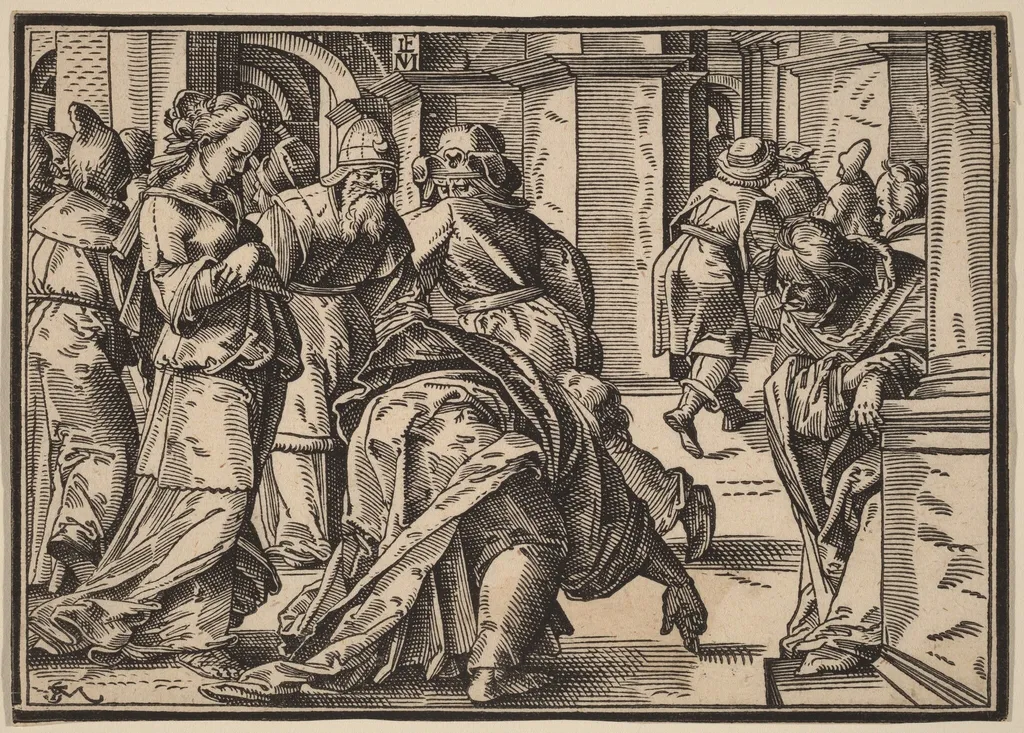
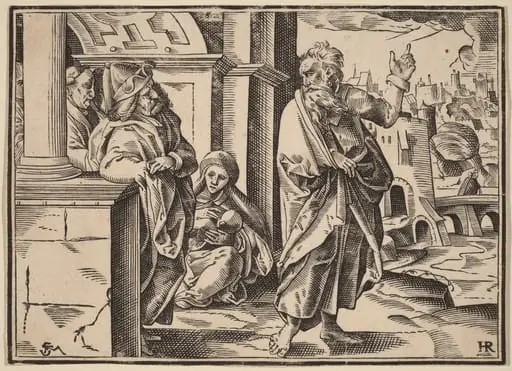
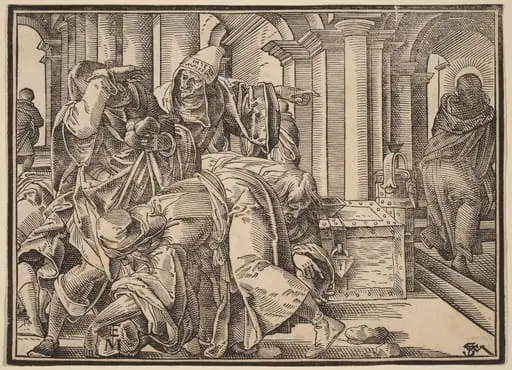
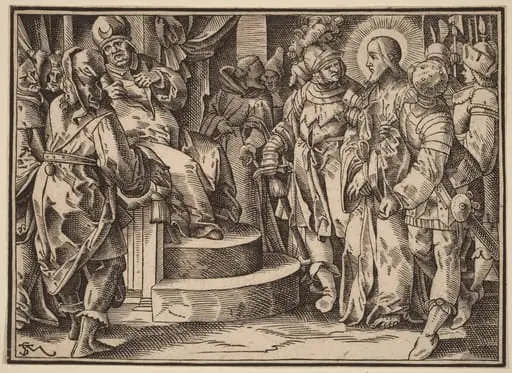
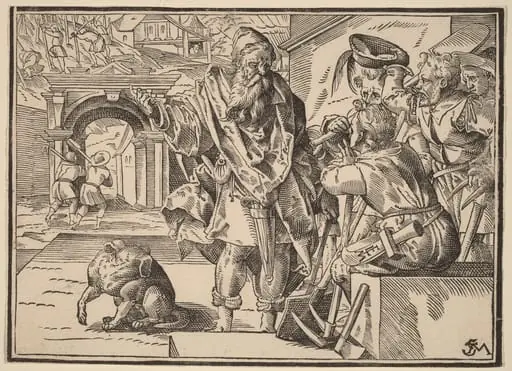
Christ Tells His Disciples of the Last Judgment is an ink print by the Renaissance artist Christoph Murer. It dates from 1630 and is held in the collection of the National Gallery of Art.
About this work
Overview
The composition is rendered entirely in black lines against a light background, creating a stark, graphic quality typical of early‑modern religious prints.
Christ Tells His Disciples of the Last Judgment is a 1630 woodcut by the German printmaker Christoph Murer. Executed on laid paper, the work presents a densely populated scene in which a central figure addresses a group of listeners, while surrounding figures react with varied expressions. The composition is rendered entirely in black lines against a light background, creating a stark, graphic quality typical of early‑modern religious prints.
Subject & Meaning
The image depicts Christ speaking to his disciples about the impending Last Judgment, a theme common in Counter‑Reformation art. The central figure, positioned slightly elevated, gestures toward the heavens, prompting the assembled crowd—standing, kneeling, or leaning forward—to look upward in attentive anticipation. The range of facial expressions, from concern to solemnity, underscores the gravity of the eschatological message being conveyed.
Technique & Style
Murer employed the woodcut process, carving the design into a single block of wood and printing it onto laid paper. The work relies on bold, unmodulated black lines to suggest volume, depth, and movement, while the absence of tonal shading accentuates the dramatic contrast between figure and space. Architectural elements in the background—tall, narrow structures with arched windows—are rendered with simple linear perspective, reinforcing the composition’s narrative focus.
Context
Created during the early seventeenth century, the print reflects the period’s emphasis on didactic religious imagery intended for wide dissemination. Woodcuts such as this were affordable and could be reproduced for devotional use, aligning with the Catholic Church’s efforts to reinforce doctrinal teachings through accessible visual media. Murer’s work thus participates in a broader tradition of print‑based evangelism prevalent in the Holy Roman Empire at the time.
Artist & collection


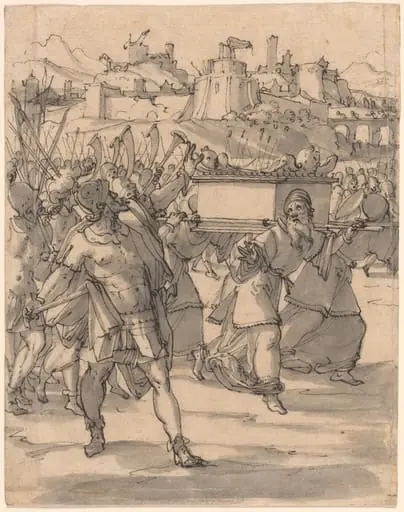 Joshua and the Israelites before the Walls of Jericho
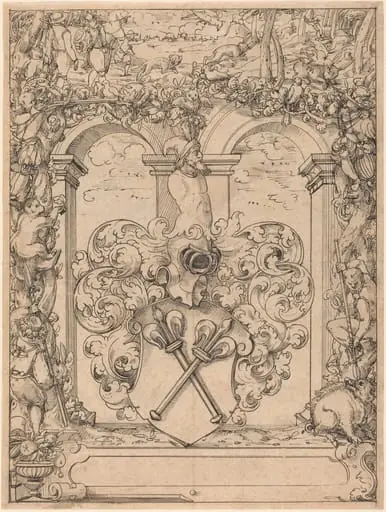 Design for a Window (Hunting Scene)
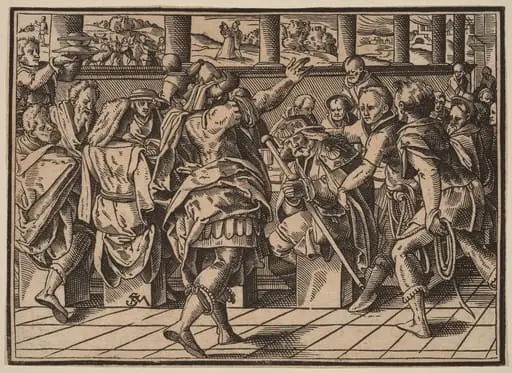 The Martyrdom of Saint James (?)
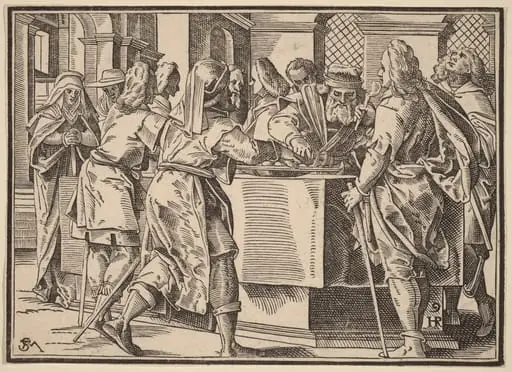 Christ Tells His Disciples of the Last Judgment
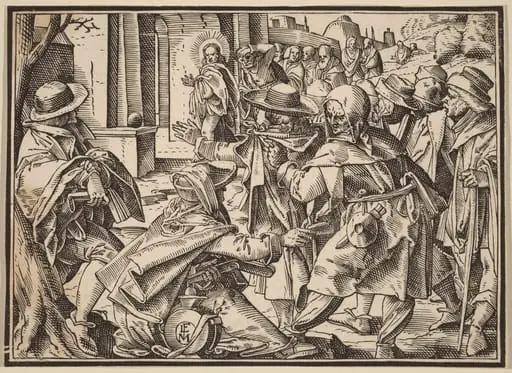 Christ Tells His Disciples of the Last Judgment
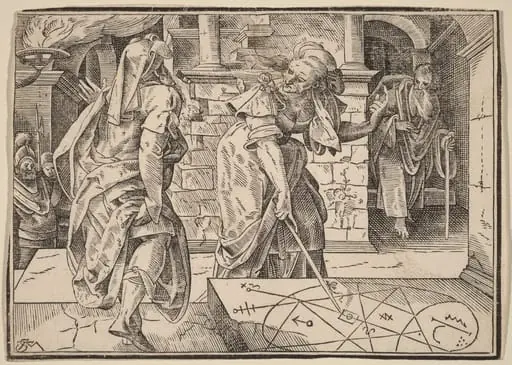 Christ Tells His Disciples of the Last Judgment
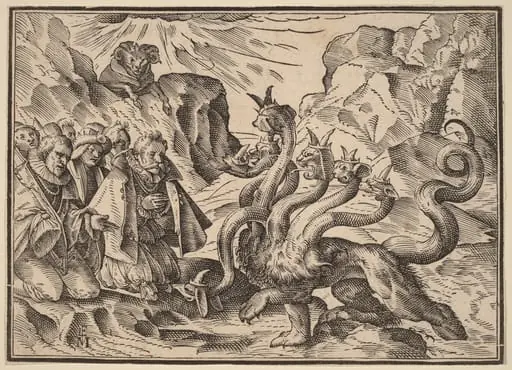 The Four Horsemen of the Apocalypse
 Christ Tells His Disciples of the Last Judgment