Artwork
Saint Margaret and the Dragon
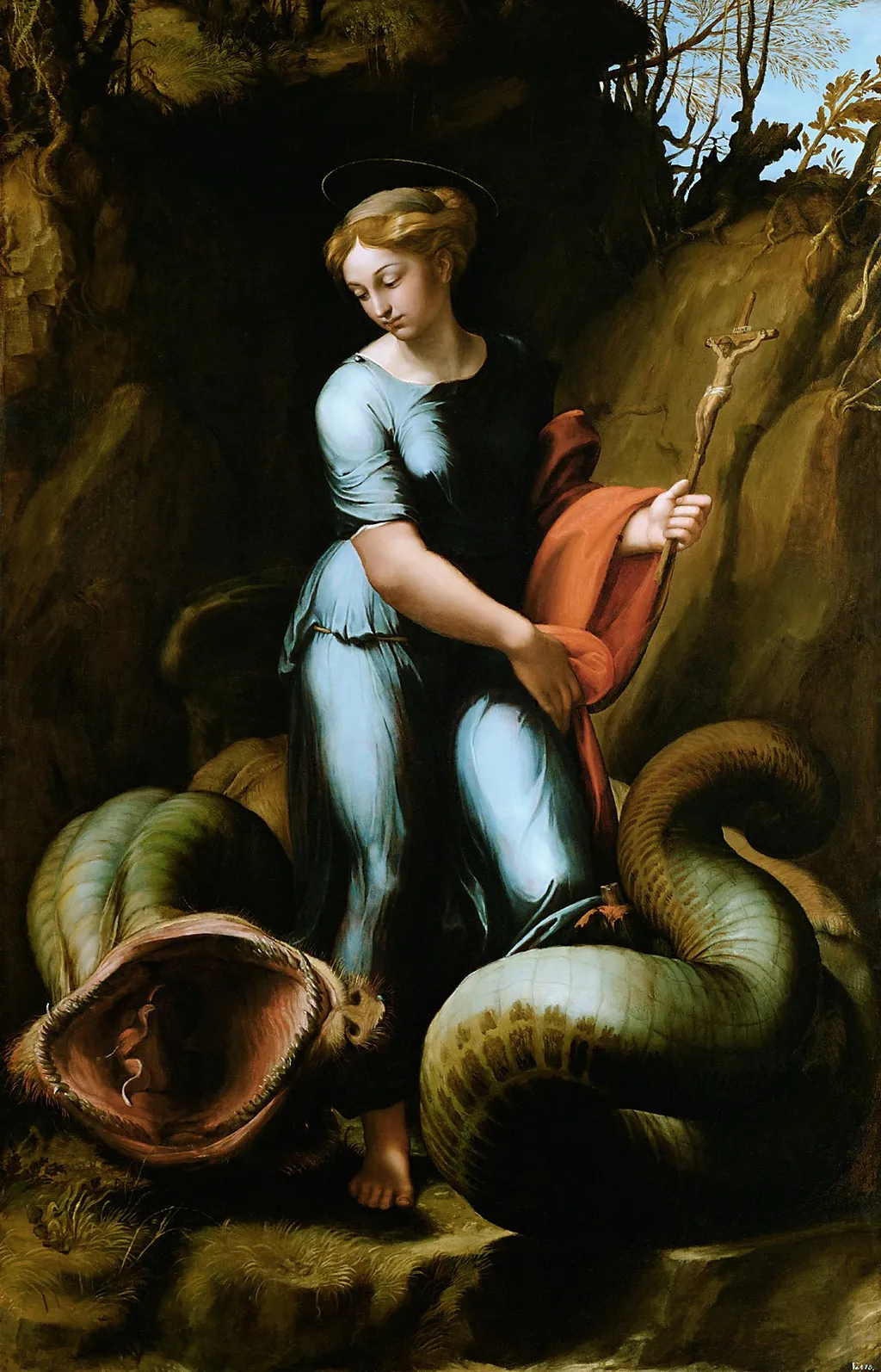
Saint Margaret and the Dragon is an oil painting by the High Renaissance artist Raphael. It dates from 1518 and is held in the collection of the Kunsthistorisches Museum.
About this work
Overview
Around 1518 the Italian High Renaissance master Raphael produced two oil paintings both titled Saint Margaret and the Dragon.
Around 1518 the Italian High Renaissance master Raphael produced two oil paintings both titled Saint Margaret and the Dragon. Each work depicts the legendary martyr confronting a serpentine beast, a subject drawn from hagiographic tradition. The pair are virtually identical in composition yet now reside in separate national collections: one in Vienna’s Kunsthistorisches Museum and the other in Paris’s Louvre.
Subject & Meaning
The narrative shows Saint Margaret, a young Christian virgin, bound to a rock as a dragon attempts to devour her. According to legend, her faith causes the creature to recoil, symbolising triumph of piety over pagan menace. Raphael’s treatment emphasizes the saint’s serene resolve, contrasting the animal’s violent motion with a calm, luminous figure, thereby reinforcing the moral of steadfast devotion.
Technique & Style
Executed in oil on panel, the paintings display Raphael’s characteristic clarity of form and balanced composition. Soft chiaroscuro models Margaret’s drapery, while a restrained palette of earth tones and muted blues creates depth. The dragon’s scales are rendered with fine brushwork, allowing a tactile sense of movement that complements the figure’s idealised anatomy.
History & Provenance
Both canvases were likely produced for the same patron or workshop, possibly as companion pieces for a private chapel. By the 18th century one entered the Habsburg imperial collection, eventually becoming part of the Kunsthistorisches Museum in Vienna. The second was acquired by the French crown and, after the Revolution, entered the Louvre, where it remains on public display.
Artist & collection
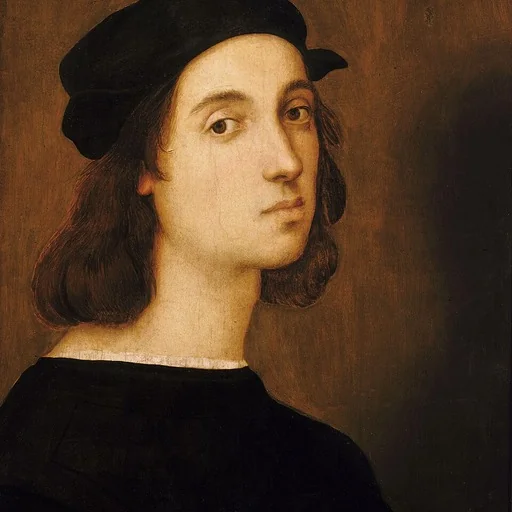
Artist
Raphael was born Raffaello Sanzio in Urbino on April 6, 1483, the son of Giovanni Santi, a painter and poet attached to the ducal court.