Artwork
Untitled
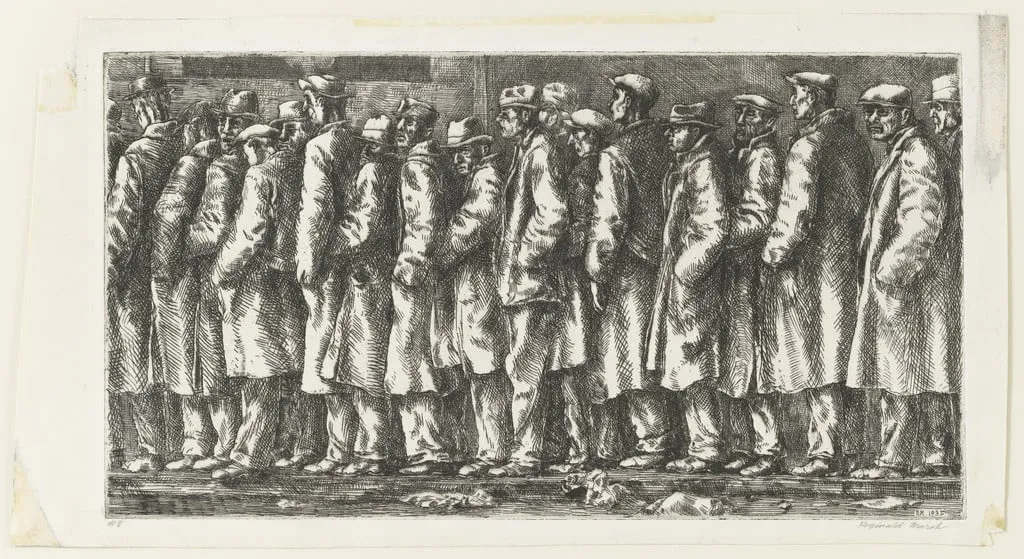
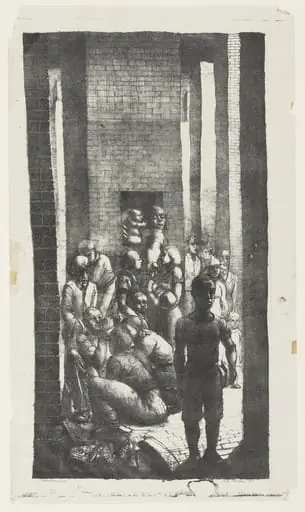
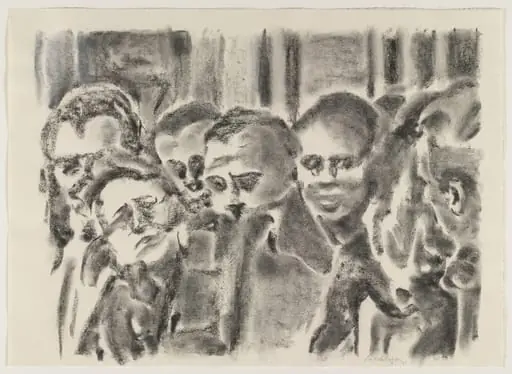
Untitled is an ink print by Reginald Marsh. It dates from 1932 and is held in the collection of the Museum of Modern Art.
About this work
Overview
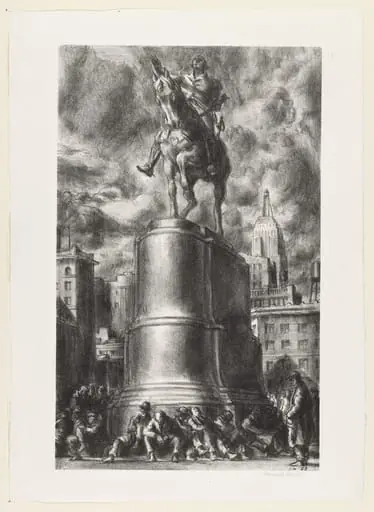
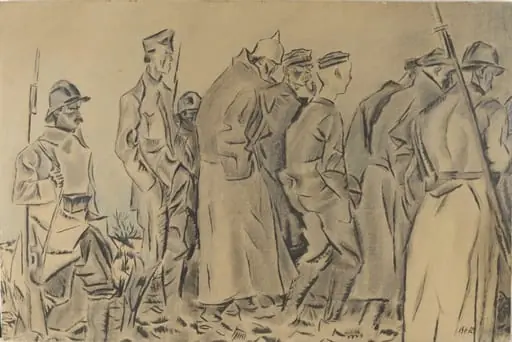
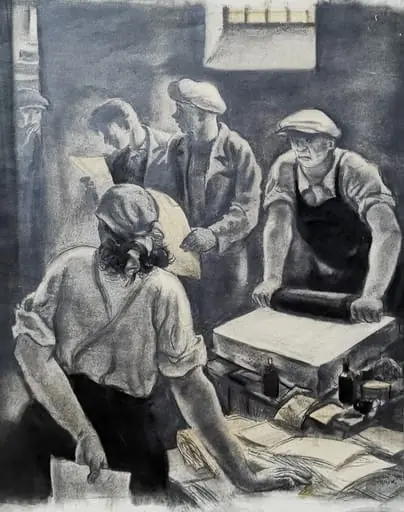
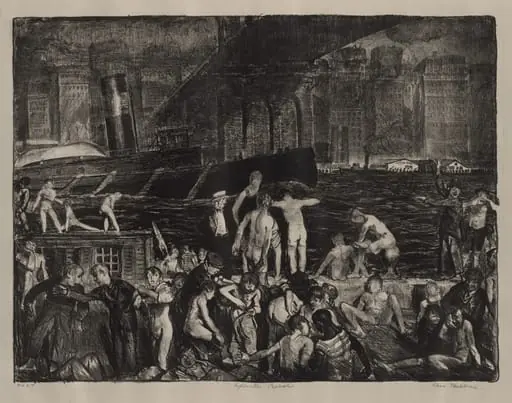
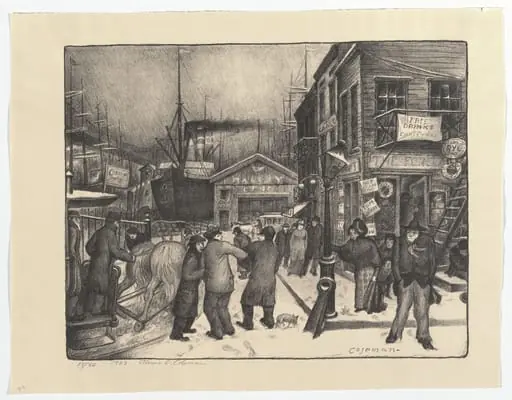
Rendered in fine, incised lines, the print captures a moment of stillness among a group of men, their forms emerging from a shadowed, ambiguous space.
Reginald Marsh created this etching in 1932 as part of his engagement with urban life during the Great Depression. The work is held in the collection of The Museum of Modern Art. Rendered in fine, incised lines, the print captures a moment of stillness among a group of men, their forms emerging from a shadowed, ambiguous space. The medium’s capacity for tonal variation enhances the somber mood, aligning with Marsh’s interest in documenting everyday struggles.
Subject & Meaning
The figures, uniformly dressed in long coats and hats, stand in a silent line, their postures suggesting fatigue and resignation. None make eye contact with the viewer; some gaze downward, others look away, reinforcing a sense of isolation. The lack of clear context—no food, no sign, no destination—heightens the ambiguity. The scene evokes the quiet endurance of those waiting for relief, whether for work, sustenance, or simply dignity, without overt commentary.
Technique & Style
Marsh employed etching to achieve fine, controlled lines and subtle gradations of tone. The dark background is built through dense cross-hatching, while the figures are defined by lighter, more deliberate strokes that model form without heavy shading. The texture of fabric and the roughness of surfaces are suggested rather than rendered literally, emphasizing atmosphere over detail. This restrained technique mirrors the emotional restraint of the subjects.
History & Provenance
The work entered The Museum of Modern Art’s collection in the 1930s, during a period when the institution was actively acquiring works that reflected contemporary American life. Marsh’s prints from this era were recognized for their social observation, and this piece was likely acquired as part of a broader effort to document the economic hardships of the Depression. Its provenance remains consistent within the museum’s holdings since acquisition.
Context
Created during the height of the Great Depression, the etching reflects a widespread reality: long lines for relief, unemployment, and the erosion of personal agency. Marsh, based in New York, frequently depicted crowds, laborers, and the urban underclass. This work aligns with his broader project of portraying ordinary people with dignity, avoiding melodrama while preserving the weight of their circumstances.
Legacy
Though not among Marsh’s most widely reproduced works, this etching exemplifies his commitment to quiet, unembellished realism. It contributes to a visual record of Depression-era America that prioritizes observation over sentiment. Its inclusion in MoMA’s collection helped legitimize printmaking as a vehicle for social commentary, influencing later artists who sought to document marginalized lives through intimate, handcrafted imagery.
Artist & collection

Artist
Reginald Marsh was an American painter, born in Paris, most notable for his depictions of life in New York City in the 1920s and 1930s.