Artwork
Tivoli and the Temple of the Sibyl above the Aniene Gorge
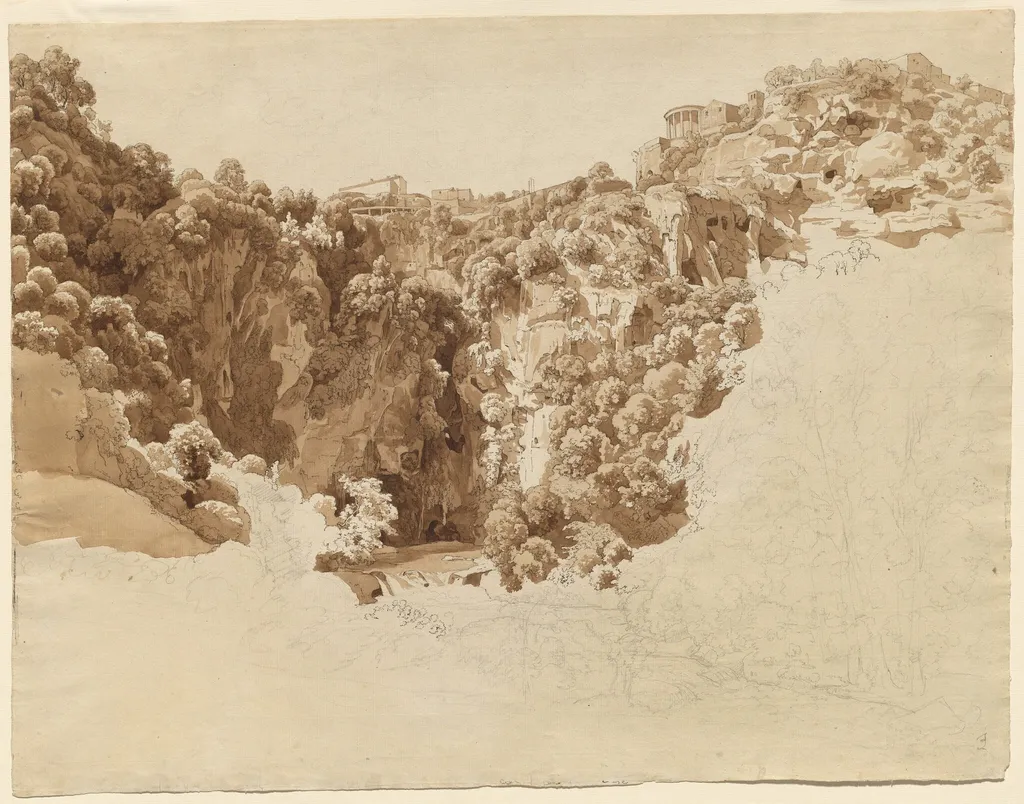
Tivoli and the Temple of the Sibyl above the Aniene Gorge is an ink drawing by the Romanticist artist Johann Christian Reinhart. It dates from 1796 and is held in the collection of the National Gallery of Art.
About this work
Overview
The work belongs to a tradition of topographical sketching that sought to record natural and architectural forms with precision and atmospheric sensitivity.
Created in 1796, this drawing by Johann Christian Reinhart captures a panoramic view of Tivoli, Italy, with the Temple of the Sibyl perched atop a rocky promontory above the Aniene Gorge. Executed in pen and brown ink with wash over graphite on laid paper, it reflects the artist’s disciplined approach to landscape observation. The work belongs to a tradition of topographical sketching that sought to record natural and architectural forms with precision and atmospheric sensitivity.
Subject & Meaning
The composition centers on the ancient Temple of the Sibyl, isolated on a high cliff, overlooking a deep, wooded gorge. Its solitary position evokes a sense of quiet endurance amid wild terrain. The scene does not dramatize myth or narrative but instead invites contemplation of time, ruin, and nature’s reclamation. The temple becomes a silent witness to the landscape’s enduring rhythms, aligning with emerging Romantic sensibilities that valued solitude and historical resonance over idealized grandeur.
Technique & Style
Reinhart employed swift, fluid pen lines to define the contours of rock and foliage, layered with diluted brown wash to suggest depth and shadow. Graphite underdrawing guided the composition, while the wash softened transitions between light and mass. The handling is economical yet expressive—details emerge through suggestion rather than finish. This technique balances topographical accuracy with a lyrical tone, characteristic of early German Romantic landscape drawing.
History & Provenance
Reinhart produced this work during his years in Italy, where he lived from the 1780s onward, absorbing classical ruins and the Italian countryside. It was likely made as a study for larger works or as a personal record of the site. The drawing remained within European collections, eventually entering institutional holdings. Its survival reflects its value as a document of 18th-century artistic practice and the German engagement with Italian antiquity.
Context
In the late 18th century, German artists increasingly traveled to Italy to study classical ruins and natural scenery. Reinhart, alongside Joseph Anton Koch, helped shape a new genre that merged empirical observation with emotional tone. This drawing reflects a shift from Neoclassical idealism toward a more personal, atmospheric response to landscape—one that valued mood and the passage of time over formal perfection.
Legacy
Reinhart’s work contributed to the development of German Romantic landscape art, influencing later artists who sought to convey spiritual and historical depth through nature. This drawing exemplifies a quiet, observational mode that prioritized authenticity over spectacle. Though not widely exhibited in his lifetime, it remains a key example of how sketching functioned as both record and reflection in the transition from Enlightenment to Romantic aesthetics.
Artist & collection

Artist
Johann Christian Reinhart was a German painter and engraver. He was one of the founders, along with Joseph Anton Koch, of German romantic classical landscape painting.

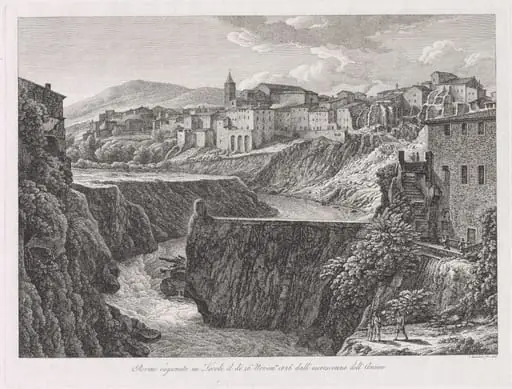
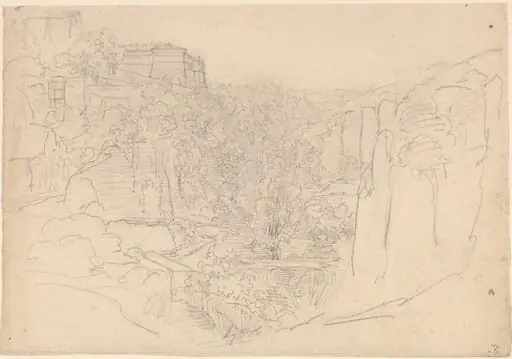 Fortified Castle Above a Narrow Valley
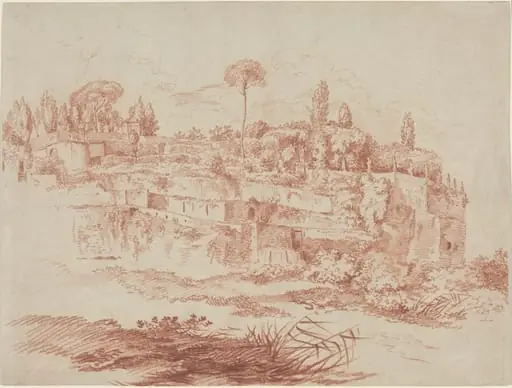 Gardens of the Villa Mattei
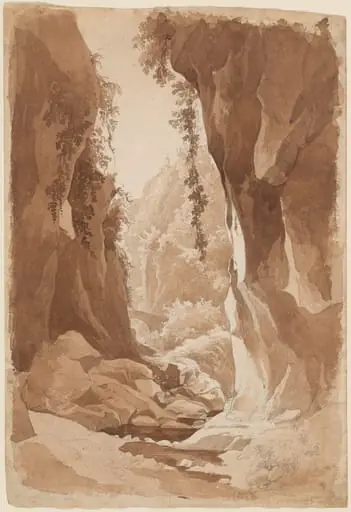 Cliffs Overhanging a River Gorge near Sorrento (recto)
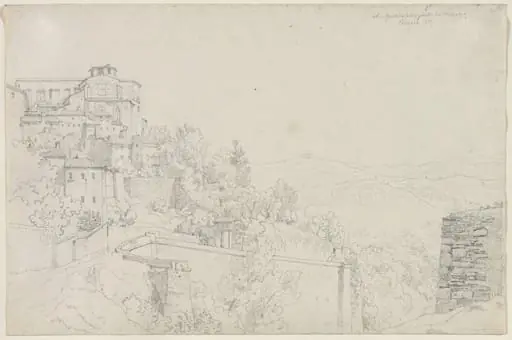 Saint Agostino from Bulagajo, Perugia (San Agostino dalla parte del Bulagajo, Perugia)
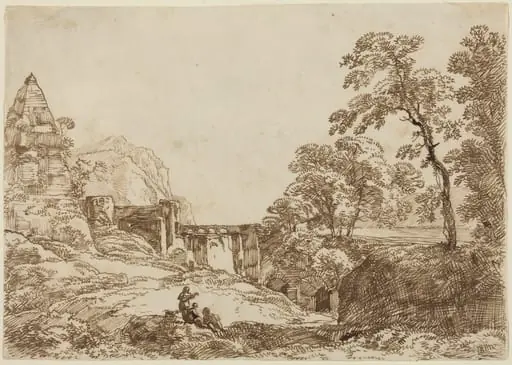 Landscape with a Pyramid and Classical Ruins
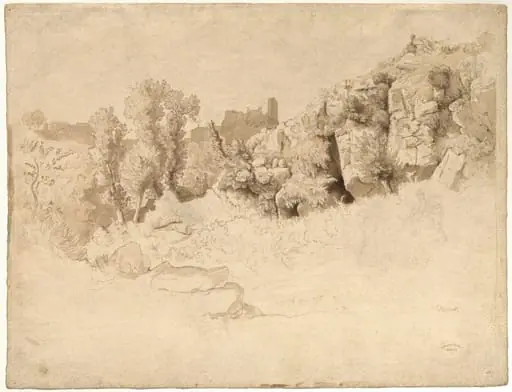 Rock Formations near Olevano
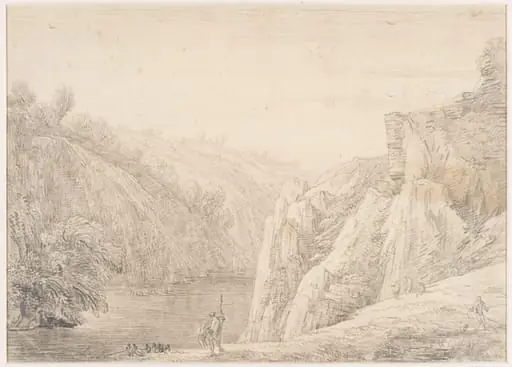 Untitled
![The Fantastic Rocks and Castle at Bomarzo [recto], by Bartholomeus Breenbergh](https://artifactworldgallery.com/img/bartholomeus-breenbergh--the-fantastic-rocks-and-castle-at-bomarzo-recto--e05f03da6f1f9c0a-w320.webp) The Fantastic Rocks and Castle at Bomarzo [recto]
The Fantastic Rocks and Castle at Bomarzo [recto]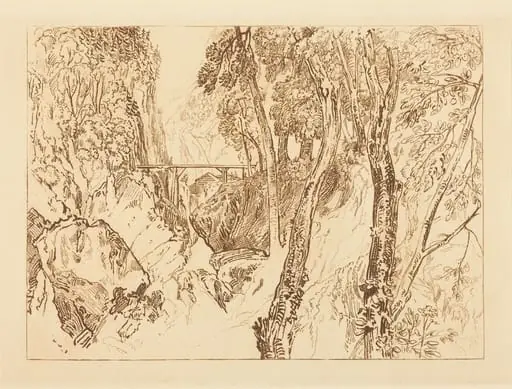 Mill near the Grand Chartreuse