Artwork
Christ Returning from the Temple with His Parents
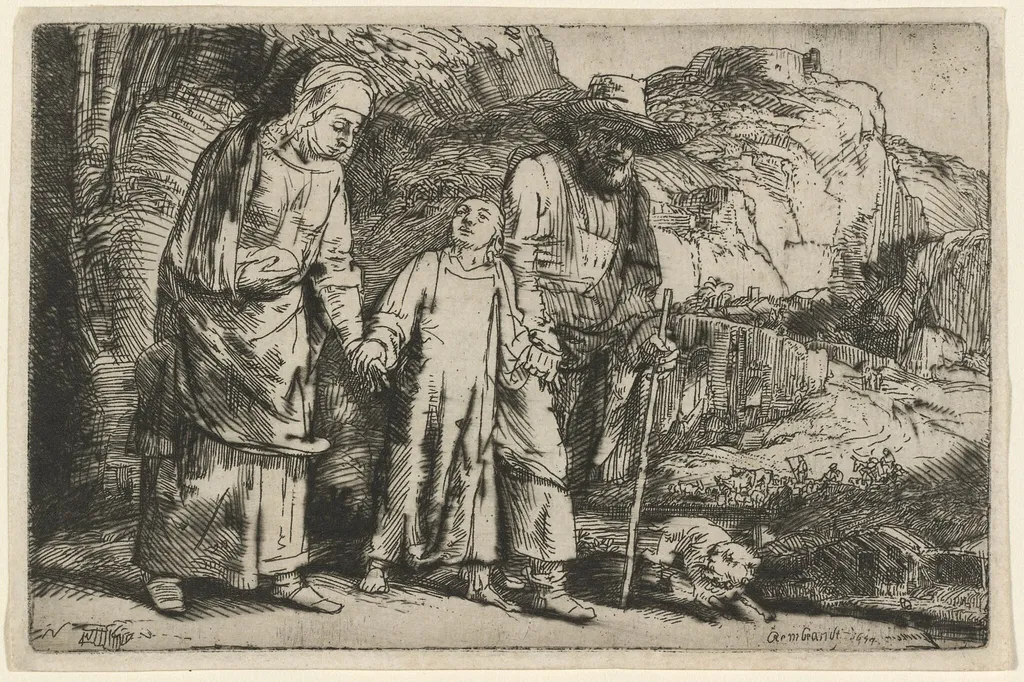
Christ Returning from the Temple with His Parents is an ink print by the Baroque artist Rembrandt. It dates from 1654 and is held in the collection of the National Gallery of Art.
About this work
Overview
Rendered in etching and drypoint, the composition focuses on three figures in a natural setting, their expressions subdued and their gestures restrained.
Created in 1654, this print by Rembrandt van Rijn depicts a quiet moment from the Gospel narrative in which the young Jesus is found in the Temple and returns with his parents. Rendered in etching and drypoint, the composition focuses on three figures in a natural setting, their expressions subdued and their gestures restrained. The work exemplifies Rembrandt’s mastery of line to convey emotional depth without overt drama.
Subject & Meaning
The scene illustrates the moment after Jesus, at age twelve, is discovered among the teachers in the Temple and is led home by Mary and Joseph. Rather than emphasizing the theological significance of the event, Rembrandt captures its domestic gravity—the quiet tension of reunion, the child’s vulnerability, and the parents’ watchful presence. The inclusion of a small animal at their feet suggests a natural, unidealized world.
Technique & Style
Rembrandt employed etching and drypoint to achieve rich tonal variation and tactile texture. Fine, incised lines define the folds of clothing and the dense foliage, while drypoint’s burr adds soft, velvety shadows. The background is minimally suggested, drawing focus to the figures. His use of line is neither decorative nor mechanical but expressive, responding to the psychological weight of the moment.
History & Provenance
The print was made during Rembrandt’s later years, a period marked by personal hardship and artistic introspection. It circulated widely among collectors and artists, admired for its emotional nuance. While no single early ownership record is definitive, numerous impressions survive in major European and American collections, attesting to its enduring presence in print culture.
Context
In mid-17th-century Amsterdam, religious subjects remained central to printmaking, even as secular themes gained ground. Rembrandt’s approach diverged from idealized depictions common in earlier religious art, favoring intimate, humanized moments. His prints were often made in small editions for private contemplation, reflecting a shift toward personal devotion over public spectacle.
Legacy
This work influenced generations of printmakers through its emotional restraint and technical innovation. Artists studied its handling of light, texture, and psychological subtlety. Though not widely reproduced in popular media, it remains a touchstone in academic and museum collections for its quiet power and the depth of its draftsmanship.
Artist & collection
Artist
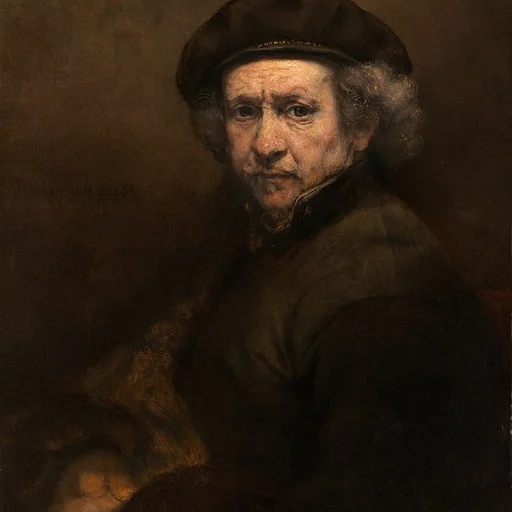
Rembrandt Harmenszoon van Rijn (15 July 1606 – 4 October 1669), known mononymously as Rembrandt, was a Dutch Golden Age painter, printmaker, and draughtsman.

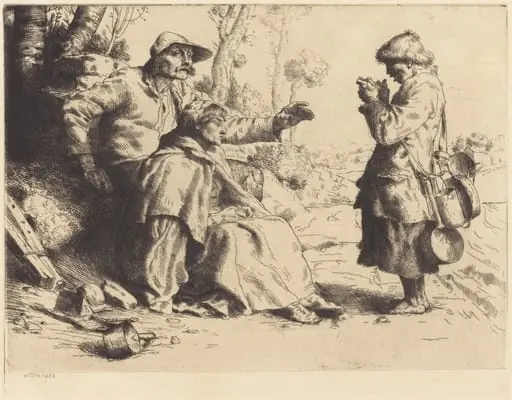 Tinkers
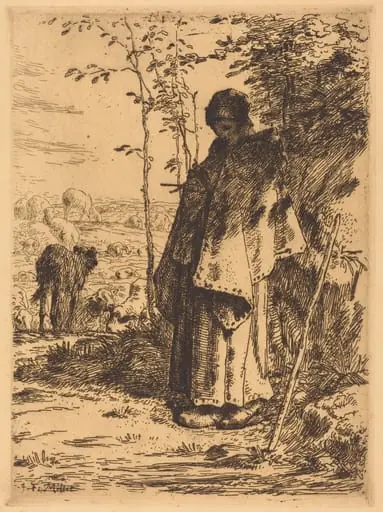 The Large Shepherdess (La grande bergere)
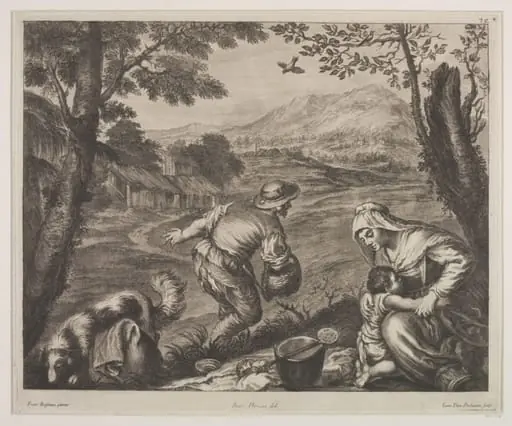 The Husbandman
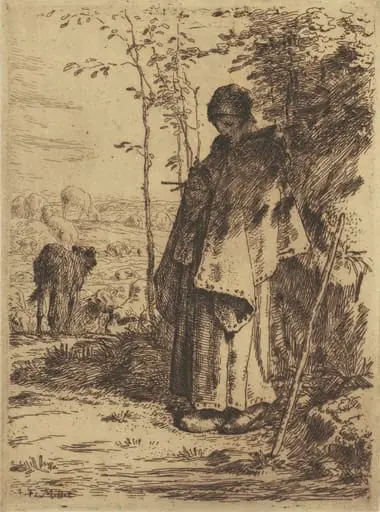 The Large Shepherdess (La Grande Bergere)
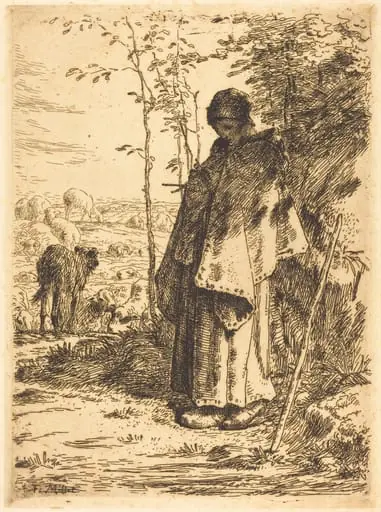 The Large Shepherdess (La grande bergere)
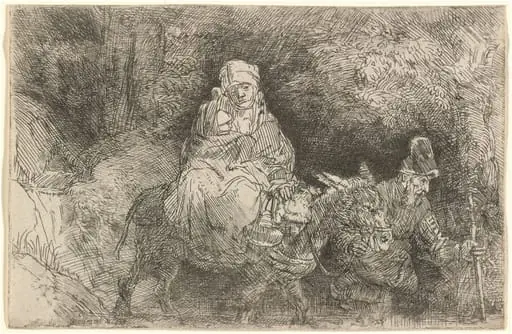 The Flight into Egypt: Crossing a Brook
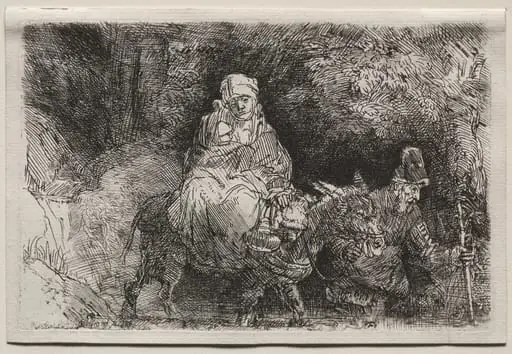 The Flight into Egypt: Crossing a Brook
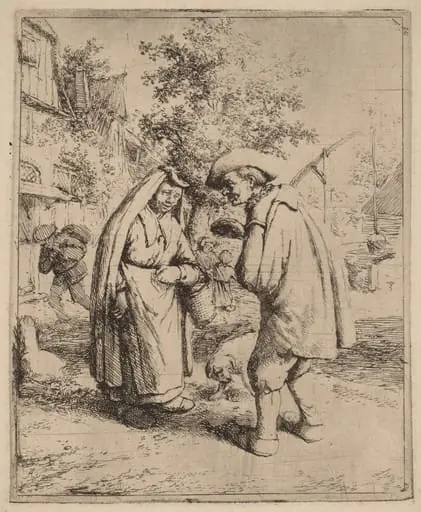 Man and Woman Conversing on a Busy Village Street
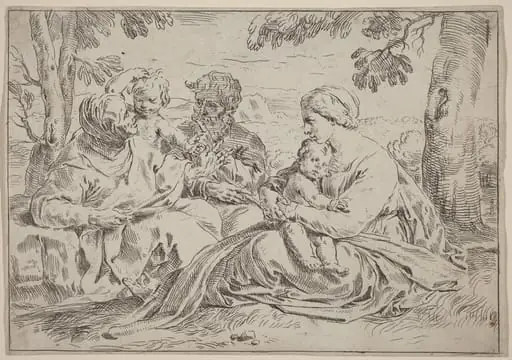 The Holy Family
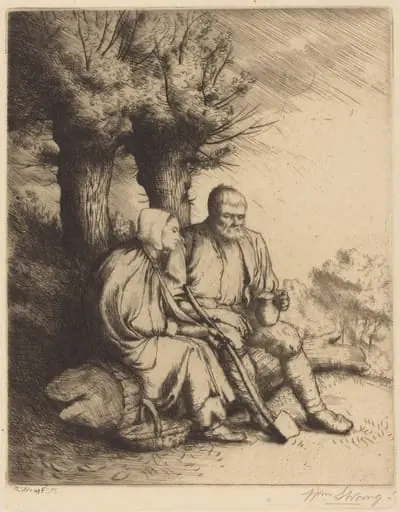 Man and Woman under a Tree