Artwork
The Hog
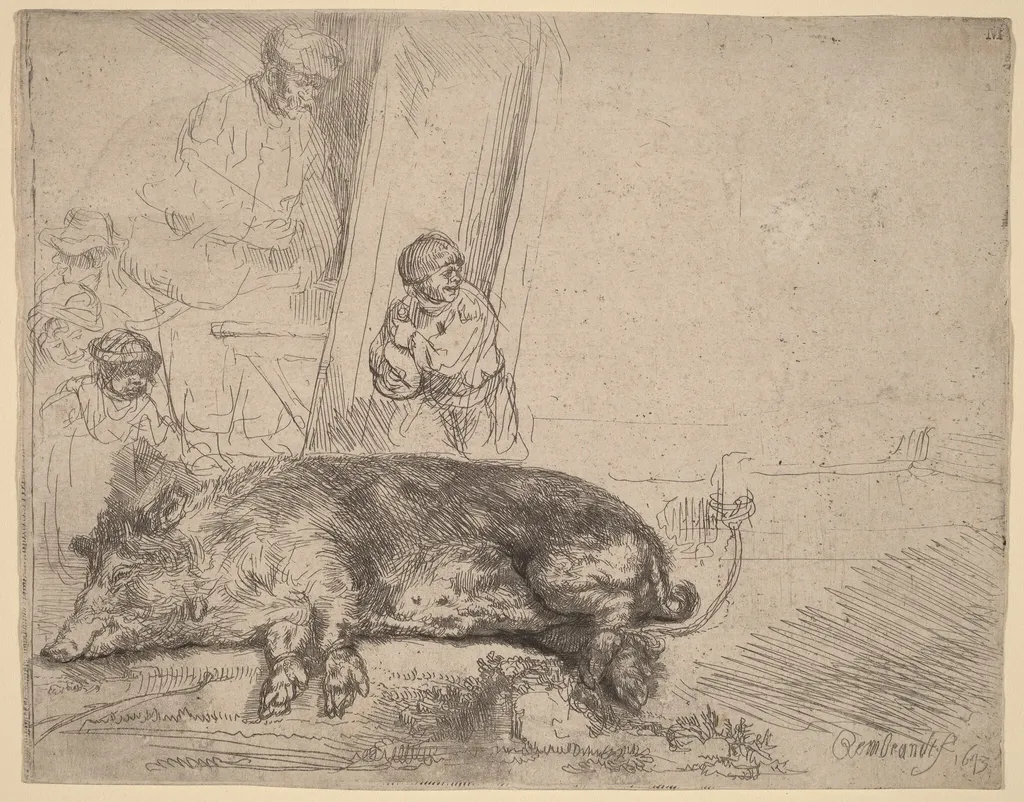
The Hog is an ink print by the Baroque artist Rembrandt. It dates from 1643 and is held in the collection of the National Gallery of Art.
About this work
Overview
The composition avoids elaborate detail, focusing instead on the animal’s physicality and the quiet, grounded atmosphere of the scene.
Created in 1643, The Hog is a print by Rembrandt van Rijn, executed in etching and drypoint. It depicts a large pig reclining in the foreground, its form rendered with dense, tactile lines that emphasize weight and texture. Behind it, a sparse group of figures stands at a distance, their presence faintly indicated. The composition avoids elaborate detail, focusing instead on the animal’s physicality and the quiet, grounded atmosphere of the scene.
Subject & Meaning
The central subject is a domesticated hog, portrayed not as a symbol of abundance or rustic charm, but as a heavy, unidealized creature resting on the earth. The surrounding figures—likely rural laborers—observe without interaction, suggesting a moment of ordinary life. The image conveys no moral or allegorical message; instead, it presents an unembellished observation of animal and human coexistence in a humble setting.
Technique & Style
Rembrandt employed etching for broad tonal areas and drypoint for rich, velvety lines, particularly in the hog’s coarse hide and the uneven ground. The drypoint burr holds ink unevenly, creating soft, blurred edges that enhance the sense of texture and atmosphere. Background elements are minimally suggested with sparse, light strokes, directing attention to the animal’s form and the tactile quality of its surface.
History & Provenance
The print was made during Rembrandt’s mature period in Amsterdam, when he increasingly turned to intimate, observational subjects. It was likely produced for private collectors rather than public sale, reflecting his interest in printmaking as a medium for personal expression. Early ownership records are sparse, but it entered major collections in the 18th and 19th centuries, where it was valued for its technical nuance.
Context
In mid-17th century Dutch art, scenes of rural life were common, but few artists rendered animals with such direct, unromanticized attention. Rembrandt’s focus on the hog aligns with broader trends in Dutch genre painting that celebrated everyday reality. Yet his use of printmaking—emphasizing texture and shadow—distinguishes this work from contemporaneous depictions, which often favored clarity and narrative.
Legacy
The Hog is regarded as a quiet but significant example of Rembrandt’s late printmaking, where he prioritized emotional resonance over spectacle. Its influence lies in its restraint: the animal’s presence, rendered with such physical immediacy, inspired later artists to explore the expressive potential of ordinary subjects through intimate, textured mark-making.
Artist & collection
Artist
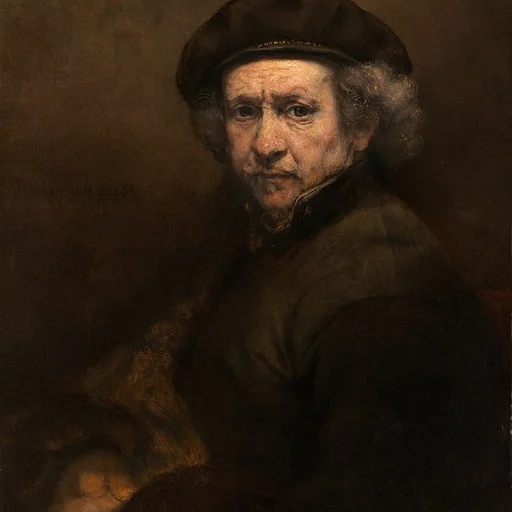
Rembrandt Harmenszoon van Rijn (15 July 1606 – 4 October 1669), known mononymously as Rembrandt, was a Dutch Golden Age painter, printmaker, and draughtsman.

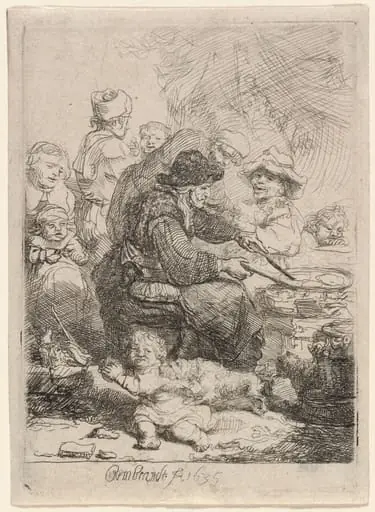 The Pancake Woman
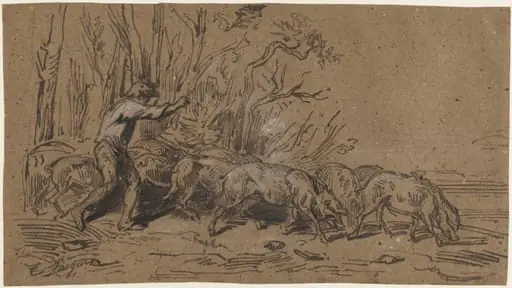 The Truffle Gatherers
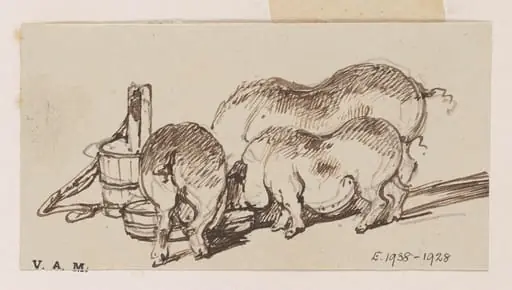 Three pigs at a trough
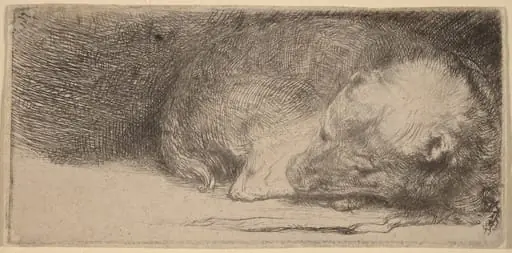 Sleeping Puppy
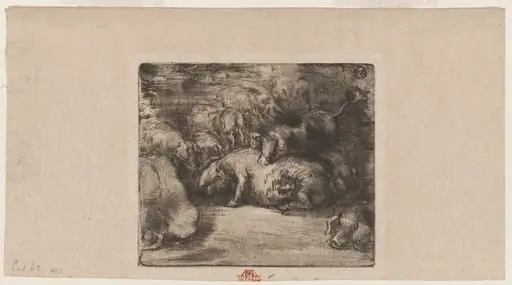 Cochons au soleil (Pigs in the Sun)
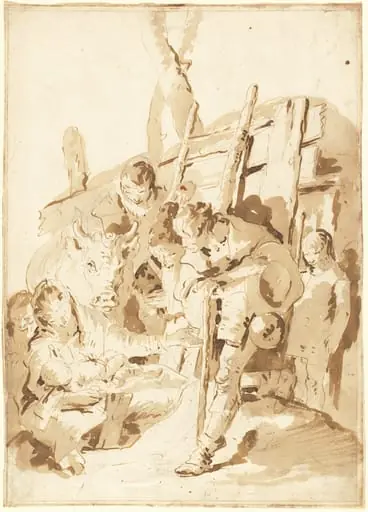 The Adoration of the Shepherds
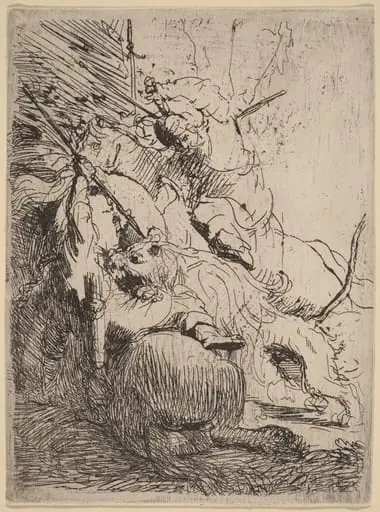 The Small Lion Hunt (with One Lion)
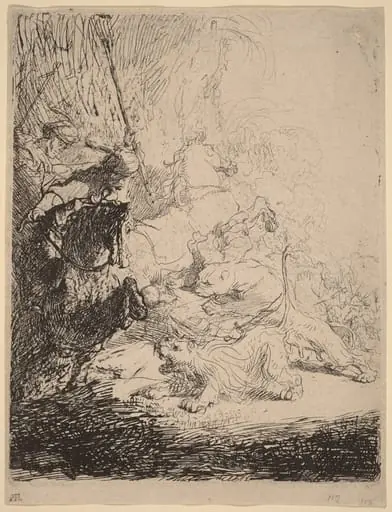 The Small Lion Hunt (with Two Lions)
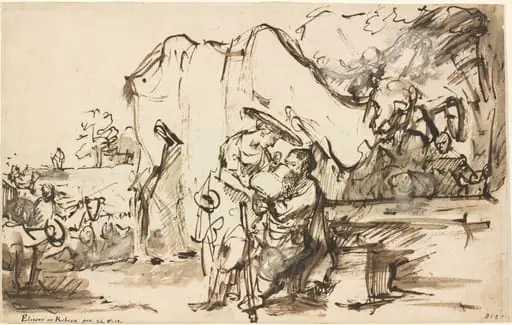 Eliezer and Rebecca at the Well
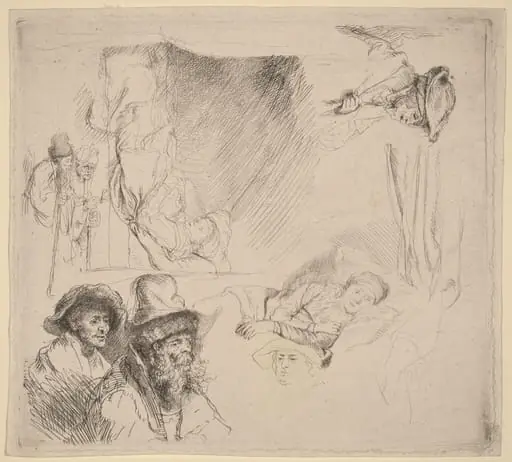 Sheet of Studies including a Woman Lying Ill in Bed
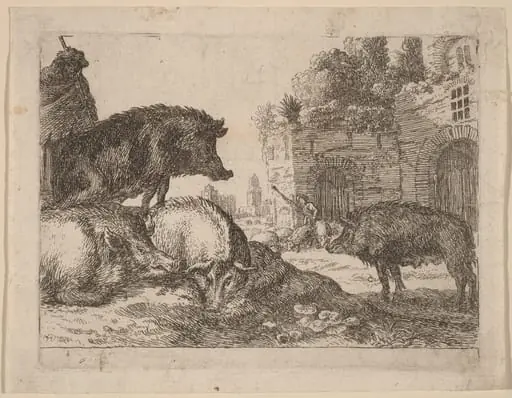 Pigs
Pigs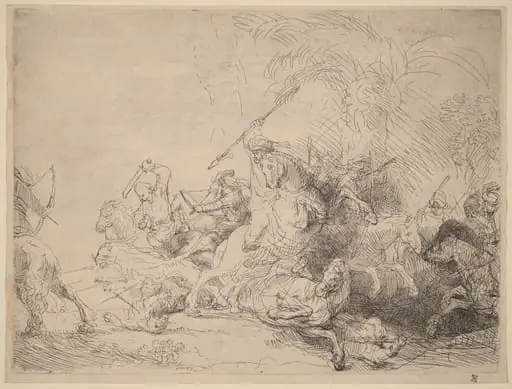 The Large Lion Hunt