Artwork
Pigs
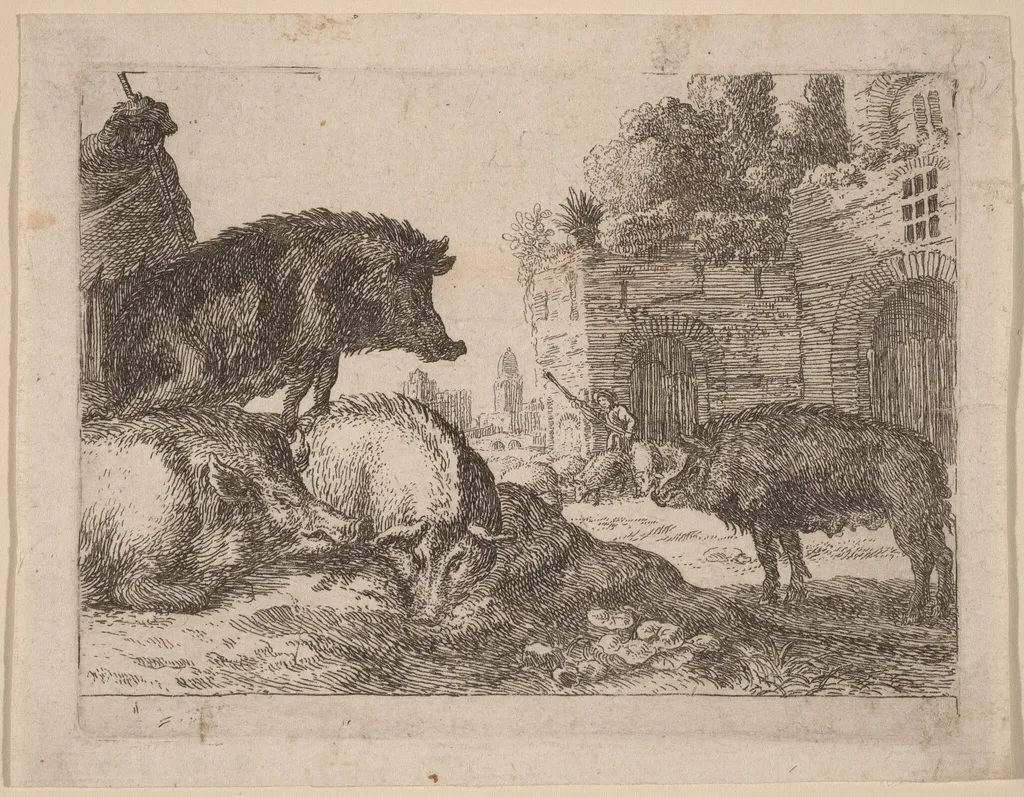
Pigs is an ink print by the Baroque artist Herman van Swanevelt. It dates from 1628 and is held in the collection of the National Gallery of Art.
About this work
Overview
The work balances a straightforward narrative with careful observation, inviting viewers to consider everyday life in a seventeenth‑century landscape.
Herman van Swanevelt’s 1628 etching titled Pigs presents a modest rural tableau rendered in monochrome. The composition centers on two swine engaged in foraging, their bodies positioned against a backdrop that hints at a small settlement with a church spire and scattered trees. The work balances a straightforward narrative with careful observation, inviting viewers to consider everyday life in a seventeenth‑century landscape.
Subject & Meaning
The print captures a moment of animal behavior: one pig thrusts its snout into the earth while the other lifts its foreleg, scattering soil. By foregrounding these creatures, van Swanevelt emphasizes the vitality of pastoral labor and the intimate connection between livestock and the agrarian environment. The distant village suggests a symbiotic relationship between human habitation and the natural world.
Technique & Style
Created through the traditional etching process, van Swanevelt incised lines into a metal plate, then transferred the image onto paper. The artist employs varied line work to differentiate textures—dense, stippled strokes convey the pigs’ coarse fur, while smoother, broader lines suggest the loosened earth. Architectural elements are rendered with finer, restrained lines, establishing depth and perspective within the limited tonal range of black ink.
History & Provenance
The etching was produced in 1628, during van Swanevelt’s early period when he explored landscape and genre subjects. While specific ownership records are scarce, the work is documented in several 17th‑century print collections and has appeared in catalogues of Dutch etchers. Its survival in multiple impressions attests to the artist’s reputation for meticulous printmaking.
Context
Van Swanevelt, a Dutch artist active in the early Baroque era, is known for integrating landscape with genre scenes. Pigs aligns with contemporary interests in depicting rural life, reflecting broader Dutch artistic trends that celebrated everyday subjects alongside more formal religious or mythological themes. The inclusion of a church spire situates the scene within a recognizable, localized setting.
Legacy
Although not as widely reproduced as van Swanevelt’s later landscapes, this etching contributes to the understanding of his development as a printmaker. It exemplifies his capacity to render narrative detail within the constraints of the etching medium, influencing subsequent Dutch artists who explored similar genre scenes in print form.
Artist & collection

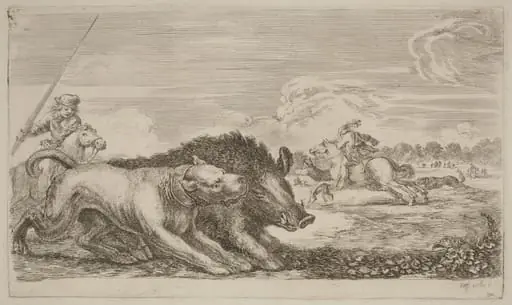 Boar Chased by a Dog
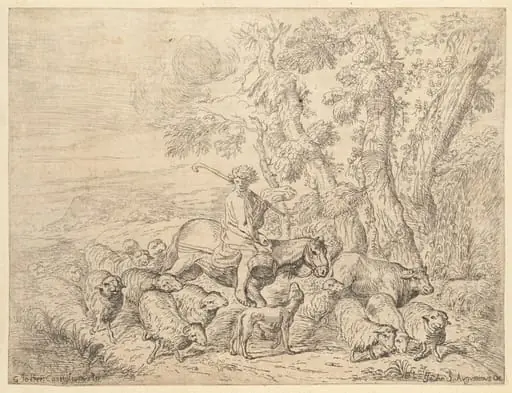 Shepherd on Horseback
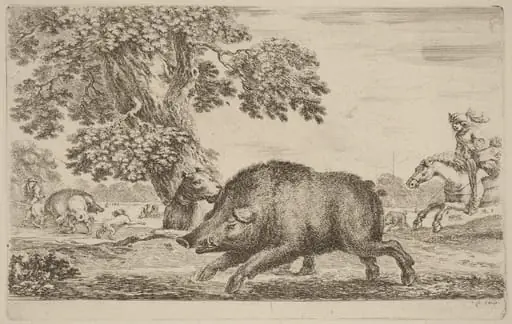 Boar Running to the Left
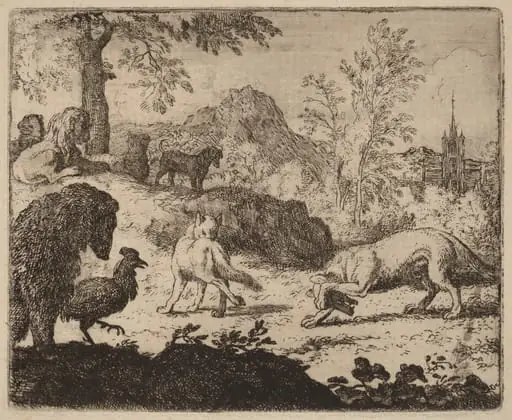 Reynard Blinds the Wolf in One Eye
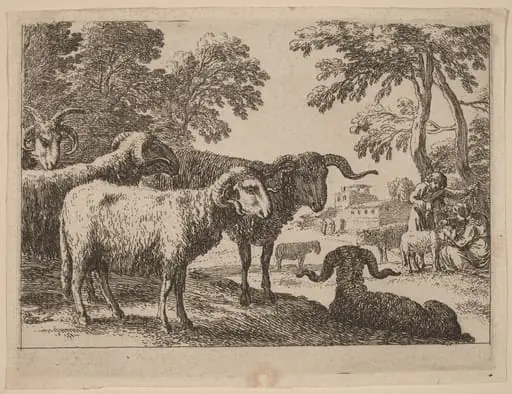 Rams
Rams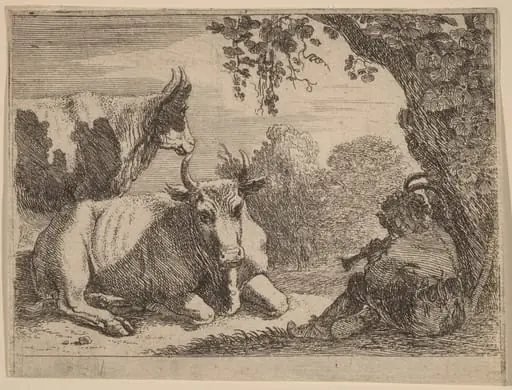 Cows
Cows Angora Sheep
 The Ram Blesses Reynard
 A Horse, Buffalo, Sheep, and Goat in an Italian Landscape
 Reynard Condemned
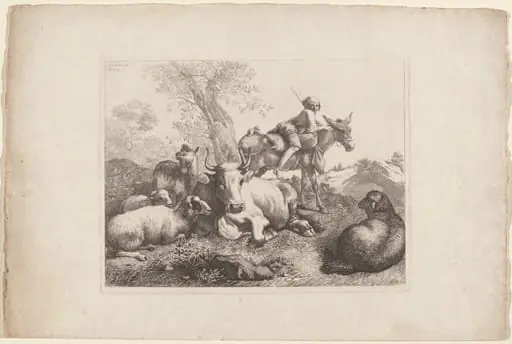 Boy on a Donkey Watching over a Group of Animals
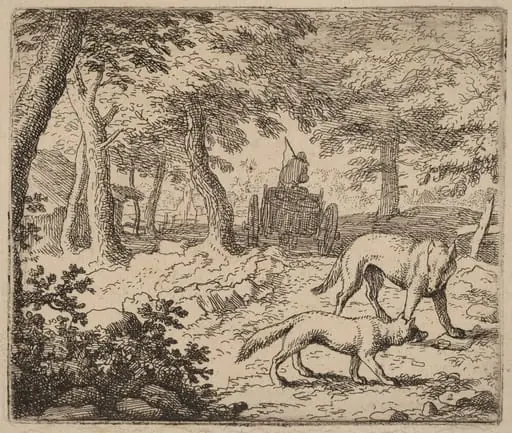 Reynard and the Wolf before the Fish Cart