Artwork
Untitled
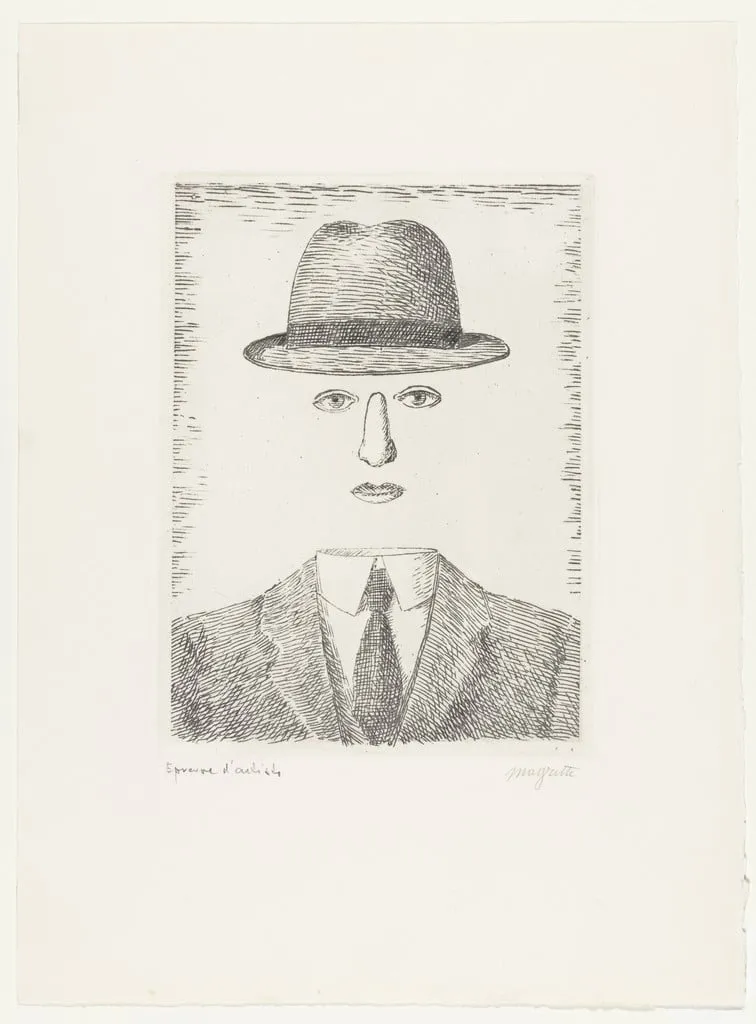
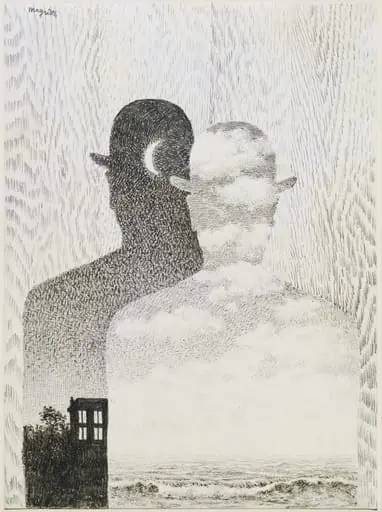
Untitled is an ink print by René Magritte. It dates from 1966 and is held in the collection of the Museum of Modern Art.
About this work
Overview
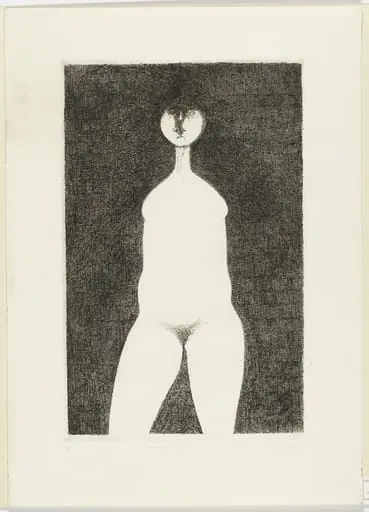
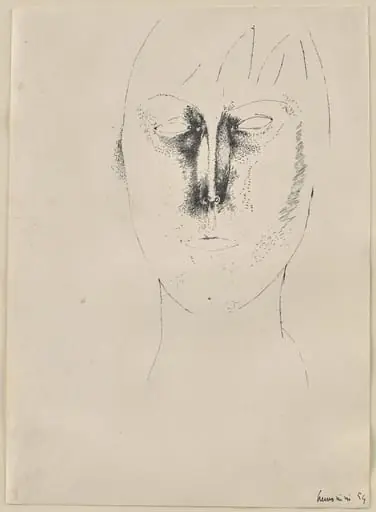
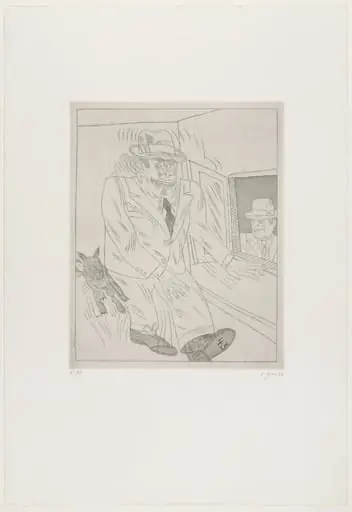
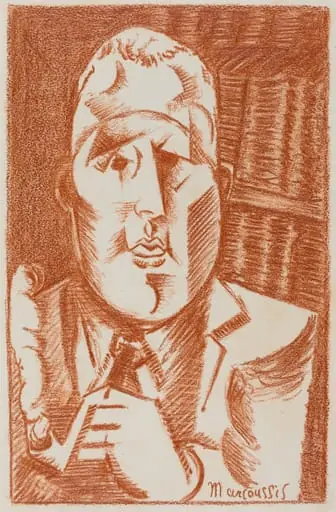
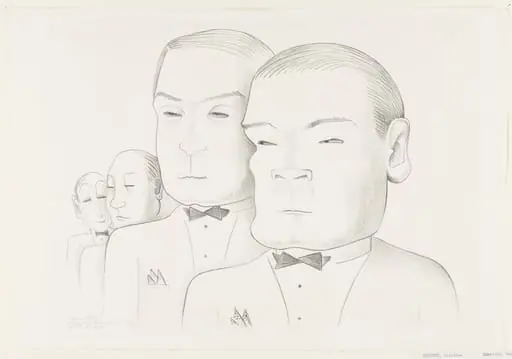
Created in 1966, this etching by René Magritte is a black-and-white print held in the collection of The Museum of Modern Art. It depicts a male figure from the shoulders up, rendered with precise, incised lines characteristic of the etching technique. The composition omits conventional facial features, replacing them with an unsettling absence that challenges perception of identity and form.
Subject & Meaning
The figure wears a broad, low-brimmed hat that obscures most of the face, revealing only the eyes and nose. Below, a neatly knotted tie appears on the collar, but the mouth and chin are entirely missing. This deliberate omission disrupts the expectation of a complete human visage, suggesting themes of concealment, anonymity, or the fragmentation of self—hallmarks of Magritte’s surrealist inquiry.
Technique & Style
The hat’s brim is rendered with rough, irregular strokes, contrasting with the smooth, tightly packed lines of the tie and shirt.
Magritte employed fine, controlled etching lines to build texture and contrast. The hat’s brim is rendered with rough, irregular strokes, contrasting with the smooth, tightly packed lines of the tie and shirt. The absence of tonal gradation emphasizes line over shading, reinforcing the graphic, almost diagrammatic quality of the image. The technique enhances the sense of precision and deliberate disruption.
History & Provenance
The work was produced in 1966, during the later phase of Magritte’s career, when he continued to explore visual paradoxes in print media. It entered The Museum of Modern Art’s collection through established acquisition channels, reflecting institutional recognition of his contributions to 20th-century printmaking. No record of prior ownership or exhibition history beyond the museum’s custody is widely documented.
Context
This piece aligns with Magritte’s long-standing interest in subverting the relationship between objects and their representation. In the mid-1960s, he revisited recurring motifs—hats, ties, obscured faces—across mediums, often using printmaking to refine his visual language. The work reflects his engagement with Surrealist principles, even as he moved beyond earlier, more overtly fantastical imagery.
Legacy
The etching contributes to Magritte’s broader legacy of redefining perception through minimal, precise interventions. Its quiet strangeness has influenced later artists working in conceptual and graphic traditions, particularly those interested in the psychological weight of absence. As a print, it remains accessible and widely studied, offering a distilled example of his enduring inquiry into the visible and the hidden.
Artist & collection

Artist
René François Ghislain Magritte was a Belgian surrealist artist known for his depictions of familiar objects in unfamiliar, unexpected contexts, which often provoked questions about the nature and boundaries of reality and representation.