Artwork
Young Portugese Man
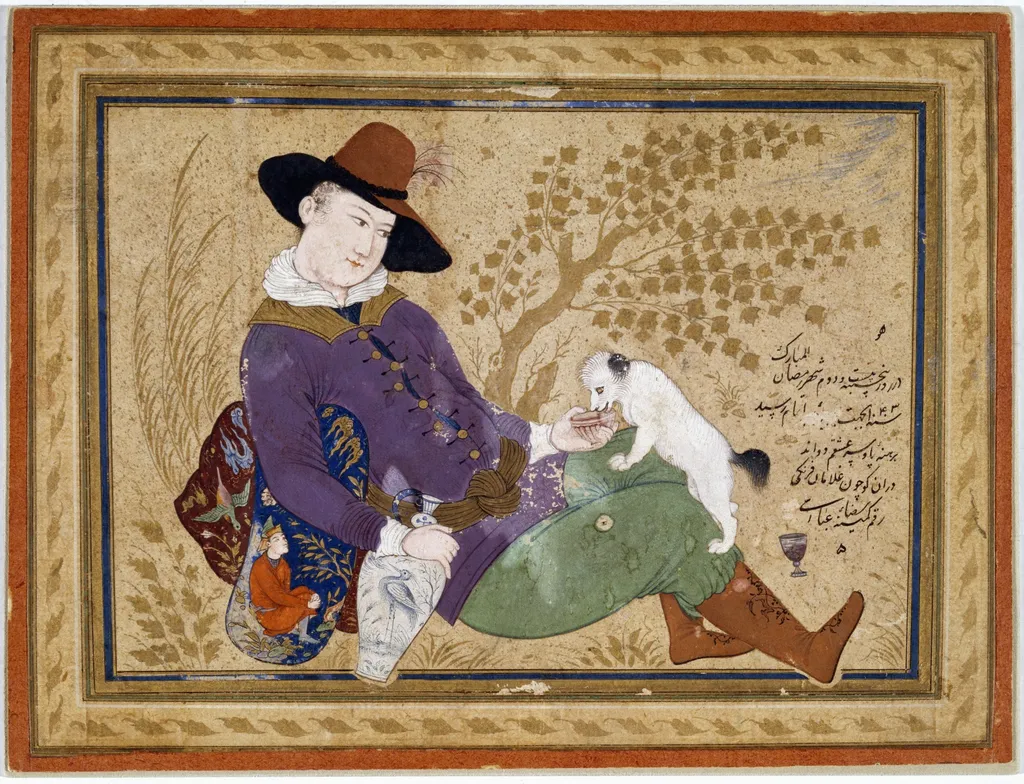
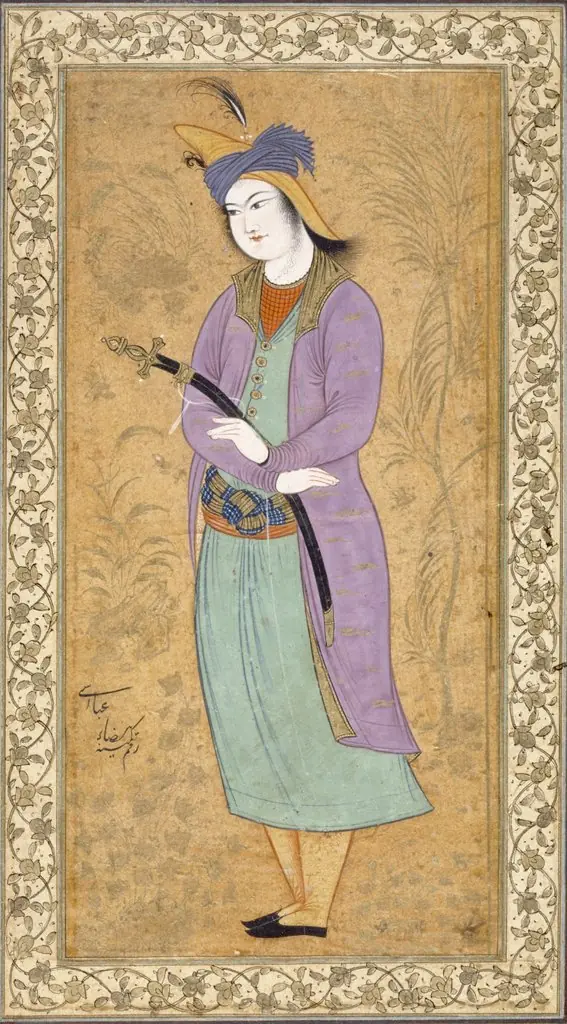
Young Portugese Man is an unspecified painting by the Barbizon school artist Reza `Abbasi. It dates from 1634 and is held in the collection of the Detroit Institute of Arts.
About this work
Overview
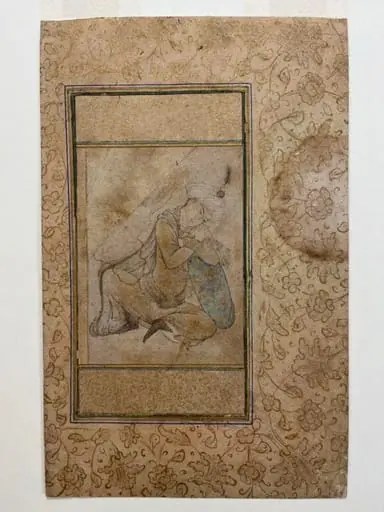
Created in 1634 by Reza 'Abbasi, a preeminent painter of the Isfahan School, this work is a single-figure miniature from a period when album paintings gained prominence in Safavid Persia. Though executed in the refined traditions of Persian miniature art, the subject diverges from typical courtly or literary themes, presenting instead a foreign figure in a moment of quiet repose. The painting resides in the Detroit Institute of Arts.
Subject & Meaning
His relaxed posture, the cat on his lap, and the glass in his hand suggest an informal, personal moment rather than a formal portrait.
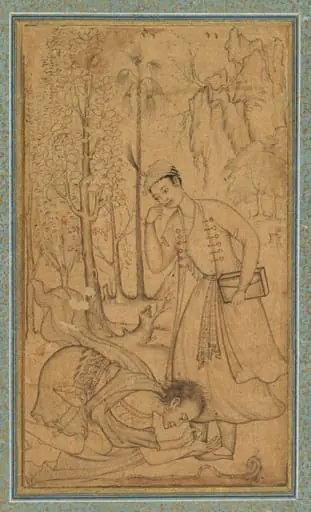
The figure is believed to be a young Portuguese man, possibly a trader or diplomat encountered in Safavid Iran. His relaxed posture, the cat on his lap, and the glass in his hand suggest an informal, personal moment rather than a formal portrait. The inclusion of a European subject reflects the cosmopolitan nature of Isfahan under Shah Abbas I, where foreign visitors were common and occasionally depicted with curiosity and dignity.
Technique & Style
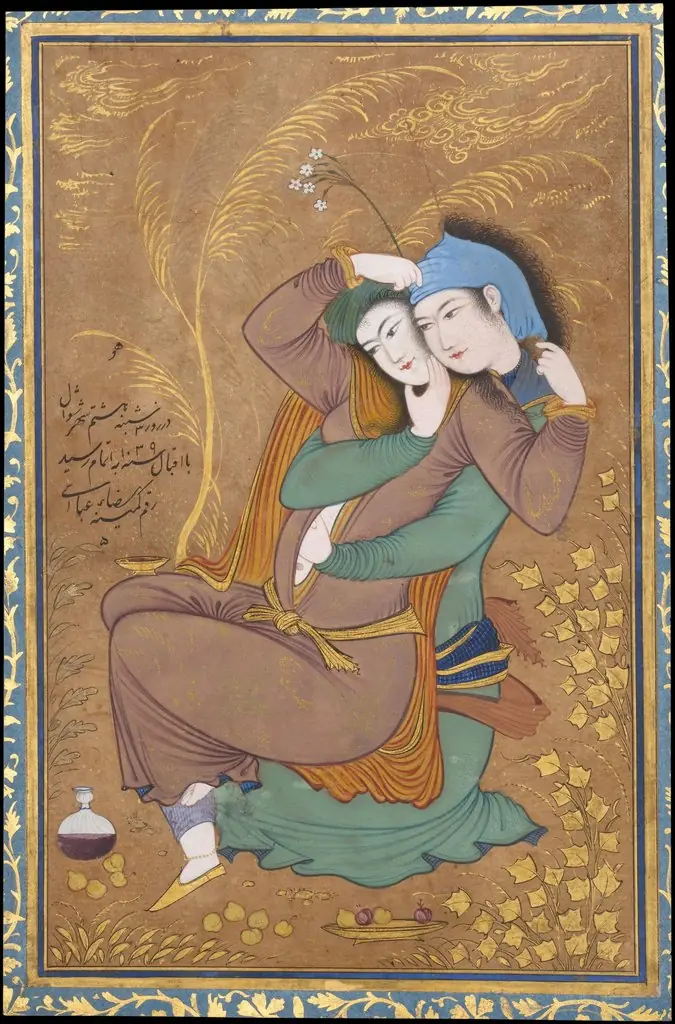
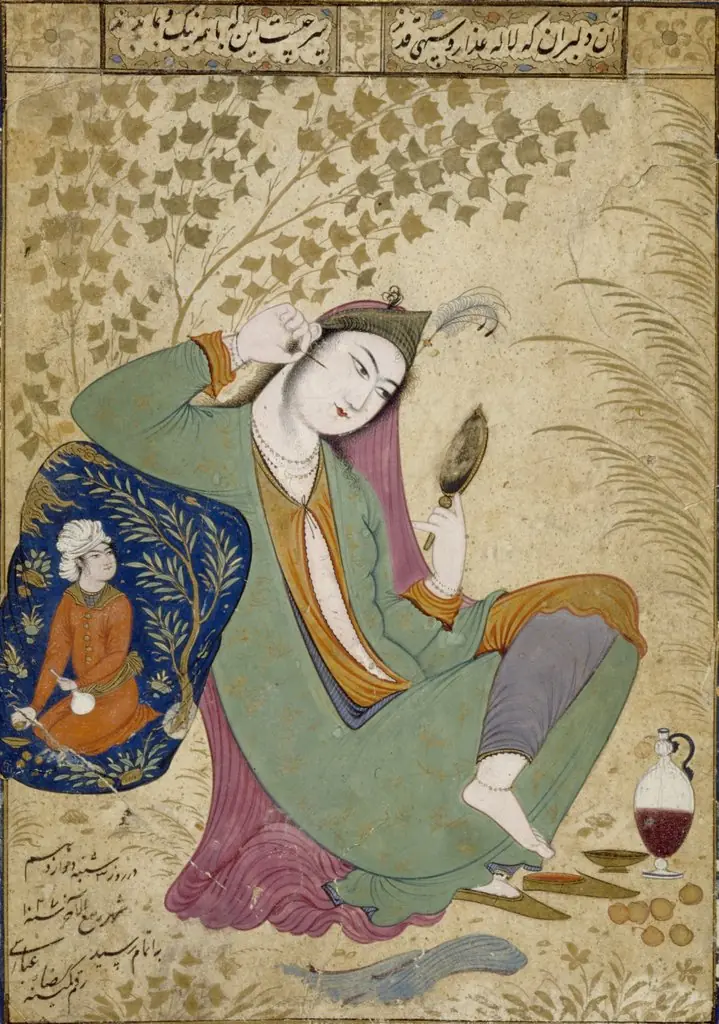
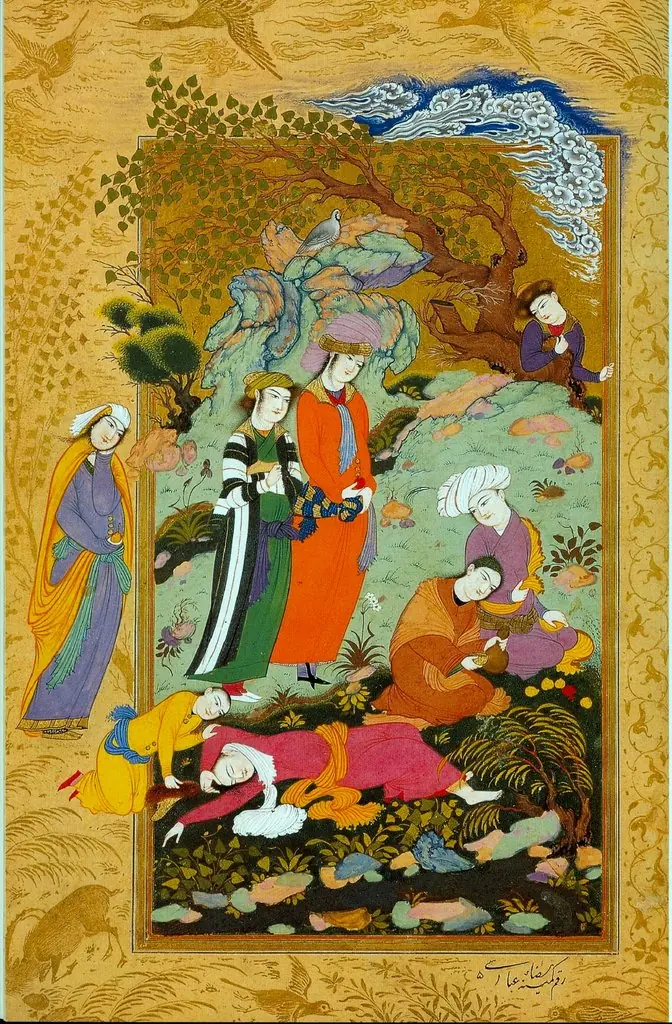
Reza 'Abbasi employed fine brushwork, delicate color gradients, and precise linework characteristic of late Persian miniatures. The palette is restrained yet vivid—purple, green, and brown tones are rendered with subtle modulation. The background, sparse and atmospheric, uses minimal vegetation and a soft brown wash to frame the figure without distraction, emphasizing intimacy over narrative.
History & Provenance
The painting was likely part of an album compiled during or shortly after Reza 'Abbasi’s tenure at the Safavid court. It passed through private collections before entering the Detroit Institute of Arts’ holdings. Its survival as a standalone piece is notable, as many such miniatures were bound into volumes and later disassembled. The work’s attribution to Reza 'Abbasi is supported by stylistic analysis and historical records.
Context
In early 17th-century Isfahan, the Safavid court fostered cultural exchange with European traders and envoys. Reza 'Abbasi, as court artist, occasionally turned his attention to these outsiders, blending Persian aesthetic conventions with observations of foreign dress and demeanor. This painting exemplifies how Persian art absorbed external influences without abandoning its own formal language.
Legacy
Reza 'Abbasi’s later works, including this one, mark a shift from traditional miniature storytelling toward psychological portraiture and individualized expression. His focus on solitary figures in tranquil settings influenced subsequent generations of Persian painters and remains a touchstone for studies of cross-cultural representation in Islamic art.
Artist & collection
Artist
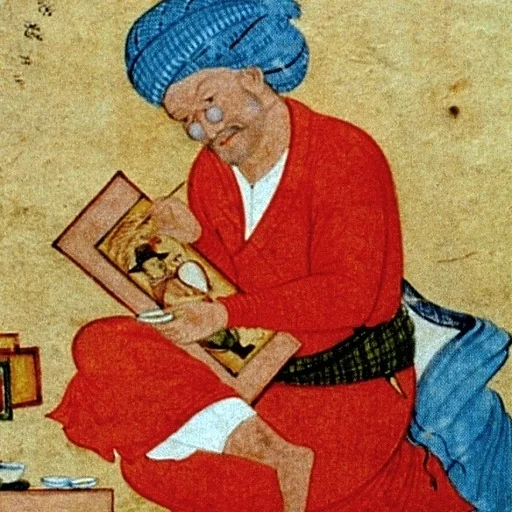
Reza Abbasi (Persian: رضا عباسی), also known as Agha Reza (c. 1565 – 1635), was the leading Persian miniaturist of the Isfahan School during the later Safavid period, spending most of his career working for Shah Abbas…