Artwork
Christ on the Cross
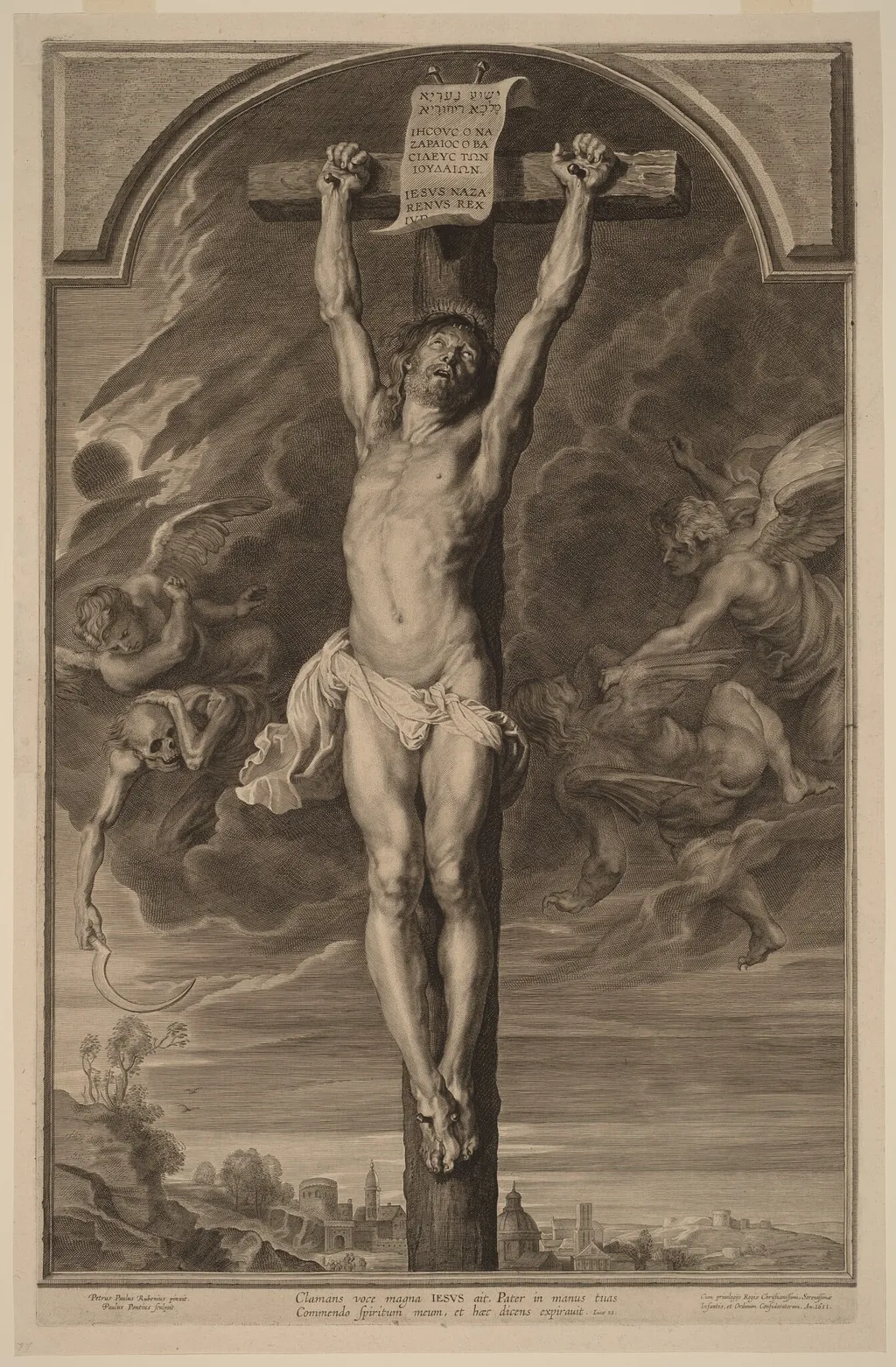
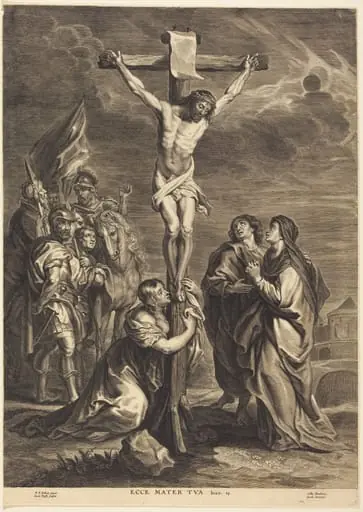
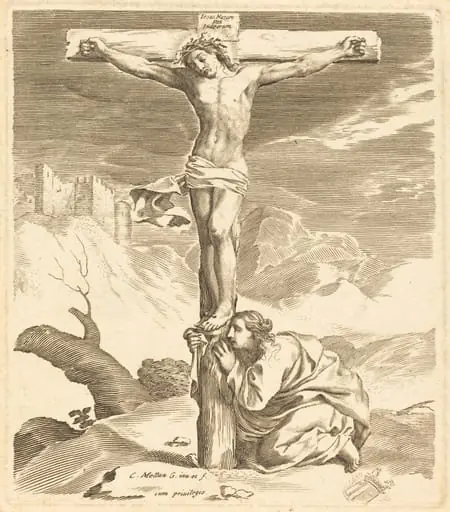
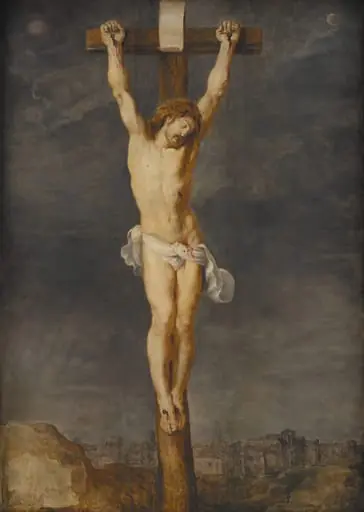
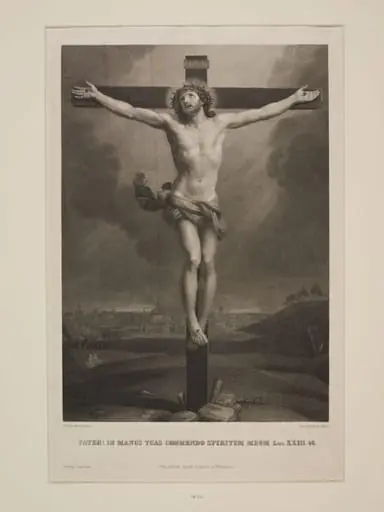
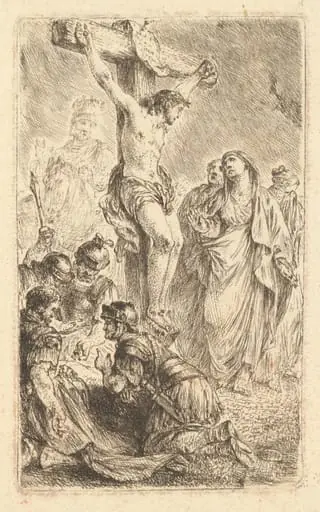
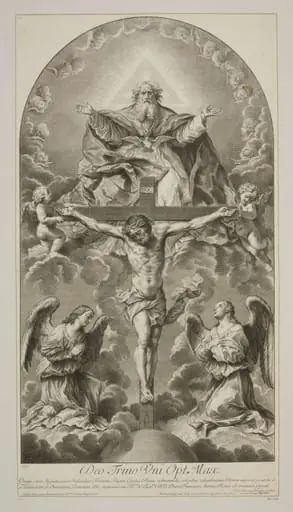
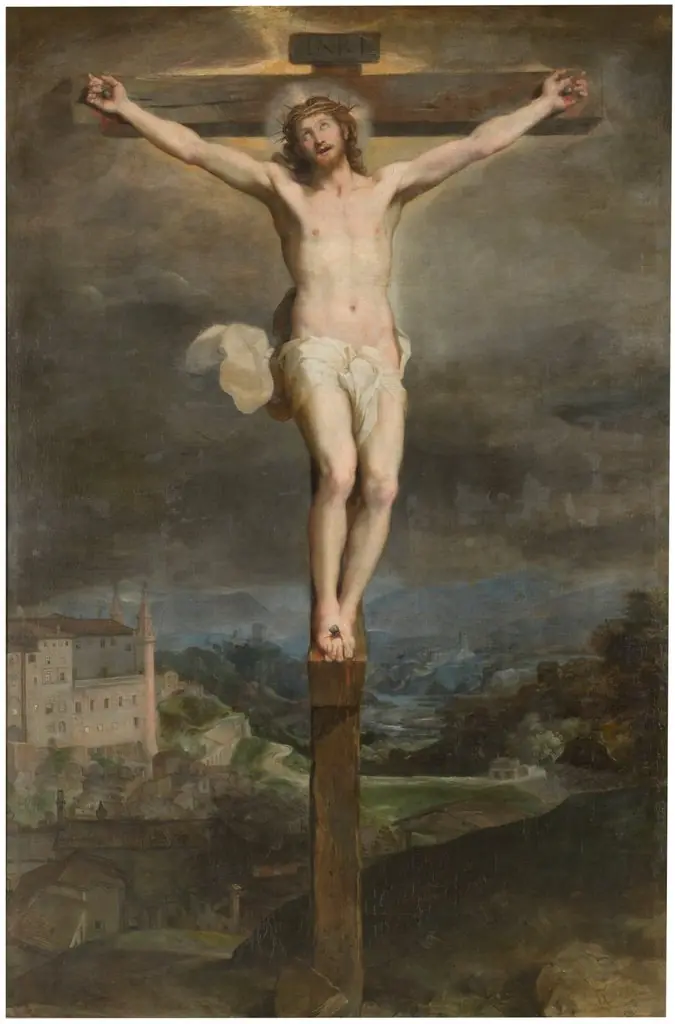
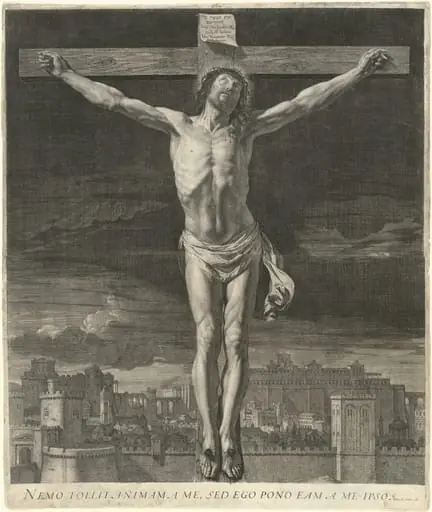
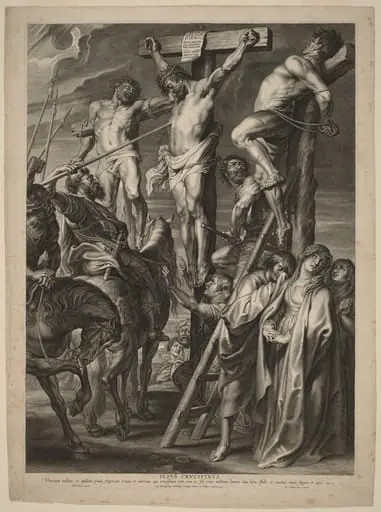
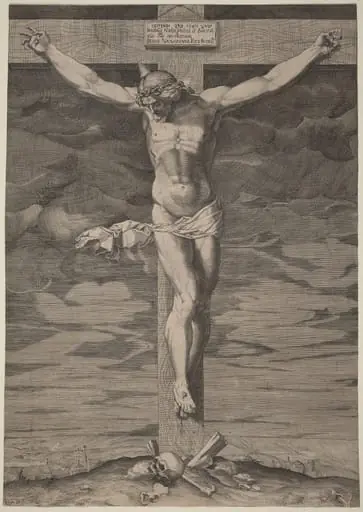
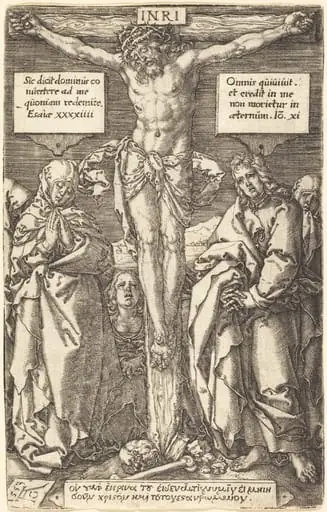
Christ on the Cross is an ink print by the Baroque artist Paulus Pontius. It dates from 1631 and is held in the collection of the National Gallery of Art. Created in 1631 by the Flemish artist Pontius Paulus, this engraving portrays the crucifixion of Christ.
About this work
Overview
Created in 1631 by the Flemish artist Pontius Paulus, this engraving portrays the crucifixion of Christ. As a printmaker active in the circle of Rubens, Pontius employed precise line work to translate religious imagery into a medium suited for wider dissemination. The composition balances solemnity with technical refinement, reflecting the devotional priorities of early 17th-century Flanders.
Subject & Meaning
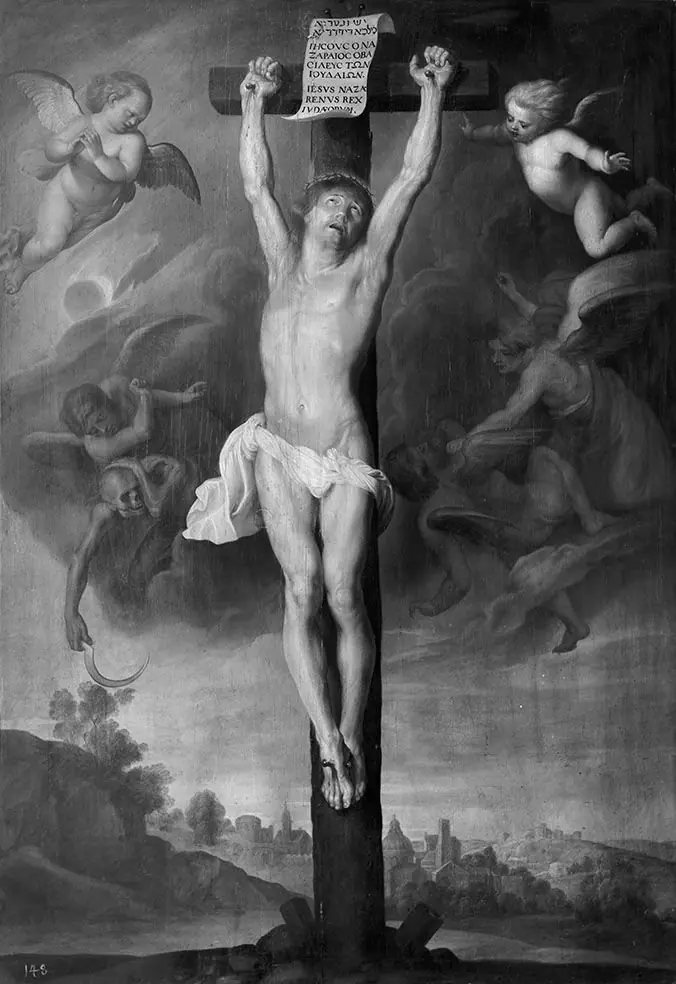
The arched inscription above, in Latin, reinforces the theological weight of the moment, framing the crucifixion as both historical and sacred.
The scene centers on Christ nailed to the cross, his body rendered with anatomical clarity. Above him, two angels hover, their gazes directed heavenward, suggesting divine witness to the sacrifice. Below, a quiet town lies beneath a brooding sky, grounding the event in earthly reality. The arched inscription above, in Latin, reinforces the theological weight of the moment, framing the crucifixion as both historical and sacred.
Technique & Style
Pontius used fine, intersecting lines to model form and depth, particularly in the musculature of Christ and the feathery texture of the angels’ wings. Deep shadows contrast with sharply defined contours, heightening the emotional gravity. The cross-hatching technique, meticulously applied, creates tonal variation without color, relying solely on line density to convey volume and light.
History & Provenance
Pontius Paulus worked within the Rubens workshop, where engraving served to reproduce and circulate major compositions. This print likely originated as part of a devotional or artistic project tied to Antwerp’s religious culture. Its survival in collections today reflects its role in disseminating Counter-Reformation imagery through accessible printed media.
Context
In early 17th-century Flanders, religious prints were vital tools for private devotion and theological education. Artists like Pontius translated large-scale paintings into detailed engravings for broader audiences. This work aligns with the period’s emphasis on emotional immediacy in sacred scenes, responding to the Catholic Church’s call for accessible, impactful religious imagery.
Legacy
Though not widely known today, Pontius’s engravings contributed to the visual language of Baroque religious art. His technical precision and fidelity to Rubens’s compositional ideals helped standardize the depiction of Christ’s crucifixion across Northern Europe. This print remains a quiet example of how printmaking extended the reach of major artistic movements.
Artist & collection
Artist
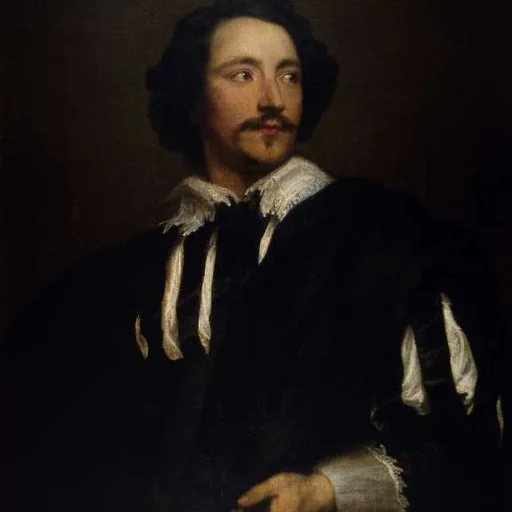
Paulus Pontius (27 May 1603 – 16 January 1658) was a Flemish engraver and painter.