Artwork
Christ and the Samaritan Woman
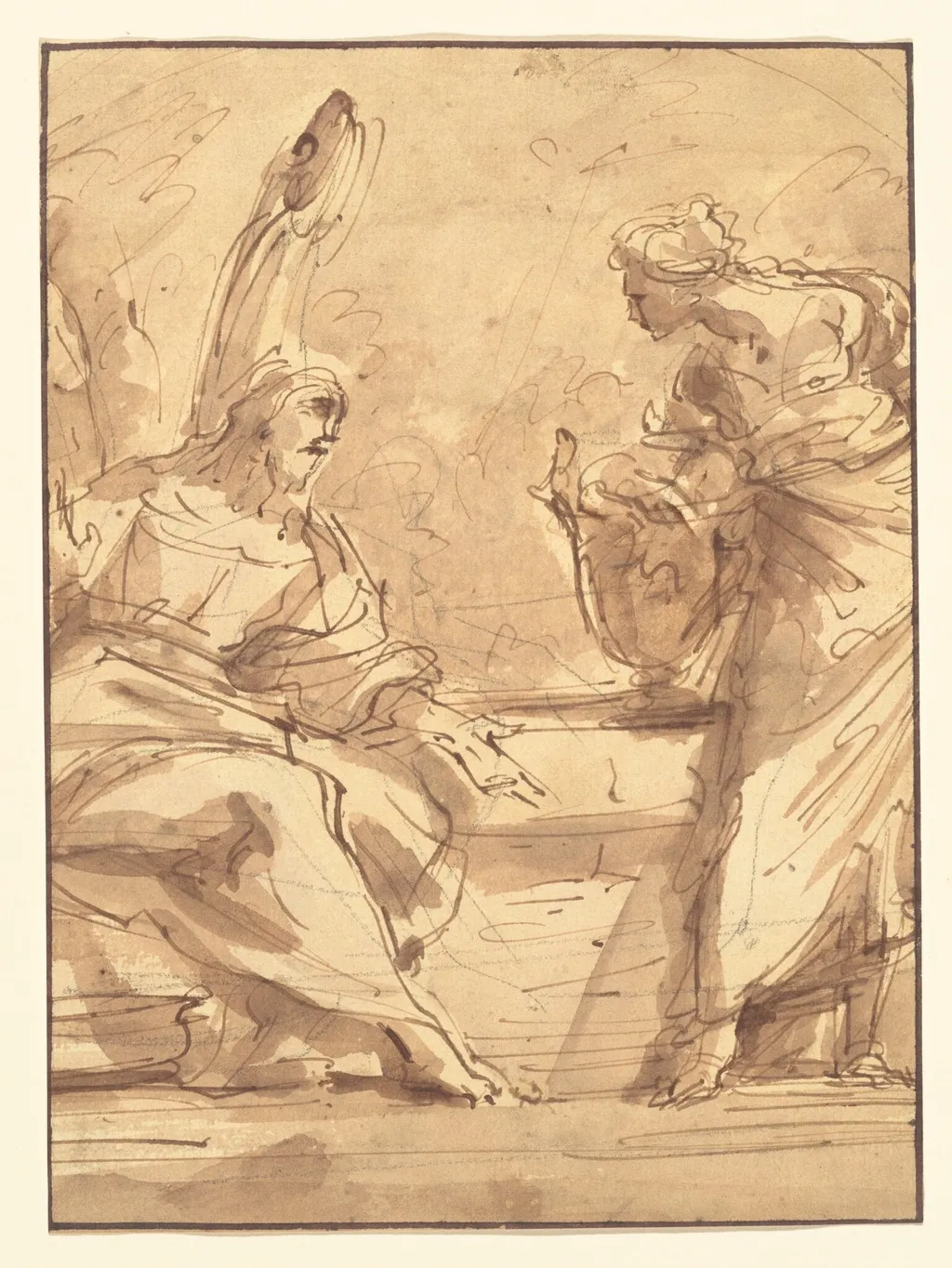
Christ and the Samaritan Woman is a chalk drawing by the Baroque artist Sebastiano Ricci. It dates from 1718 and is held in the collection of the National Gallery of Art.
About this work
You can learn more about this style by looking into the movement: Baroque.
The painting is called Christ and the Samaritan Woman.
It was made by Sebastiano Ricci in 1718.
The artist used pen, brown ink, and brown wash over black chalk on laid paper, which was a common technique during the Baroque period, and this period is also known for its dramatic lighting and intense emotions, which might be reflected in this work.
You can learn more about this style by looking into the movement: Baroque.
Overview
Sebastiano Ricci’s drawing titled Christ and the Samaritan Woman dates to 1718. Executed on laid paper, the work combines pen work, brown ink, and a brown wash applied over an initial black chalk sketch. The composition captures a moment from the Gospel narrative, presenting the encounter between Jesus and the Samaritan woman at the well.
Subject & Meaning
The image illustrates the biblical episode in which Christ engages a Samaritan woman, a scene traditionally interpreted as a dialogue on spiritual thirst and the breaking of social barriers. By focusing on the two figures, Ricci emphasizes the exchange of ideas and the transformative nature of the encounter.
Technique & Style
Ricci employs a layered drawing process: a preliminary black chalk drawing establishes form, followed by pen lines and brown ink that define detail, and finally a brown wash that unifies the surface with tonal depth. The handling of light and shadow reflects Baroque sensibilities, creating a sense of immediacy and emotional intensity.
History & Provenance
Created in the early eighteenth century, the drawing belongs to Ricci’s mature period when he was active in Venice and across Europe. Its provenance traces through private collections before entering a museum holding, where it is displayed as part of the institution’s Baroque drawing holdings.
Own this work as a print
Artist & collection


![The Ecstasy of Saint Francis [recto], by Sebastiano Ricci](https://artifactworldgallery.com/img/sebastiano-ricci--the-ecstasy-of-saint-francis-recto--5f53f9b59775e5dd-w320.webp)
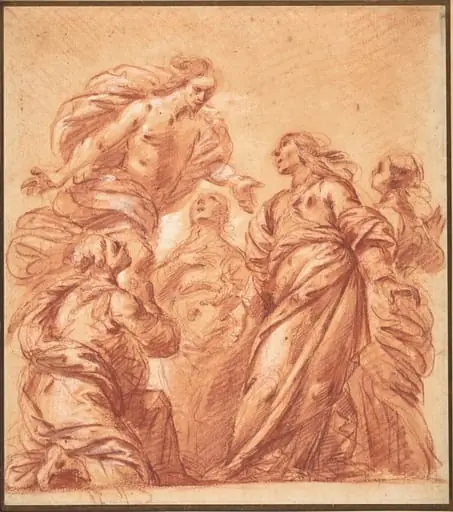 The Women at the Sepulchre with Christ of the Noli me Tangere
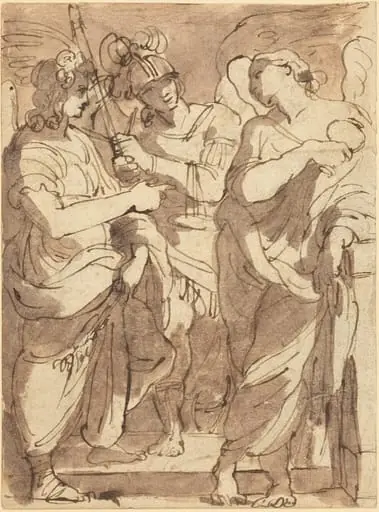 Allegory of Justice
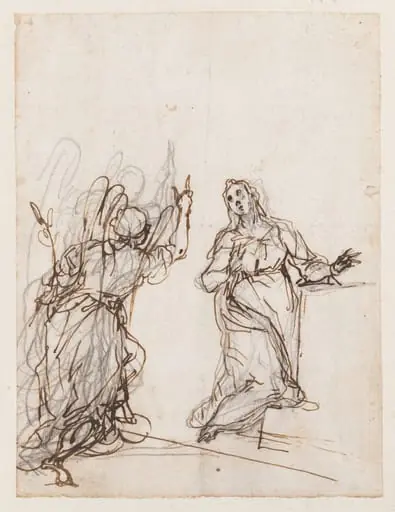 The Annunciation
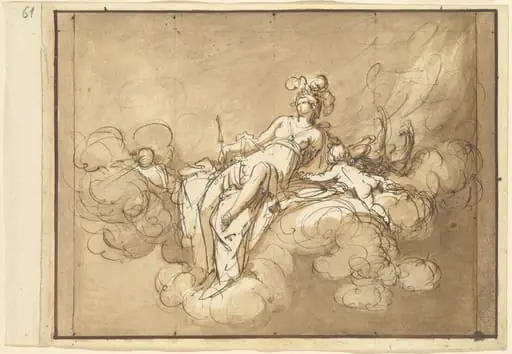 Juno Seated on the Clouds
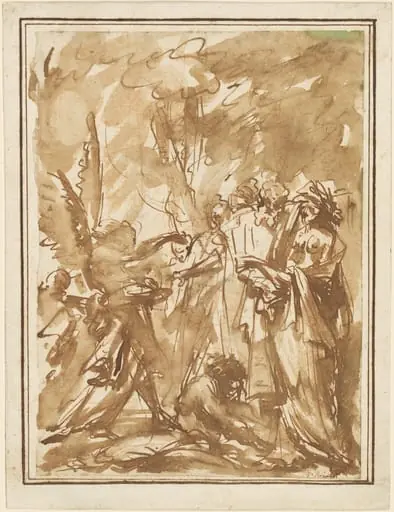 Scherzo with Antique Figures
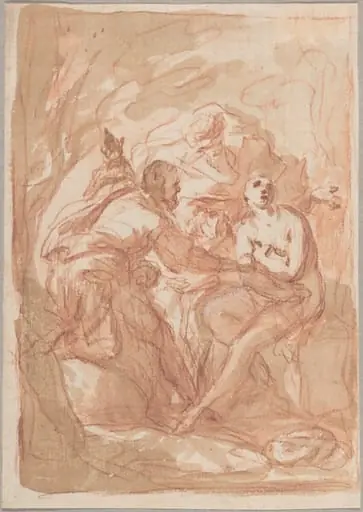 Susanna and the Elders
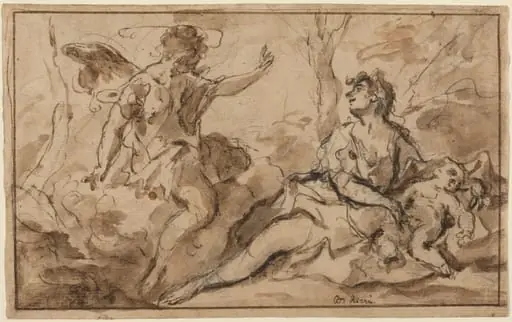 The Angel Appearing to Hagar and Ishmael
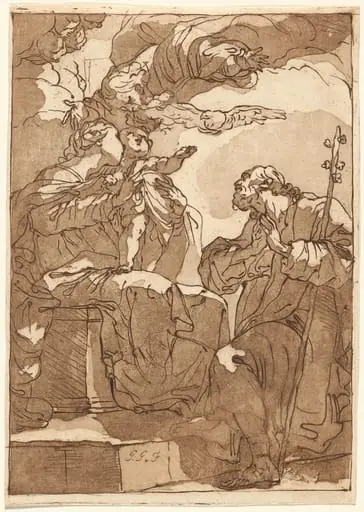 The Holy Family with God the Father
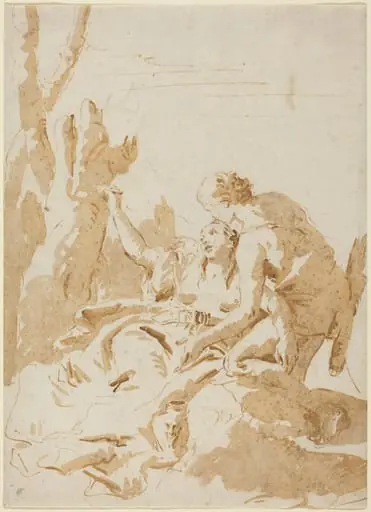 Angelica and Medoro
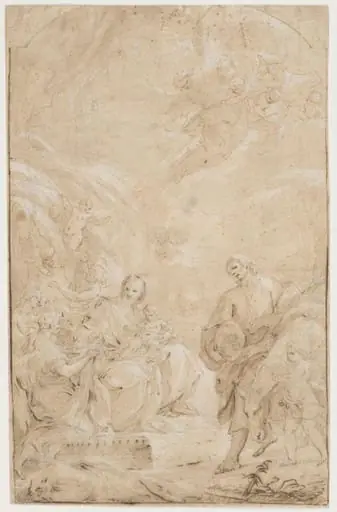 Untitled
![Female Saint Carrying a Banner [recto], by Baldassare Franceschini](https://artifactworldgallery.com/img/baldassare-franceschini--female-saint-carrying-a-banner-recto--7b0a38585a5ad76d-w320.webp) Female Saint Carrying a Banner [recto]
Female Saint Carrying a Banner [recto]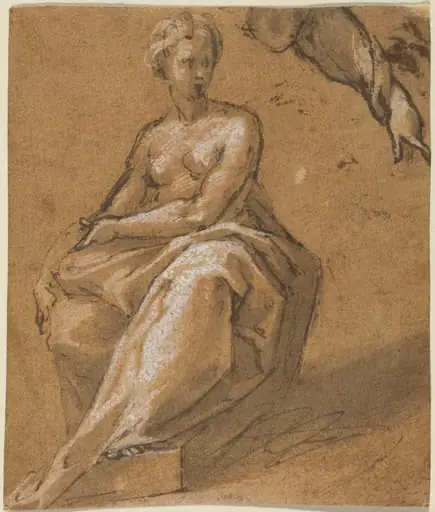 Seated Nude with Drapery