Artwork
Self-Portrait
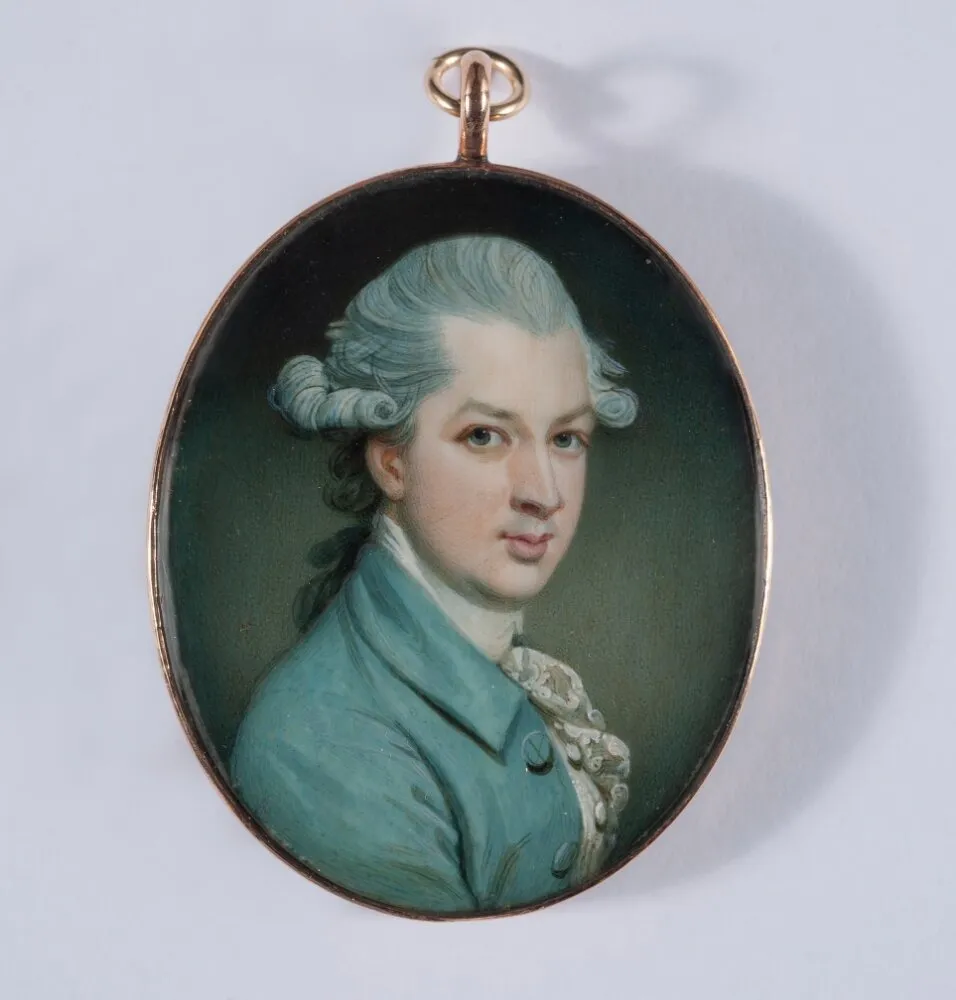
Self-Portrait is an unspecified painting by the Rococo painting artist Richard Crosse. It dates from 1775 and is held in the collection of the Nationalmuseum.
About this work
Overview
Created in 1775, this miniature self‑portrait presents the artist as a young gentleman with light skin, blue eyes and gray hair gathered in a ponytail. He is dressed in a blue jacket trimmed with a white lace collar and a white cravat, set against a muted dark green‑gray backdrop. The work exemplifies the delicate, intimate scale for which the painter was known.
Subject & Meaning
The sitter looks directly at the viewer with a neutral expression, offering a straightforward, unembellished representation of his own likeness. The composition emphasizes personal identity rather than narrative, reflecting the 18th‑century interest in individual portraiture as a means of documenting social status and personal presence.
Technique & Style
Executed in a realistic manner, the portrait displays careful attention to the texture of fabric, the sheen of lace, and the curls framing the face. Subtle chiaroscuro modelling creates depth, while the limited palette and fine brushwork are characteristic of miniature portraiture practiced in the Rococo period.
History & Provenance
The painting was produced by Richard Crosse, an English miniature portraitist active in the late 1700s, and now forms part of the Nationalmuseum’s collection. Crosse worked alongside contemporaries such as John Smart and Richard Cosway, contributing to the era’s demand for small, finely rendered likenesses.
Artist & collection
Artist
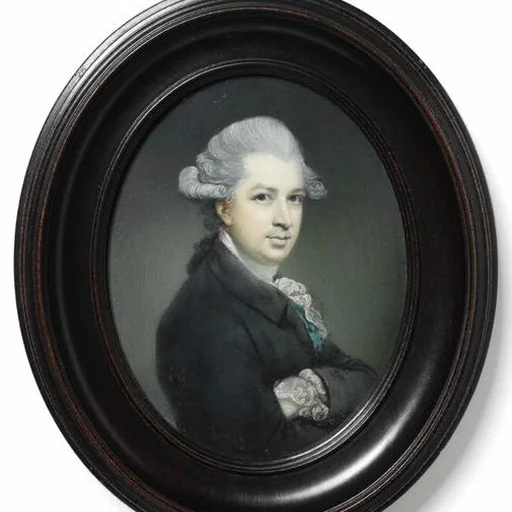
Richard Crosse (24 April 1742 – May 1810) was an English painter of portrait miniatures. He was a contemporary of John Smart, George Engleheart, Richard Cosway and William Wood.

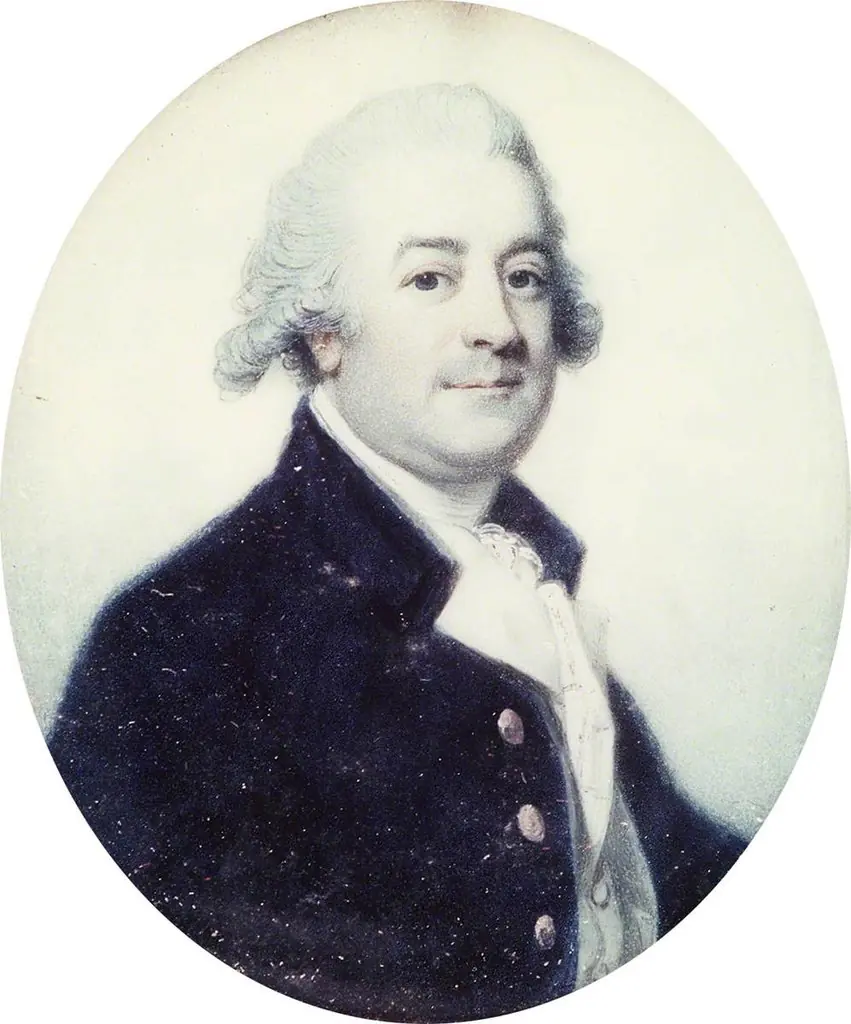
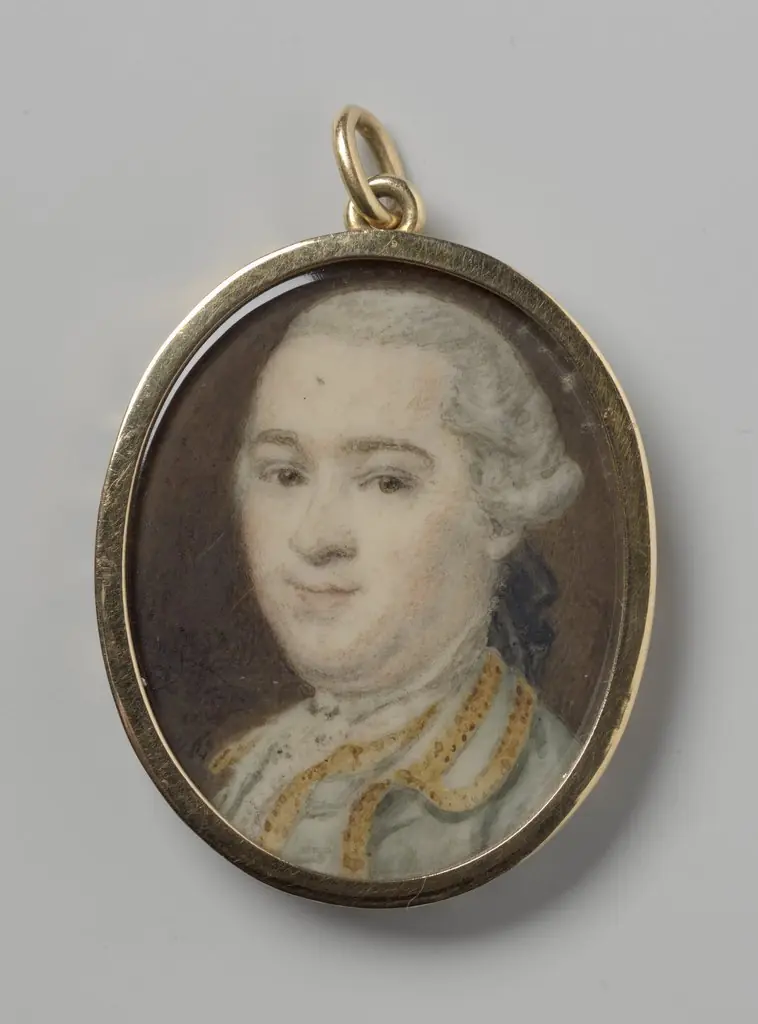 Portret van een man
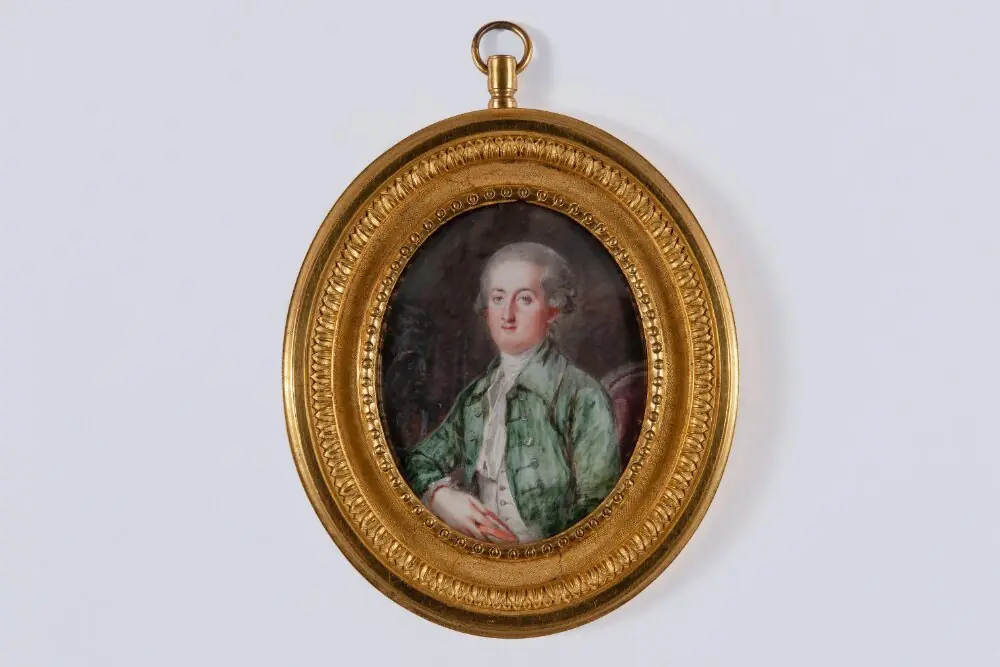 Portrait Presumed to be René Louis de Girardin (1735–1808), Marquis, Writer and Gardening Lord
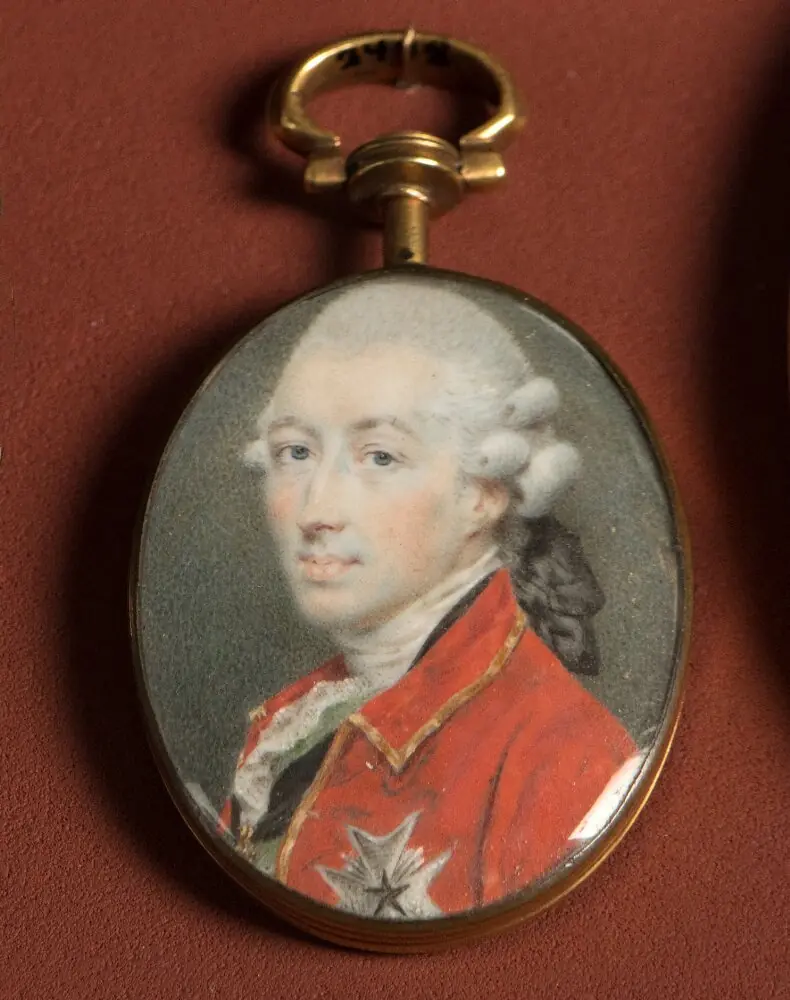 Baron Gustaf Adam von Nolcken
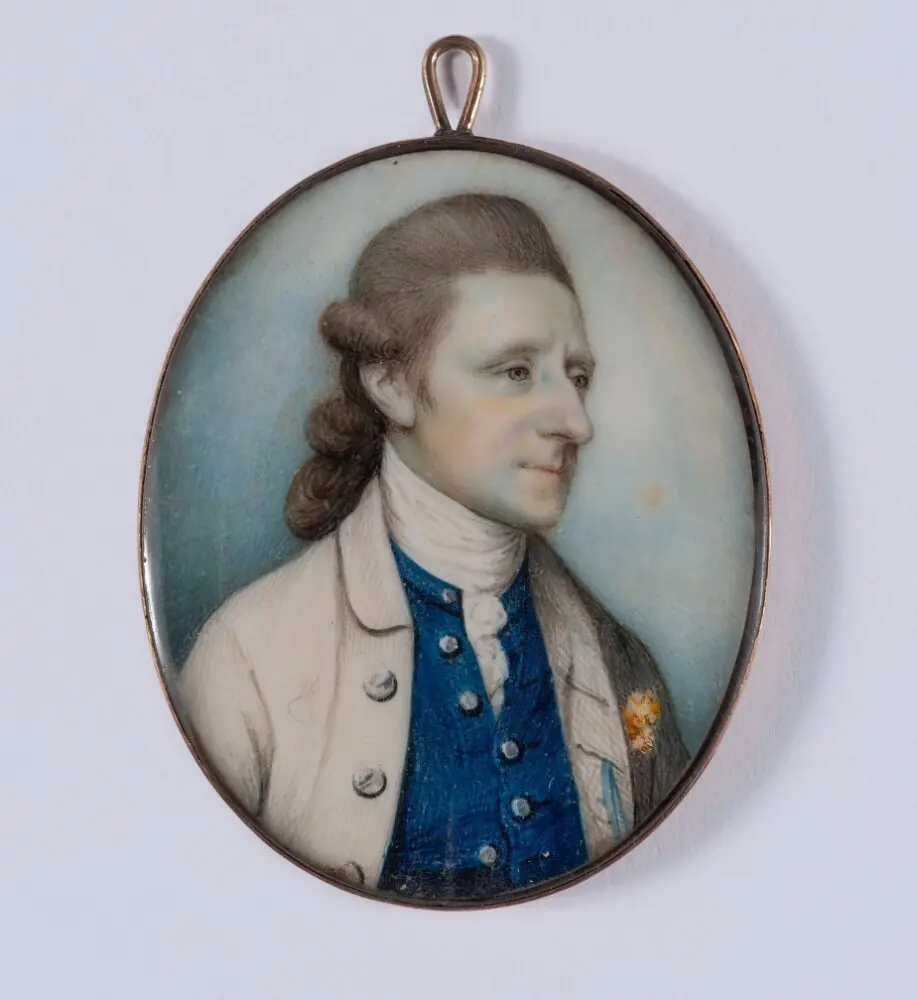 Porträtt av en man i cremefärgad jacka
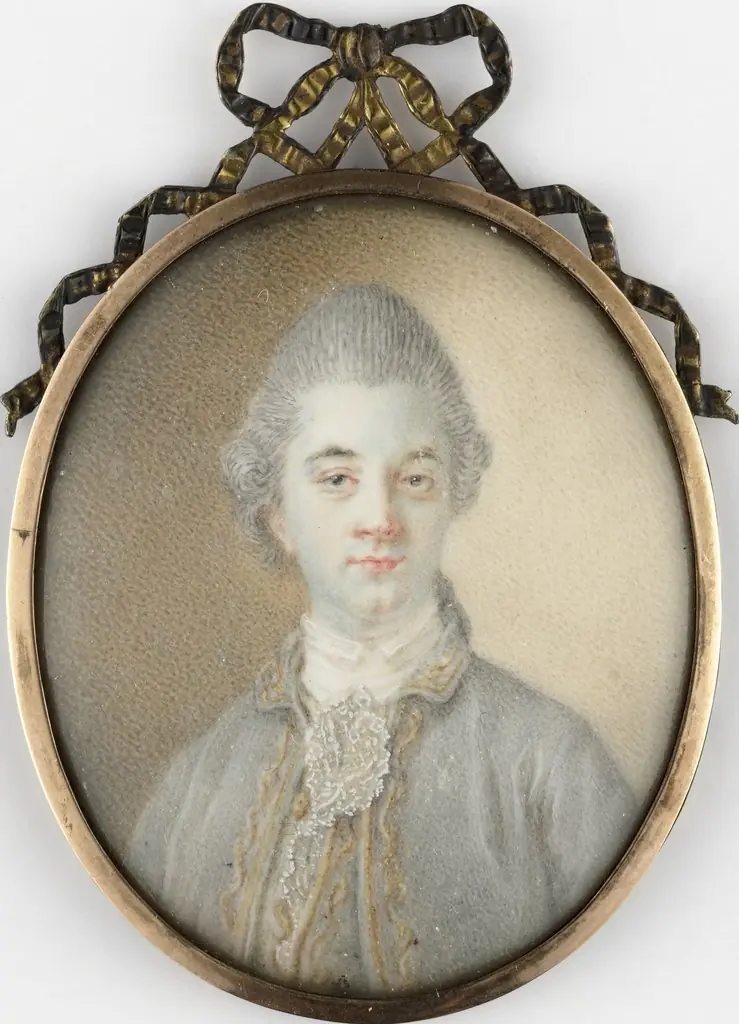 Mr. Willem Boreel (1744-1796), magistrate of Amsterdam
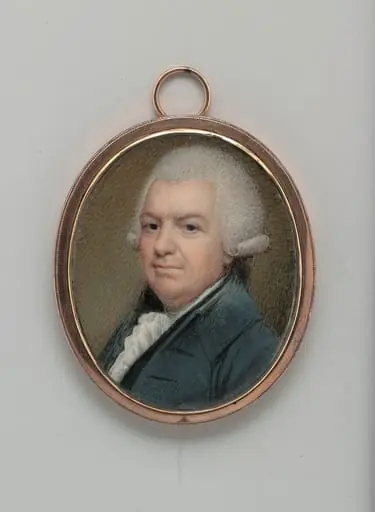 Stephen Hooper
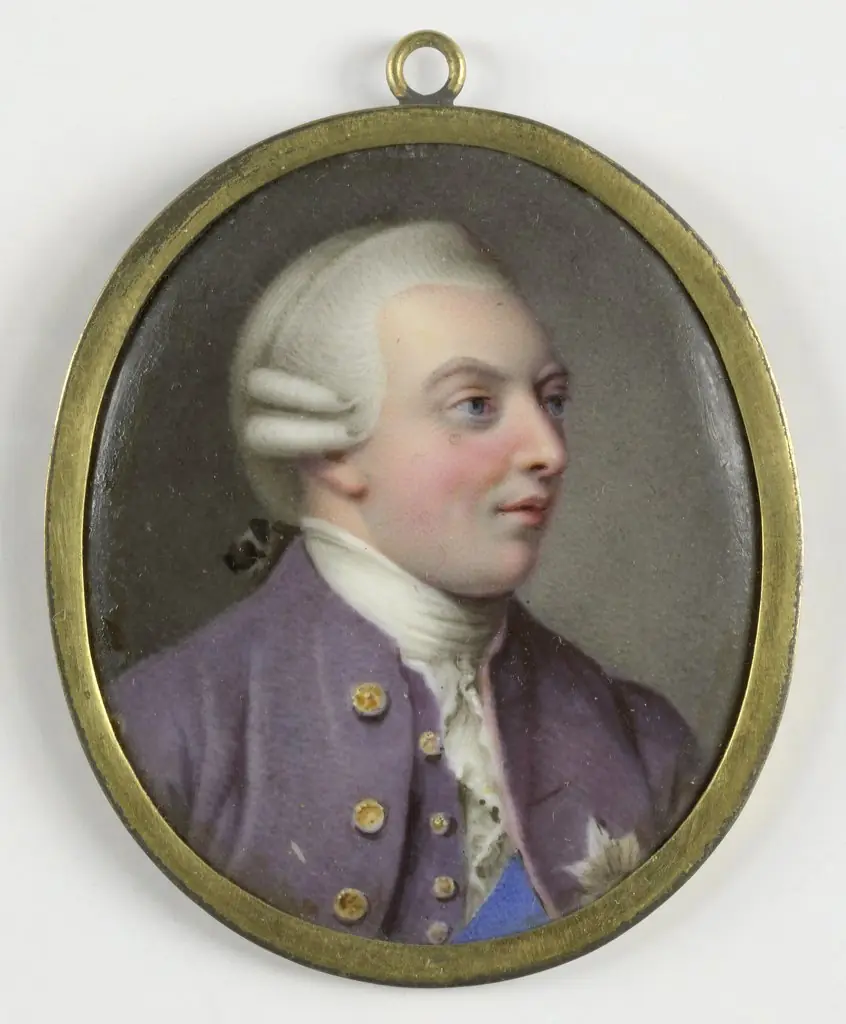 George III (1738-1820), koning van Engeland
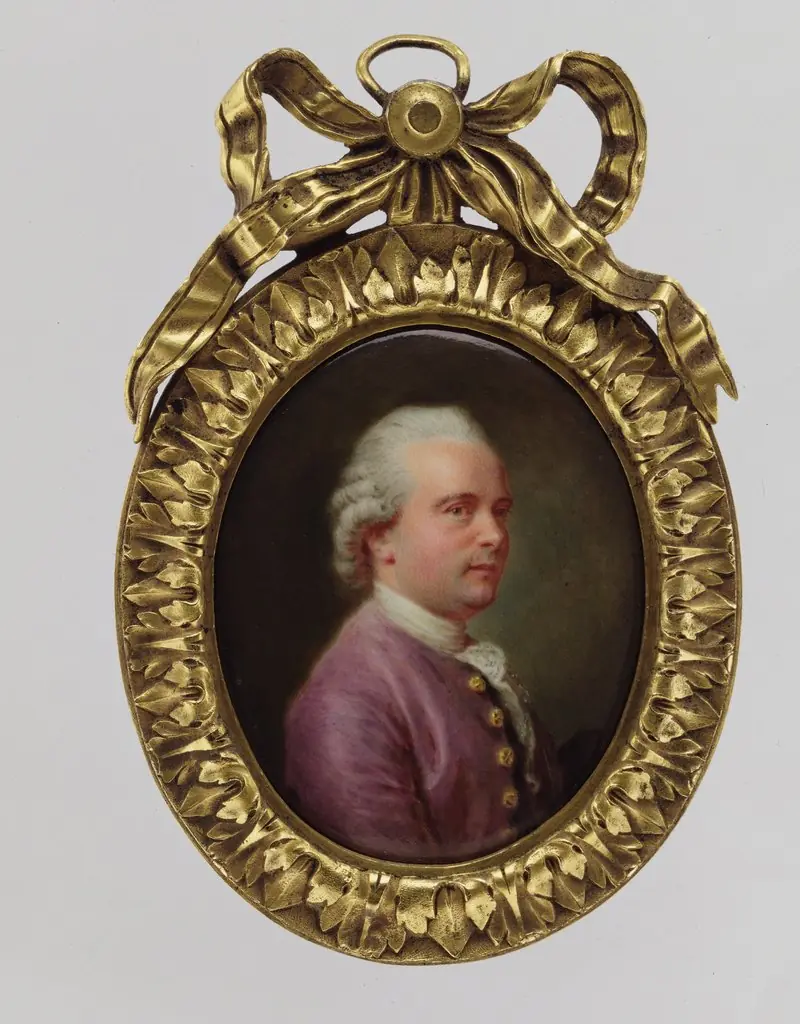 Abbé Charles Bossut (1730–1814)
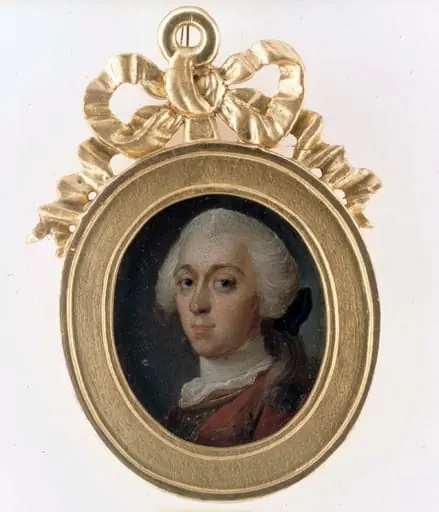 Valtaneuvos Clas Ekeblad
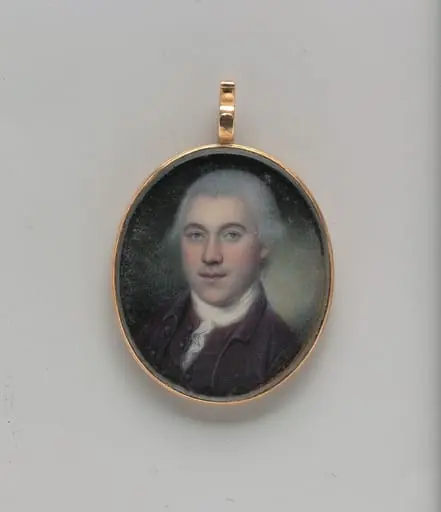 Joseph Donaldson
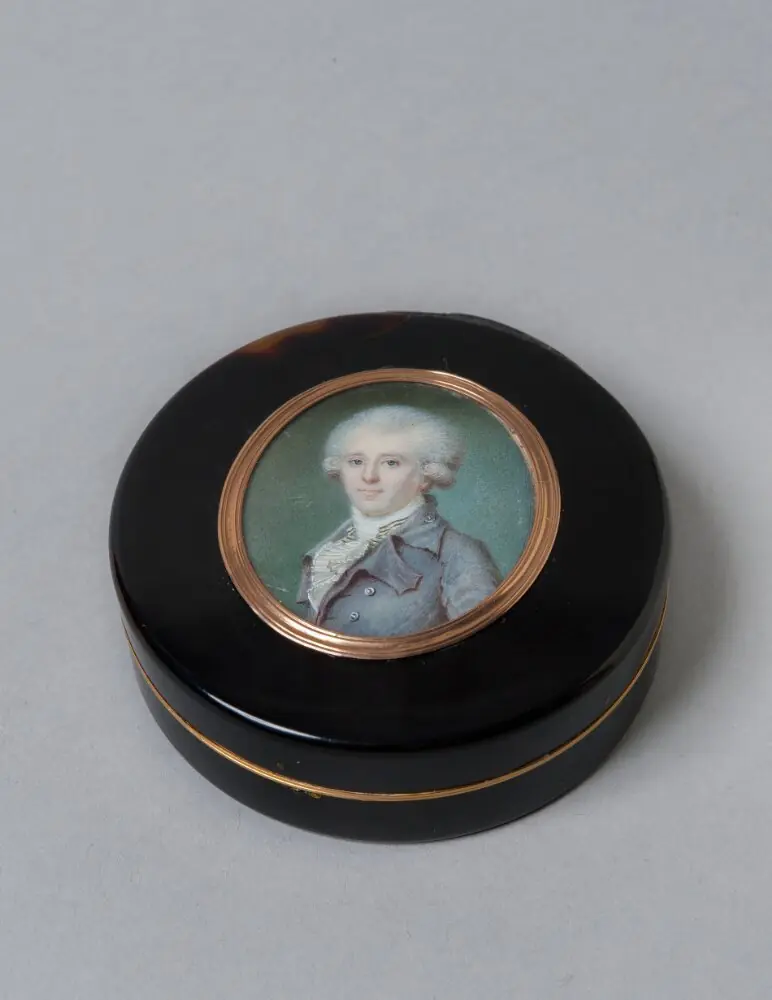 Edmond-Charles-Edouard Genet (1763-1834), franskt sändebud i USA
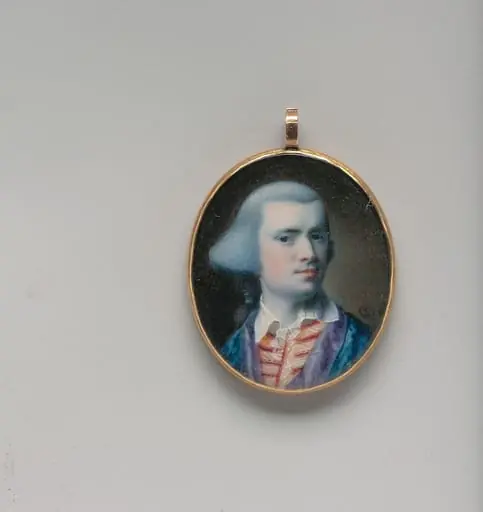 Self-portrait miniature