Artwork
Liber Veritatis: No. 89, View of a Mountainous Extended Country
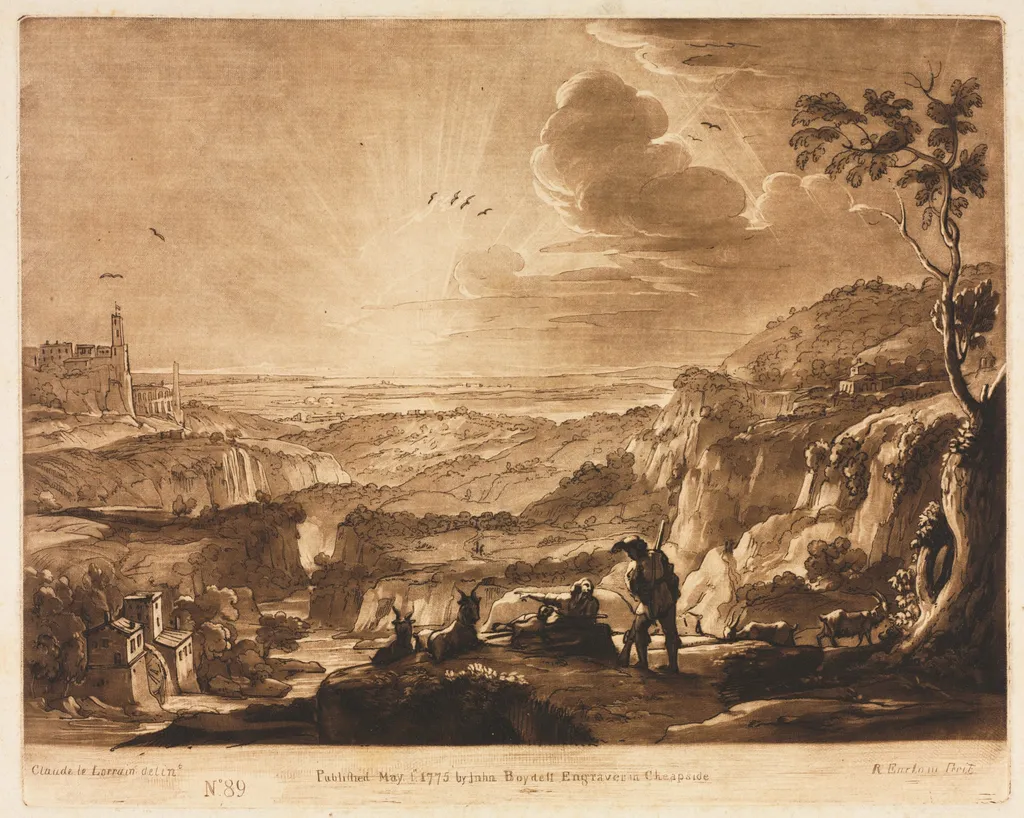
Liber Veritatis: No. 89, View of a Mountainous Extended Country is a print by the Romanticist artist Richard Earlom. It dates from 1775 and is held in the collection of the Cleveland Museum of Art.
About this work
Overview
This print, numbered 89 in the Liber Veritatis series, was produced by Richard Earlom in 1775 as a reproductive etching after a drawing by Claude Lorrain.
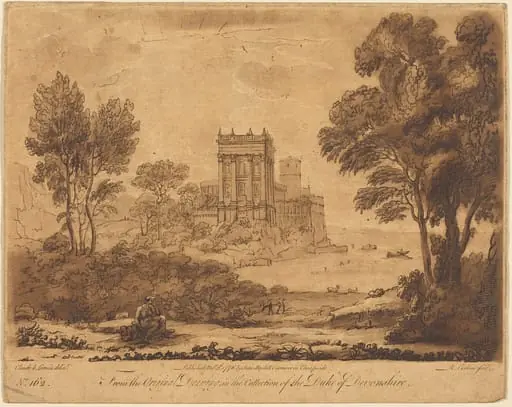
This print, numbered 89 in the Liber Veritatis series, was produced by Richard Earlom in 1775 as a reproductive etching after a drawing by Claude Lorrain. It depicts a tranquil rural landscape with undulating terrain, a winding path, and a modest waterfall. The composition emphasizes spatial depth and quiet solitude, rendered through delicate tonal gradations rather than sharp lines. The work is part of a larger collection documenting Claude’s paintings, compiled to preserve their compositions.
Subject & Meaning
The scene portrays an uneventful moment in the countryside: a lone figure near a cart, grazing sheep, and distant dwellings clustered around a tower. There is no narrative drama—only the stillness of rural life. The placement of elements suggests harmony between human presence and nature, reflecting classical ideals of pastoral order. The misty horizon and soft light imply a timeless, almost idealized countryside, consistent with Claude’s influence on 18th-century landscape aesthetics.
Technique & Style
Earlom employed soft aquatint techniques to achieve subtle tonal transitions, mimicking the atmospheric effects of Claude’s original drawings. Fine detailing in the sheep’s wool, stone textures, and architectural features contrasts with the hazy, indistinct hills, enhancing the sense of depth. The absence of bold outlines and the dominance of muted grays create a serene, diffused light, characteristic of Earlom’s approach to translating oil sketches into printed form.
History & Provenance
The print originates from the Liber Veritatis, a portfolio Claude Lorrain compiled to record his own paintings, later acquired by the Duke of Devonshire. Earlom was commissioned to reproduce these drawings for a wider audience. This particular plate was published in 1777 as part of a two-volume set. The Cleveland Museum of Art acquired the print through established collection channels, preserving its place within the tradition of British printmaking after Old Master works.
Context
In late 18th-century Britain, there was growing interest in Italianate landscapes, fueled by Grand Tour travelers and collectors. Earlom’s prints made Claude’s compositions accessible beyond elite collections. The Liber Veritatis series served both as an artistic archive and a commercial product, aligning with Enlightenment-era values of documentation and dissemination. This print reflects a cultural moment when landscape was valued for its aesthetic and moral resonance, not merely as scenery.
Legacy
Earlom’s reproductions helped solidify Claude Lorrain’s reputation in Northern Europe, influencing landscape artists and collectors for generations. The Liber Veritatis prints remain important references for scholars studying the transmission of compositional ideas across media. While not original works, they represent a significant chapter in the history of printmaking, where technical precision met reverence for earlier artistic traditions.
Own this work as a print
Artist & collection

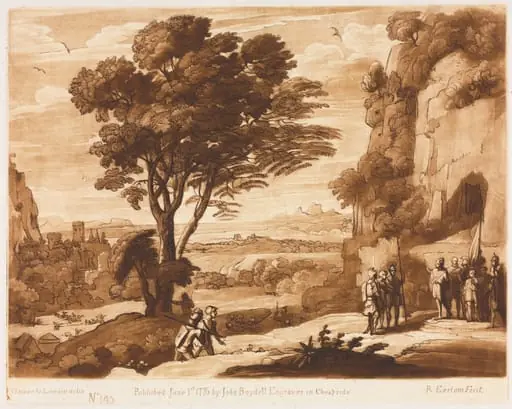 Liber Veritatis: No. 145, A Landscape, with Figures, Simon brought before Priam
 Landscape with Men Fishing by Moonlight
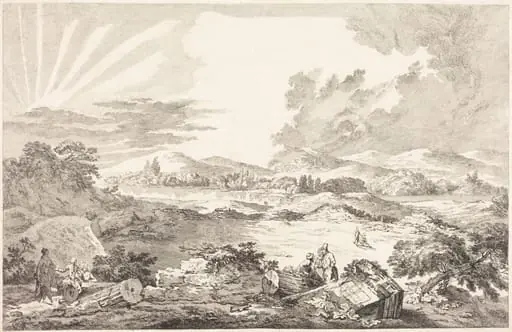 The Dromos, Athens
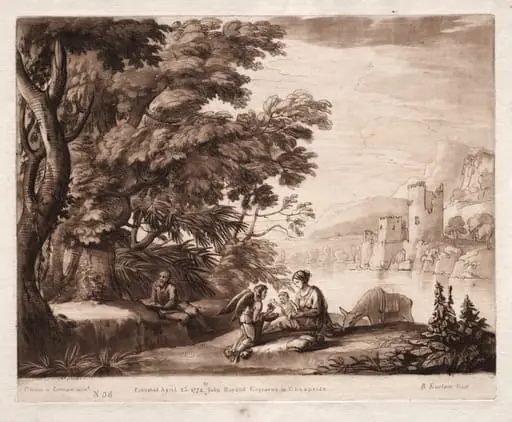 Liber Veritatis: No. 38, The Repose of the Holy Family along a River
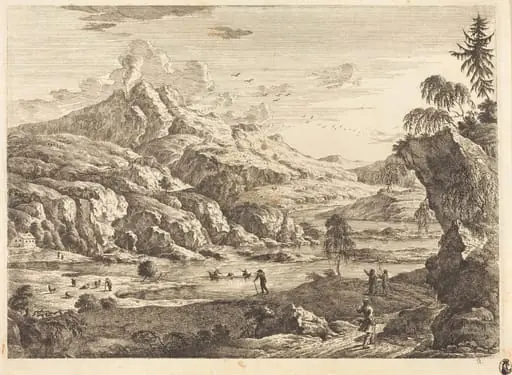 Mountainous Riverscape with Figures
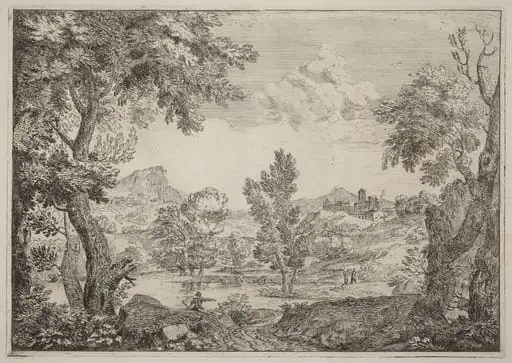 The Stream
 Liber Veritatis: No. 47, A River Scene with the Finding of Moses
 Liber Veritatis: No. 68, A Landscape at Sunset with Fishermen Drawing a Net