Artwork
The Weald of Sussex
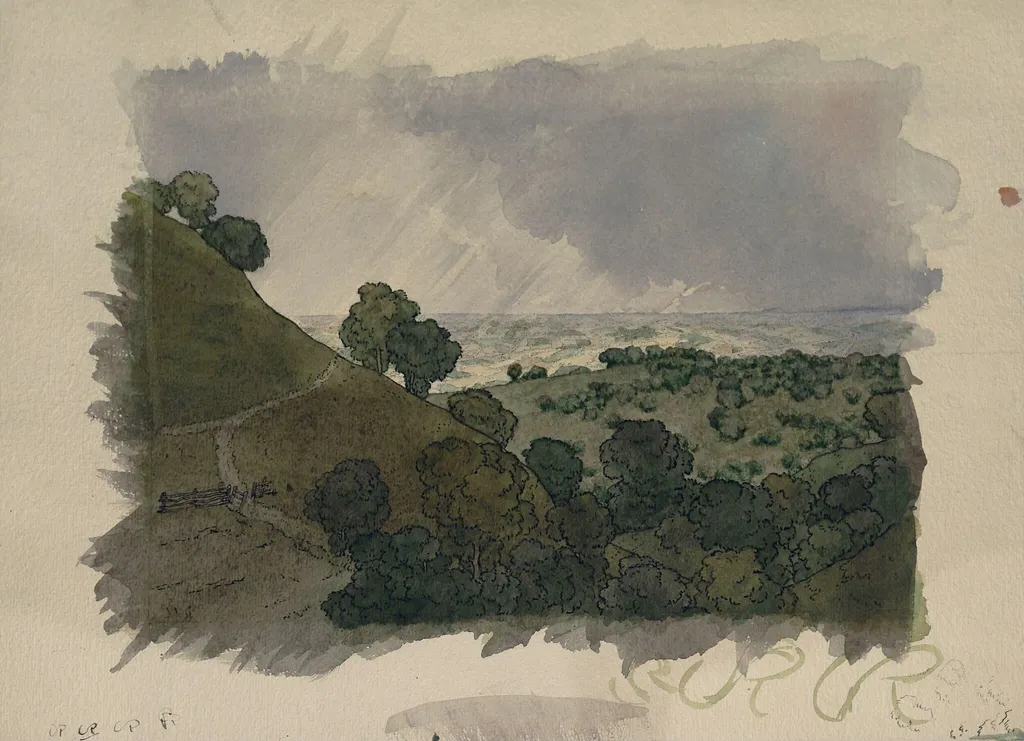
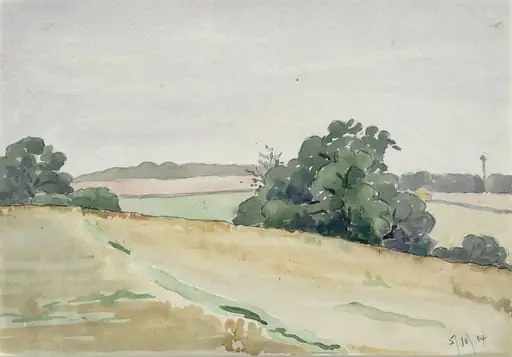
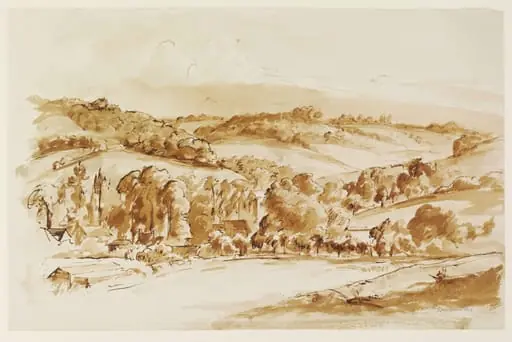
The Weald of Sussex is a watercolor work on paper by Victor Charles Riches. It dates from 1931 and is held in the collection of the Victoria and Albert Museum.
About this work
Overview
Its delicate handling suggests a direct, observational approach, typical of early 20th-century British landscape watercolours.
Painted in 1931, this watercolour by Victor Charles Riches captures a quiet stretch of the Weald in Sussex. Executed in transparent washes, the piece conveys the subtle rhythms of the countryside without rigid definition. The artist’s signature and the date are present, anchoring the work in its time. Its delicate handling suggests a direct, observational approach, typical of early 20th-century British landscape watercolours.
Subject & Meaning
The scene portrays undulating farmland under a soft, overcast sky, with trees scattered across gentle slopes. There is no human presence or architectural element, emphasizing the land’s natural stillness. The focus on light shifting over grass and earth reflects an interest in atmosphere rather than narrative. It is a meditation on the quiet persistence of rural terrain, observed with patience and restraint.
Technique & Style
Riches employed loose, fluid washes to suggest form without outline, allowing pigments to bleed and blend naturally on the paper. Highlights emerge through the white of the ground, while shadows are built with faint layers of muted greens and greys. The absence of hard edges creates a sense of atmospheric depth, characteristic of watercolour traditions that prioritize mood over detail.
History & Provenance
The work is documented as part of Riches’s output during the early 1930s, a period when he frequently painted the Sussex countryside. No public record of its early ownership exists, but its condition and inscription suggest it was kept in private hands. It has not been widely exhibited, remaining a lesser-known example of regional British watercolour practice.
Context
Created during a time when British artists were revisiting landscape traditions after the upheavals of war, this piece aligns with a quiet revival of pastoral themes. Unlike modernist experiments, Riches’s approach remained rooted in direct observation and tonal harmony. His work reflects a broader interest among contemporaries in capturing the English countryside with sensitivity rather than spectacle.
Legacy
Though not widely reproduced or studied, this watercolour exemplifies the understated skill of regional watercolourists who documented England’s rural landscapes with quiet precision. It contributes to a body of work that values subtlety over grandeur, preserving a visual record of a landscape unchanged by industrialization. Its presence in institutional collections would reinforce its place in 20th-century British watercolour history.
Artist & collection
Artist
Victor Charles Riches painted watercolours of the British landscape in the early 20th century.

 The Southdown, Underhill Road; Edburton, and the Road Eastwards
 Peisaj
 A Heath Scene
 Untitled
 A hilly landscape with trees
 In Danny Park, near Hassocks, Sussex
 Stroud, Gloucestershire
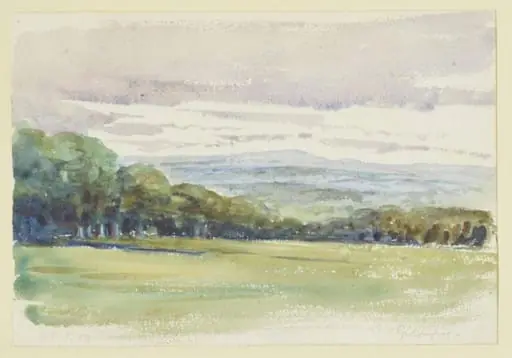 Sketch of a wooded landscape viewed from Gwaynynog, Denbigh
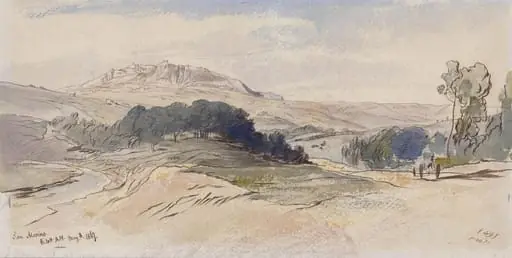 San Marino 6.40 AM. May 8. 1867
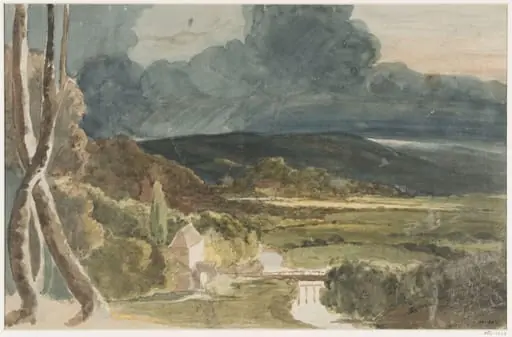 Landscape with river and mountains
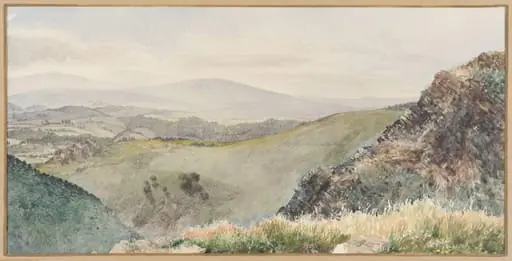 Untitled
 View over Fingest