Artwork
View over Fingest
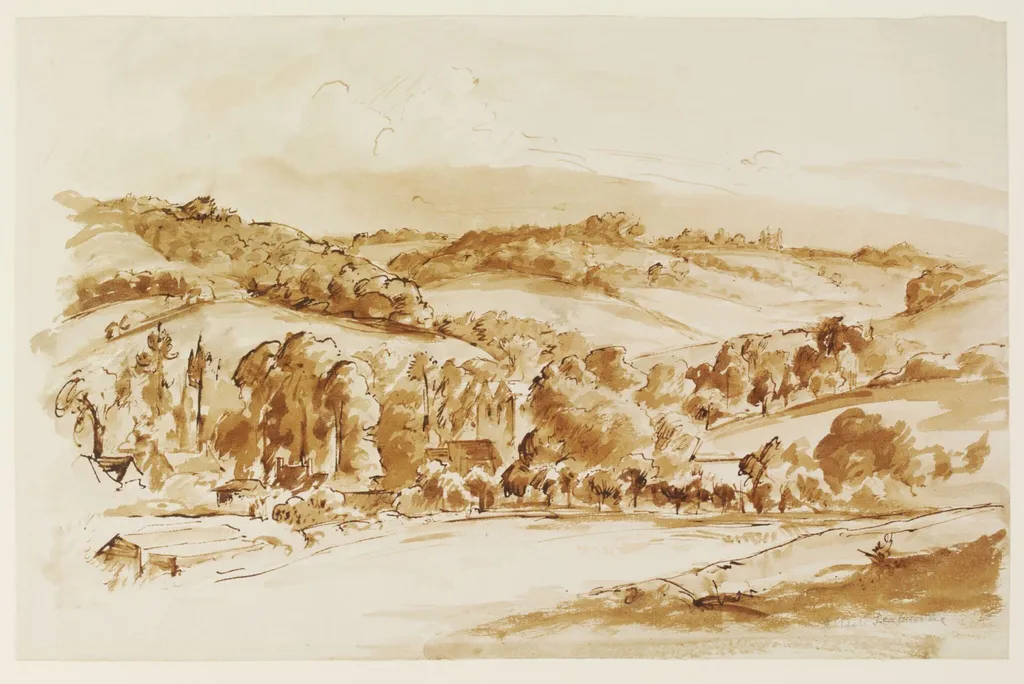
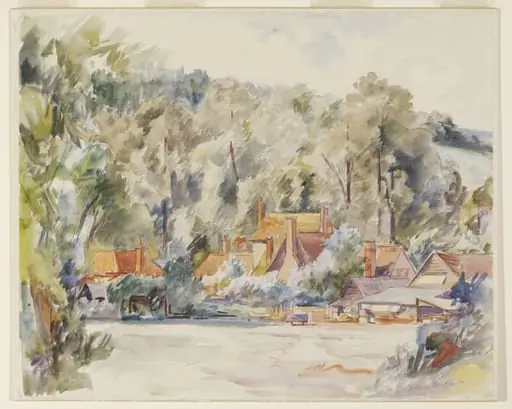
View over Fingest is a watercolor work on paper by Seabrooke. It dates from 1940 and is held in the collection of the Victoria and Albert Museum.
About this work
Overview
Executed in soft washes of green and brown, the painting presents a distant view framed by wooded hills and a pale, cloud-streaked sky.
This 1940 watercolour by Seabrooke captures a quiet rural vista of Fingest, a village in Buckinghamshire. Executed in soft washes of green and brown, the painting presents a distant view framed by wooded hills and a pale, cloud-streaked sky. It was produced as part of the 'Recording Britain' initiative, a wartime effort to preserve visual records of the English countryside amid threats from conflict and development.
Subject & Meaning
The scene depicts Fingest as a modest cluster of buildings nestled among rolling terrain, with a winding path suggesting quiet human presence. The composition emphasizes stillness and continuity, avoiding dramatic elements. Rather than celebrating grandeur, the work conveys a sense of ordinary, enduring place—intended to affirm cultural identity during a time of national uncertainty.
Technique & Style
Seabrooke employed transparent watercolour washes to build subtle tonal gradations, allowing the paper’s white to suggest light and atmosphere. Delicate brushwork defines tree canopies and rooflines without sharp detail, creating a hazy, atmospheric effect. The restrained palette of earth greens and muted browns reinforces the painting’s quiet, observational tone, typical of topographical watercolour practice of the period.
History & Provenance
Created in 1940, the work entered the 'Recording Britain' collection, a project initiated by the Pilgrim Trust and directed by Sir Kenneth Clark. It was one of over 1,500 watercolours and drawings commissioned to document landscapes and architecture at risk from wartime destruction or modern change. The piece remains part of the Victoria and Albert Museum’s holdings, preserved as a historical record.
Context
During the early years of World War II, British cultural institutions sought to safeguard national heritage through visual documentation. 'Recording Britain' focused on rural and vernacular scenes, often overlooked in official art. Seabrooke’s contribution reflects this mission: a quiet, unembellished record of a village landscape, valued not for its beauty but for its representativeness of a threatened way of life.
Legacy
The 'Recording Britain' collection, including Seabrooke’s work, endures as a significant archive of mid-20th-century English topography. While the artist’s broader career remains less documented, this watercolour contributes to a broader understanding of how artists responded to wartime imperatives—not through propaganda, but through attentive, modest observation of everyday places.
Artist & collection
Artist
This watercolor artist recorded the rolling hills and stone cottages of the Chilterns in the 1940s.

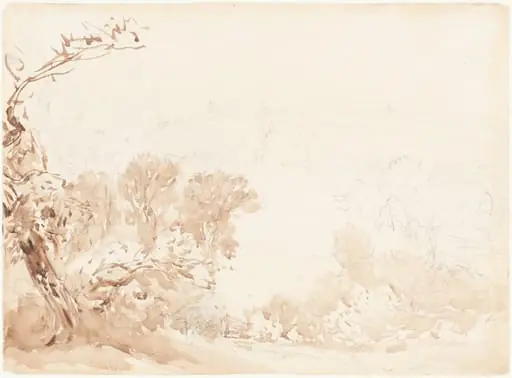 Hillside and Trees
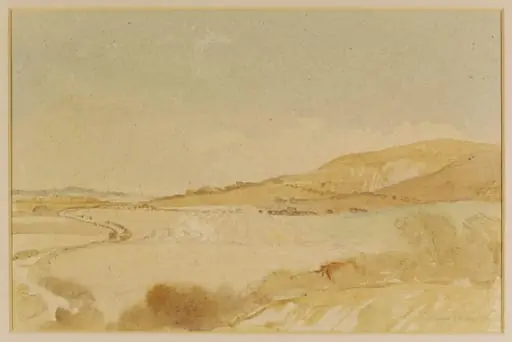 The Southdown, Underhill Road; Clayton to Westmeston
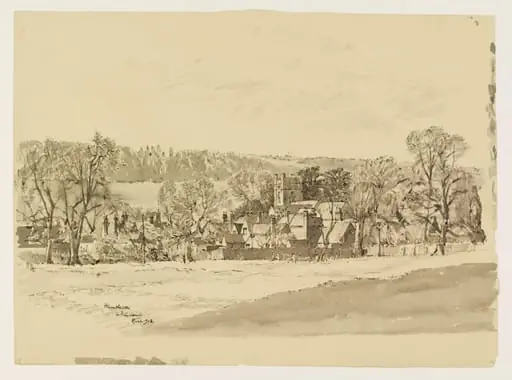 Hambledon
 A country road with elm trees
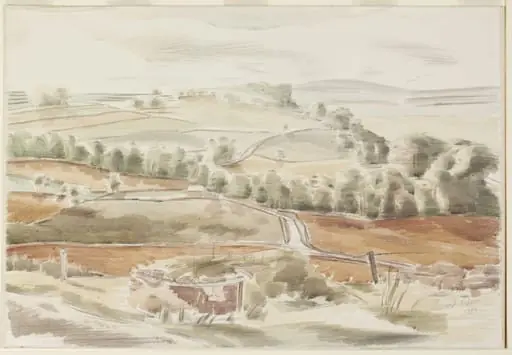 The Porter Valley, No.1
 Meadow with trees
 A wooded hillside at Underriver, near Sevenoaks, Kent
 An Extensive View in Shropshire
 Untitled
 The Sea of Galilee from the heights of Safad
 Road by woods and fields