Artwork
San Marino 6.40 AM. May 8. 1867
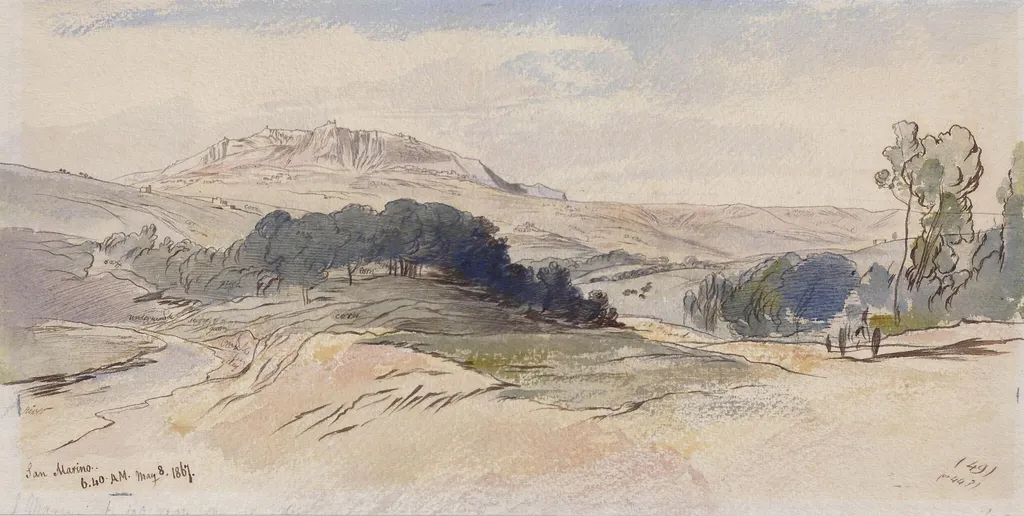
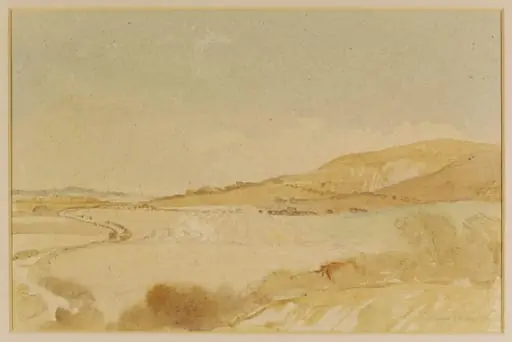
San Marino 6.40 AM. May 8. 1867 is a watercolor work on paper by the Impressionist artist Edward Lear. It dates from 1867 and is held in the collection of the Victoria and Albert Museum. This watercolor sketch, dated May 8, 1867, captures the view of San Marino at dawn.
About this work
Overview
This watercolor sketch, dated May 8, 1867, captures the view of San Marino at dawn. The artist inscribed the location and time directly on the work, anchoring it to a specific moment. Rendered in delicate washes, the piece conveys a quiet, early morning atmosphere through soft transitions and muted tones, typical of watercolor’s capacity for subtle gradation.
Subject & Meaning
The scene presents San Marino’s elevated terrain, dominated by a distant, flat-topped mountain rising above rolling hills and scattered trees. No human figures or structures are visible, emphasizing the landscape’s stillness. The composition suggests contemplation of place and time, inviting attention to natural form rather than narrative or symbolism.
Technique & Style
Executed in watercolor, the work relies on layered washes to build depth without heavy outlines. Light hues dominate the sky and mountain, while darker tones define the foliage and contours of the hills. The absence of sharp edges and the gentle blending of colors create a hazy, atmospheric effect, characteristic of the medium’s inherent transparency.
History & Provenance
The sketch is one of many observational works produced during the artist’s travels in Italy. Its precise inscription indicates a practice of documenting locations with temporal specificity. While its early ownership is undocumented, it has remained within private collections since the 19th century, preserved for its intimate record of a fleeting moment.
Context
Created during a period of growing interest in plein air sketching, this work aligns with broader European trends of direct landscape observation. Though not affiliated with the Impressionist movement, its focus on light and transient conditions reflects similar sensitivities emerging in mid-century art, particularly among travelers and amateur naturalists.
Legacy
The piece endures as a quiet example of 19th-century topographical watercolor, valued for its sincerity and restraint. It contributes to a body of work that records the Italian landscape through personal, unembellished observation, offering insight into how artists engaged with place outside formal academic traditions.
Artist & collection

Artist
Edward Lear (12 May 1812 – 29 January 1888) was an English artist, illustrator, musician, author and poet, who is known mostly for his literary nonsense in poetry and prose and especially his limericks, a form he popularised but which term…

 The Southdown, Underhill Road; Clayton to Westmeston
 Landscape with hills in the background
 The ruins of a Cowdray House
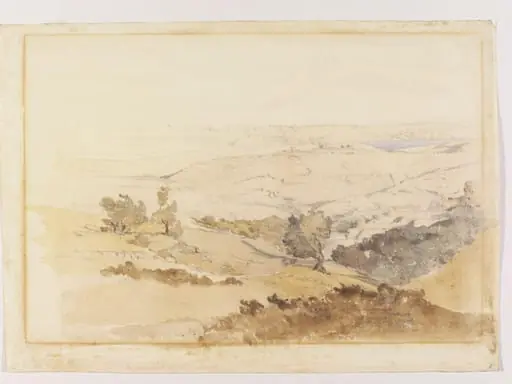 The Sea of Galilee from the heights of Safad
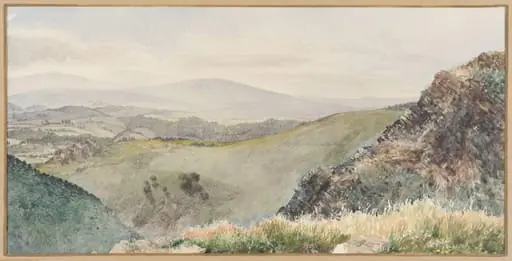 Untitled
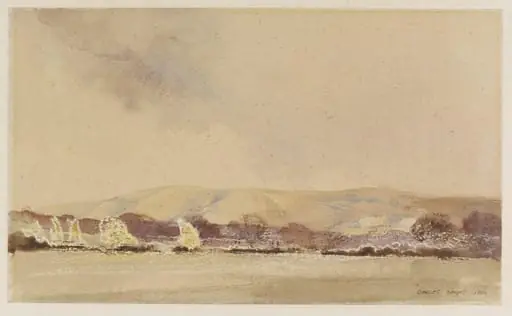 Fields and Woods South of Ditchling
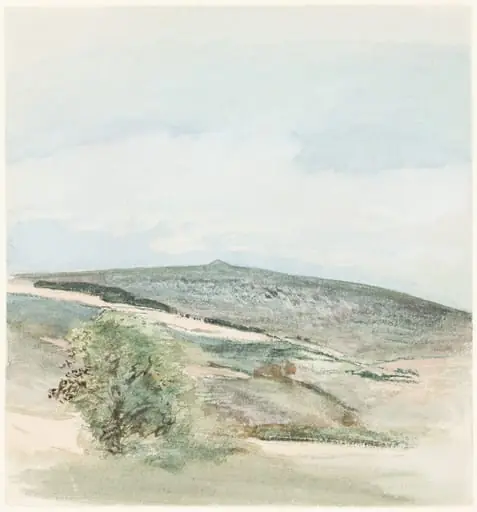 A Heath in Sussex
 Landscape with river and mountains
 Mountains and Cattle
 The Xanthus Valley, Lycia